

Featured image for bmw x5 service bay
Image source: mstyle.co.uk
Dealerships offer factory-trained technicians and genuine parts but cost 30-50% more. Independent specialists often provide equal expertise at lower prices with personalized service. Your warranty remains valid at either option under the Magnuson-Moss Warranty Act, provided proper documentation is maintained.
You love your BMW X5. It delivers that perfect blend of luxury, performance, and practicality that made you buy it in the first place. But now it needs service, and you are staring at a familiar dilemma: the dealership down the highway with the shiny showroom and loaner fleet, or the independent BMW specialist across town with the five-star reviews and lower labor rates. This decision impacts your wallet, your warranty, and your peace of mind.
The bmw x5 dealer vs independent service debate is one of the most common questions among owners. It is not just about an oil change. It is about complex turbocharged engines, sophisticated xDrive all-wheel-drive systems, air suspension, and electronics that require specialized knowledge. Making the right choice requires understanding the real differences, not just the marketing brochures. We will break down the costs, the expertise, the warranty implications, and the hidden factors that dealerships and independent shops rarely tell you about.
Key Takeaways
- Cost Difference: Independent shops typically charge 30-50% less for labor than dealerships on BMW X5 maintenance.
- Warranty Protection: Federal law protects your warranty regardless of where you service, as long as you follow the maintenance schedule and keep records.
- Technician Expertise: Many independent specialists are former dealership master technicians with identical training and certifications.
- Parts Options: Dealers use only OEM parts; independents offer OEM, OES, and quality aftermarket choices at different price points.
- Diagnostic Access: Modern independents invest in factory-level diagnostic tools (ISTA/D, ISTA+) for full BMW system access.
- Service Experience: Dealers provide loaners and amenities; independents offer direct communication with the technician working on your car.
- Long-Term Value: Building a relationship with a trusted independent often yields better personalized care for high-mileage X5 ownership.
📑 Table of Contents
- The Real Cost Breakdown: Where Your Money Actually Goes
- Technician Expertise: Who Is Actually Turning the Wrenches?
- Warranty & Legal Protection: Know Your Rights
- Parts Quality: OEM, OES, and Aftermarket Explained
- Diagnostic Capabilities: The Software Gap Is Closing
- Service Experience: Loaners, Communication, and Convenience
- Specific BMW X5 Considerations by Generation
- Building a Hybrid Strategy: The Smart Owner’s Approach
- Conclusion: Your X5, Your Choice, Your Money
The Real Cost Breakdown: Where Your Money Actually Goes
Let us start with the number everyone cares about: the bottom line. Dealership labor rates for BMW X5 service typically range from $180 to $250 per hour depending on your geographic location. Independent BMW specialists usually charge between $110 and $160 per hour. That is a 30% to 50% savings on labor alone. But the hourly rate is only half the story.
Parts Markup: The Hidden Profit Center
Dealerships operate on a standard parts markup matrix, often 100% to 150% over wholesale cost. An independent shop typically marks up parts 30% to 50%. On a major repair like a water pump and thermostat replacement on an N63 V8 engine—where the parts bill alone can exceed $1,500—that markup difference puts hundreds of dollars back in your pocket. Did you know? Many dealerships classify “genuine BMW parts” as a revenue stream target for their fixed operations department, with specific monthly quotas.
The “Menu Pricing” Trap
Dealerships love menu pricing: “Brake Fluid Flush – $189,” “Cabin Filter – $99.” These fixed prices sound transparent but often bundle labor and parts at a premium. Independents usually quote line-item estimates. You see exactly what the part costs, what the labor costs, and you can discuss options. For example, on an X5 with 80,000 miles needing front brakes, a dealer quotes a fixed $850 for “genuine BMW pads and rotors.” An independent might offer: OEM rotors and Textar pads (OEM supplier) for $550, or Brembo aftermarket for $480. You choose based on your budget and how long you plan to keep the vehicle.
Diagnostic Fees: The First Hour Cost
Both will charge a diagnostic fee, typically one hour of labor. Dealerships often apply this to the repair if you proceed. Many independents will waive or reduce it if you authorize the repair. Pro tip: Always ask if the diagnostic fee is credited toward the repair. If a shop says no, that is a red flag regardless of whether it is a dealer or independent.
Technician Expertise: Who Is Actually Turning the Wrenches?
There is a persistent myth that dealership technicians are inherently more skilled. The reality is more nuanced. BMW dealership technicians follow a structured training path: Apprentice, Mainline, Master Technician. They have access to BMW’s Technical Information System (TIS) and Engineering Bulletins (EBA) in real-time. They see the newest models first. However, turnover at dealerships is high. The master tech who knows your N55 engine inside out might leave for an independent shop next month.
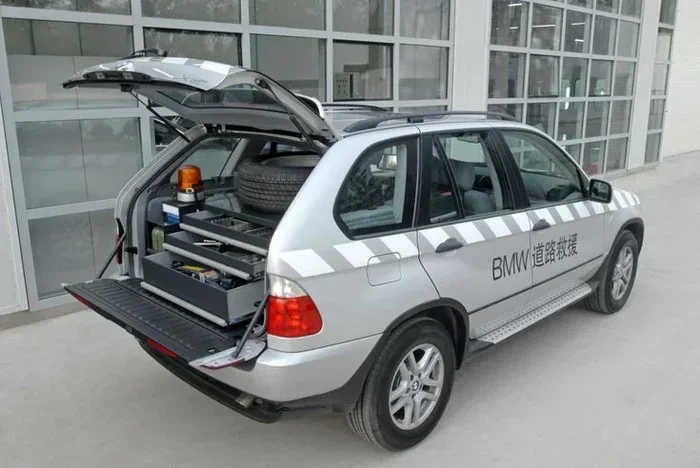
Visual guide about bmw x5 service bay
Image source: i.pinimg.com
The Independent Specialist Advantage
Many successful independent BMW shops are founded by former dealership master technicians. They left the flat-rate pressure and corporate metrics to run their own businesses. They bring 15-20 years of BMW-specific experience. They know the common failure patterns on the X5 E70, F15, and G05 chassis generations because they have fixed them hundreds of times. Analogy time: Think of it like a surgeon. The dealership is a teaching hospital with the latest equipment and rotating residents. The established independent is the private practice surgeon who has done your specific procedure 500 times.
Certifications That Matter
Look for ASE L1 (Advanced Engine Performance) and ASE L3 (Light Duty Hybrid/Electric) certifications. For BMW specifically, the “BMW Master Technician” certification is the gold standard. Many independents display these plaques proudly. Ask to see them. A shop with multiple BMW Master Techs on staff often exceeds the collective expertise of a dealership where only one or two hold that title.
Continuous Training: The Hidden Requirement
BMW releases technical updates constantly. Dealerships receive mandatory training modules. Quality independents subscribe to the same training platforms (like BMW STEP or third-party providers like Autologic, Bosch, or CarPro) and attend industry conferences (AAPEX, Vision, MACS). Ask your independent shop: “How do you stay current on G05 X5 software updates?” A good answer involves paid subscriptions to factory information systems, not just YouTube videos.
Warranty & Legal Protection: Know Your Rights
This is the area with the most misinformation. Service advisors at dealerships may imply—sometimes directly, sometimes subtly—that going elsewhere voids your warranty. This is false. The Magnuson-Moss Warranty Act of 1975 is a federal law that prohibits manufacturers from voiding warranties simply because you used an independent repair shop or aftermarket parts.
What Magnuson-Moss Actually Says
The manufacturer can only deny a warranty claim if they prove the aftermarket part or independent service caused the failure. If an independent shop changes your oil with the correct LL-01 spec oil and your turbo fails two months later, BMW must cover it unless they prove the oil change caused the turbo failure. The burden of proof is on the manufacturer, not you.
Documentation Is Your Shield
Whether you choose dealer or independent, documentation is everything. Keep every invoice. Ensure the invoice lists: VIN, mileage, date, specific services performed, parts used (with part numbers), and fluid specifications. For the X5, this means documenting LL-01 or LL-17FE+ oil specs, OEM filter part numbers, and brake fluid DOT 4 LV. Did you know? BMW’s own warranty policy manual for dealers explicitly states: “Warranty coverage cannot be denied solely because maintenance was performed by a non-BMW facility.”
Extended Warranties & CPO: Read the Fine Print
If you purchased a BMW Extended Service Contract or Certified Pre-Owned (CPO) warranty, the contract may require service at “authorized BMW centers.” However, many third-party extended warranties (Endurance, CarShield, etc.) explicitly allow independent repair facilities. If you have a factory-backed extended plan, check the “Maintenance Requirements” section. Some require dealer service for the first few years, then allow independents. When in doubt, call the warranty administrator—not the dealership selling the plan—and get written confirmation.
Parts Quality: OEM, OES, and Aftermarket Explained
Parts terminology confuses even experienced owners. Understanding the hierarchy helps you make informed decisions on your X5.
OEM (Original Equipment Manufacturer)
These are parts sold in a BMW box, sourced from the supplier BMW contracted (e.g., Bosch, Continental, Mann+Hummel, Lemförder). Dealerships sell these exclusively. They are identical to what was installed at the factory. Price: Highest.
OES (Original Equipment Supplier) / “Genuine Supplier” Parts
This is the sweet spot for value. These are the exact same parts made by the same supplier in the same factory, but sold in the supplier’s box (Bosch box, Mann filter box, Lemförder control arm box) without the BMW logo markup. They carry the same warranty from the supplier. Many independents use these as their default. Price: 20-40% less than OEM.
Quality Aftermarket
Reputable brands like Bilstein (suspension), Brembo/Textar (brakes), Mahle/Behr (cooling), Gates (belts), and Continental (electronics) often meet or exceed OE specifications. These are not “cheap parts.” They are engineered alternatives. For an X5 owner planning to keep the car 150k+ miles, quality aftermarket can be a smart choice on wear items. Price: 30-50% less than OEM.
Budget Aftermarket: The Danger Zone
RockAuto “Economy” lines, unbranded eBay control arms, $20 brake rotors. These have no place on a BMW X5. The tolerances on your aluminum suspension knuckles, the heat dissipation requirements of your 4000-lb SUV’s brakes, and the precision of your Valvetronic system demand quality. A $40 control arm bushing that fails at 70 mph costs far more than the $120 Lemförder unit. Rule of thumb: If the price seems too good to be true on a safety or precision component, it is.
Diagnostic Capabilities: The Software Gap Is Closing
Ten years ago, dealerships held a massive advantage in diagnostic software. They had ISTA/D (diagnostics) and ISTA/P (programming) on dedicated OSS (Offboard Diagnostic System) terminals connected to BMW’s backend in Germany. Independents relied on generic OBD-II scanners or early aftermarket tools that could not access all modules.
Today’s Reality: Factory-Level Access
Modern independent BMW specialists invest heavily in diagnostic infrastructure. Tools like the Autologic AssistPlus, Launch X431 Pro Elite with BMW software, or dedicated ISTA/D setups via legitimate ICOM interfaces give them near-dealer-level capability. They can code new injectors, program battery registration, calibrate steering angle sensors, update module software, and perform ISTA-P programming for module replacements. Did you know? As of 2023, BMW allows independent shops to access ISTA cloud-based diagnostics through the “BMW Independent Repairer” portal, though subscription costs are significant ($3,000-$5,000/year).
The One Remaining Gap: Brand-New Models
For the first 12-18 months of a new chassis release (like the current G05 X5 LCI), dealerships may have exclusive access to certain security-gated functions (FSC codes for maps, certain anti-theft programming, online key programming). If your X5 is brand new and under factory warranty, the dealer has a temporary edge for complex module replacements. For any X5 older than two years, a well-equipped independent has full capability.
Software Updates: The Hidden Maintenance
BMW releases integration level (I-level) software updates regularly. These fix bugs, improve transmission shift logic, optimize start-stop behavior, and address emissions compliance. Dealerships apply these during routine visits. Good independents check and update I-levels as part of major service. Ask: “Do you check for ISTA software updates during Inspection 2?” The answer should be yes.
Service Experience: Loaners, Communication, and Convenience
Dealerships win on amenities. Comfortable waiting areas, coffee bars, loaner fleets (often new BMWs), shuttle service, and car washes. For many owners, the loaner car alone justifies the premium. If you cannot be without a vehicle for a day, the dealer’s loaner program is a tangible benefit worth $100-$150 in value.
The Communication Difference
At a dealership, you talk to a Service Advisor (SA). The SA talks to the Dispatcher. The Dispatcher talks to the Technician. The Technician finds an issue. The message travels back up the chain. You get a call from the SA with a recommendation. This game of telephone loses nuance. At a quality independent, you often speak directly with the technician or the shop owner who knows your car’s history. Analogy: Dealership = calling a corporate help desk. Independent = texting your mechanic friend who knows your car’s quirks.
Upselling Pressure
Dealership SAs are often paid on commission or have strict “hours per repair order” (HPRO) targets. The “complimentary multi-point inspection” is a sales tool. You will frequently get recommendations for “walnut blasting” at 40k miles, “brake fluid flush” at 15k miles, or “cabin filter” at every visit. Independents rely on reputation and repeat business. They upsell too, but the pressure is usually lower, and the recommendations are often more tailored to your actual driving habits and vehicle condition.
Scheduling and Turnaround
Dealerships have high volume. Simple services (oil, brakes, tires) often require appointments booked 1-2 weeks out. Independents are often more flexible, with same-week availability. However, a one-man independent shop can be delayed if the tech gets sick or a complex job runs long. Multi-tech independent shops (3+ bays) offer the best balance of flexibility and capacity.
Specific BMW X5 Considerations by Generation
The X5 has spanned five generations (E53, E70, F15, G05, G05 LCI). Each has unique service needs that influence the dealer vs independent decision.
E53 (2000-2006): The Analog Era
These are aging classics. Dealerships often lack technicians with deep E53 experience. Parts availability for obscure modules (DSP amplifier, navigation computer) is better through independent networks and specialists who hoard NOS (New Old Stock) parts. An independent with a GT1/DIS scanner is often better equipped than a dealer using ISTA-only terminals that dropped support for K-line diagnostics.
E70 (2007-2013): The N63/N55 Transition
The N63 V8 (2008-2013) is notorious for valve stem seals, turbochargers, and oil consumption. Dealerships have seen thousands. But so has every independent BMW specialist. The N63 “Customer Care Package” extended warranty (7 years/70k miles on valve seals, 8 years/80k on turbos) requires strict documentation. Either dealer or independent works, but the independent will often proactively inspect turbo oil lines and crankcase ventilation during routine service—items the dealer’s flat-rate inspection might miss.
F15 (2014-2018): The Volume Seller
This generation shares many components with the 5 Series and 7 Series. Both dealers and independents have deep experience. The B58 inline-6 (2018+) is remarkably reliable. The N55 and N63TU engines are well-understood. This is the generation where independent savings shine most—common repairs (oil filter housing gasket, valve cover gasket, water pump, thermostat, coolant pipes) are bread-and-butter jobs for any BMW specialist.
G05 (2019-Present): The Tech-Heavy Era
Mild hybrid 48V systems, digital key, gesture control, laser headlights, integral active steering. Complexity is high. Dealerships have factory engineers a phone call away for “puzzle cases.” Independents with ISTA cloud access can handle 95% of issues. For the 48V system, ensure your independent has high-voltage certification and the proper PPE/tools. Battery registration on the 48V lithium-ion module requires ISTA-P—verify capability before booking.
Building a Hybrid Strategy: The Smart Owner’s Approach
You do not have to choose one forever. The savviest X5 owners use a hybrid strategy based on the service type.
Use the Dealer For:
- Factory warranty repairs (obviously free)
- Recall campaigns and safety campaigns
- Complex electrical gremlins on brand-new models (<2 years old)
- Key programming and replacement (dealers have direct access to BMW’s key server)
- When you need a loaner car for multi-day repairs
- Software updates that require online BMW backend connection (rare but exists)
Use the Independent For:
- All routine maintenance (oil, brakes, fluids, filters, belts)
- Out-of-warranty repairs (suspension, cooling, drivetrain, HVAC)
- Pre-purchase inspections (unbiased assessment)
- Performance modifications and tuning
- Alignment and corner balancing (independents often have better equipment like Hunter Hawkeye Elite)
- Building a long-term relationship for high-mileage ownership
How to Vet an Independent Shop
Not all independents are equal. Use this checklist:
- Specialization: Do they work only on BMW/Mini, or BMW plus Audi/Mercedes? Dedicated BMW shops have deeper tooling and parts inventory.
- Equipment: Ask “What scan tool do you use for ISTA diagnostics?” Acceptable answers: Autologic, Launch X431 with BMW license, ICOM/ISTA-D. Unacceptable: “Snap-on Solus,” “generic OBD2,” “we just use a code reader.”
- Parts Policy: “Do you use OEM, OES, or aftermarket?” Good answer: “We default to OES (Lemförder, Mann, Bosch, Continental) and discuss options with you.”
- Warranty on Repairs: Minimum 24 months / 24,000 miles on parts and labor. Many offer 36/36k.
- Technician Retention: “How long have your techs been here?” High turnover = inconsistent quality.
- Reviews: Look for patterns in Google/Yelp reviews. “Fixed my X5’s rough idle after dealer couldn’t find it” is a strong signal.
- Shop Cleanliness: A clean, organized shop reflects professional pride. Chaos often means chaos in your repair.
Conclusion: Your X5, Your Choice, Your Money
The bmw x5 dealer vs independent service decision ultimately comes down to value alignment. If you prioritize convenience, loaner vehicles, and the psychological comfort of the “BMW badge on the building,” the dealership earns its premium. If you prioritize direct technician communication, lower costs, parts flexibility, and a relationship with a specialist who knows your specific X5’s history, a reputable independent is the superior choice.
Remember: Your warranty is protected by federal law. Your X5 does not know if the hands turning the wrenches wear a BMW polo or a shop shirt—it only knows if the correct torque spec was applied, the correct fluid was filled, and the correct software was coded. The best service facility is the one that documents everything, communicates clearly, stands behind their work, and treats your Ultimate Driving Machine with the respect its engineering deserves.
Start by finding two highly-rated independent BMW specialists near you. Visit them. Ask the vetting questions. Get a quote for your next major service (Inspection 2 or 60k/80k/100k mile service). Compare it to the dealer quote. The numbers—and the conversation—will tell you everything you need to know.
Frequently Asked Questions
Does servicing my BMW X5 at an independent shop void the factory warranty?
No. The Magnuson-Moss Warranty Act protects your right to use any qualified repair facility. BMW cannot void your warranty solely because you chose an independent shop, provided the service follows the maintenance schedule and uses correct specifications. Keep detailed records of all work performed.
Are independent shops able to update BMW software and program modules?
Yes, most well-equipped independent BMW specialists have factory-level diagnostic tools (ISTA/D, ISTA/P via ICOM or cloud) and can perform software updates, module programming, battery registration, and coding. Verify they subscribe to current BMW technical information before booking complex electrical work.
What is the typical labor rate difference between a BMW dealer and an independent specialist?
Dealership labor rates typically range from $180-$250/hour while independent BMW specialists charge $110-$160/hour. This represents a 30-50% savings on labor. Parts markup at dealers is often 100-150% vs 30-50% at independents, compounding the savings on major repairs.
Should I use OEM parts or are OES/aftermarket parts acceptable for my X5?
OES (Original Equipment Supplier) parts from brands like Lemförder, Mann+Hummel, Bosch, and Continental are identical to OEM but sold without the BMW box markup. Quality aftermarket from reputable brands is acceptable for wear items. Avoid budget-tier parts on safety-critical components like suspension, brakes, and cooling systems.
How do I find a trustworthy independent BMW specialist near me?
Look for shops specializing exclusively in BMW/Mini with ASE L1/L3 certified technicians, factory scan tools (Autologic, ISTA), 24+ month warranties, and strong reviews mentioning X5-specific repairs. Visit the shop, ask about technician tenure, and request a quote for a known service like Inspection 2 to compare value.
Can an independent shop handle my X5’s 48V mild hybrid system repairs?
Yes, but verify the shop has high-voltage certification, proper PPE (Class 0 gloves, face shield), and ISTA-P programming capability for the 48V lithium-ion battery module. The 48V system requires specific safety protocols—ask about their training and equipment before authorizing hybrid-related repairs.