
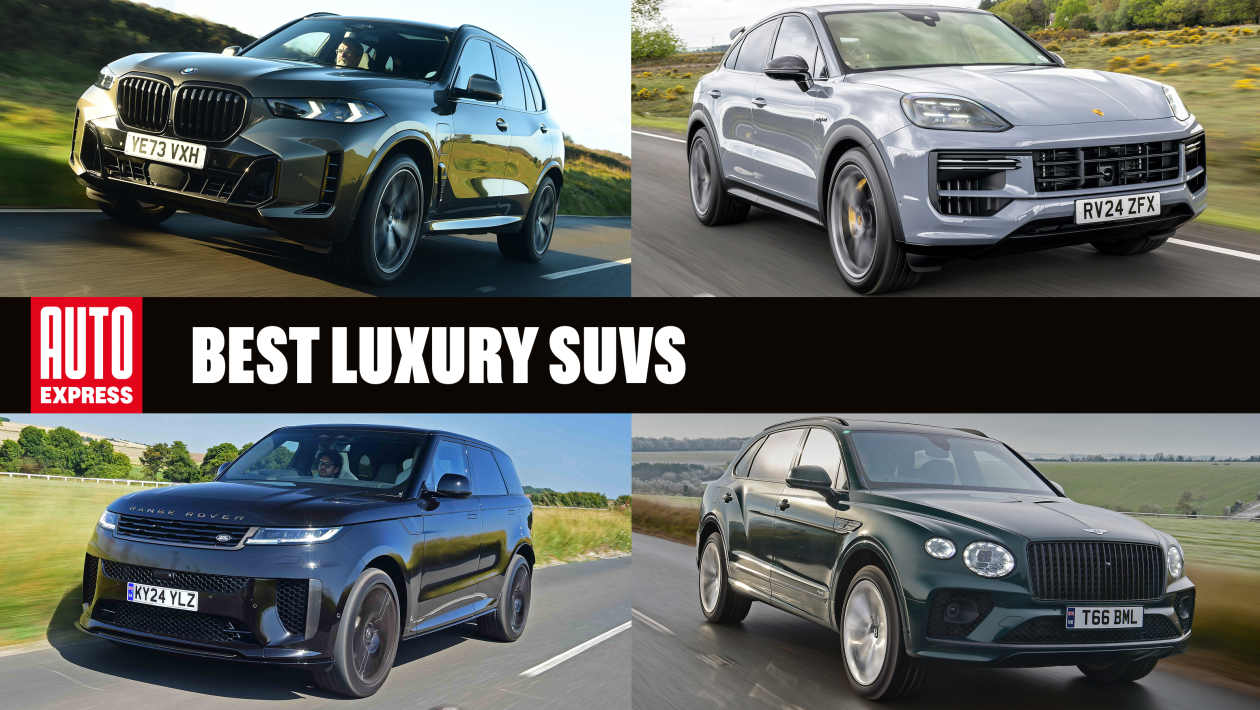
The UK premium‑SUV segment continues to grow, blending opulent interiors, cutting‑edge technology and genuine driving dynamics. Buyers now expect a vehicle that coddles passengers on the motorway, tackles a weekend off‑road detour and keeps running costs in check. This guide examines the current market leaders, breaks down the key performance, comfort and ownership factors, and gives you a practical framework for choosing the model that fits your lifestyle.
Why Premium SUVs Remain Popular in the UK
British drivers value a high driving position, generous cabin space and the badge prestige that comes with brands such as Range Rover, BMW and Mercedes‑Benz. Recent buyer surveys show that families prioritize versatile seating configurations and advanced driver‑assistance systems, while company‑car users focus on benefit‑in‑kind tax efficiency and residual values. The segment’s breadth — ranging from compact‑ish luxury crossovers to full‑size flagship off‑roaders — means there is a credible option for almost every budget above £45,000. Understanding the SUV category helps clarify which size class matches your daily needs. You can also read our guide on top luxury suvs of.
Top Contenders for 2025‑2026
| Model | Powertrain Options | Starting Price (£) | Key Strength |
|---|---|---|---|
| Range Rover Sport | 3.0 L I6 mild‑hybrid, 4.4 L V8, PHEV | 78,000 | Iconic design, supreme off‑road hardware |
| BMW X5 | 3.0 L I6 mild‑hybrid, 4.4 L V8, PHEV | 71,500 | Sharp handling, iDrive 8 infotainment |
| Audi Q7 | 3.0 L V6 mild‑hybrid, 4.0 L V8, PHEV | 68,000 | Seven‑seat flexibility, virtual cockpit |
| Mercedes‑Benz GLE | 2.0 L I4 mild‑hybrid, 3.0 L I6, PHEV | 70,000 | MBUX AI, air‑suspension comfort |
| Land Rover Defender 110 | 2.0 L I4 mild‑hybrid, 3.0 L I6, PHEV | 65,000 | Unmatched rugged capability, modern interior |
| Volvo XC90 Recharge | 2.0 L PHEV, pure‑electric (2025) | 73,000 | Safety leadership, minimalist Scandinavian design |
Prices reflect manufacturer‑recommended on‑the‑road figures for 2025‑2026 model years; final cost varies with options and dealer discounts.

Premium SUVs lined up for a comparative test drive.
Performance & Powertrain Options
Modern premium SUVs no longer rely solely on large‑displacement petrol engines. Mild‑hybrid 48 V systems are now standard on most six‑ and eight‑cylinder units, delivering smoother start‑stop behaviour and a modest torque fill. Plug‑in hybrid (PHEV) variants typically offer 30–40 km of pure‑electric range, enough for the average UK commute, while full‑electric derivatives (e.g., the upcoming Volvo EX90 and Mercedes EQE SUV) are entering the segment with 400‑plus kilometre WLTP ranges.
When evaluating performance, look beyond headline horsepower. Torque delivery, gearbox calibration (most now use eight‑speed torque‑converter or dual‑clutch units) and adaptive suspension tuning dictate real‑world drivability. In practice, the BMW X5’s rear‑biased all‑wheel‑drive system gives a more engaging cornering feel, whereas the Range Rover Sport’s air suspension excels at isolating cabin occupants from harsh surfaces. You can also read our guide on toyota highlander hybrid suv.
Luxury Interior & Technology
Cabin quality is the primary differentiator at this price point. Expect Nappa or semi‑aniline leather, open‑pore wood veneers and metal speaker grilles as standard on flagship trims. Infotainment screens have grown to 12–15 inches, often curved, with over‑the‑air updates and wireless Apple CarPlay/Android Auto.
A common mistake is assuming every model offers a third row as standard; the Audi Q7 and Volvo XC90 include seven seats, while the BMW X5 and Mercedes GLE require an optional package. Rear‑seat entertainment, four‑zone climate control and head‑up displays are increasingly bundled in premium packs. For a deeper side‑by‑side luxury comparison, see our detailed feature breakdown. You can also read our guide on evaluation of suv.
Safety Systems & Euro NCAP Ratings
All current contenders carry a five‑star Euro NCAP rating, but the composition of scores varies. The Volvo XC90 Recharge leads in adult‑occupant protection (97 %) and safety‑assist (95 %), thanks to its Pilot Assist suite and Run‑off Road Mitigation. The Mercedes GLE matches it with Active Brake Assist and Evasive Steering Assist.
When test‑driving, verify that adaptive cruise control, lane‑keeping assist, blind‑spot monitoring and automatic emergency braking function smoothly in real traffic. Euro NCAP safety ratings provide an independent benchmark for these systems. You can also read our guide on luxury suv comparisons.
Fuel Efficiency, Hybrid & Electric Variants
Official WLTP combined figures for the 2025‑2026 PHEV models typically sit between 1.5–2.5 L/100 km (equivalent to 115–190 mpg) when the battery is regularly charged. Pure‑electric versions promise 0 g/km CO₂ and benefit from the £0 VED rate for the first year, then £180 thereafter.
Real‑world economy depends heavily on charging discipline; a PHEV driven mostly on the engine will return 9–11 L/100 km. For buyers covering >25,000 km annually, a mild‑hybrid diesel (still offered on the X5 and GLE) can be more cost‑effective than a PHEV that rarely sees a plug. Our guide on hybrid SUV options outlines charging strategies that maximise electric miles. You can also read our guide on ford hybrid suv.
Running Costs: Tax, Insurance & Maintenance
| Cost Element | Typical Range (Annual) |
|---|---|
| Vehicle Excise Duty (VED) | £0 – £2,605 (first year) |
| Benefit‑in‑Kind (BiK) for company cars | 8 % – 37 % of P11D value |
| Insurance Group | 40 – 50 (high) |
| Scheduled Service (3 yr/36k mi) | £1,200 – £2,000 |
| Tyre Replacement (set of 4) | £800 – £1,500 |
Figures are indicative; exact numbers depend on specification, region and driver profile.
UK vehicle tax bands influence total cost of ownership, especially for higher‑emission V8 models. Many manufacturers now offer pre‑paid service plans that lock in labour rates for three to five years, providing budget certainty.
Off‑Road Ability vs On‑Road Comfort
The segment splits into two philosophies. Land Rover Defender 110 and Range Rover Sport retain genuine low‑range gearing, locking differentials and wading depths up to 900 mm, making them capable of serious green‑laning. Conversely, the BMW X5, Audi Q7 and Mercedes GLE prioritize on‑road dynamics with adaptive air suspension, active anti‑roll bars and rear‑axle steering (on the X5). For further reading, see tfl.gov.uk.
If your weekly routine includes motorway cruising and occasional gravel tracks, the on‑road‑biased models deliver superior ride quality and handling precision. For regular off‑road use, the Defender’s Terrain Response 2 system and configurable differential locks are unmatched.
Warranty, Service Plans & After‑Sales Support
Standard warranties sit at 3 years/60,000 mi across the board, with Roadside Assistance included. Lexus‑style extended coverage (up to 5 years/100,000 mi) is available from most brands for an additional premium. Manufacturer‑backed service packages often include wear‑and‑tear items (brake pads, wipers) and MOT‑prep checks, which can reduce unexpected bills.
Dealer network density matters: Mercedes‑Benz and BMW have the widest UK footprint, while Volvo and Land Rover rely on fewer but highly specialised retailers. Check local service centre reviews before committing.
How to Choose the Right Premium SUV for You
- Define primary use – family haulage, company‑car tax efficiency, off‑road recreation, or pure luxury statement.
- Set a realistic budget – include deposit, monthly finance, insurance, VED and estimated fuel/charging costs.
- Shortlist three models that match your size and powertrain preference.
- Book back‑to‑back test drives on the same day; evaluate seat comfort, visibility, infotainment ergonomics and noise insulation.
- Compare total cost of ownership over 3–4 years using manufacturer finance calculators and independent residuals data.
- Negotiate – leverage competing quotes, ask for included service plans or extended warranty.
- Finalise – verify delivery timeline, specification sheet and any pre‑registered mileage.
Comparison Table: Key Specs at a Glance
| Model | Seats | Boot (L) | 0‑62 mph (s) | Electric‑Only Range (km) | Towing (kg) |
|---|---|---|---|---|---|
| Range Rover Sport | 5 | 835 | 4.5 (V8) | 113 (PHEV) | 3,500 |
| BMW X5 | 5/7 | 650 | 4.7 (M60i) | 96 (PHEV) | 3,500 |
| Audi Q7 | 7 | 865 | 5.9 (55 TFSI) | 56 (PHEV) | 3,500 |
| Mercedes GLE | 5/7 | 630 | 5.6 (450 4MATIC) | 106 (PHEV) | 3,500 |
| Land Rover Defender 110 | 5/7 | 1,075 | 6.1 (P400) | 43 (PHEV) | 3,500 |
| Volvo XC90 Recharge | 7 | 740 | 5.3 (T8) | 77 (PHEV) | 2,700 |
Frequently Asked Questions
Which premium SUV holds its value best in the UK?
Historically, the Range Rover Sport and Land Rover Defender retain 60–65 % of list price after three years, aided by strong brand demand and limited supply. The Volvo XC90 Recharge also performs well due to its safety reputation.
Are plug‑in hybrids worth it for high‑mileage drivers?
If you can charge at home or work and cover ≤30 km per trip, a PHEV dramatically cuts fuel bills. For >40 km daily runs without charging, a mild‑hybrid diesel or full EV may be cheaper overall.
What is the current Benefit‑in‑Kind rate for a £70k PHEV?
For the 2025/26 tax year, a PHEV emitting ≤50 g/km CO₂ attracts a 12 % BiK rate, rising to 14 % in 2026/27. Pure EVs stay at 2 %.
Do all premium SUVs offer seven seats?
No. The Audi Q7, Volvo XC90 and Mercedes GLE (optional) provide seven seats as standard or optional. The BMW X5, Range Rover Sport and Defender 110 are five‑seat only unless a third‑row package is fitted.
How does the UK’s Ultra Low Emission Zone (ULEZ) affect these models?
All listed PHEV and EV variants meet Euro 6d‑TEMP standards and are ULEZ‑compliant. Pure‑petrol V8 versions may incur the daily charge unless they meet the latest Euro 6d‑ISC‑FCM limits.
Conclusion
Choosing the best premium SUV in the UK today means balancing brand prestige, real‑world practicality and total cost of ownership. The 2025‑2026 lineup delivers an unprecedented mix of electrified powertrains, advanced safety tech and handcrafted interiors. Start by defining your non‑negotiables — seating, electric range, off‑road cred — then test‑drive the shortlisted contenders back‑to‑back. Armed with the data above, you’ll be positioned to negotiate a deal that matches both your lifestyle and your ledger. Your ideal premium SUV is waiting; the next step is a test drive.