
Leasing a premium SUV in 2026 remains one of the smartest ways to access cutting-edge technology, refined interiors, and the latest safety systems without tying up capital in a depreciating asset. With interest rates stabilizing and manufacturers competing aggressively on residual values, monthly payments on many luxury models are surprisingly competitive — especially when you understand how to structure the deal. This guide breaks down the current market, explains the numbers that actually matter, and highlights specific models where lease terms favor the driver.
 The Jaguar F-Pace blends sporty handling with luxury appointments, a popular lease choice.
Why Lease a Premium SUV in 2026?
Leasing shifts the depreciation risk to the manufacturer. You pay only for the vehicle’s expected decline in value during your term, plus interest (expressed as a money factor) and fees. In practice, this means driving a $70,000 SUV for roughly half the monthly outlay of a 60-month loan. Three-year terms align with factory warranty coverage, so unexpected repairs are rare. A common mistake is focusing solely on the advertised payment; the capitalized cost (selling price), money factor, and mileage allowance determine true cost. Today’s market favors lessees: strong residuals on models like the Genesis GV70 and BMW X3 keep payments low, while elevated used-SUV prices mean you may have equity at turn-in — a lever for your next deal.
Decoding Lease Terminology: Money Factor, Residual, and Fees
Every lease advertisement hides the math behind a low monthly number. The money factor is the interest rate expressed as a decimal (e.g., 0.00125 = 3% APR). Multiply by 2,400 to compare. The residual value — the automaker’s guess at the SUV’s worth at lease end — is set by the captive finance company and rarely negotiable; higher residuals equal lower payments. Acquisition fees ($595–$1,095) and disposition fees ($350–$595) are standard but sometimes waived for loyalty. Mileage allowances typically run 10,000–12,000 miles/year; excess miles cost $0.25–$0.30 each. Negotiate the capitalized cost (selling price) just as you would for a purchase — every $1,000 reduction drops a 36-month payment by roughly $28 before tax.
Top Premium SUV Lease Deals for 2026
The table below reflects representative national offers for well-qualified lessees (tier 1 credit, 36 months, 10,000 mi/yr, $0 down beyond first payment and fees). Actual terms vary by region, credit, and dealer inventory. Use these as benchmarks when you shop.
| Model (Trim) | Est. Monthly | Due at Signing | Term | Miles/Yr | Key Lease Advantage |
|---|---|---|---|---|---|
| Genesis GV70 2.5T Advanced AWD | $589 | $4,299 | 36 mo | 10k | Complimentary scheduled maintenance |
| BMW X3 xDrive30i | $619 | $4,499 | 36 mo | 10k | Strong residual (61%) |
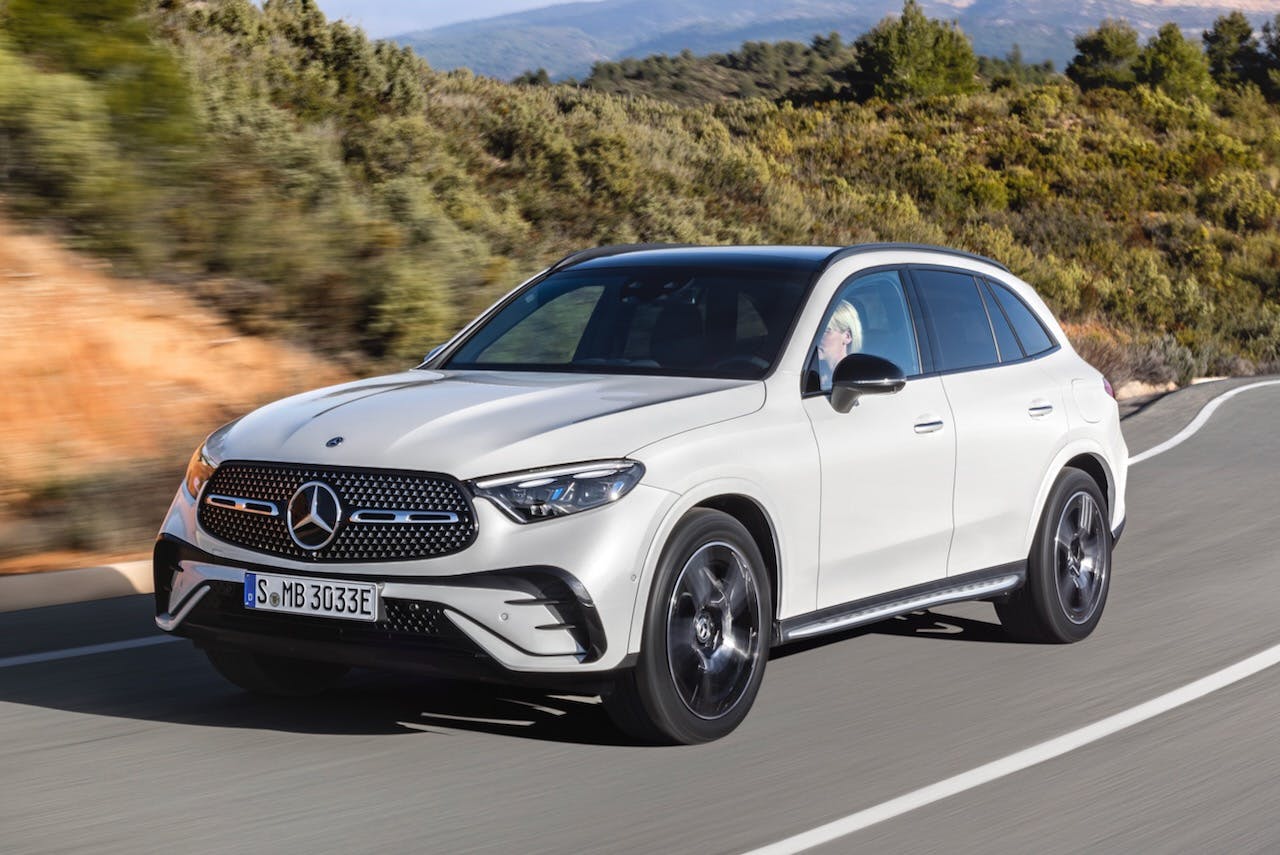
| Mercedes-Benz GLC 300 4MATIC | $649 | $4,799 | 36 mo | 10k | Loyalty conquest incentives |
| Audi Q5 45 TFSI quattro Premium | $629 | $4,399 | 36 mo | 10k | High residual, low money factor |
| Cadillac XT5 Premium Luxury AWD | $569 | $3,999 | 36 mo | 10k | Aggressive conquest cash |
| Cadillac Escalade Premium Luxury AWD | $989 | $6,999 | 36 mo | 10k | Flagship presence, strong residual |
| Rivian R1S Adventure Dual-Motor | $849 | $5,499 | 36 mo | 10k | $7,500 federal credit captured by lessor |
Source: Manufacturer incentive bulletins, January 2026. Payments exclude tax, title, license, and dealer fees.
For a deeper comparison of top lease candidates, our dedicated roundup evaluates residual trends and incentive stacks across twelve models. Shoppers prioritizing badge prestige should also review flagship luxury models where high residuals offset steep MSRPs.
How to Find and Negotiate the Best Lease Terms
- Check your credit — Tier 1 (720+) unlocks the advertised money factor; a 50-point drop can add 0.0005–0.0010 to the factor, costing $15–$30/month.
- Time your visit — End-of-month and end-of-quarter (March, June, September, December) align with dealer volume bonuses.
- Request the “one-pay” quote — Pre-paying the entire lease often reduces the money factor by 0.0003–0.0005, saving hundreds.
- Shop three dealers — Email each the exact configuration; ask for the selling price, money factor, residual, and all fees in writing.
- Negotiate the selling price first — Do not discuss monthly payment until the capitalized cost is locked.
In practice, dealers are more flexible on slow-moving trims (e.g., V6 models when four-cylinders dominate sales). Always verify the money factor against the current base rate published by the captive; markups are common but removable.
Hidden Costs That Inflate Your Monthly Payment
Beyond the advertised payment, budget for:
- Acquisition fee: $595–$1,095 (often rolled into capitalized cost)
- Disposition fee: $350–$595 (waived if you lease another same-brand vehicle)
- Wear-and-tear: Budget $500–$1,000 for tires, dents, and interior damage beyond “normal” — consider a third-party protection plan if you park on the street.
- Insurance: Luxury SUVs cost 20–35% more to insure than mainstream models; get quotes before signing.
- Gap coverage: Included free with most captives (GM Financial, BMW FS, Mercedes-Benz FS); confirm it’s in the contract.
A practical tip: photograph every panel and the odometer at turn-in. Disputes over a $150 scratch become trivial with dated evidence.
Electric and Hybrid Premium SUV Leases: Incentives and Considerations
The $7,500 federal EV tax credit (IRC §30D) flows to the lessor on leased vehicles, and most captives pass the full amount through as a capitalized-cost reduction — effectively lowering your payment. State rebates (e.g., California’s CVRP, Colorado’s EV credit) may stack. The Rivian R1S and Cadillac Lyriq currently offer the strongest lease support because their high MSRPs and qualifying battery sourcing capture the full federal credit. However, residuals on EVs remain volatile; a 36-month term limits exposure. For plug-in hybrids, the BMW X5 xDrive50e and Volvo XC90 Recharge combine electric daily range with gasoline flexibility — ideal where charging infrastructure is still sparse. Always cross-reference official fuel-economy data to estimate real-world electricity vs. gas costs.
 Acura's redesigned RDX offers strong residual values that support competitive lease payments.
End-of-Lease Options: Buy, Return, or Extend
At maturity you have three paths:
- Purchase — Pay the residual plus any purchase-option fee ($150–$350). If market value exceeds residual (common in 2024–2025), you gain instant equity. Financing the buyout at current rates often beats a new lease payment.
- Return — Schedule a pre-inspection 60 days early. Address excess wear yourself (paintless dent repair, tire replacement) for far less than the lessor’s charges.
- Extend — Most captives offer month-to-month extensions (up to 6 months) at the same payment — useful if your next vehicle is delayed.
Loyalty pull-ahead programs (e.g., BMW, Mercedes) may waive your final 3–6 payments if you lease a new model early. Ask 90 days before turn-in.
Regional Spotlight: Leasing in the U.S. vs. Canada
Canadian leases differ structurally: terms often run 48 months, residuals are lower, and GST/HST applies to each payment rather than the full price upfront. Manufacturer subvention (subsidized money factors) is less aggressive, but longer terms can yield similar monthly outlays. For buyers north of the border, our U.S.-market favorites guide translates poorly; consult the dedicated Canada-specific analysis for relevant incentives and model availability.
 Genesis GV70 leases often include complimentary maintenance, reducing total cost of ownership.
Frequently Asked Questions
What Are The Benefits Of Leasing A Premium SUV?
Lower monthly payments, factory warranty coverage for the entire term, access to the latest safety tech (automatic emergency braking, adaptive cruise with stop-and-go), and the flexibility to walk away or buy at a predetermined price. Leasing also avoids the hassle of selling a used luxury vehicle in a soft market.
How To Choose The Best Premium SUV Lease?
Match the vehicle to your actual use: three-row vs. two-row, electric vs. combustion, sport-tuned vs. comfort-oriented. Compare total lease cost (payments + fees + taxes) across at least three dealers. Prioritize models with residuals above 55% at 36 months and money factors near the captive base rate. Check federal safety ratings for any model you’re serious about.
What Should I Know Before Leasing A Premium SUV?
Mileage limits are strict — underestimate and you’ll pay $0.25–$0.30/mile at return. Insurance premiums for luxury SUVs average $2,200–$3,500/year. Wear-and-tear standards vary by lessor; request the “excess wear” guide upfront. If you drive >15,000 miles/year, buying usually wins.
Can I Negotiate My Premium SUV Lease Terms?
Yes. The selling price (capitalized cost), money factor (if marked up), acquisition fee (sometimes), and add-ons (window etch, protection packages) are all negotiable. The residual value is set by the finance company and generally fixed. Bring competing quotes; dealers match written offers.
Are Electric Premium SUVs Cheaper To Lease Than Gas Models?
Often, yes — because the $7,500 federal credit reduces the capitalized cost directly. However, money factors on EVs can be higher, and residuals are less predictable. Run a side-by-side total-cost comparison over 36 months before deciding.
Conclusion: Maximize Value on Your Next Premium SUV Lease
The best lease isn’t the lowest advertised payment — it’s the one where selling price, money factor, residual, and mileage align with your driving reality. In 2026, Genesis, BMW, and Cadillac offer the strongest combination of high residuals and factory subvention. Electric models capture federal incentives that slash effective cost. Negotiate the capitalized cost first, verify the money factor against the captive base rate, and protect yourself with gap coverage and a pre-return inspection. Compare current lease offers on our top picks page to shortcut the research.