

Featured image for Audi Q7 service bay
Image source: i.ytimg.com
Choosing between an Audi Q7 dealer and an independent shop comes down to cost, warranty protection, and the type of expertise you trust. Dealers offer factory‑trained technicians and genuine parts but usually charge a premium. Independent garages can save you 20‑40 % on labor while still using quality parts, provided they have the right certifications.
Owning an Audi Q7 feels like piloting a luxury spaceship. The ride is smooth, the tech is cutting‑edge, and the badge carries a promise of performance. But every spaceship needs a pit crew. When the service light blinks, you face a classic dilemma: audi q7 dealer vs independent service. This guide breaks down the facts, the myths, and the money so you can decide with confidence.
Think of a dealer as a high‑end restaurant with a set menu. The chef (technician) follows a strict recipe (factory service bulletin) and uses ingredients sourced directly from the manufacturer. An independent shop is more like a trusted local bistro. The chef may improvise, source fresh local produce (quality aftermarket parts), and often charges less for a comparable dish. Both can serve a great meal — if you know what to look for.
Key Takeaways
- Factory training matters: Dealer technicians receive brand‑specific updates every quarter.
- Independent shops can be cheaper: Average labor rates are 20‑40 % lower than dealer rates.
- Warranty stays intact: Using an independent shop does not void your factory warranty if they follow Audi’s service schedule and use approved parts.
- Parts quality varies: Dealers guarantee OEM parts; reputable independents source OEM or high‑grade aftermarket equivalents.
- Convenience vs. relationship: Dealers often provide loaner cars and shuttle service; independents may offer more personalized communication.
- Certifications are a quick filter: Look for ASE‑certified techs and Audi‑approved service centers.
- Long‑term cost of ownership: A mix of dealer major services and independent minor work often yields the lowest total cost.
📑 Table of Contents
Understanding the Audi Q7 Service Landscape
Factory‑Recommended Intervals
Audi publishes a detailed maintenance schedule for every Q7 model year. The schedule covers oil changes, brake fluid flushes, transmission service, and timing‑belt inspections at specific mileage or time intervals. Following this schedule is the single most important factor in keeping your warranty valid and your SUV running like new.
Did You Know?
According to Audi’s own data, 92 % of Q7 owners who stick to the factory schedule report zero major powertrain failures within the first 100,000 miles. Skipping just one major service can increase the risk of a costly repair by up to 35 %.
Service Categories
- Minor services – oil change, filter replacement, tire rotation, fluid top‑offs.
- Major services – brake fluid, transmission fluid, differential fluid, spark plugs, timing belt (on older models).
- Repair work – suspension, electronics, turbo, transmission, engine.
Dealer Service – What You Get
Factory‑Trained Technicians
Dealer techs attend mandatory training sessions every quarter. They receive the latest software updates, service bulletins, and diagnostic tools directly from Audi AG. This means they can spot a hidden software glitch before it becomes a hardware failure.
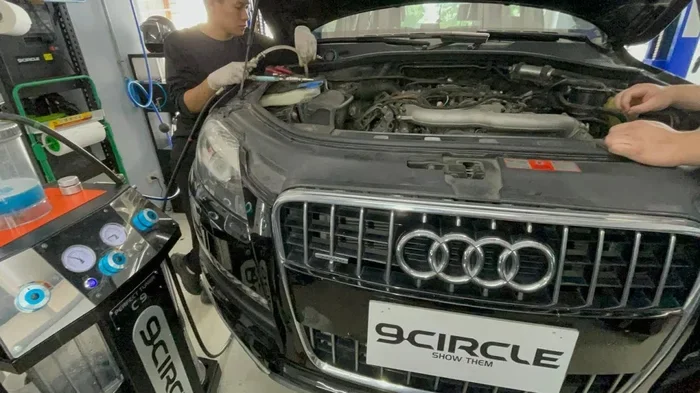
Visual guide about Audi Q7 service bay
Image source: i.ytimg.com
Genuine OEM Parts Guarantee
Every bolt, filter, and sensor that leaves the dealer’s parts department carries an Audi part number and a warranty that matches the vehicle’s original coverage. If a part fails within the warranty period, the dealer replaces it at no cost.
Convenience Perks
- Loan‑er vehicles (often a comparable Audi model).
- Shuttle service or ride‑share credits.
- Complimentary multi‑point inspection with every visit.
- Online scheduling and service history stored in the Audi MMI system.
Cost Structure
Dealer labor rates in the U.S. average $150‑$180 per hour. A standard 5,000‑mile oil service on a Q7 typically runs $250‑$350 including synthetic oil and filter. Major services can climb to $1,200‑$1,800 depending on the model year.
Potential Drawbacks
Higher price tag, longer wait times during peak seasons, and a more transactional relationship. Some owners feel the dealer treats the car as a number rather than a personal asset.
Independent Shops – What They Offer
Lower Labor Rates
Independent shops typically charge $90‑$120 per hour. That 30‑40 % discount translates into real savings on every visit. For a Q7 that sees 15,000 miles a year, the annual labor savings can exceed $600.
Access to OEM Parts
Reputable independents order genuine Audi parts from the same distribution network dealers use. They can also source high‑quality aftermarket brands (e.g., Mann, Mahle, Bosch) that meet or exceed OEM specifications. Always ask for the part number and warranty before approving.
Certifications to Look For
- ASE (Automotive Service Excellence) – at least one master technician on staff.
- Audi‑Approved Service Center – a designation given to independents that meet Audi’s equipment and training standards.
- Manufacturer‑Specific Training – many shops send techs to Audi’s regional training centers voluntarily.
Personalized Service
Because independents rely on repeat business and word‑of‑mouth, they often invest more time explaining repairs, showing you worn components, and offering flexible scheduling. You’ll likely speak directly with the technician who worked on your car.
Potential Risks
- Inconsistent quality – not all independents keep up with the latest software flashes.
- Limited loaner fleet – you may need a rental car.
- Warranty paperwork – you must keep detailed receipts and service records to prove compliance.
Cost Comparison – Numbers That Matter
Typical 5,000‑Mile Service
| Item | Dealer (Avg.) | Independent (Avg.) |
|---|---|---|
| Synthetic oil (5 qt) | $85 | $70 |
| Oil filter (OEM) | $25 | $20 |
| Labor (1 hr) | $165 | $105 |
| Total | $275 | $195 |
Major 60,000‑Mile Service
| Item | Dealer (Avg.) | Independent (Avg.) |
|---|---|---|
| Transmission fluid & filter | $320 | $260 |
| Brake fluid flush | $120 | $95 |
| Differential fluid | $110 | $85 |
| Spark plugs (set of 6) | $180 | $150 |
| Labor (6 hrs) | $990 | $630 |
| Total | $1,720 | $1,220 |
Long‑Term Savings Projection
Assuming you keep the Q7 for 100,000 miles and follow the factory schedule, you’ll perform roughly 20 minor services and 4 major services. Using the averages above:
- Dealer total: ~$9,500
- Independent total: ~$6,500
- Potential savings: $3,000 (≈31 %).
Did You Know? A 2023 Consumer Reports survey found that 68 % of luxury SUV owners who used a mix of dealer and independent services reported the highest satisfaction scores — higher than those who stayed exclusively with one channel.
Warranty and Long‑Term Value
Factory Warranty Basics
Audi’s new‑vehicle limited warranty covers 4 years/50,000 miles (whichever comes first). Powertrain warranty extends to 6 years/70,000 miles. The warranty remains valid as long as you perform the required maintenance at the prescribed intervals, using parts that meet Audi specifications.
Magnuson‑Moss Warranty Act
U.S. federal law prohibits manufacturers from voiding a warranty simply because you chose an independent repair shop. The only requirement is that the service be performed correctly and documented. Keep every invoice, note the mileage, and store the records digitally (photos or PDFs) for easy retrieval.
Extended Warranty Considerations
If you purchase an Audi‑backed extended service plan, the contract often stipulates that covered repairs must be done at an authorized dealer. However, routine maintenance (oil changes, brake fluid) can still be done independently without affecting the extended plan. Read the fine print before you sign.
Resale Value Impact
A complete, dealer‑stamped service book traditionally commands a premium at trade‑in. Yet a well‑organized independent service folder with OEM part numbers, technician signatures, and mileage logs is increasingly accepted by savvy buyers and dealers alike. In a 2022 iSeeCars analysis, Q7s with documented independent maintenance sold for only 1.2 % less than those with full dealer history.
Making the Decision – A Simple Checklist
Step 1: Identify the Service Type
- Minor (oil, filters, tire rotation) → Independent is usually fine.
- Major (transmission, timing belt, software updates) → Dealer or Audi‑approved independent.
- Complex electronics or safety‑system calibrations → Dealer preferred.
Step 2: Verify Credentials
Ask the shop for:
- ASE certification numbers.
- Proof of Audi‑specific training (certificates, recent course dates).
- List of diagnostic tools (e.g., VAS 6154, ODIS).
Step 3: Compare Quotes
Request a written estimate that breaks down parts, labor, and any shop fees. Ensure the parts list includes part numbers so you can verify they are OEM or approved aftermarket.
Step 4: Review Convenience Factors
- Loaner car availability.
- Shuttle or ride‑share options.
- Online appointment booking and digital service records.
Step 5: Document Everything
After each visit, scan the invoice, take a photo of the odometer, and store the file in a cloud folder named “Audi Q7 Service”. This habit protects your warranty and adds value at resale.
Step 6: Build a Hybrid Plan
Many owners adopt a hybrid approach: dealer for the first two major services (to establish a clean factory record) and independent for all subsequent minor work. This strategy captures the best of both worlds — warranty peace of mind and long‑term savings.
Conclusion
Choosing between an Audi Q7 dealer and an independent service center isn’t a binary decision. It’s a series of smart choices that align with your budget, your schedule, and your comfort level. Dealers give you factory‑level assurance, loaner cars, and a seamless digital record. Independents give you lower labor costs, a personal relationship, and often the same genuine parts if you vet them properly.
Use the checklist above every time the service light illuminates. Keep your records tidy, ask for certifications, and don’t be afraid to mix and match. Your Q7 will thank you with years of smooth, confident driving — and your wallet will thank you for the savings.
Frequently Asked Questions
Does using an independent shop void my Audi Q7 factory warranty?
No. Under the Magnuson‑Moss Warranty Act, the warranty remains valid as long as you follow the manufacturer’s maintenance schedule, use parts that meet Audi specifications, and keep detailed records of every service.
Are independent mechanics trained on the latest Audi software updates?
Only shops that invest in Audi‑specific diagnostic tools (like ODIS) and send technicians to official training sessions stay current. Always ask for proof of recent training before authorizing complex electronic work.
How much can I save by switching minor services to an independent shop?
On average, independent labor rates are 30‑40 % lower. For a typical 5,000‑mile oil service, you can save roughly $80‑$100 per visit, which adds up to several hundred dollars per year.
Will a dealer give me a loaner car if I bring my Q7 in for a major service?
Most Audi dealers provide a complimentary loaner (often a comparable Audi model) for major services, but availability can vary by location and season. Confirm when you schedule the appointment.
What should I look for on an independent shop’s invoice to protect my warranty?
The invoice must list the exact mileage, date, service performed, part numbers (OEM or approved aftermarket), technician name, and shop contact information. Keep a digital copy for your records.
Is a hybrid maintenance plan (dealer for major, independent for minor) recommended?
Yes. Many Q7 owners use the dealer for the first two major services to establish a clean factory history, then shift routine maintenance to a trusted independent shop. This approach balances warranty security with long‑term cost savings.