
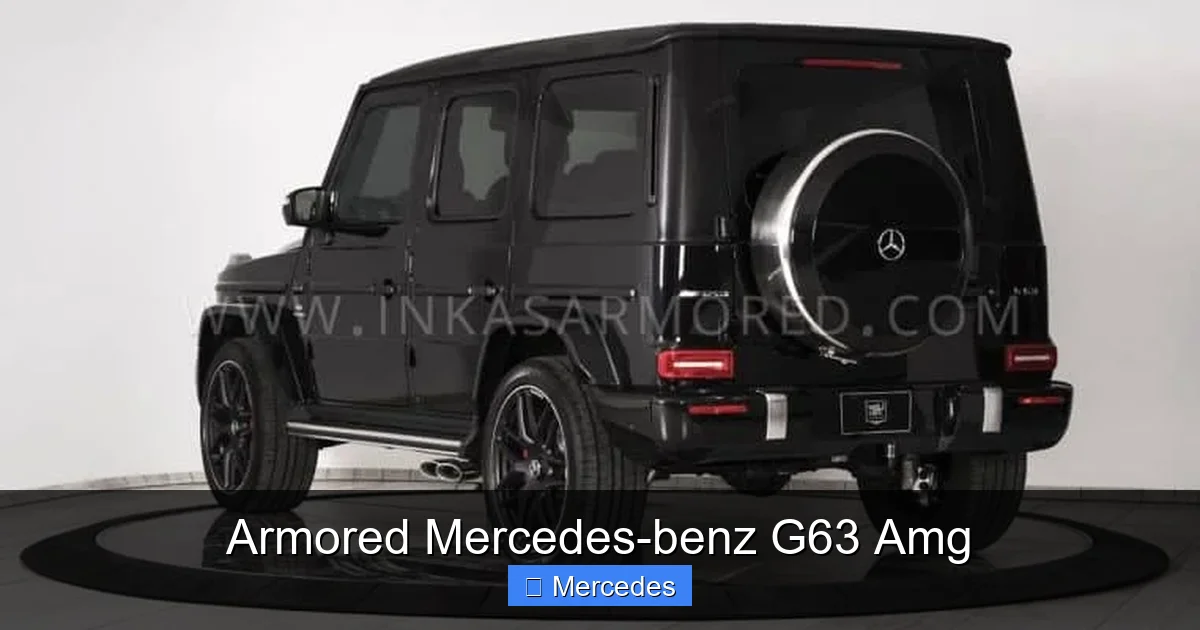
The Armored Mercedes-Benz G63 AMG is a rare blend of raw power, bespoke luxury, and military-grade security. Designed for executives, dignitaries, and VIPs who refuse to compromise on safety or performance, this heavily modified SUV delivers bulletproof protection without sacrificing the thrilling drive of a true supercar. From its reinforced chassis to its hand-stitched leather interiors, every detail reflects Mercedes-Benz’s craftsmanship at its finest.
There’s something undeniably magnetic about the Mercedes-Benz G63 AMG—its boxy silhouette, burly V8 engine, and unmistakable presence turn heads wherever it goes. But what happens when you take that iconic SUV and wrap it in layers of military-grade steel, ballistic glass, and anti-explosive technology? You get the **Armored Mercedes-Benz G63 AMG**—a machine built not just for show, but for survival.
This isn’t your average luxury ride. It’s a rolling fortress designed for CEOs, royalty, celebrities, and anyone whose status demands discretion and protection. Yet, despite its fortified shell, it still feels like a Mercedes-Benz—just one engineered for the extraordinary. In this deep dive, we’ll explore everything you need to know about the armored G63 AMG: how it’s made, why people buy it, what sets it apart from regular models, and whether it’s truly worth the staggering price tag.
—
Key Takeaways
- Unmatched Protection: The armored G63 AMG meets or exceeds international ballistic standards (EN 1063 BR7), offering resistance against rifle rounds and explosive threats.
- Luxury Meets Functionality: Despite heavy armor, it retains the G-Class’s signature rugged design, premium materials, and advanced infotainment systems.
- Customization Options: Buyers can choose from various armor levels, window treatments, and interior finishes tailored to their specific needs.
- High Maintenance Costs: Due to complex engineering and limited production, servicing an armored G63 AMG is expensive and often requires specialized technicians.
- Legal and Regulatory Hurdles: In many countries, importing or registering an armored vehicle involves strict compliance with local laws—especially regarding weight, emissions, and safety certifications.
- Rarity and Exclusivity: With fewer than 50 produced annually globally, the armored G63 AMG is one of the most exclusive vehicles on the planet.
- Performance Compromises: While still powerful, armor adds significant weight, reducing acceleration and top speed compared to the standard G63 AMG.
Quick Answers to Common Questions
How much does an armored Mercedes-Benz G63 AMG cost?
Expect to pay between $350,000 and $600,000 depending on customization, armor level, and region. Base G63 AMG starts around $150,000; armor adds $100,000–$200,000.
Can the armored G63 AMG pass standard emissions tests?
Yes, but only if installed by certified professionals who preserve factory emissions controls. Many armored variants comply with EPA and EURO 6 standards.
Is the armored version slower than the regular G63 AMG?
Typically yes—added weight reduces 0–60 mph time by 1–2 seconds and lowers top speed slightly due to increased drag and reduced power-to-weight ratio.
Are there different levels of armor protection?
Absolutely. Levels range from B4 (handgun resistance) to BR7 (rifle round resistance). Most buyers opt for BR4 or BR6 for balanced protection and weight.
Where can I legally register an armored G63 AMG?
In the U.S., most states allow registration if under 3,000 lbs GVWR. Always consult local DMV regulations—some require special permits or inspections.
📑 Table of Contents
- The Evolution of Luxury Security Vehicles
- What Makes the Armored G63 AMG Different?
- Who Buys an Armored Mercedes-Benz G63 AMG?
- Practical Tips for Prospective Owners
- The Future of Armored Luxury Vehicles
- Conclusion: Is the Armored G63 AMG Worth It?
The Evolution of Luxury Security Vehicles
Before we get into the nitty-gritty of the armored G63 AMG, let’s set the stage. For decades, high-net-worth individuals and government officials have sought ways to travel safely without sacrificing comfort or style. Early attempts involved modifying existing sedans with basic bullet-resistant windows and reinforced doors—but these lacked sophistication and often compromised ride quality.
Then came companies like Mercedes-Benz’s partner, Guard Car International or Omniqo Armor, which developed full-body armor kits that could be applied to select Mercedes models. The G-Class, with its solid ladder-frame chassis and go-anywhere capability, was an obvious choice. Over time, the combination evolved into what we now recognize as the modern armored luxury SUV—blending cutting-edge defense tech with five-star hospitality. For a deeper look at how SUVs transformed from military vehicles to luxury icons, explore the enduring evolution of the SUV.
Today, the armored G63 AMG represents the pinnacle of this evolution. It’s no longer just about stopping bullets; it’s about creating a mobile command center, a quiet cocoon in chaos, and a symbol of unassailable authority. And yes—it still sounds incredible through its exhaust note.
—
What Makes the Armored G63 AMG Different?
Visual guide about Armored Mercedes-benz G63 Amg
Image source: triqueta-armored.com
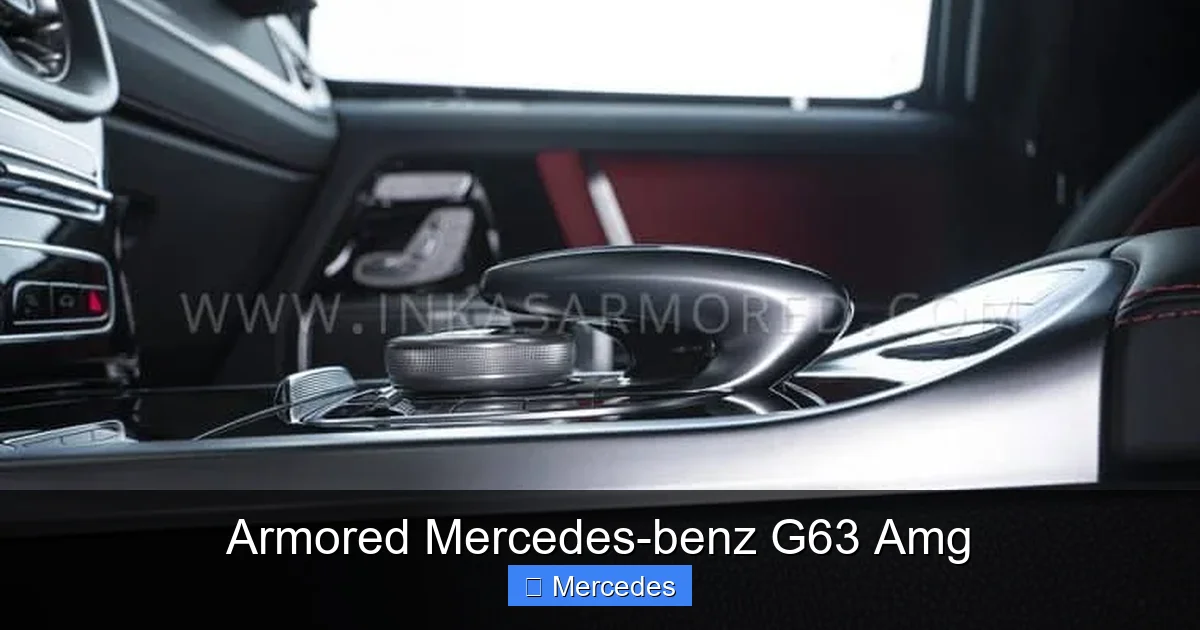
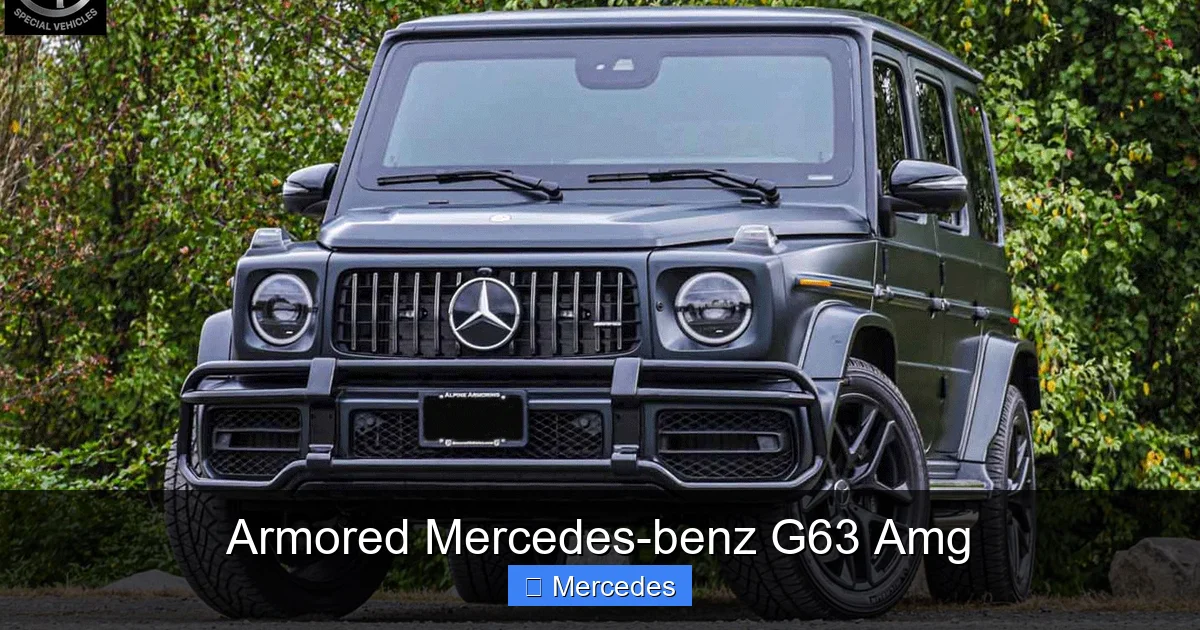
At first glance, an armored G63 AMG looks nearly identical to its unarmored counterpart. That’s intentional—discretion is key. But peel back the curtain, and you’ll find a world of engineering marvels hidden beneath the exterior.
Ballistic Protection Layers
The armor isn’t slapped on like a sticker. Instead, it integrates seamlessly into the vehicle’s structure:
– Steel plates are welded into the frame, doors, and floor panels.
– Tempered and laminated ballistic glass replaces standard windows—up to 4 inches thick in some areas.
– Kevlar and ceramic composites line the roof and trunk to absorb high-velocity impacts.
All components undergo rigorous testing to meet or exceed EN 1063 BR7 standards, meaning they can withstand .30 caliber armor-piercing rounds.
Weight Penalties and Performance Trade-offs
Armor adds significant mass—often 1,500–2,500 lbs over stock. This affects:
– Acceleration: 0–60 mph may take 1–2 seconds longer than the 3.4-second AMG model.
– Fuel economy: Expect 12–15 mpg combined instead of 14–18 mpg.
– Suspension tuning: Custom dampers and springs are installed to handle the extra load while preserving ride comfort.
Despite this, the twin-turbo 4.0L V8 still pumps out around 577 hp and 627 lb-ft of torque—plenty to dominate any highway or off-road trail.
Bespoke Interiors Fit for Royalty
Inside, expect nothing less than perfection:
– Hand-stitched leather from Bridge of Weir or Poltrona Frau.
– Wood veneers crafted by master artisans.
– Optional features like massage seats, climate-controlled compartments, and encrypted communication systems**.
Some models even include bulletproof safes, oxygen masks for chemical threats, and emergency medical kits.
—
Who Buys an Armored Mercedes-Benz G63 AMG?
Visual guide about Armored Mercedes-benz G63 Amg
Image source: thefindgroupsv.com
You might assume only dictators or drug lords drive such vehicles—but the reality is far broader. Here are real-world examples:
Corporate Titans
CEOs of Fortune 500 companies often use armored SUVs for executive transport during high-risk business trips—especially in regions with political instability or organized crime.
Celebrities and Athletes
Actors, musicians, and sports stars face constant paparazzi harassment and stalker risks. An armored G63 provides a private, secure bubble during public appearances.
Diplomats and Government Officials
Embassy staff and foreign dignitaries rely on armored vehicles for safe transit across volatile cities like Baghdad, Mogadishu, or Kyiv.
Private Collectors
For enthusiasts who want the ultimate status symbol, owning an armored G63 AMG is akin to possessing a living piece of automotive art—rare, powerful, and utterly unique.
—
Practical Tips for Prospective Owners
Buying an armored G63 AMG isn’t as simple as walking into a dealership. Here’s what to consider:
Work Only With Certified Armor Specialists
Never modify a vehicle yourself or use untested third-party kits. Reputable firms like Armormax, Oshkosh Defense, or Mercedes-Benz OEM-approved partners ensure proper integration and certification.
Check Local Regulations
In the U.S., federal law allows armor up to 3,000 lbs gross vehicle weight—but states like California restrict modifications. Europe has stricter emissions rules; some countries ban certain armor types entirely.
Budget for Hidden Costs
Beyond the base price ($250K+ for a pre-armored G63 AMG), factor in:
– $50K–$150K for full armor installation
– Higher insurance premiums (sometimes double)
– Specialized maintenance every 10,000 miles ($3K–$5K per service)
Consider Purpose Over Prestige
Ask yourself: Will I actually use this daily? Or will it sit in a garage most of the time? If security isn’t critical, a standard G63 AMG offers similar thrills at a fraction of the cost. Compare it against other top luxury SUVs to see what fits your actual needs.
—
The Future of Armored Luxury Vehicles
As autonomous driving and electric propulsion reshape the auto industry, how will armor evolve? Some speculate that future armored vehicles will integrate active defense systems—like drone detection jammers or electromagnetic pulse shielding. Others predict lighter, smarter materials such as graphene composites that offer equal protection with minimal added weight.
Meanwhile, brands like Rolls-Royce, Maybach, and Lamborghini also offer armored variants, but none match the G63 AMG’s fusion of brute force and refined luxury. Its rugged DNA ensures it remains relevant even as society grows more automated and connected. Learn more about the latest Mercedes SUV innovations for 2024 shaping this future.
One thing is certain: as long as threat landscapes remain unpredictable, demand for vehicles like the armored G63 AMG won’t fade—it’ll only grow louder.
—
Conclusion: Is the Armored G63 AMG Worth It?
Let’s be honest—the armored Mercedes-Benz G63 AMG costs more than many homes. But for the right buyer, it’s not merely transportation; it’s peace of mind wrapped in carbon fiber and steel.
If you value absolute security, exclusivity, and the roar of a hand-built V8, then yes—it’s worth every penny. But if you’re just looking for a fast, stylish SUV for weekend drives, save your money and enjoy the standard G63 AMG instead. After all, sometimes the greatest armor isn’t steel—it’s knowing you don’t need it.
—
Frequently Asked Questions
What type of glass is used in the armored G63 AMG?
The windows feature multi-layered ballistic laminate—typically tempered glass sandwiched with polycarbonate and acrylic sheets—capable of stopping multiple pistol shots and fragments.
Does the armor affect fuel efficiency significantly?
Yes. Due to added weight and drag, fuel economy drops by 20–30% compared to the unarmored version, resulting in 12–15 mpg combined.
Can I customize the interior after purchase?
Most manufacturers restrict post-installation modifications to maintain structural integrity and warranty validity. Consult your armor specialist before making changes.
How often should the armored G63 AMG be serviced?
Every 10,000 miles or annually, whichever comes first. Service includes checking armor welds, glass seals, and ensuring electronic systems function correctly under stress.
Are there any driving restrictions for armored vehicles?
In some countries, armored cars must display diplomatic plates or carry emergency lights. Off-road capability remains intact, but extreme speeds may strain reinforced suspension components.
Can children ride in the rear seats of an armored G63 AMG?
Yes, provided booster seats or child restraints meet local safety laws. The rear cabin offers ample space and optional entertainment systems for passenger comfort.