
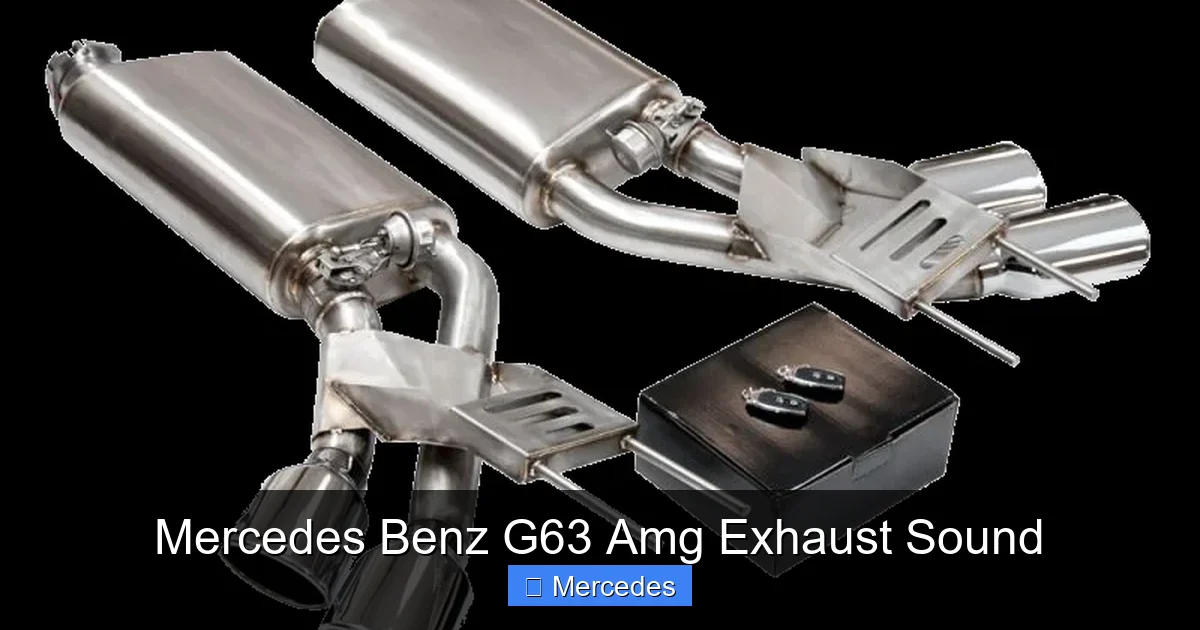
The Mercedes-Benz G63 AMG is not just a vehicle; it’s an auditory experience. Its signature exhaust sound blends raw V8 power with refined engineering, creating one of the most iconic engine notes in the automotive world. Whether you’re cruising through city streets or dominating off-road terrain, the G63 AMG delivers a symphony of performance that turns heads and stirs the soul.
From factory-built rumble to aftermarket upgrades, the G63 AMG exhaust system plays a crucial role in shaping its commanding presence. This guide dives deep into every aspect of the G63 AMG exhaust sound—what makes it so special, how to improve it, and why it matters to car enthusiasts worldwide.
Key Takeaways
- Factory exhaust sound: The stock G63 AMG features a quad-tip exhaust with a deep, aggressive tone that reflects its 4.0L twin-turbo V8 powertrain.
- Aftermarket options: Upgrading to high-flow catalytic converters, valved exhaust systems, or titanium mufflers can amplify the sound without compromising legality.
- Sound engineering: Mercedes engineers tuned the exhaust to balance performance, efficiency, and noise control—especially important for luxury SUVs.
- Valves and modes: Many upgraded exhausts include active valves that open in Sport or AMG Track modes, unleashing the full V8 roar at the push of a button.
- Practical tips: Always consider local noise regulations, professional installation, and quality materials to ensure durability and optimal sound.
- Customization potential: From carbon fiber tips to drone-reducing baffles, endless options exist to personalize your G63 AMG exhaust experience.
- Emotional impact: The G63 AMG’s exhaust isn’t just loud—it’s powerful, emotional, and instantly recognizable across the globe.
The moment you start a Mercedes-Benz G63 AMG, something extraordinary happens—the engine ignites with a throaty growl that quickly escalates into a symphony of mechanical perfection. That sound isn’t just noise; it’s a statement. The G63 AMG’s exhaust system is meticulously engineered to deliver a deep, resonant V8 rumble that echoes through city streets and mountain passes alike. It’s the kind of sound that makes people turn around, slow down to listen, or even pull over just to hear it pass by.
What sets the G63 AMG apart from other luxury SUVs is how Mercedes has managed to blend raw power with refined elegance in its exhaust design. While many performance vehicles lean too far into aggression or too far into silence, the G63 AMG strikes a perfect balance. The result? An exhaust note that’s aggressive enough to satisfy driving purists but polished enough to fit seamlessly into the luxury segment. Whether you’re accelerating hard on a highway or idling at a stoplight, the G63 AMG speaks—and it does so with unmistakable authority.
Key Takeaways
- Understanding mercedes benz g63 amg exhaust sound: Provides essential knowledge
Quick Answers to Common Questions
What does a stock G63 AMG exhaust sound like?
The stock G63 AMG produces a deep, resonant V8 rumble with quad-tailpipe output. It’s aggressive but controlled, offering volume increases only under heavy acceleration or in sport modes.
Can I upgrade my G63 AMG exhaust without losing daily usability?
Absolutely. Many aftermarket systems, especially valved ones, maintain quiet operation in comfort mode while delivering enhanced sound in sport or track settings.
Are aftermarket exhausts legal everywhere?
Not necessarily. Always check local noise regulations before installing aftermarket parts. Look for “street legal” or “noise compliant” labeled systems to avoid fines.
Will an exhaust change affect my fuel economy?
In most cases, no significant change occurs. High-flow systems reduce backpressure slightly, which can even improve efficiency. However, extremely loud setups may encourage aggressive driving.
How much does it cost to upgrade a G63 AMG exhaust?
Prices vary widely. Cat-back systems start around $1,500, while full titanium valved setups can exceed $5,000 including installation. Budget accordingly based on your goals.
📑 Table of Contents
- The Signature Sound: What Makes the G63 AMG Exhaust So Iconic?
- Stock vs. Aftermarket: Understanding Your Options
- How to Enhance Your G63 AMG Exhaust Sound Responsibly
- The Role of Active Exhaust Valves in Modern G63 AMGs
- Real-World Examples: Before and After Exhaust Upgrades
- Maintenance Tips to Keep Your G63 AMG Exhaust Performing at Its Best
The Signature Sound: What Makes the G63 AMG Exhaust So Iconic?
At the heart of the G63 AMG’s legendary exhaust sound lies its 4.0-liter twin-turbocharged V8 engine. This powerplant produces 577 horsepower and 627 lb-ft of torque, generating enough energy to propel the massive SUV from zero to 60 mph in just 4.5 seconds. But more than raw numbers, it’s the way that energy translates into sound that defines the G63 AMG’s identity.
The factory exhaust system is designed with four stainless steel tips, each carefully positioned to optimize airflow and acoustic resonance. When combined with the twin-scroll turbochargers and direct fuel injection, the exhaust gases produce a low-frequency thump that builds into a muscular roar under acceleration. This isn’t the sharp, high-pitched scream of a sports car—it’s deeper, richer, and more commanding. Think of it as the growl of a predator, confident and unapologetic.
One of the most fascinating aspects of the G63 AMG’s exhaust engineering is how Mercedes manages to control noise levels without sacrificing character. Unlike some performance cars that rely solely on straight-through piping and minimal muffler design, the G63 AMG uses a combination of resonators, chambered mufflers, and carefully tuned pipe diameters to shape the sound. This allows for volume increases during spirited driving while maintaining compliance with European noise regulations—a rare feat in the performance SUV space.
Stock vs. Aftermarket: Understanding Your Options
Visual guide about Mercedes Benz G63 Amg Exhaust Sound
Image source: longlife.co.uk
While the factory exhaust system delivers an impressive sound, many G63 AMG owners seek ways to enhance it further. Fortunately, the market offers a wide range of aftermarket options designed specifically for the W463 platform. These upgrades fall into several categories: performance-oriented systems, aesthetic modifications, and noise-level adjustments.
A common starting point for sound enhancement is replacing the factory catalytic converter with a high-flow unit. Stock cats can restrict exhaust flow and muffle the sound, whereas aftermarket versions allow gases to exit more freely, resulting in a crisper, louder exhaust note. Brands like Akrapovic, Eisenmann, and AWE Tuning offer cat-back and full exhaust systems tailored to the G63 AMG’s V8 configuration.
For those who want maximum control over their exhaust sound, valved systems are the gold standard. These incorporate electronic solenoids that open and close based on driving mode. In Comfort or Eco settings, the valves remain closed, keeping the cabin quiet and meeting noise restrictions. Switch to Sport or AMG Track mode, and the valves open fully, unleashing the full V8 roar. Some systems even integrate with the car’s infotainment screen, allowing owners to adjust valve behavior via smartphone app.
Another popular modification is upgrading to titanium exhaust components. Titanium is lighter than steel and more resistant to heat degradation, which improves both performance and longevity. It also contributes to a sharper, higher-frequency exhaust note compared to traditional stainless steel. However, titanium systems come at a premium price—often three to five times more than comparable steel alternatives.
How to Enhance Your G63 AMG Exhaust Sound Responsibly
Visual guide about Mercedes Benz G63 Amg Exhaust Sound
Image source: i.pinimg.com
Improving your G63 AMG’s exhaust sound doesn’t have to mean turning it into a street-racing monster. With thoughtful planning and respect for local laws, you can achieve a noticeable upgrade while staying compliant and maintaining daily drivability.
Start by researching your area’s noise regulations. In many countries, including Germany and parts of the U.S., there are strict limits on vehicle exhaust decibels, especially during nighttime hours. Exceeding these limits can result in fines or mandatory modifications. Look for systems labeled “street legal” or “noise compliant,” which often include built-in silencers or adjustable valve controls.
Next, prioritize quality installation. Even the best exhaust system won’t perform well if improperly fitted. Work with a reputable shop experienced in German performance vehicles—they’ll know how to route pipes correctly, avoid interference with suspension components, and ensure all connections are leak-free. Poor installation can lead to rattles, reduced efficiency, and even damage to the engine over time.
Consider a phased approach to upgrades. Begin with a cat-back system (replacing everything behind the catalytic converter), then move to a full axle-back if desired. This lets you test the difference incrementally and avoid overspending upfront. Don’t forget to check compatibility with your specific model year—early G63 AMGs may require different hangers or mounting brackets than newer models.
Finally, embrace customization. Beyond sound, think about aesthetics. Carbon fiber tips, chrome-plated accents, or even custom-engraved logos can elevate the visual appeal of your exhaust while complementing the G63 AMG’s luxurious interior. Just remember: beauty is only part of the equation. True enhancement comes from harmony between form, function, and sound.
The Role of Active Exhaust Valves in Modern G63 AMGs
One of the most innovative features in recent G63 AMG models is the integration of active exhaust valves. These aren’t just mechanical flaps—they’re electronically controlled components that respond dynamically to driving conditions and driver preferences.
In standard mode, the valves remain closed, allowing the exhaust gases to pass through internal chambers and silencers. This creates a subdued, almost whisper-quiet cabin environment, ideal for urban commuting or long-distance travel. The sound outside is still present but noticeably toned down, helping the G63 AMG blend into traffic without drawing attention.
When you activate Sport mode—either manually or automatically via adaptive driving logic—the valves open progressively. First, they begin to partially release pressure, adding depth and character to the exhaust note. As throttle input increases, the valves swing wide open, letting the V8 breathe freely. At full throttle, the difference is dramatic: the deep rumble becomes a thunderous roar that vibrates through the chassis and fills the cabin.
Some high-end aftermarket systems take this concept further by offering “smart valve” technology. Using sensors and real-time data from the ECU, these systems predict driving intent and adjust valve timing accordingly. For example, if you accelerate gently from a stop, the valves stay mostly closed. But if you floor it on a winding road, they open instantly for maximum sound and performance.
It’s worth noting that not all valved systems are created equal. Cheap knockoffs often fail to seal properly, leading to leaks, reduced performance, and inconsistent sound. Stick with brands known for reliability and precision engineering, and always verify that the system includes proper O2 sensor spacers and wiring harness adapters for seamless integration.
Real-World Examples: Before and After Exhaust Upgrades
To truly appreciate the impact of an exhaust upgrade, let’s look at real-world examples from G63 AMG owners around the world.
Case Study 1: A 2019 G63 AMG owner in Los Angeles installed an AWE Tuning valved cat-back system. Before the upgrade, the car sounded pleasant but muted, especially in electric or comfort mode. After installation, the difference was immediate. In sport mode, the V8 transformed from a polite purr into a ferocious beast. The owner reported increased satisfaction during highway drives and even received compliments from fellow drivers at car meets.
Case Study 2: A 2021 G63 AMG in Munich went for a full titanium system by Eisenmann. The owner wanted a sharper, more aggressive tone without sacrificing daily usability. The new setup delivered exactly that—a crisp, echoing exhaust note that stood out in the Bavarian countryside but remained manageable in the city center thanks to intelligent valve control.
Case Study 3: An early-generation G63 AMG (pre-2019) owner opted for an Akrapovic Evolution exhaust with removable baffles. This allowed him to switch between a loud, race-inspired sound and a quieter, more civilized profile depending on the occasion. He noted improved throttle response and slightly better fuel economy due to reduced backpressure.
These examples highlight a universal truth: the right exhaust upgrade can transform not just the sound, but the entire driving experience. It’s not just about being louder—it’s about feeling more connected to the machine, more confident on the road, and more expressive as a driver.
Maintenance Tips to Keep Your G63 AMG Exhaust Performing at Its Best
Like any critical component, your G63 AMG’s exhaust system requires regular maintenance to preserve both sound quality and structural integrity. Neglecting it can lead to rust, leaks, and diminished performance over time.
Start with routine inspections. Check for visible cracks, loose clamps, or discoloration near welds—these can indicate heat stress or corrosion. Pay special attention to joints between pipes, as these areas are prone to vibration-induced fatigue. If you notice a change in sound—like a new ticking or hissing—address it promptly before minor issues become major repairs.
Cleaning is another essential task. Over time, carbon buildup can clog catalytic converters and mufflers, reducing airflow and muting the exhaust note. Use a high-pressure steam cleaner or specialized exhaust degreaser to remove deposits. Avoid abrasive brushes that might scratch sensitive surfaces.
If you’ve installed aftermarket components, follow the manufacturer’s recommended service intervals. Some titanium systems require periodic re-torquing of fasteners due to thermal expansion and contraction. Others may need replacement of gaskets or seals after several years of use.
Finally, protect your investment with coatings. Ceramic or powder-coated exhaust tips resist fading, staining, and oxidation better than bare metal. They also add a sleek, premium look that complements the G63 AMG’s design language. Just make sure any coating used is heat-rated for continuous exposure above 1,000°F.
Frequently Asked Questions
Is the G63 AMG’s exhaust sound louder than other AMG models?
Yes, the G63 AMG stands out due to its large body size and V8 configuration. While other AMG vehicles also have powerful engines, the G63’s off-road heritage and unique chassis tuning contribute to a more pronounced and distinctive exhaust note.
Do I need to tune my ECU when changing the exhaust?
Not always. Many modern exhaust systems are designed to work with the stock ECU. However, pairing an aggressive exhaust with a tune can optimize performance and further refine the sound. Consult your tuner for compatibility.
Can I install an exhaust myself?
DIY installation is possible but challenging. It requires knowledge of automotive systems, proper tools, and patience. Improper installation can lead to leaks, rattles, or damage. Professional help is recommended for best results.
How do I know if my exhaust system is leaking?
Listen for hissing or ticking sounds, especially at idle. Check for black soot around joints or rust formation. If detected early, leaks can be repaired before they worsen.
Will upgrading the exhaust void my warranty?
In some regions, modifying the exhaust may affect emissions-related warranties. In others, it won’t impact coverage as long as original parts are reinstalled if requested. Check your warranty terms or consult a dealer.
What’s the difference between a cat-back and axle-back system?
A cat-back system replaces everything from the catalytic converter backward, offering the most comprehensive upgrade. Axle-back systems cover only one side (front or rear), making them less invasive but also less effective at improving sound and performance.
