
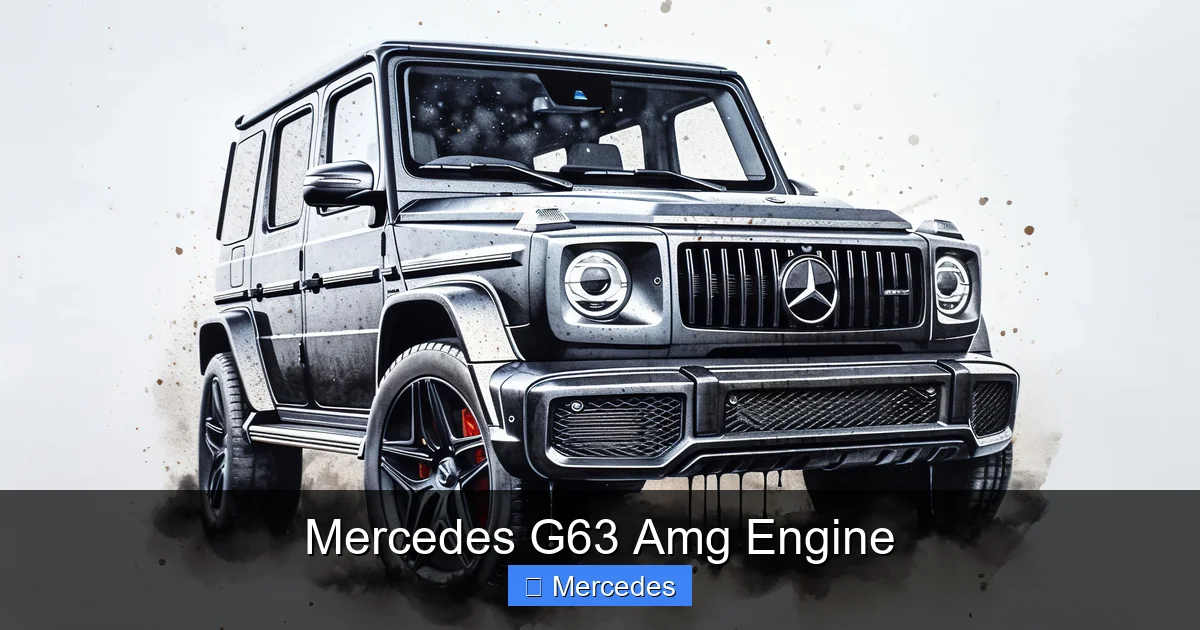
The Mercedes G63 AMG engine is a masterpiece of engineering that blends raw power with refined luxury. This 4.0-liter twin-turbocharged V8 produces 577 horsepower and 627 lb-ft of torque, enabling the G-Class to accelerate from 0 to 60 mph in just 4.5 seconds. Built for both on-road dominance and rugged off-road adventures, it’s the heart of one of the most iconic SUVs ever made.
Key Takeaways
- Engine Type: The G63 AMG features a 4.0-liter twin-turbocharged V8 engine, known as the M179, developed by Mercedes-AMG.
- Power Output: Delivers 577 horsepower and 627 lb-ft of torque, making it one of the most powerful engines in the AMG lineup.
- Performance: Capable of 0–60 mph in approximately 4.5 seconds and a top speed of 149 mph (electronically limited).
- Off-Road Prowess: Despite its high output, the engine maintains strong low-end torque for challenging terrain like rocks, mud, and steep inclines.
- Luxury Meets Power: The engine is paired with a smooth 9-speed automatic transmission and advanced all-wheel-drive system for a seamless driving experience.
- Efficiency Improvements: Thanks to cylinder deactivation and turbocharging, the G63 AMG offers better fuel economy than previous V8 models.
- Iconic Sound: The engine delivers an aggressive yet refined exhaust note that enhances the AMG driving experience.
If you’ve ever heard the thunderous growl of a Mercedes-Benz roaring down the highway or watched a G-Wagon conquer a muddy trail with effortless precision, you’ve felt the pulse of the Mercedes G63 AMG engine. This isn’t just any engine—it’s a symbol of luxury, power, and uncompromising performance wrapped into one legendary machine. The G63 AMG stands tall among high-performance SUVs, not only because of its boxy silhouette and military-inspired design but also due to the heart-pounding force delivered beneath its hood.
At the core of this automotive icon is the 4.0-liter twin-turbo V8, a piece of engineering excellence that has redefined what an AMG engine can do. Unlike older naturally aspirated V8s that relied solely on displacement for power, this modern marvel uses forced induction to deliver explosive acceleration while maintaining impressive efficiency. It’s a perfect example of how Mercedes-AMG balances raw muscle with cutting-edge technology—proving that you don’t have to sacrifice refinement for performance.
Whether you’re carving through city streets or climbing a rocky mountain path, the G63 AMG engine ensures every journey feels thrilling and controlled. In this deep dive, we’ll explore everything about the engine—from its technical specs and evolution over time to maintenance tips and what makes it so special compared to other high-performance engines in the market.
Key Takeaways
- Understanding mercedes g63 amg engine: Provides essential knowledge
Quick Answers to Common Questions
What type of engine does the Mercedes G63 AMG use?
It uses a 4.0-liter twin-turbocharged V8 engine called the M179, developed by Mercedes-AMG.
How much horsepower does the G63 AMG engine produce?
The engine delivers 577 horsepower and 627 lb-ft of torque.
Is the G63 AMG engine good for off-roading?
Absolutely. Its wide torque band and advanced all-wheel-drive system make it excellent for challenging terrain.
How fast is the G63 AMG from 0 to 60 mph?
It accelerates from 0 to 60 mph in approximately 4.5 seconds.
Does the G63 AMG engine improve fuel efficiency?
Yes, thanks to features like cylinder deactivation and turbocharging, it offers better fuel economy than older V8 models.
📑 Table of Contents
The Evolution of the Mercedes G63 AMG Engine
When the original G-Class was introduced in the late 1970s, it was built tough—for military use, construction sites, and extreme off-road conditions. But it wasn’t until 2013 that Mercedes-AMG stepped in with the first true AMG-powered version, the G65 AMG, which featured a massive 6.0-liter V12 engine. While that engine was undeniably powerful, it was also heavy, thirsty, and expensive.
Recognizing the need for a more efficient yet equally capable powerplant, Mercedes-AMG developed the 4.0-liter twin-turbo V8 for the G63 AMG, launched in 2015. Dubbed the M179, this new engine marked a turning point. It retained the G-Class’s legendary off-road DNA while injecting modern performance and efficiency into the mix.
Over the years, the M179 has seen minor updates, including improved turbo response and enhanced cooling systems. In later models, Mercedes even introduced a hybrid-ready architecture, hinting at future electrification efforts. But for now, the twin-turbo V8 remains the soul of the current G63 AMG.
From V12 to V8: Why the Shift?
The transition from the V12 to the V8 wasn’t just about cost-cutting—it was a strategic move to meet evolving consumer demands. Today’s buyers expect high performance without excessive environmental impact. The new V8 delivers over 50% more power than the old V12 while using less fuel and producing fewer emissions.
Moreover, the V8’s compact size allows for better weight distribution and easier integration with modern drivetrains. It also opens the door for future upgrades, such as mild-hybrid systems that can add electric assist without altering the engine block.
Key Features of the M179 Engine
- Twin-Turbocharging: Two small turbos mounted on opposite sides of the V8 reduce turbo lag and improve throttle response.
- Cylinder Deactivation: At light loads, two cylinders shut down to save fuel—something unheard of in a performance SUV.
- Direct Injection: Fuel is injected directly into the combustion chamber for better efficiency and cleaner burns.
- Variable Valve Timing: Adjusts intake and exhaust timing dynamically for optimal performance across RPM ranges.
These innovations make the M179 one of the most sophisticated engines in its class.
Performance Numbers That Speak Volumes
Visual guide about Mercedes G63 Amg Engine
Image source: c8.alamy.com
Let’s talk numbers—because when it comes to performance, they tell the real story.
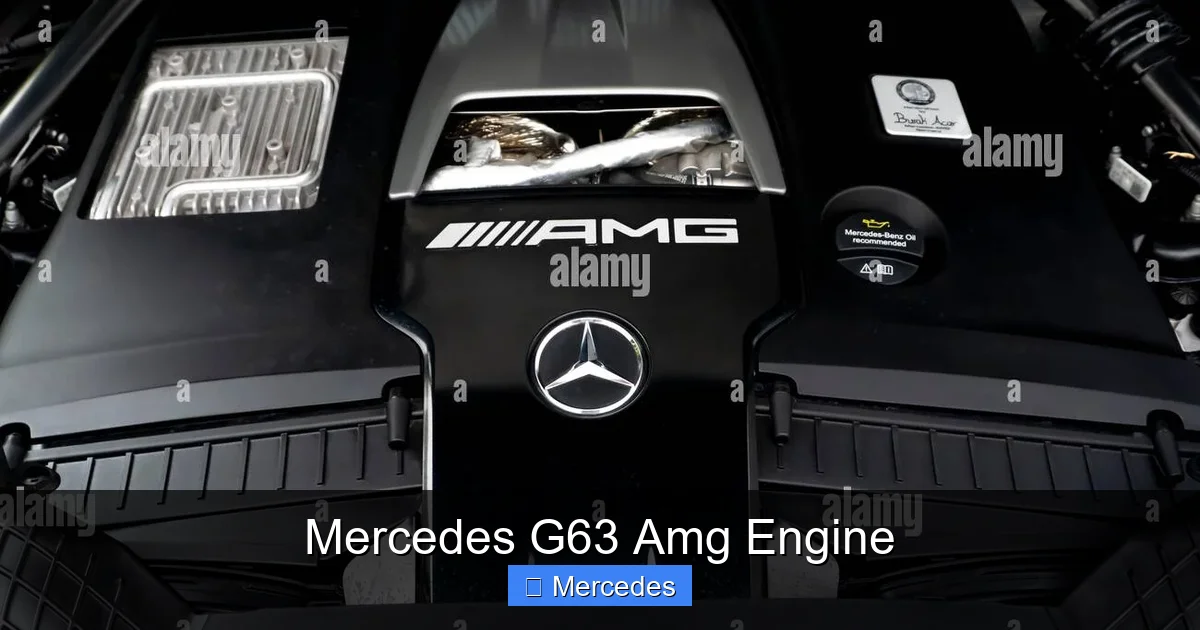
The Mercedes G63 AMG engine produces 577 horsepower at 6,000 rpm and 627 lb-ft of torque starting at just 2,250 rpm. That means you get instant power delivery the moment you press the accelerator—no lag, no hesitation.
In terms of acceleration, the G63 AMG rockets from 0 to 60 mph in about 4.5 seconds and hits a top speed of 149 mph (electronically limited). For context, that’s faster than many sports cars and rivals supercars in straight-line speed.
But what truly sets it apart is its versatility. Unlike many high-performance SUVs that struggle off-road, the G63 AMG handles rough terrain like a champion. The engine’s wide torque band ensures strong pulling power even at low RPMs, crucial for climbing steep grades or navigating slippery surfaces.
Real-World Performance Scenarios
Imagine driving through downtown Los Angeles during rush hour. You step on the gas, and within seconds, you’re weaving through traffic with ease. The engine responds instantly, offering a surge of power that leaves others behind.
Now picture yourself on a mountain trail in Utah. As you tackle switchbacks and rocky patches, the G63 AMG engine keeps pushing forward without breaking a sweat. Its low-end torque ensures you never feel stuck, even in challenging conditions.
This dual capability—urban agility and off-road resilience—is rare. Few vehicles can match the G63 AMG’s balance of everyday usability and extreme performance.
How Does It Compare to Competitors?
Other luxury SUVs like the Porsche Cayenne Turbo or Lamborghini Urus offer similar horsepower, but few match the G63 AMG’s off-road credentials. The Cayenne excels on pavement, while the Urus leans more toward supercar-like handling. The G63, however, wears both hats effortlessly.
What’s more, the G63 AMG’s engine sound is unmistakable—a deep, aggressive rumble that turns heads wherever it goes. It’s not just loud; it’s musical, with a character that evolves from a purr at idle to a roar under full throttle.
Technological Innovations Behind the Engine
Visual guide about Mercedes G63 Amg Engine
Image source: gtopcars.com
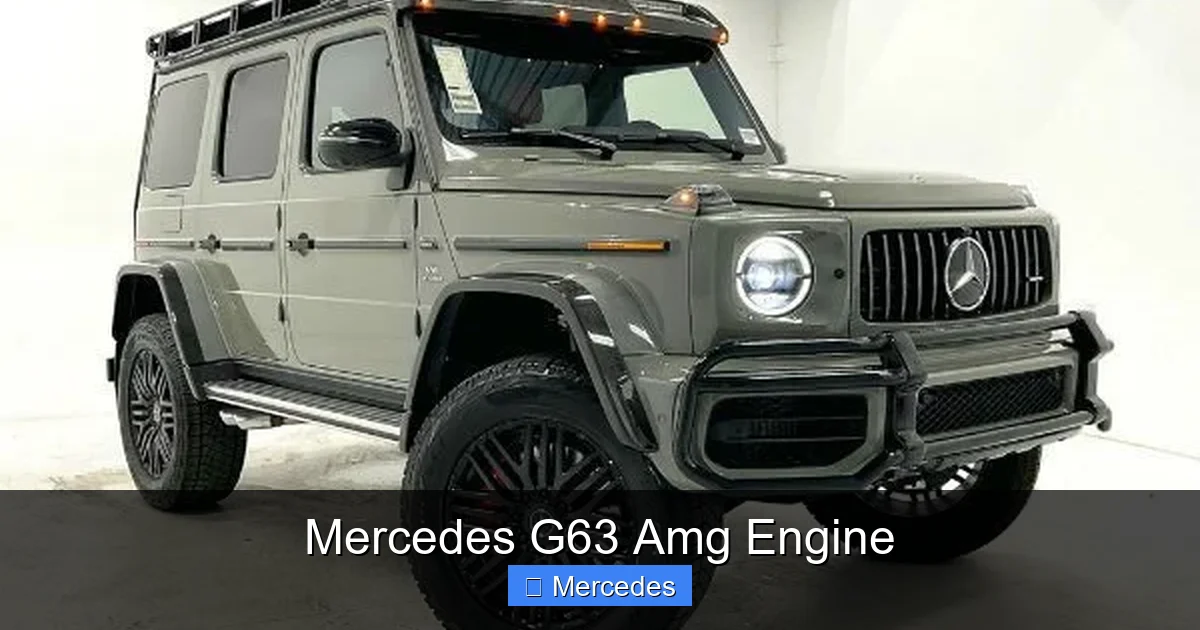
Behind the scenes, the Mercedes G63 AMG engine is packed with advanced technologies designed to maximize performance, efficiency, and durability.
One standout feature is the use of hot-vane turbochargers, which eliminate the need for wastegates and reduce turbo lag significantly. These turbos spool up quickly, ensuring immediate power delivery even at low engine speeds.
Another innovation is the integrated exhaust manifold—part of the cylinder head itself. This design reduces heat loss, improves turbo efficiency, and shortens the distance hot exhaust gases travel to the turbocharger.
The engine also benefits from a robust aluminum block and forged steel crankshaft, materials chosen for their strength and heat resistance. Combined with AMG-specific cooling systems, this ensures long-term reliability under high-stress conditions.
Hybrid Future: Is Electrification Coming?
While the current G63 AMG runs purely on gasoline, rumors suggest Mercedes plans to introduce a plug-in hybrid version in the near future. Such a model would likely retain the same V8 but add a battery and electric motor for added torque and efficiency.
Even if that happens, the core identity of the G63 AMG engine will remain intact—delivering the same thrilling performance fans love today.
Maintenance Tips for Long-Term Health
To keep your G63 AMG engine running smoothly, follow these practical tips:
- Regular Oil Changes: Use synthetic oil meeting Mercedes specifications (e.g., MB 229.51). Change every 10,000 miles or annually.
- Turbo Care: Allow the engine to warm up before hard driving. Avoid short trips that don’t let the turbo cool properly.
- Air Filter Checks: Inspect and replace the air filter every 15,000–20,000 miles to maintain airflow.
- Software Updates: Keep the ECU updated via dealer visits. These often include performance tweaks and bug fixes.
- Drive Sensibly: While the engine can handle abuse, consistent aggressive driving reduces lifespan.
With proper care, your G63 AMG engine can easily exceed 150,000 miles.
The Sound of Power: Engine Exhaust and Acoustics
Few things are as satisfying as the sound of a powerful engine. The Mercedes G63 AMG engine delivers an audio experience that’s both aggressive and refined.
Thanks to its quad-exit exhaust system and specially tuned mufflers, the V8 emits a deep, throaty growl that’s unmistakably AMG. Under light throttle, it sounds muscular but civilized. When pushed hard, it roars like a predator unleashed.
Mercedes engineers spent countless hours fine-tuning the acoustics to ensure the sound complements the cabin ambiance rather than overwhelming it. Even in comfort mode, the engine note remains engaging—never too loud, always present.
Owners often customize their exhaust systems for even more drama, but stock setups already provide one of the best engine sounds in the industry.
Ownership Experience: Luxury Meets Thrill
Driving a G63 AMG isn’t just about getting from A to B—it’s an emotional experience. Every time you start the engine, you’re greeted by that iconic AMG ignition sequence, complete with a brief engine rev and dashboard lights cycling through.
Inside, premium materials abound: leather seats, carbon fiber trim, and ambient lighting create a cockpit worthy of a supercar. Yet, it’s still a practical SUV with seating for five and a surprisingly spacious trunk.
The steering wheel vibrates slightly at high speeds, giving you tactile feedback. The ride is firm but comfortable, absorbing bumps without sacrificing control.
And then there’s the wow factor—when people see the G63 AMG roll up, they stop and stare. That’s partly due to the design, but also the engine’s unmistakable presence. It says, “I mean business.”
Practical Examples of Daily Life with the G63 AMG
Sarah drives her G63 AMG to work every day in Seattle. On rainy mornings, she relies on the all-wheel-drive system and electronic differential locks to navigate slick roads safely. By afternoon, she’s picking up her kids from soccer practice—proof that performance doesn’t have to mean impracticality.
Meanwhile, Mark uses his G63 AMG for weekend adventures in Colorado. He’s tackled trails in Moab and driven through snow-covered passes in Aspen. The engine’s torque and low-range gearing make short work of steep climbs and loose gravel.
Both owners agree: the G63 AMG engine delivers excitement without compromise.
Tips for Maximizing Enjoyment
- Use Sport+ Mode: This setting sharpens throttle response, stiffens suspension, and enhances exhaust sound.
- Explore Off-Road Programs: Try modes like “Cross Country” or “Rock” for optimized traction control and torque distribution.
- Customize Ambient Lighting: Set the mood with colors that match your personality or daily mood.
- Upgrade Wheels and Tires: Lighter wheels improve acceleration; high-grip tires enhance cornering.
Small tweaks can make a big difference in how you experience the engine’s capabilities.
The Future of the G63 AMG Engine
As automotive technology evolves, so too does the Mercedes G63 AMG engine. While the current V8 remains dominant, industry trends suggest a shift toward electrification may be on the horizon.
However, Mercedes has been careful not to rush the transition. They understand that changing the engine fundamentally alters the character of the G-Class. That’s why any future hybrid or fully electric version will likely aim to preserve the essence of what makes the G63 AMG special—power, presence, and capability.
For now, though, the twin-turbo V8 continues to dominate. And with each new model year, Mercedes refines it further—improving efficiency, reducing emissions, and enhancing performance.
Owners can rest assured that their investment in a G63 AMG represents not just a vehicle, but a statement of engineering excellence.
What’s Next for AMG Engines?
AMG is exploring hybrid powertrains across its entire lineup, including the G-Class. Rumors point to a possible plug-in hybrid G63 by 2025, combining the V8 with a 15-kWh battery and electric motor.
Such a system could add over 100 horsepower and enable short electric-only drives—ideal for city commuting. But again, the goal would be to keep the engine’s signature sound and feel intact.
Until then, the current engine remains unbeaten in its class.
Final Thoughts on the G63 AMG Engine
The Mercedes G63 AMG engine is more than just a power source—it’s the heartbeat of one of the world’s most iconic vehicles. It combines brute force with technological sophistication, luxury with capability, and tradition with innovation.
Whether you’re drawn to its thunderous exhaust note, its unmatched off-road prowess, or its status as a lifestyle symbol, the G63 AMG delivers on all fronts. And at the center of it all? A brilliantly engineered V8 that proves performance and refinement aren’t mutually exclusive.
If you’ve ever dreamed of owning a vehicle that turns every drive into an adventure, the G63 AMG engine is the reason to make it happen.
Frequently Asked Questions
What makes the Mercedes G63 AMG engine unique compared to other SUV engines?
Its combination of twin-turbo V8 power, off-road capability, and luxury refinement sets it apart. Few SUVs offer such high performance without sacrificing everyday usability.
Can I modify the exhaust system on my G63 AMG for a louder sound?
Yes, many owners upgrade to performance exhaust systems. However, factory-installed setups already provide one of the best engine sounds in the industry.
How often should I service the G63 AMG engine?
Follow the manufacturer’s schedule: oil changes every 10,000 miles or annually, air filter checks every 15,000–20,000 miles, and regular inspections of turbo components.
Will the G63 AMG engine last a long time with proper care?
Yes, with regular maintenance, the engine can easily exceed 150,000 miles. Many owners report strong performance well beyond 100,000 miles.
Is the G63 AMG engine available in other Mercedes models?
No, the G63 AMG is exclusive to the G-Class SUV. However, the same 4.0L V8 powers other AMG models like the AMG GT and C63 S.
Does Mercedes plan to discontinue the V8 engine in favor of electric powertrains?
Not immediately. While electrification is a long-term goal, Mercedes aims to preserve the character of the G-Class. Any future hybrid version will likely retain the V8’s essence.