

Porsche vehicles are generally reliable, especially when properly maintained, but they come with higher ownership costs than average. While modern Porsches score well in dependability studies, their performance engineering means more complex systems—requiring expert care to ensure long-term reliability. For a broader understanding of sport utility vehicles, see our SUVs Explained guide.
Key Takeaways
- Porsche reliability has improved significantly over the past decade: Thanks to better engineering and quality control, newer models are more dependable than ever.
- Regular maintenance is critical for long-term reliability: Skipping scheduled service can lead to expensive repairs, especially with high-performance components.
- Electrical and software issues are common in some models: Infotainment glitches and sensor malfunctions have been reported, particularly in earlier versions of the Cayenne and Macan.
- Porsche SUVs like the Cayenne and Macan offer strong reliability scores: These models balance luxury, performance, and daily usability better than many rivals.
- Ownership costs are higher than average: Parts, labor, and specialized servicing add up, making Porsches more expensive to maintain than mainstream brands.
- Extended warranties and prepaid maintenance plans are worth considering: These can help manage long-term costs and protect against unexpected repairs.
- Real-world owner feedback is mostly positive: Many Porsche owners report high satisfaction, citing driving enjoyment and build quality as key strengths.
📑 Table of Contents
- Are Porsche Reliable? The Truth Behind the Badge
- What Do Reliability Studies Say About Porsche?
- Porsche SUVs: Reliability in the Real World
- Common Porsche Reliability Issues to Watch For
- Maintenance Tips to Maximize Porsche Reliability
- Ownership Costs: Is a Porsche Worth It?
- Final Verdict: Are Porsche Reliable?
Are Porsche Reliable? The Truth Behind the Badge
When you think of Porsche, images of sleek sports cars, roaring engines, and precision engineering likely come to mind. But beyond the glamour and performance, a practical question lingers for potential buyers: Are Porsche reliable? It’s a fair concern—especially when you’re investing tens of thousands of dollars into a luxury vehicle.
The short answer? Yes, Porsches are generally reliable—but with caveats. Unlike mass-market brands that prioritize simplicity and low running costs, Porsche focuses on high-performance engineering. That means more complex systems, tighter tolerances, and components built for speed and agility. While this delivers an exhilarating driving experience, it also means that maintenance and repairs require more attention—and often, a bigger budget.
Over the past 15 years, Porsche has made significant strides in improving reliability. Older models from the early 2000s, like the 996-generation 911, had well-documented issues with IMS bearings and intermediate shaft failures. But modern Porsches—especially those built from 2015 onward—have benefited from improved manufacturing, better materials, and advanced diagnostics. Today’s models are far more dependable, particularly when cared for properly.
What Do Reliability Studies Say About Porsche?
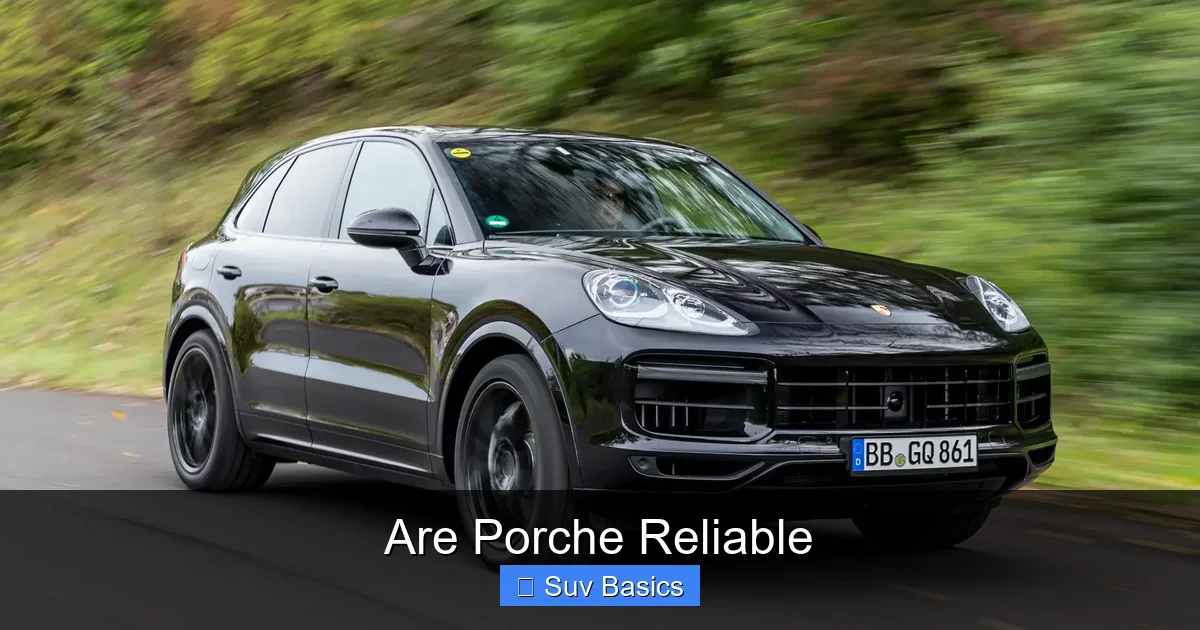
Visual guide about Are Porche Reliable
Image source: car-images.bauersecure.com
Reliability rankings from trusted sources like J.D. Power, Consumer Reports, and What Car? offer valuable insights into how Porsches stack up against the competition.
According to J.D. Power’s Vehicle Dependability Study (VDS), Porsche has consistently ranked above average in recent years. In the 2023 study, Porsche placed in the top 10 among all brands, outperforming many luxury rivals like BMW and Mercedes-Benz. This is a significant improvement from earlier decades when the brand lagged behind in dependability.
Consumer Reports also gives modern Porsches solid marks. The 2022 Porsche Cayenne, for example, earned a “Good” predicted reliability rating, while the Macan scored even higher. These ratings are based on survey data from thousands of owners, covering issues like engine problems, transmission troubles, and electrical faults.
That said, it’s important to note that reliability can vary by model and model year. For instance, the 2014–2016 Porsche Cayenne had a higher incidence of electrical and infotainment issues, while the 2017–2020 Macan saw some complaints about turbocharged engine quirks and fuel system sensors. Always research the specific year and trim you’re considering.
Porsche SUVs: Reliability in the Real World
Porsche’s SUV lineup—the Cayenne, Macan, and the newer Cayenne Coupe—has become a major part of the brand’s sales success. These vehicles blend sports car DNA with everyday practicality, making them popular among luxury SUV buyers. But how reliable are they?
The Porsche Cayenne: A Balanced Performer
The Cayenne is Porsche’s flagship SUV and one of its most reliable models. Since its redesign in 2019, the third-generation Cayenne has received praise for its refined ride, advanced tech, and improved build quality. Owners report fewer mechanical issues compared to earlier versions, and the turbocharged V6 and V8 engines have proven durable with proper care.
Common issues in older Cayennes include air suspension failures, coolant leaks, and infotainment system glitches. However, these problems are less frequent in newer models, especially those with updated software and revised components.
The Porsche Macan: Compact, Fun, and Mostly Dependable
The Macan, Porsche’s compact SUV, is often praised for its agility and driving dynamics. It’s essentially a shrunk-down Cayenne with a sportier edge. Reliability-wise, the Macan has been solid overall, though some early models (2015–2017) experienced issues with the turbocharged four-cylinder engine, including carbon buildup and timing chain concerns.
Porsche addressed many of these problems in later updates, and the 2020+ Macans have shown improved reliability. Owners love the Macan for its daily usability and engaging handling, making it a top choice for those who want a sporty SUV without sacrificing comfort.
The Cayenne Coupe: Style and Substance
Introduced in 2019, the Cayenne Coupe shares much of its underpinnings with the standard Cayenne but adds a sleeker roofline and sportier styling. Reliability has been on par with the regular Cayenne, with no major red flags reported so far. As with all Porsches, staying on top of maintenance is key to avoiding surprises.
Common Porsche Reliability Issues to Watch For
While modern Porsches are more dependable than their predecessors, no car is immune to problems. Here are some common issues reported by owners and mechanics:
Electrical and Infotainment Glitches
Many Porsche owners have experienced issues with the PCM (Porsche Communication Management) system. Symptoms include frozen screens, unresponsive touch controls, and Bluetooth connectivity problems. These are often software-related and can usually be fixed with a system update or module replacement.
Engine and Turbo Concerns
Turbocharged engines, like those in the Macan and Cayenne, can develop carbon buildup over time, especially if driven primarily in stop-and-go traffic. This can lead to reduced performance and check engine lights. Regular highway driving and using high-quality fuel can help mitigate this.
Suspension and Air Ride Problems
Porsches with air suspension—common in the Cayenne and Panamera—can develop leaks or compressor failures over time. These repairs can be costly, often ranging from $1,500 to $3,000. Opting for a model with traditional steel springs can reduce long-term maintenance costs.
Brake Wear and Tear
High-performance brakes are a hallmark of Porsche, but they also wear faster than standard brakes. Expect to replace pads and rotors more frequently, especially if you drive aggressively or track your car.
Maintenance Tips to Maximize Porsche Reliability
The best way to ensure your Porsche stays reliable is through proactive maintenance. Here’s how to keep your Porsche running smoothly:
Follow the Maintenance Schedule
Porsche provides a detailed maintenance plan for each model. Stick to it—don’t skip oil changes, fluid flushes, or inspections. Use only Porsche-approved parts and fluids to avoid compatibility issues.
Use a Porsche Specialist
While some general mechanics can handle basic services, complex repairs—especially those involving the engine, transmission, or electronics—should be handled by a Porsche-certified technician. They have the tools, training, and access to factory diagnostics.
Warm Up the Engine
Porsche engines, especially turbocharged ones, benefit from a gentle warm-up before hard driving. Let the engine idle for 30–60 seconds on cold starts, then drive gently until it reaches operating temperature.
Store Properly in Harsh Climates
If you live in a cold or humid climate, store your Porsche in a garage when possible. Use a battery maintainer during long periods of inactivity to prevent drain and corrosion.
Consider an Extended Warranty
Porsche’s factory warranty covers 4 years/50,000 miles, but an extended warranty can provide peace of mind beyond that. Porsche offers certified pre-owned (CPO) warranties and extended service contracts that cover major components.
Ownership Costs: Is a Porsche Worth It?
Reliability isn’t the only factor to consider—ownership cost matters too. Porsches are more expensive to maintain than mainstream brands. Here’s what to expect:
– **Oil changes:** $200–$400 (synthetic oil and labor)
– **Brake job (front):** $800–$1,500
– **Tire replacement:** $200–$400 per tire (high-performance tires wear faster)
– **Annual maintenance:** $1,000–$2,000+ depending on model and mileage
While these costs are higher than average, many owners feel the driving experience justifies the expense. Porsches are built to be driven, and for enthusiasts, the joy of ownership often outweighs the financial burden.
Final Verdict: Are Porsche Reliable?
So, are Porsche reliable? The answer is a qualified yes. Modern Porsches—especially SUVs like the Cayenne and Macan—are more dependable than ever, with strong reliability scores and satisfied owners. However, their high-performance nature means they require more care, attention, and investment than typical vehicles.
If you’re willing to follow a strict maintenance routine, use qualified technicians, and budget for higher running costs, a Porsche can be a rewarding and reliable long-term companion. But if you’re looking for a low-maintenance, budget-friendly ride, a Porsche might not be the best fit.
Ultimately, reliability isn’t just about avoiding breakdowns—it’s about consistency, quality, and peace of mind. And for many drivers, the thrill of behind the wheel of a Porsche makes every mile worth it.
Frequently Asked Questions
Are Porsches expensive to maintain?
Yes, Porsches are more expensive to maintain than average vehicles. Costs for parts, labor, and specialized servicing are higher due to their performance engineering and luxury components.
Which Porsche model is the most reliable?
The Porsche Cayenne and Macan are among the most reliable models, especially newer versions (2019+). They offer a good balance of performance, comfort, and dependability.
Do Porsches break down often?
Modern Porsches do not break down frequently when properly maintained. However, neglecting service or driving aggressively can increase the risk of mechanical issues.
Is it worth buying a used Porsche?
Yes, if you choose a well-maintained model with a clean history and consider a certified pre-owned (CPO) warranty. Avoid high-mileage examples with incomplete service records.
Can I service my Porsche at any mechanic?
Basic services can be done at reputable shops, but complex repairs should be handled by a Porsche specialist with access to factory tools and diagnostics.
Do Porsches have good resale value?
Yes, Porsches generally hold their value well, especially popular models like the 911, Cayenne, and Macan. Strong demand and brand prestige contribute to high resale prices.