
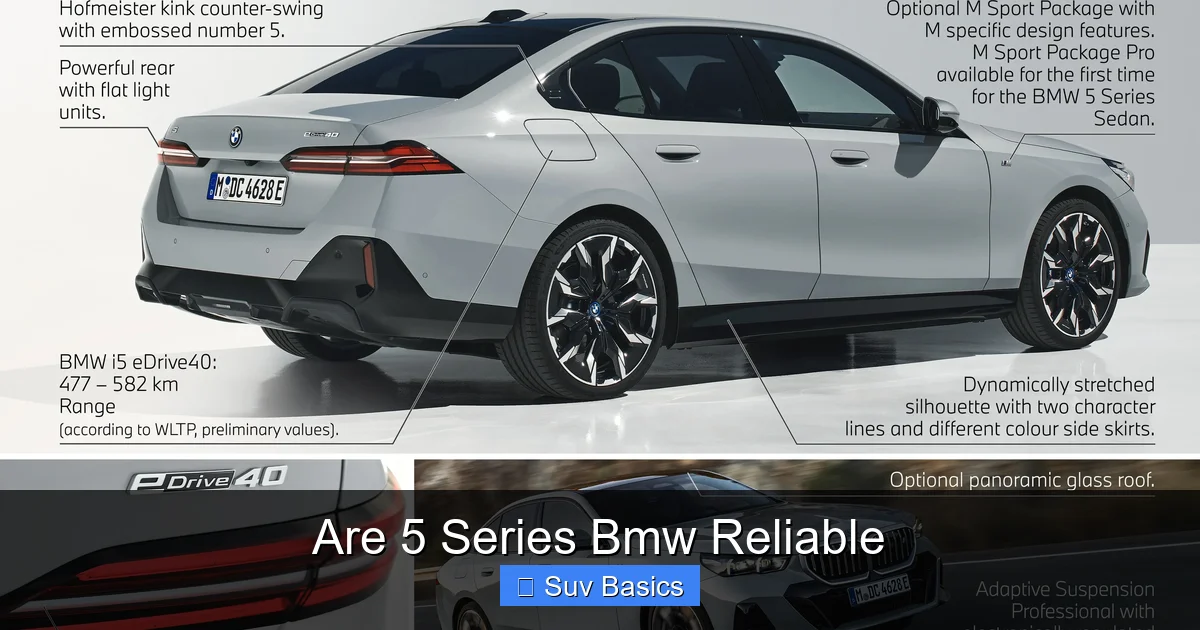
The BMW 5 Series is generally reliable when properly maintained, but it’s not immune to common luxury car issues. While many owners enjoy years of smooth performance, certain model years and components—like electronics and cooling systems—can present challenges. If you’re also curious about other vehicle types, check out our SUVs explained guide for a quick overview.
Key Takeaways
- Overall Reliability: The BMW 5 Series scores above average in reliability for luxury sedans, especially with regular maintenance.
- Best Model Years: 2017–2020 models are considered among the most dependable, with fewer reported issues.
- Common Problems: Electrical glitches, cooling system failures, and turbocharger concerns are frequently reported in older models.
- Maintenance Matters: Following the manufacturer’s service schedule greatly improves long-term reliability and resale value.
- Warranty & Support: BMW’s warranty and maintenance programs can help offset repair costs, especially in the first few years.
- Real Owner Feedback: Many long-term owners report satisfaction, citing driving dynamics and comfort as key strengths.
- Resale Value: The 5 Series holds its value well, especially well-maintained examples with full service history.
📑 Table of Contents
- Are 5 Series BMW Reliable? A Deep Dive into Longevity and Performance
- Understanding BMW 5 Series Reliability Ratings
- Best and Worst Model Years for Reliability
- Common Problems in the BMW 5 Series
- How Maintenance Affects Long-Term Reliability
- Real Owner Experiences: What Drivers Are Saying
- Tips for Buying a Reliable Used 5 Series
- Conclusion: Is the BMW 5 Series Worth It?
Are 5 Series BMW Reliable? A Deep Dive into Longevity and Performance
When you’re considering a luxury sedan, the BMW 5 Series often lands at the top of the list. Known for its refined driving experience, premium interior, and advanced technology, it’s a favorite among executives, families, and driving enthusiasts alike. But beyond the badge and the badge appeal, one question keeps popping up: Are 5 Series BMW reliable?
The short answer? Yes—mostly. But like any high-performance vehicle, reliability depends heavily on how you treat it. The 5 Series isn’t a Honda Civic, where you can skip oil changes and still expect 200,000 miles of trouble-free driving. It’s a finely tuned German machine that demands attention, care, and respect. When properly maintained, many 5 Series models can last well over 150,000 miles. But neglect routine service, and you might find yourself facing expensive repairs sooner than expected.
In this guide, we’ll break down what makes the BMW 5 Series tick, which model years are the most dependable, common problems to watch for, and how to keep your BMW running smoothly for years to come. Whether you’re buying used or leasing new, understanding reliability is key to enjoying your 5 Series without constant trips to the shop.
Understanding BMW 5 Series Reliability Ratings
Reliability isn’t just about whether a car breaks down—it’s about how often it needs repairs, how much those repairs cost, and how long it lasts. Independent organizations like J.D. Power, Consumer Reports, and RepairPal have all evaluated the BMW 5 Series, and their findings offer a mixed but generally positive picture.
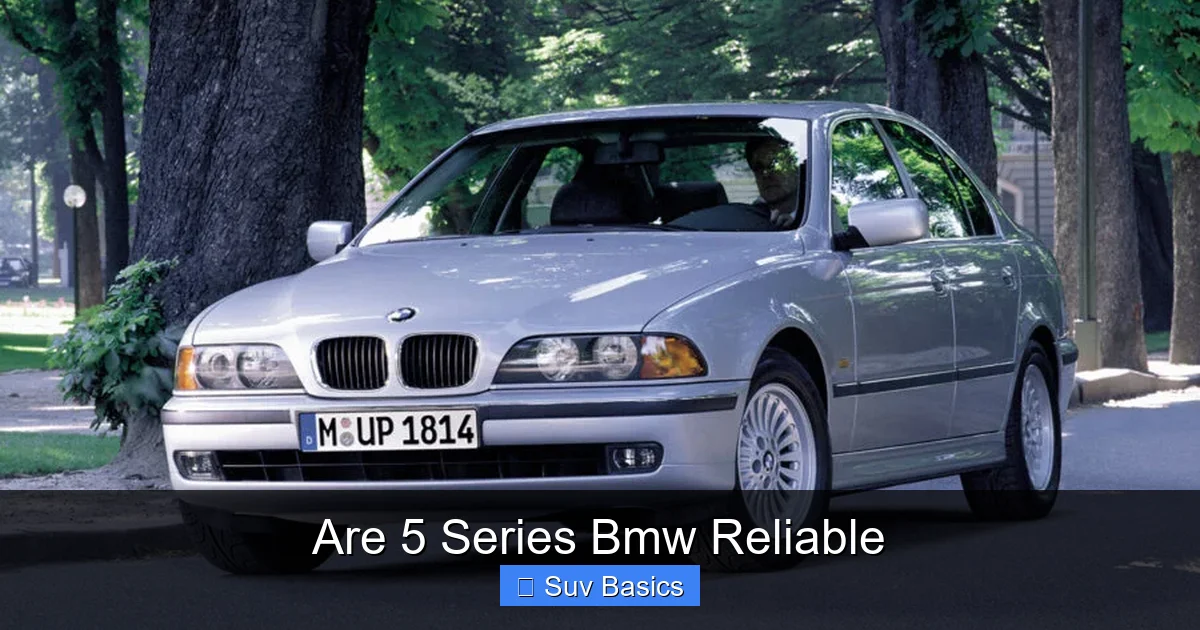
Visual guide about Are 5 Series Bmw Reliable
Image source: prestigeandperformancecar.com
What the Experts Say
According to J.D. Power, the 5 Series typically earns a “Above Average” reliability rating, especially in recent model years. Consumer Reports gives the 2017–2020 models strong marks for dependability, noting improvements in build quality and fewer reported issues compared to earlier generations. RepairPal, which analyzes real repair data, reports that the average annual repair cost for a BMW 5 Series is around $739—higher than the $652 average for all vehicles, but not outrageous for a luxury sedan.
How It Compares to the Competition
When stacked against rivals like the Mercedes-Benz E-Class, Audi A6, and Lexus ES, the 5 Series holds its own. Lexus still leads in long-term reliability, but BMW has closed the gap significantly in the past decade. The 5 Series often scores higher in driving dynamics and tech features, which many buyers value over minor reliability trade-offs.
Best and Worst Model Years for Reliability
Not all 5 Series models are created equal. Some years shine, while others come with known flaws. Knowing which years to target—or avoid—can save you thousands in repairs. If you’re considering an SUV alternative, see how the BMW X5 stacks up against the Audi Q7.
Top Reliable Model Years: 2017–2020
The 2017 to 2020 BMW 5 Series models are widely regarded as the sweet spot for reliability. These years benefit from BMW’s updated G30 platform, which introduced better build quality, improved electronics, and more durable components. Owners report fewer issues with infotainment systems, suspension, and engine performance. The 2018 and 2019 models, in particular, are praised for their balance of performance and dependability.
Model Years to Approach with Caution
Older models, especially from 2011 to 2016, have a higher incidence of problems. The 2011–2013 models, for example, are known for issues with the N20 and N26 four-cylinder engines, including timing chain failures and excessive oil consumption. The 2014–2016 models improved but still face complaints about electrical gremlins and cooling system leaks. If you’re shopping used, always get a pre-purchase inspection and check the vehicle’s service history.
Common Problems in the BMW 5 Series
Even the most reliable cars have weak spots. The 5 Series is no exception. While it’s generally well-built, certain components are more prone to failure than others.
Electrical and Infotainment Issues
One of the most frequently reported problems is with the iDrive infotainment system. Screens freezing, navigation glitches, and Bluetooth connectivity issues are common, especially in models from 2014–2016. These aren’t usually safety concerns, but they can be frustrating. Many issues can be resolved with software updates from a BMW dealership. For those interested in luxury SUVs, check out our comparison of top luxury SUVs.
Cooling System Failures
The cooling system—including the water pump, thermostat, and radiator—is a known trouble spot, particularly in turbocharged models. Over time, plastic components can degrade, leading to leaks or overheating. Replacing a water pump on a 5 Series can cost $800–$1,200, so it’s wise to check for signs of coolant loss during a test drive.
Turbocharger and Engine Concerns
Turbocharged engines deliver great power, but they also generate more heat and stress. In older 5 Series models (especially those with the N55 engine), turbo failures and wastegate rattle have been reported. Regular oil changes with the correct synthetic oil are critical to preventing premature wear.
Suspension and Steering Wear
The 5 Series offers a sporty ride, but that comes with stiffer suspension components that wear faster. Bushings, control arms, and shocks may need replacement around 80,000–100,000 miles