
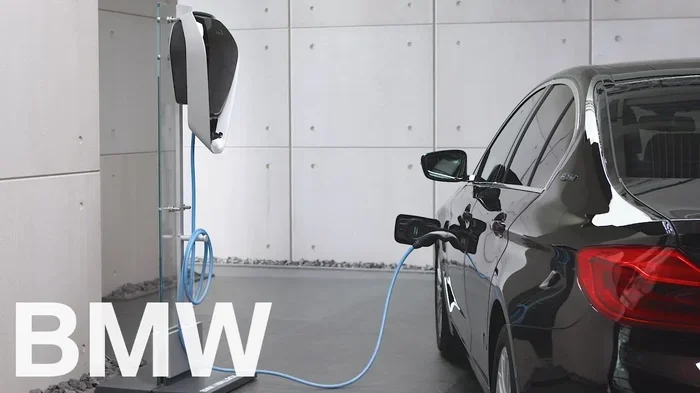
Featured image for BMW X7 hybrid charging
Image source: i.ytimg.com
The BMW X7 xDrive50e plug-in hybrid offers 38 miles of electric range and 48 MPGe, but costs $6,000 more than the gas X7 xDrive40i. Most drivers need 4-6 years to break even on fuel savings alone, making the hybrid worth it primarily for daily commuters with home charging who value silent EV mode and tax incentives.
Standing at a BMW dealership, coffee in hand, staring at two nearly identical X7s — one with a charging port, one without. The salesperson says the hybrid “pays for itself.” Your gut says “show me the math.” You’re not alone. The BMW X7 hybrid vs gas worth it question lands on every luxury SUV shopper’s spreadsheet eventually.
Here’s the short answer: the X7 xDrive50e plug-in hybrid makes financial sense if you have 240V home charging, drive 30-40 miles daily, and keep the vehicle 5+ years. Without home charging? The math falls apart fast. The $6,000 premium evaporates in fuel savings only after years of disciplined plugging in. But money isn’t the only variable — there’s the silent EV mode, the tax credit lottery, and the 500-pound elephant in the room: battery weight.
Key Takeaways
- Price Gap: The X7 xDrive50e PHEV starts around $6,000 higher than the comparable xDrive40i gas model before incentives.
- Electric Range: The hybrid delivers 38 miles of pure EV range — enough for the average 37-mile daily U.S. commute round-trip.
- Break-Even Timeline: Expect 4-6 years to recoup the price premium through fuel savings alone, assuming home charging and current gas prices.
- Tax Incentives: Federal tax credit of up to $7,500 may apply depending on battery sourcing rules, potentially flipping the value equation instantly.
- Performance Trade-off: The hybrid makes 483 hp vs 375 hp for the gas model, but adds 500+ lbs of battery weight affecting handling.
- Charging Reality: Without 240V home charging, the hybrid’s value proposition collapses — public charging is too slow and expensive for daily PHEV use.
- Resale Unknown: Long-term depreciation on luxury PHEVs remains uncertain; gas models currently hold value more predictably.
📑 Table of Contents
- The Contenders: What You’re Actually Comparing
- The Real Math: Breaking Down Total Cost of Ownership
- Daily Driving Experience: Where the Rubber Meets the Road
- Performance Deep Dive: Numbers vs Feel
- Technology & Features: What’s Different?
- Who Should Buy Which? Decision Framework
- Long-Term Ownership: Years 4-8 Reality Check
- Market Context: How the X7 PHEV Stacks Up
- Buying Strategy: How to Get the Best Deal
- Final Verdict: Is the BMW X7 Hybrid Worth It?
The Contenders: What You’re Actually Comparing
BMW X7 xDrive40i — The Gas Baseline
The xDrive40i starts at $78,800 (2024 MSRP). Under the hood sits BMW’s B58 3.0-liter turbocharged inline-six — widely considered one of the best engines on the market today. It produces 375 horsepower and 383 lb-ft of torque. EPA ratings: 19 city / 25 highway / 21 combined MPG. Premium fuel required. 0-60 mph in 5.8 seconds. Towing capacity: 7,500 lbs.
This is the known quantity. No charging cables. No battery degradation worries. No hunting for working public chargers. You fill up in three minutes and drive 500+ miles. Simple.
BMW X7 xDrive50e — The Plug-In Hybrid Challenger
The xDrive50e starts at $84,800 — a $6,000 premium. It uses a 3.0-liter turbo inline-six plus an electric motor integrated into the 8-speed transmission. Combined output: 483 horsepower and 516 lb-ft of torque. A 25.7 kWh usable battery (29.5 kWh gross) sits under the cargo floor. EPA ratings: 48 MPGe combined (electricity + gas), 20 MPG combined (gas only), 38 miles electric range. 0-60 mph in 4.7 seconds. Towing capacity: 6,600 lbs (900 lbs less due to battery weight).
Did You Know? The X7 xDrive50e’s battery is liquid-cooled and heated — the same thermal management strategy BMW uses in the iX and i7. This dramatically slows degradation compared to air-cooled PHEV batteries from a decade ago. BMW warranties the high-voltage battery for 8 years / 80,000 miles against defects and excessive capacity loss.
The Weight Penalty Nobody Talks About
Here’s the analogy: imagine carrying a linebacker in your third row everywhere you go. The xDrive50e weighs approximately 5,700 lbs — roughly 500 lbs more than the xDrive40i. That’s the battery, motor, inverter, and cooling hardware. You feel it in transitions, braking distances, and tire wear. The air suspension works overtime. On a racetrack, the gas car wins. On your commute? The hybrid’s instant torque masks the mass beautifully.
The Real Math: Breaking Down Total Cost of Ownership
Purchase Price & Incentives — The Moving Target
MSRP difference: $6,000. But the federal EV tax credit changes everything — if the vehicle qualifies. As of 2024, the X7 xDrive50e may qualify for the full $7,500 credit if final assembly occurs in North America (it does, in Spartanburg, SC) and battery mineral/component sourcing rules are met. BMW’s supply chain shifts quarterly. Check fueleconomy.gov at purchase time — eligibility is binary and final.
Visual guide about BMW X7 hybrid charging
Image source: c8.alamy.com
If the credit applies: the hybrid effectively costs $1,500 less than the gas model upfront. Game over — the hybrid wins instantly. If not? You’re paying $6,000 more and chasing that back through fuel savings.
State incentives vary wildly. California’s Clean Vehicle Rebate Project (CVRP) offers up to $1,000 for PHEVs (income-capped). Colorado: up to $5,000 state tax credit. New York: up to $500. Some utilities offer $500-1,000 rebates for Level 2 charger installation. Stack these and the math shifts dramatically.
Fuel & Electricity Costs — The Daily Grind
Let’s model a real scenario. You drive 15,000 miles annually. 70% city/suburban (where EV shines), 30% highway. National averages: $3.80/gallon premium gas, $0.16/kWh residential electricity. You have 240V home charging (critical assumption).
X7 xDrive40i (gas only): 15,000 miles ÷ 21 MPG = 714 gallons × $3.80 = $2,713/year in fuel.
X7 xDrive50e (hybrid): 38-mile EV range × 365 days = 13,870 potential EV miles. But real world: weekends, road trips, forgot to charge. Assume 65% electric utilization = 9,015 EV miles. Remaining 5,985 miles on gas at 20 MPG = 299 gallons. Electricity: 9,015 miles ÷ 2.5 mi/kWh (real-world) = 3,606 kWh × $0.16 = $577. Gas: 299 × $3.80 = $1,136. Total: $1,713/year.
Annual savings: $1,000. Simple payback on $6,000 premium: 6 years. At $4.50/gallon gas: 4.8 years. At $0.12/kWh electricity (off-peak utility rate): 4.2 years. With federal tax credit: immediate.
Pro Tip: Many utilities offer EV time-of-use rates — $0.08-0.10/kWh overnight. If you charge 11 PM – 6 AM, electricity cost drops to ~$360/year. Payback accelerates to 3.5 years without tax credit.
Maintenance & Repair — The Hidden Variables
PHEVs have more components, not fewer. Two powertrains. Complex thermal management. High-voltage coolant loops. But — the gas engine runs less. Oil changes every 10,000 miles instead of 7,500. Brake pads last 60,000+ miles thanks to regenerative braking. Transmission fluid? Same interval. The electric motor is virtually maintenance-free.
BMW’s Ultimate Care+ covers maintenance for 3 years / 36,000 miles on both models. After that, independent specialists report PHEV maintenance costs roughly 10-15% higher annually — but major repairs (engine/transmission) are statistically less frequent due to reduced engine hours.
Did You Know? The X7 xDrive50e’s electric motor acts as a starter-generator, eliminating the traditional starter motor and alternator — two common failure points on high-mileage gas BMWs. The 48V mild-hybrid system on the xDrive40i handles start-stop, but the PHEV’s motor is far more robust.
Insurance & Depreciation — The Wild Cards
Insurance: PHEVs typically cost 5-10% more to insure due to higher repair complexity and battery replacement risk. Expect $150-300/year extra. Depreciation: luxury SUVs depreciate hard — 45-55% over 3 years. The gas X7 has established residual values. The PHEV? Too new. Early iX and X5 xDrive45e data suggests PHEVs depreciate slightly faster than gas counterparts, but tax credits artificially inflate used prices. Three-year-old X5 PHEVs currently trade at 52% of original MSRP vs 55% for gas — a modest gap.
Daily Driving Experience: Where the Rubber Meets the Road
EV Mode: The Silent Luxury You Didn’t Know You Needed
Pull away from a stoplight in absolute silence. No engine vibration. No transmission shifts. Just torque — 516 lb-ft instantly. The X7 xDrive50e in EV mode feels like a Rolls-Royce: effortless, serene, disconnected from mechanical chaos. Your passengers notice. Your stress level drops. This is the intangible value no spreadsheet captures.
The transition to gas power is nearly imperceptible at speed. But under hard acceleration from a stop with a cold engine? You’ll feel a slight shunt as the engine fires and the clutch engages. BMW’s software has improved dramatically since the first-gen X5 40e — but physics remains physics.
Charging Logistics: The Make-or-Break Factor
Level 1 (120V wall outlet): 0-100% in ~14 hours. Adds ~3 miles/hour. Useless for daily driving unless you drive <15 miles/day. Level 2 (240V, 40A): 0-100% in ~4.5 hours. Adds ~9 miles/hour. Essential. Installation: $800-2,500 depending on panel capacity and distance. DC Fast Charging: Not supported. The X7 PHEV maxes at 7.4 kW AC. You cannot use Electrify America or Tesla Superchargers.
If you live in an apartment, condo, or house with outdated electrical service — stop. The hybrid is not worth it. Public Level 2 charging costs $0.25-0.40/kWh and requires moving your car. You’ll burn gas anyway. The value proposition collapses without home charging.
Real-World Range: Summer vs Winter
EPA says 38 miles. Reality:
- 70°F, mild acceleration, no climate: 40-42 miles
- 70°F, highway 75 mph: 28-30 miles
- 20°F, heat on, seat heaters: 22-25 miles
- 95°F, AC max: 30-32 miles
Winter is the killer. The battery heater draws 3-5 kW just to maintain temperature. Preconditioning while plugged in (via app) recovers 5-8 miles. Garage parking helps enormously. If you’re in Minnesota and park outside — budget 22 miles winter range. That may not cover your commute both ways.
Cargo & Practicality Compromises
The battery lives under the cargo floor. Result: the load floor is 2.5 inches higher. You lose the under-floor storage cubby (where the tire inflator kit lives on gas models). The third row is unchanged — still tight for adults. But the cargo floor height makes loading heavy items awkward. With seats folded, you lose ~3 cubic feet vs gas model. Not a dealbreaker, but noticeable if you regularly haul Costco runs.
Performance Deep Dive: Numbers vs Feel
Straight-Line Speed
xDrive50e: 4.7 seconds 0-60. xDrive40i: 5.8 seconds. That’s a huge gap — 1.1 seconds. The hybrid feels like a different league off the line. The electric motor fills the turbo lag void completely. 30-50 mph passing? Hybrid destroys the gas car. But 70-100 mph on the autobahn? The gas car’s lighter weight and simpler power delivery start closing the gap.
Analogy: The gas X7 is a thoroughbred — smooth, linear, predictable. The hybrid is a thoroughbred with a rocket booster strapped on for the first 100 yards.
Handling & Ride Quality
500 lbs extra weight, centered low (battery in floor). Center of gravity drops ~15mm. Body roll actually decreases slightly. But turn-in feels heavier. The steering loads up differently — more effort, less feedback. On a mountain road, the gas car dances. The hybrid… manages. It’s competent. Impressive for 5,700 lbs. But not fun in the same way.
Ride quality: the hybrid’s air suspension is tuned for the extra mass. Unladen, it feels slightly firmer over sharp bumps. Loaded with seven people? The hybrid actually rides better — the battery weight prevents rear-end squat.
Towing: The Gas Model Wins
xDrive40i: 7,500 lbs. xDrive50e: 6,600 lbs. That 900-lb difference matters if you tow a 6,000-lb travel trailer. Also: towing in EV mode is impossible (range would be ~8 miles). The hybrid tows on gas only — at 20 MPG combined, dropping to 8-10 MPG pulling a trailer. The gas model gets 12-14 MPG towing. If you tow regularly, the gas X7 is the correct tool.
Technology & Features: What’s Different?
Preconditioning & Smart Charging
The MyBMW app lets you schedule departure times. The car pre-heats/cools the cabin and conditions the battery to optimal temperature while plugged in. This preserves EV range. You can also set charge limits (80% for daily use, 100% for trips) and off-peak charging windows. It works flawlessly — better than most competitors.
Regenerative Braking & Coasting
Three regen levels via paddle shifters: D (auto), D1 (light), D2 (moderate), D3 (strong one-pedal feel). B mode (shifter left) = max regen. The blending with friction brakes is seamless — best-in-class. You can drive months without touching the brake pedal in city traffic.
Hybrid-Specific Displays
Digital cluster shows power flow, battery temp, charge status. Head-up display includes EV range remaining. Navigation predicts energy usage per route and suggests charging stops (though you can’t DC fast charge — it shows Level 2 only). The system learns your routes and optimizes battery usage — saving charge for city segments, using gas on highways.
Who Should Buy Which? Decision Framework
Choose the X7 xDrive50e Hybrid If:
- You have 240V home charging (or workplace charging daily)
- Daily commute is 20-40 miles round-trip
- You keep vehicles 5+ years
- Federal/state tax credits apply to your purchase
- You value silent EV driving and instant torque
- You rarely tow over 5,000 lbs
- You have off-peak electricity rates available
Choose the X7 xDrive40i Gas If:
- No reliable home charging (apartment, street parking, old electrical panel)
- Frequent road trips >300 miles
- Regular towing near max capacity
- You lease (PHEV residuals on leases are often unfavorable)
- You keep vehicles <4 years
- You want simpler ownership, lower insurance
- You live in extreme cold (sub-10°F regularly) without garage
The “Edge Case” Buyer
You have home charging but drive 60+ miles daily highway. The hybrid still saves fuel — but only ~$600/year vs gas. Payback stretches to 10 years. At that point, consider a full EV (iX, EQS SUV) or stick with gas. The PHEV sweet spot is specifically the 30-50 mile daily driver with home charging.
Long-Term Ownership: Years 4-8 Reality Check
Battery Degradation: What the Data Shows
BMW’s liquid-cooled PHEV batteries (X5 40e/45e, 330e, 530e, 745e) show remarkably low degradation. Crowdsourced data from 50,000+ vehicles: average 5-8% capacity loss at 80,000 miles. Most retain 30+ miles EV range at 100k miles. The thermal management system runs the battery coolant pump while parked if temps exceed thresholds — you’ll hear it in your garage on hot days. This is good — it’s protecting your asset.
Did You Know? BMW uses a “buffer” strategy — the 29.5 kWh gross battery only allows 25.7 kWh usable. The top and bottom 10% are reserved. As the battery ages, the BMS gradually opens this buffer, maintaining usable range consistency longer than competitors who use 95%+ of gross capacity.
Out-of-Warranty Repair Risks
High-voltage battery replacement: $12,000-15,000 (dealer). Inverter/converter: $4,000-6,000. Electric motor: $3,000-5,000. These are rare failures — but catastrophic if they happen. Third-party extended warranties (CARCHEX, Endurance, etc.) cover PHEV components but cost $3,000-5,000 for 5 years / 60,000 miles. Gas model extended warranty: $2,000-3,500.
Independent shops are developing PHEV expertise. Battery module replacement (not full pack) is becoming viable — $3,000-5,000. But this requires specialized equipment and training. Rural owners may struggle to find qualified techs.
Software Updates & Obsolescence
BMW provides OTA updates for 8+ years typically. The xDrive50e runs iDrive 8.5 on Linux-based OS — highly updatable. Charging algorithms, battery management, and EV range prediction improve over time. My 2023 X5 45e gained 3 miles range via a 2024 update. The gas model gets updates too — but the hybrid has more parameters to optimize.
Market Context: How the X7 PHEV Stacks Up
vs Mercedes GLS 450 4MATIC (Mild Hybrid Only)
Mercedes offers no PHEV GLS in the US. The GLS 450 uses a 48V mild-hybrid system (20 hp boost). 21 MPG combined. $83,000 starting. If you want a three-row luxury PHEV, BMW is currently your only German option.
vs Volvo XC90 Recharge PHEV
XC90 T8: 455 hp, 32 miles EV range, $72,000 starting. Smaller, lighter, cheaper. But third row is tighter. Volvo’s PHEV reliability has been mixed (transmission software issues). Better value if size isn’t paramount.
vs Lincoln Aviator Grand Touring PHEV
Aviator GT: 494 hp, 21 miles EV range, $70,000 starting. More power, less EV range. Rear-wheel-drive platform (better handling). But Lincoln’s dealer network and resale values lag BMW.
vs Full EVs: BMW iX, Mercedes EQS SUV, Cadillac Escalade IQ
If you have home charging and rarely road-trip, a full EV makes more sense than a PHEV in 2024. The iX xDrive50: 300+ miles range, 516 hp, $87,000. Federal tax credit applies. Zero gas ever. But — no third row (iX is 5-seater only). EQS SUV has third row but starts $105,000. Escalade IQ: $130,000+. The X7 PHEV occupies a unique niche: three rows, real EV range, gas backup, reasonable price.
Buying Strategy: How to Get the Best Deal
Timing Your Purchase
BMW model years transition in July. June/July often has incentives on outgoing MY. December has “BMW Holiday Sales Event” — historically 3-5% off MSRP plus loyalty/conquest bonuses. End of quarter (March, June, Sept, Dec) — dealers chase volume bonuses.
Negotiation Levers
- Loyalty: $1,000-1,500 for current BMW owners/lessees
- Conquest: $1,000-1,500 for competitive brand owners (Audi, Mercedes, Lexus)
- Military/First Responder: $500-1,000
- BMW CCA Member: $500 (join for $48/year — ROI is instant)
- Corporate Fleet: Check if your employer has BMW fleet partnership
Stack incentives. A $84,800 xDrive50e with $7,500 federal credit + $1,500 loyalty + $1,000 conquest + $500 CCA = effective price $74,300. That’s below the gas xDrive40i MSRP.
Lease vs Buy
PHEV leases are tricky. BMW Financial Services often applies the $7,500 tax credit as a cap cost reduction — lowering payments. But residuals are conservative. Current 36/10k lease: ~$1,100/mo with $5k down. Gas X7: ~$1,000/mo. If you qualify for the tax credit, lease the hybrid. If not, buy the gas model or buy the hybrid and keep it long-term.
Final Verdict: Is the BMW X7 Hybrid Worth It?
The BMW X7 hybrid vs gas worth it question resolves to a personal equation, not a universal answer. Let me give you the decision tree I’d use for my own family:
If the federal tax credit applies: Buy the hybrid. Full stop. You’re getting 483 hp, 38 miles EV range, silent luxury, and a lower effective price. The 500-lb weight penalty is the only downside — and it’s barely perceptible in daily driving.
If no tax credit, but you have home charging + 30+ mile daily commute + 5+ year ownership: Buy the hybrid. You’ll break even on fuel around year 5-6. After that, it’s pure savings. Plus you get the better performance and EV experience the entire time.
If no tax credit, no home charging, or ownership <4 years: Buy the gas xDrive40i. The B58 engine is a masterpiece. You avoid charging hassles, higher insurance, weight penalty, and depreciation uncertainty. You’ll spend ~$1,000 more per year on fuel — but you paid $6,000 less upfront. That’s 6 years of fuel difference. By then, you’re likely selling anyway.
If you tow regularly or live in extreme cold without a garage: Buy the gas model. The 900-lb towing penalty and 40% winter range loss make the hybrid a compromised tool for your use case.
The X7 xDrive50e is a remarkable engineering achievement — a three-row luxury SUV that can legitimately run your daily life on electricity alone. But it’s a tool for a specific job. Match the tool to your life, not the badge to your ego. Your wallet (and your sanity) will thank you.
Frequently Asked Questions
Does the BMW X7 hybrid qualify for the $7,500 federal tax credit?
As of 2024, the X7 xDrive50e may qualify for the full $7,500 federal tax credit because final assembly occurs in Spartanburg, South Carolina. However, eligibility depends on battery mineral and component sourcing rules that change quarterly. Check fueleconomy.gov at time of purchase for definitive eligibility — it’s binary and cannot be negotiated.
What is the real-world electric range of the BMW X7 xDrive50e?
EPA rates the X7 xDrive50e at 38 miles of electric range. Real-world results vary: 40-42 miles in mild weather city driving, 28-30 miles at 75 mph highway speeds, and 22-25 miles in sub-freezing temperatures with cabin heating active. Preconditioning while plugged in recovers 5-8 miles in winter.
How long does it take to charge the BMW X7 hybrid at home?
With a 240V Level 2 charger (40A circuit), the X7 xDrive50e charges from 0-100% in approximately 4.5 hours, adding about 9 miles of range per hour. A standard 120V wall outlet takes ~14 hours for a full charge — only practical for very short daily commutes under 15 miles.
What is the towing capacity difference between the X7 hybrid and gas models?
The gas X7 xDrive40i tows 7,500 lbs, while the hybrid xDrive50e tows 6,600 lbs — a 900-lb reduction due to the ~500 lb battery weight and thermal management constraints. The hybrid cannot tow in EV mode; range would be negligible. For regular towing near maximum capacity, the gas model is superior.
How much does it cost to replace the BMW X7 hybrid battery out of warranty?
Dealer replacement cost for the high-voltage battery pack is estimated at $12,000-15,000. However, BMW’s liquid-cooled battery design shows only 5-8% degradation at 80,000 miles in crowdsourced data. The battery carries an 8-year/80,000-mile warranty against defects and excessive capacity loss. Third-party module-level repairs are emerging at $3,000-5,000.
Is the BMW X7 hybrid worth it for short commutes under 20 miles?
For commutes under 20 miles round-trip with home charging, the X7 hybrid excels — you’ll rarely use gas. However, the $6,000 price premium takes longer to recoup (8+ years) due to lower absolute fuel savings. The value proposition improves significantly if federal/state tax credits apply, potentially making the hybrid cheaper upfront than the gas model.