
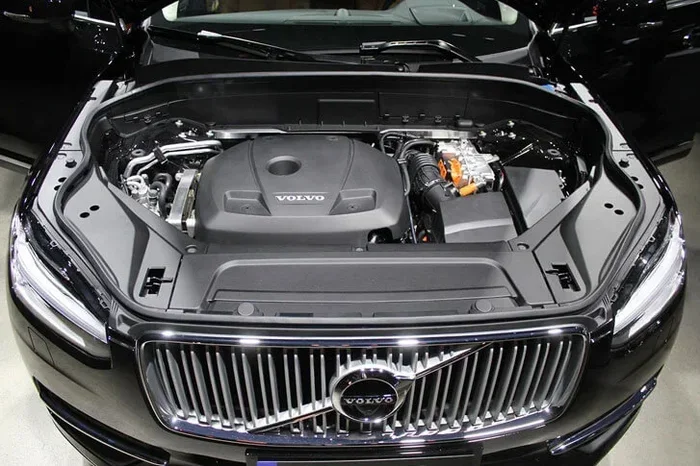
Featured image for Volvo XC90 engine bay
Image source: enginecompare.co.uk
The Volvo XC90 offers luxury and safety, but specific model years suffer from costly transmission failures, engine leaks, and premature suspension wear. Understanding these common expensive problems helps buyers avoid lemon years and helps current owners budget for preventative maintenance. This guide breaks down the top faults, average repair bills, and exactly which components to watch.
Buying a used luxury SUV feels like walking a tightrope. You want the prestige, the safety ratings, and the comfortable ride, but you live in fear of a repair bill that costs more than a down payment on a new economy car. The Volvo XC90 sits right in that danger zone. It is a brilliant vehicle when it works—arguably the safest family hauler on the road—but it has a well-documented history of specific, wallet-draining failures.
Think of the XC90 like a high-performance thoroughbred horse. It wins races (safety tests, comfort comparisons), but it requires specialized feed (synthetic oil, specific transmission fluid), a top-tier vet (Volvo specialist mechanic), and it has a few genetic quirks that can sideline it permanently. This guide puts the most critical information first: the problems that cost the most money, the years they happen, and how to spot them before they bankrupt you.
Key Takeaways
- The 2003-2007 First Generation carries the highest risk: These models are notorious for the GM-sourced 4T65EV-GT transmission failure, often costing $3,500-$5,000 to rebuild or replace.
- 2016-2018 Second Generation models face software and hardware growing pains: Early SPA platform cars suffer from transmission software glitches, coolant leaks from the supercharger/turbo assembly, and premature brake wear.
- Power steering failure is a cross-generational issue: Both generations experience leaks from the power steering pump, lines, or rack, with repairs frequently exceeding $1,500.
- The AWD system requires specific fluid maintenance: Neglecting the Haldex (Gen 1) or BorgWarner (Gen 2) coupling fluid changes leads to expensive propeller shaft and rear differential failure.
- Suspension components wear faster than competitors: Control arm bushings, sway bar links, and air suspension compressors (on equipped models) often need replacement before 100,000 miles.
- Pre-purchase inspections (PPI) are non-negotiable: A $200-$300 specialist inspection can reveal hidden engine sludge, transmission shudder, or suspension play, saving thousands post-purchase.
- Extended warranties pay off for early SPA models: Given the complexity of the Drive-E engines and 8-speed gearboxes, a quality exclusionary warranty often pays for itself with a single major claim.
📑 Table of Contents
- The “Wallet-Breakers”: Top 5 Most Expensive XC90 Repairs
- Generation Deep Dive: First Generation (2003–2014) — The “Classic” Risks
- Generation Deep Dive: Second Generation (2016–Present) — The “Tech” Risks
- The “Hidden” Costs: Maintenance Items That Become Repairs
- Buying Guide: How to Avoid Buying a Money Pit
- Ownership Strategy: Keeping Costs Down Long-Term
- Frequently Asked Questions (Expert Answers)
The “Wallet-Breakers”: Top 5 Most Expensive XC90 Repairs
If you only read this section, you have the executive summary. These are the repairs that turn a $15,000 used SUV into a $20,000 headache overnight. We are ranking these by a combination of frequency, severity, and total parts-plus-labor cost at an independent specialist (dealership costs are typically 30-50% higher).
1. Transmission Failure (Gen 1: 2003-2014 | Gen 2 Early: 2016-2018)
This is the number one reason XC90s end up in junkyards prematurely. The first generation (2003-2014) uses a General Motors 4T65EV-GT (later TF-80SC Aisin) transmission. The GM unit is the primary villain here. It suffers from valve body wear, solenoid failure, and the infamous “flare” between 2nd and 3rd gear.
Did You Know? The GM 4T65E in the XC90 is rated for roughly 280 lb-ft of torque. The T6 twin-turbo engine produces 295 lb-ft. The transmission is essentially operating at 105% capacity from the factory. It is like asking a 150-pound person to bench press 200 pounds every single day—something is going to snap.
- Symptoms: Hard shifts, “slipping” feeling, delayed engagement into Drive/Reverse, “Transmission Service Urgent” message.
- Typical Cost: $3,500 – $5,500 for a quality rebuild with updated valve body; $6,000+ for a remanufactured unit installed.
- The Fix: A rebuilt valve body ($800-$1,200) might buy time if caught at the very first flare, but usually, a full rebuild is required.
For the Second Generation (2016+), the Aisin TG-81SC 8-speed is mechanically stronger but plagued by software mapping issues and early torque converter lockup clutch failures. Volvo released numerous Technical Service Bulletins (TSBs) and software updates for 2016-2018 models.
2. Engine Oil Leaks & PCV System Failure (All Years, Peaks at 100k+ Miles)
Volvo engines breathe heavy. The Positive Crankcase Ventilation (PCV) system is designed to suck blow-by gases out of the crankcase and burn them. On the XC90, the flame trap (oil separator box) and associated hoses clog with sludge. When the engine can’t breathe, it pressurizes the crankcase and blows out every seal it can find: the rear main seal, camshaft seals, valve cover gasket, and the oil filter housing gasket.
Imagine holding your nose and mouth shut while trying to exhale forcefully. Your ears pop or your cheeks burst. The engine seals are the cheeks.
- Gen 1 (Whiteblock 5-cyl / Yamaha V8): Rear main seal ($800-$1,200), Cam seals ($600-$900), Oil trap system ($400-$700).
- Gen 2 (Drive-E 2.0L 4-cyl): Oil filter housing cooler gasket ($300-$500), Turbo oil return line ($400-$600), PCV diaphragm ($200-$400).
- Why it gets expensive: Labor access. The engine bay is tight. Replacing a $20 rear main seal requires removing the transmission.
3. All-Wheel Drive System Failure (Angle Gear / Haldex / Propshaft)
The XC90 is primarily a Front-Wheel Drive vehicle with a “hang-on” AWD system. Power goes to the front, then a driveshaft (propshaft) runs down the tunnel to a coupling unit at the rear differential. This chain has three weak links.
First Generation (Haldex Coupling): The Haldex unit is a hydraulic clutch pack. It requires fluid changes every 30k-40k miles (Volvo says “lifetime”—do not listen). If neglected, the pump fails or the clutch packs weld themselves together. Cost: $1,500-$2,500.
The “Angle Gear” (Bevel Gear): This sits on the side of the transmission and turns the power 90 degrees toward the rear. The input splines strip on the gear or the collar sleeve. This is a design flaw where the splines are too fine. Cost: $1,800-$3,000 (often requires transmission removal).
Second Generation (BorgWarner Coupling): More robust, but the propshaft center support bearing fails early, causing a vibration felt in the seats at highway speeds. Cost: $600-$1,000.
4. Suspension & Steering Overhaul (Control Arms, Bushings, Air Struts)
The XC90 is heavy. Curb weight pushes 4,500 lbs for the V8 and T6 models. That weight eats suspension bushings for breakfast. The lower control arm front bushings (hydraulic fluid-filled) are the primary victim. When they fail, the wheel shifts backward under braking, causing a violent shake in the steering wheel and rapid tire wear.
Air Suspension (Optional on Gen 1, Standard on Gen 2 Inscription/T8): The rear air struts crack and leak. The compressor burns out trying to keep up. A single air strut is $800-$1,200; the compressor is $500-$800. Converting to passive coil springs saves money but kills the self-leveling feature.
Power Steering: Gen 1 uses a hydraulic pump (leaks from reservoir/lines/rack). Gen 2 uses Electric Power Assisted Steering (EPAS). The EPAS rack on 2016-2018 models has a known internal failure mode requiring full rack replacement ($1,800-$2,500).
5. Cooling System Catastrophes (Water Pumps, Thermostats, Supercharger Coolant Leaks)
On the Gen 1 V8 and T6, the water pump is driven by the timing belt. If the pump seizes, it shreds the timing belt, and because these are interference engines, the pistons smash the valves. Engine replacement: $6,000-$10,000. This is why the timing belt service (every 10 years/105k miles) must include the water pump, tensioners, and idlers.
On the Gen 2 Drive-E engines (T5/T6/T8), the integrated charge air cooler (intercooler) inside the intake manifold can leak coolant into the cylinders. The supercharger (on T6/T8) has its own dedicated coolant circuit and pump; the supercharger snout seal leaks coolant into the intake tract. This causes hydro-lock or misfires. Repair involves supercharger removal ($1,500-$2,500).
Generation Deep Dive: First Generation (2003–2014) — The “Classic” Risks
The first generation XC90 (P2 platform) defined the “Swedish SUV” category. It shares architecture with the S80 and V70. It is mechanically simpler than the new car, but the parts are aging, and the specific failures are legendary in the Volvo community.
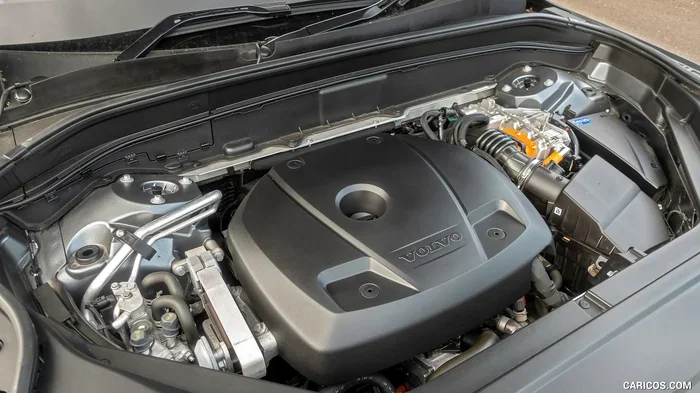
Visual guide about Volvo XC90 engine bay
Image source: images.caricos.com
The 2003-2005 “Guinea Pig” Years
The earliest cars (built on the P2 platform launch) have the highest concentration of faults. The 2003 model year specifically had issues with the Electronic Throttle Module (ETM) failing on the 2.5T engines (though the XC90 mostly got the T6 or V8). The GM transmission software was rawest here. The dash cluster pixels fade. The sunroof drains clog, leaking water onto the Central Electronic Module (CEM) under the driver’s seat—killing the car’s brain. A CEM replacement requires software download from Volvo ($1,000+).
The V8 (2005–2010) vs. The T6 (2003–2010) vs. The 3.2 (2007–2014)
- Yamaha V8 (4.4L): Smooth, reliable block. Timing belt interval is 10 years/105k. Expensive flaw: The alternator bracket bolts stretch/break. The starter motor sits in the valley under the intake manifold (5+ hours labor). Transmission is the TF-80SC (Aisin) – better than GM unit but still fails.
- T6 Twin-Turbo (3.0L Inline-6): The torque monster. Expensive flaw: Turbo oil lines coke up and leak. PCV system is a nightmare (6+ hoses under intake). Transmission is the weak GM 4T65EV. This is the fastest XC90 Gen 1, but the most expensive to maintain.
- 3.2L Inline-6 (Naturally Aspirated): The “reliable” choice. No turbos to fail. Timing chain (not belt) – but chain tensioners fail. Uses the Aisin TF-80SC transmission (shared with V8). Best bet for low-cost ownership, but slowest.
Specific Gen 1 “Gotchas”
- Subframe Bushings: The rear subframe mounts rot out. The whole rear suspension shifts. Requires subframe drop and welding/bushing press. $1,200+.
- Tail Light Wiring Harness: Insulation crumbles, shorts out, blows fuses, kills brake lights. $300 DIY, $800 shop.
- Climate Control (CCM) Failure: Buttons stick, screen dies. Reman units $300.
Generation Deep Dive: Second Generation (2016–Present) — The “Tech” Risks
The SPA (Scalable Product Architecture) platform brought the XC90 into the modern era. It is lighter, stiffer, safer, and packed with tech. It uses exclusively 2.0L 4-cylinder engines (Drive-E) differentiated by turbocharging (T5), turbo+supercharging (T6), or plug-in hybrid (T8). The transmission is the Aisin 8-speed. The electronics run on the Android Automotive OS (later years) or Sensus.
The 2016-2018 “Beta Test” Years
If you buy a used 2016-2018 XC90, you are buying a beta test. Volvo sold roughly 80,000 units in the US during this launch window. The volume of TSBs (Technical Service Bulletins) for these years is staggering.
- Transmission Software: Harsh 1-2 shift, hesitation off the line, “gear hunting” on hills. Often fixed by software update (TSB TJ 28744.2.0 or similar), but some require valve body or torque converter replacement.
- Center Console / Screen Delamination: The Sensus screen bubbles or delaminates in heat. Warranty extended to 10 years/100k on some, but many are expired now. $1,500+ replacement.
- Brake Wear: The car is heavy (4,600+ lbs T8). Rear pads wear faster than fronts due to electronic brake force distribution. Rotors warp easily. $800-$1,200 per axle for quality parts.
- Coolant Leaks (T6/T8): Supercharger coolant pump failure, charge air cooler leaks, heater core failures (dash removal required – $2,000+).
The T8 Twin Engine (Plug-In Hybrid) Specifics
The T8 adds a 65 kW electric motor on the rear axle (making it true AWD), a 11.6 kWh (later 18.8 kWh) battery, and complex power electronics.
- Battery Degradation/Module Failure: Early packs (pre-2020) had module balancing issues. Out of warranty replacement: $8,000-$12,000. Volvo extended warranty to 8yr/100k (federal) or 10yr/150k (CA/ZEV states).
- Rear Drive Module (ERAD) Oil Leaks: The electric motor/gearbox unit leaks from the output seals. $400-$700 fix.
- Onboard Charger (OBC) Failure: Car won’t charge. $1,500-$2,000.
2019+ Refresh: Android Automotive & 48V Mild Hybrid
Late 2019 (2020 Model Year) brought the Google-based infotainment (Android Automotive OS) and 48V mild hybrid systems (B5/B6 badges). This solved many Sensus bugs but introduced new ones: Google Maps offline issues, Profile login loops, 48V battery degradation causing “Start/Stop unavailable” errors. Mechanically, the B5/B6 engines are the most reliable yet, but the 48V starter-generator (ISG) is a new $1,500 failure point.
The “Hidden” Costs: Maintenance Items That Become Repairs
Many “expensive problems” are just neglected maintenance on a tight schedule. Volvo designs for 10k-15k mile oil changes (per the dashboard), but specialists universally recommend 5k-7.5k miles. Here is where the money hides.
Transmission Fluid: The “Lifetime” Lie
Volvo labels the transmission fluid “Lifetime.” In engineering terms, “Lifetime” means “The lifetime of the warranty.” The fluid degrades, the friction modifiers wear out, and the valve body solids clog the solenoids.
- Gen 1 (Aisin TF-80SC / GM 4T65): Drain and fill every 30k-40k miles. Use only Volvo 1161540 (JWS 3309) or equivalent (Mobil 3309, Penrite ATF MHP). Never flush. Flushing dislodges debris that kills the valve body instantly. Cost: $150-$250 DIY / $300-$400 shop.
- Gen 2 (Aisin TG-81SC / TG-81LS): Drain and fill every 40k-50k miles. Use Volvo 31256777 (ATF 8 SPEED). Same rule: No power flush. Cost: $200-$350 shop.
- Haldex / Rear Coupling Fluid: Every 30k-40k miles (Gen 1) or 50k-60k (Gen 2). Cheap insurance ($100-$150) against a $2,000 unit.
Brake Fluid & Coolant: The Silent Killers
Brake fluid is hygroscopic (absorbs water). Water lowers boiling point (brake fade) and corrodes ABS modulators ($1,000+). Change every 2 years regardless of mileage. Coolant: Gen 1 uses G48 (blue/green), Gen 2 uses G64 (pink/red) or G65 (newer). Never mix. A coolant flush every 5 years prevents electrolysis eating the aluminum engine block and radiator.
Timing Belt vs. Timing Chain
- Gen 1 T6 / V8 / 3.2 (Early): Timing Belt. Interval: 10 Years / 105,000 Miles. Must do Water Pump, Thermostat, Tensioners, Idlers. Kit + Labor: $1,000-$1,500. Skip it? Engine grenade ($6k+).
- Gen 1 3.2L (Late) / Gen 2 Drive-E: Timing Chain. “Lifetime” but tensioners/guides fail at 120k-150k. Rattling on cold start = $1,500-$2,500 job.
Buying Guide: How to Avoid Buying a Money Pit
You are standing in front of a used XC90. The paint shines. The leather smells rich. The seller says “It runs great.” Here is your 15-minute checklist to separate the gems from the lemons. Bring a flashlight and an OBD2 scanner (Bluetooth $20 + phone app).
Pre-Purchase Inspection (PPI) — Non-Negotiable
Pay a Volvo independent specialist $200-$300. Do not use the seller’s mechanic. Do not use a general tire shop. You need someone who knows the specific torque specs for the angle gear collar sleeve and how to read the transmission adaptation values in VIDA (Volvo’s diagnostic software). A generic OBD2 scanner misses 80% of Volvo codes.
The Test Drive Protocol
- Cold Start: Start it cold. Listen for timing chain rattle (Gen 2 / 3.2), lifter tick (V8), or excessive smoke (turbo seals). Watch RPMs—hunting idle = vacuum leak/PCV.
- Transmission Check: Shift Reverse -> Drive -> Reverse. Count seconds. >1.5 sec delay = worn valve body/clutches. Drive 15 mins to get fluid HOT. Re-check shifts. Hot fluid is thinner; slips show up now.
- The “Flare” Test: Accelerate gently 25-40 mph. Feel for a momentary RPM spike (flare) between 2nd-3rd or 3rd-4th (Gen 1). On Gen 2, feel for shudder at light throttle lockup (torque converter).
- Steering & Suspension: Find a bumpy road. Listen for clunks (sway links/struts). Turn wheel lock-to-lock stationary. Groaning = power steering pump/rack. Vibration at 60mph = propshaft center bearing / tire balance / bent wheel.
- AWD Test (Gen 1): In gravel/snow/dirt, accelerate hard. Front tires spin? Rear engages? If front spins endlessly, Haldex/Angle gear is dead.
Documentation Red Flags
- No Timing Belt Record (Gen 1 T6/V8): Walk away or deduct $1,500.
- No Transmission Fluid History: Assume it needs service immediately. Deduct $400.
- “Just needs a [sensor/coil/thermostat]”: Translation: “I gave up diagnosing it.”
- Salvage/Rebuilt Title: XC90 unibody damage is nearly impossible to align perfectly. Suspension will eat tires forever.
VIN Decode & Recall Check
Run the VIN through the NHTSA website and a Volvo dealer parts department. Key recalls:
- Gen 1: Passenger airbag inflator (Takata), Fuel pump relay, Software updates for transmission/engine.
- Gen 2: Seatbelt pretensioners, Fuel tank suction jet pump (stall risk), Brake vacuum pump (T8), Coolant pump (T8), Rear seatbelt anchorage.
Ownership Strategy: Keeping Costs Down Long-Term
You own the XC90 now. You love the seats. You trust the safety cage. How do you keep it from eating your 401k?
Find a “Volvo Indie” Specialist
Dealership labor rates are $180-$220/hr. Independent Volvo specialists run $120-$150/hr and often have 20+ years brand-specific experience. They have VIDA/DiCE diagnostic setups. They know the “updated” part numbers (Volvo supersedes parts constantly to fix design flaws). Relationship matters: a good indie will prioritize your safety items and defer the cosmetic stuff.
The “While You’re In There” Rule
Labor is the expensive part. Parts are cheap.
- Doing the Timing Belt? Replace Water Pump, Thermostat, Tensioners, Idlers, Cam/Crank Seals.
- Doing the Angle Gear? Replace the Propshaft Center Support Bearing and Haldex Fluid.
- Doing the Turbo? Replace Oil Feed/Return Lines, Gaskets, PCV Hoses.
- Doing Front Struts? Replace Mounts, Bearings, Sway Links, Lower Control Arms (if >80k miles).
This turns a $1,200 job into a $1,800 job but prevents a $1,200 labor charge 6 months later.
DIY Friendly Items (Save 70%+)
If you can turn a wrench, the XC90 rewards you handsomely.
- Cabin Air Filter (10 mins, $20).
- Engine Air Filter (15 mins, $25).
- Battery Registration (Gen 2 requires BMS reset via OBD11/VCDS or similar tool – $50 tool pays for itself instantly).
- Haldex Fluid / Diff Fluid / Transfer Case Fluid (Gen 1 Angle Gear).
- Spark Plugs (Gen 2 Drive-E: 30k interval, easy access, $60 parts).
- Brake Pads/Rotors (Electronic parking brake on Gen 2 requires software to retract caliper – $50 OBD11 tool handles this).
Extended Warranty Math
For a 2016-2019 XC90 T6/T8 with 50k-70k miles, a 3rd party exclusionary warranty (like CarShield, Endurance, or a dealer-backed Volvo VSP) costs $2,500-$3,500 for 3-4 years. One transmission claim ($4,500) or supercharger claim ($2,500) pays the premium. Read the contract: “Wear and Tear” exclusion is the trap. Ensure “Seals and Gaskets” are covered. Ensure “Consequential Damage” is covered (e.g., failed water pump destroys belt -> bent valves).
Frequently Asked Questions (Expert Answers)
Is the Volvo XC90 reliable long term?
The XC90 can be reliable long-term if you follow the severe maintenance schedule (oil every 5k, transmission fluid every 40k) and address the known design flaws proactively (PCV update, Angle Gear sleeve, Haldex service). Neglect turns them into money pits quickly. The 3.2L FWD (Gen 1) and B5/B6 Mild Hybrid (Gen 2 Late) are statistically the most reliable configurations.
What is the most unreliable year for Volvo XC90?
The 2003 and 2004 model years (launch models) have the highest complaint density per NHTSA data, specifically for transmission failure and electrical module failures. The 2016 model year (Gen 2 launch) ranks second highest for software/electrical gremlins and early hardware failures (supercharger, screen delamination).
How much does it cost to replace a transmission on a Volvo XC90?
At an independent specialist: $3,500–$5,500 for a rebuilt GM 4T65EV (Gen 1 T6) or Aisin TF-80SC (Gen 1 V8/3.2) including updated valve body. $5,000–$7,000 for a remanufactured Aisin 8-speed (Gen 2). Dealership prices add 30-50%. A used/salvage unit is $1,500-$2,500 installed but carries high risk.
Does the Volvo XC90 have timing belt or chain?
It depends on the engine. Gen 1 T6 (Twin Turbo) and V8 use a Timing Belt (Interval: 105k miles / 10 years). Gen 1 3.2L (Late) and all Gen 2 Drive-E 2.0L engines (T5, T6, T8, B5, B6) use a Timing Chain. Chains last longer but tensioners fail around 120k-150k miles.
What does “Transmission Service Urgent” mean on a Volvo XC90?
It means the Transmission Control Module (TCM) has detected slippage, incorrect gear ratio, or solenoid electrical faults exceeding thresholds. The car enters “Limp Mode” (usually locked in 3rd gear) to protect the hardware. Stop driving immediately. Tow it. Continuing to drive destroys the clutch packs and contaminates the fluid with metal, turning a valve body repair into a full rebuild.
Can I use aftermarket parts on a Volvo XC90?
Yes, but be selective. For maintenance items (filters, brakes, belts, fluids), quality aftermarket (Mann, Mahle, Bosch, FCP Euro, IPD, ATE, Zimmerman) is equal to OEM. For electronic modules (CEM, TCM, ECU), sensors (MAF, O2, Wheel Speed), and critical rubber (engine mounts, control arm bushings, turbo lines), use Genuine Volvo or OEM suppliers (SKF, Lemforder, Continental). Aftermarket control arms often fail in 15k miles; aftermarket angle gear sleeves strip instantly.