
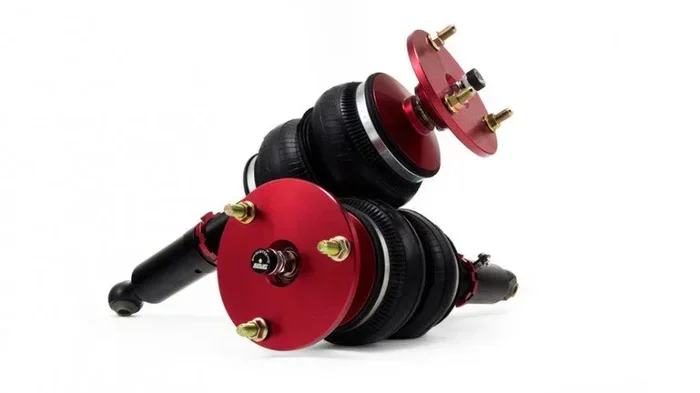
Featured image for Lexus TX air suspension
Image source: airride.co.uk
Replacing the air suspension on a Lexus TX typically costs between $2,500 and $5,500 per axle, depending on whether you choose OEM parts or aftermarket alternatives. Labor rates vary significantly by region, but the complexity of the system usually demands specialized diagnostic tools and 4–6 hours of shop time per corner.
You just picked up the kids from soccer practice, loaded the gear into your new Lexus TX, and noticed the rear end sagging like a tired horse. Or maybe the dashboard lit up with a “Suspension System Malfunction” warning on the way to work. Either way, you are now Googling Lexus TX air suspension replacement cost and bracing for the bill. Take a breath. While this repair is undeniably expensive—luxury SUV tax is real—understanding exactly where your money goes puts you back in the driver’s seat.
The Lexus TX, launched for the 2024 model year, shares its TNGA-K platform with the Toyota Grand Highlander. However, the TX distinguishes itself with standard adaptive variable suspension (AVS) on most trims and a sophisticated air suspension system standard on the flagship 500h F Sport Performance. This system replaces traditional coil springs with inflatable air bags, allowing the SUV to kneel for easy entry, raise for off-road clearance, and auto-level when you hook up a trailer. It is engineering magic—until it leaks. This guide breaks down every dollar, every option, and every strategy to handle this repair without wrecking your budget.
Key Takeaways
- Total Cost Range: Expect a full four-corner replacement to land between $5,000 and $11,000 at a dealership, while independent shops may save you 20–30%.
- Component Breakdown: Air struts are the most expensive part ($800–$1,500 each), followed by the compressor ($400–$800) and valve block ($300–$600).
- Trim Level Matters: Only upper trims like the 500h F Sport Performance feature standard air suspension; lower trims use conventional coils, drastically changing repair bills.
- Aftermarket Savings: Quality aftermarket brands (Arnott, Bilstein) can cut parts costs by 40–50% compared to Lexus OEM pricing without sacrificing ride quality.
- Conversion Kits Exist: Switching to passive coil springs eliminates future air system failures for roughly $1,500–$2,500 total, but removes adaptive damping and load-leveling.
- Warranty Coverage: The 4-year/50,000-mile basic warranty and 8-year/100,000-mile hybrid component warranty may cover early failures on 2024+ models.
- Prevention Is Cheaper: Regular compressor filter changes and leak checks can extend system life by 50,000+ miles, delaying the major expense.
📑 Table of Contents
- What Is the Lexus TX Air Suspension System?
- Average Lexus TX Air Suspension Replacement Cost Breakdown
- Factors That Influence Your Final Invoice
- Warning Signs: Catching It Early Saves Thousands
- Your Repair Path: Three Doors, Different Destinations
- Maintenance: The $50 Habit That Prevents $5,000 Repairs
- Warranty, Insurance & Lemon Law Safety Nets
- DIY Reality Check: Can You Do This in Your Driveway?
- Lexus TX vs. The Competition: Contextualizing the Cost
- Real World Scenario: The “Smart Owner” Playbook
- Future-Proofing: The 100k Mile Decision
- Conclusion
What Is the Lexus TX Air Suspension System?
Before we talk price, let’s demystify the hardware. Think of the air suspension like a high-tech balloon animal. Instead of metal coils supporting the vehicle’s weight, four heavy-duty rubber air springs (often called air struts or air bags) do the heavy lifting. An onboard compressor pumps air into a reservoir tank. A valve block directs that air to specific corners based on sensor inputs—ride height sensors at each wheel, acceleration sensors, and steering angle sensors.
The Core Components
- Air Struts (Air Springs): These combine the shock absorber and the air spring into one unit at each corner. They handle damping and load support simultaneously.
- Air Compressor: Usually mounted near the rear axle or under the cargo floor, this pumps ambient air into the system. It has a built-in dryer/filter to remove moisture.
- Valve Block (Solenoid Block): The traffic controller. It opens and closes valves to send air to the front left, rear right, etc., independently.
- Air Lines: High-pressure plastic tubing connecting the compressor, valve block, and struts.
- Height Sensors: Mechanical linkages at each wheel telling the ECU (Electronic Control Unit) exactly how high the body sits.
Analogy: The Human Circulatory System
Imagine the compressor as your heart, the air lines as arteries, the valve block as the aortic valve directing flow, and the air struts as muscles expanding and contracting. The height sensors are your eyes telling the brain (ECU) where your limbs are in space. If the heart fails (compressor), blood pressure drops. If an artery bursts (air line leak), the muscle deflates. If the valve sticks, the wrong muscle gets the blood. The system is interconnected; a failure in one part often stresses the others.
Did You Know? Platform Sharing Saves You Money
The TX 500h F Sport Performance uses a system nearly identical to the Toyota Grand Highlander Hybrid Max and the Lexus RX 500h F Sport Performance. This parts commonality is good news. It means the supply chain is robust, aftermarket manufacturers have existing molds, and independent mechanics already know the architecture. You are not paying for “first-year model” experimental parts.
Average Lexus TX Air Suspension Replacement Cost Breakdown
Let’s get straight to the numbers you came for. Because the TX is new (2024+), actual dealer invoices are scarce, but we can project costs with high accuracy using Toyota/Lexus OEM pricing for the shared Grand Highlander/RX platform and current labor guides.
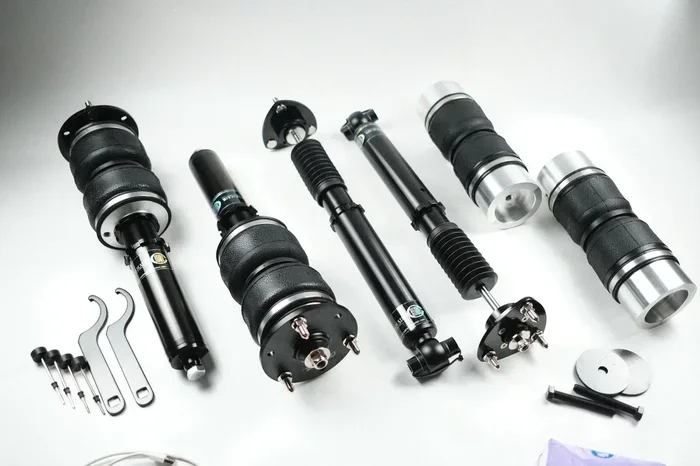
Visual guide about Lexus TX air suspension
Image source: roamairsuspension.com
The “All-In” Estimates (Per Axle)
| Repair Scenario | Dealership Estimate | Independent Shop Estimate | DIY Parts Only |
|---|---|---|---|
| Front Air Struts (Pair) | $3,200 – $4,500 | $2,400 – $3,200 | $1,600 – $2,400 |
| Rear Air Struts (Pair) | $3,000 – $4,200 | $2,200 – $3,000 | $1,500 – $2,200 |
| Compressor Assembly | $1,100 – $1,600 | $800 – $1,200 | $450 – $800 |
| Valve Block | $800 – $1,200 | $600 – $900 | $300 – $550 |
| Full 4-Corner Overhaul | $9,500 – $12,500+ | $6,500 – $8,500 | $4,000 – $5,500 |
Note: Estimates assume 2024-2025 model year. Prices include parts, labor (approx. $175-$225/hr dealer, $120-$160/hr indie), alignment, and shop supplies. Taxes extra.
Why the Massive Spread?
The difference between a dealership quote of $12,000 and an independent shop at $7,000 usually comes down to three things: Parts Markup (dealers often charge full MSRP + 20-30%), Labor Rate (dealers are $50-$75/hr higher), and Diagnostic Time (dealers may bill 1-2 hours just to confirm what you already know). Independent specialists often have “menu pricing” for common air suspension jobs on the TNGA-K platform.
Component-Level Deep Dive
Air Struts: The Big Ticket Item
Each Lexus TX air strut (OEM part number typically starting with 48080 or 48090 for this platform) lists around $850–$1,200 from the parts counter. You need two per axle. The front struts integrate the AVS (Adaptive Variable Suspension) actuator—a solenoid that adjusts damping force in milliseconds. This makes them pricier than rear units. Aftermarket equivalents (Arnott, Bilstein, Meyle) run $450–$750 each. Pro Tip: Always replace in pairs (both fronts or both rears). Replacing one side creates a damping mismatch that ruins ride quality and stresses the new unit.
The Compressor: The Heart
The TX uses a high-output, single-cylinder compressor with an integrated desiccant dryer. OEM cost: ~$550–$750. The labor to swap it is usually 1.5–2.0 hours. It lives in a harsh environment (road salt, water, heat). Critical Failure Mode: If a strut leaks, the compressor runs overtime to maintain pressure, overheating and burning out the motor or saturating the dryer. Never replace a compressor without fixing the leak that killed it.
Valve Block & Lines: The Plumbing
The valve block (solenoid pack) rarely fails mechanically but suffers from internal corrosion or stuck solenoids. OEM ~$350–$500. Air lines are cheap ($20–$50 per section) but labor-intensive to trace and replace if chafed. Rodents love the soy-based insulation on these lines—check your garage for uninvited guests.
Factors That Influence Your Final Invoice
The Lexus TX air suspension replacement cost isn’t a fixed menu price. It shifts based on variables you can control and some you can’t.
1. Trim Level & VIN Decoding
This is the single biggest factor. The TX 350 and TX 500h (base and premium) typically ride on conventional coil springs with AVS dampers. They do not have air springs. Only the TX 500h F Sport Performance gets the rear air suspension (and often front air struts depending on final spec sheets—verify with your VIN). If a shop quotes you air suspension work on a TX 350, they are either confused or upselling coil spring replacement as “air suspension.” Always decode your VIN (positions 4-8) or check the window sticker for “Air Suspension” or “Height Control.”
2. Geographic Labor Rates
Labor in San Francisco or New York metro averages $190–$250/hr at dealers. In the Midwest or Southeast, $140–$180 is standard. On a 12-hour four-corner job, that’s a $600–$1,200 swing purely on zip code.
3. OEM vs. Aftermarket vs. Remanufactured
- OEM (Lexus Box): Highest cost, 12-month/12k-mile warranty (parts only usually), guaranteed fit. Best for leased vehicles or strict warranty maintenance records.
- Premium Aftermarket (Arnott, Bilstein, Continental): 40-50% cheaper. Often built in the same factories as OEM. Lifetime warranties common. Slight risk of calibration mismatch with AVS ECU (rare on this platform).
- Remanufactured/Recycled: $200–$400/strut. High risk. The rubber bladder is old; the shock valving is unknown. Avoid for daily drivers.
4. “While You’re In There” Items
Smart shops will insist on replacing the compressor dryer/filter ($40 part) anytime the system is opened. They should also inspect sway bar links, control arm bushings, and wheel bearings. Since the suspension is disassembled, labor for these “wear items” drops to near zero. Budget an extra $300–$600 for these preventative adds.
5. Alignment is Mandatory
You cannot skip the four-wheel alignment ($150–$250). Air strut replacement changes ride height parameters. The AVS system must be recalibrated (often requiring a Techstream/ODIS level scan tool) after alignment. Skipping this eats tires in 5,000 miles and makes the safety systems (LTA, PCS) angry.
Warning Signs: Catching It Early Saves Thousands
Air suspension rarely fails catastrophically without warning. It whispers before it screams. Recognizing the whispers turns a $6,000 four-corner job into a $1,200 single-strut fix.
The “Morning Lean” (Classic Leak)
You park level on Tuesday. Wednesday morning, the driver’s rear corner is two inches lower. The compressor wakes up, runs for 30 seconds, and the car rises. Diagnosis: That specific air strut has a pinhole leak in the rubber bladder or a failing top seal. The compressor masks the symptom overnight. Action: Soapy water spray on the strut folds finds the bubbles. Fix one strut now.
The “Compressor Marathon”
You hear the compressor (a distinct electric whir/hum from the rear) running frequently—every startup, every stoplight, sometimes while parked. Diagnosis: Systemic leak (multiple struts or valve block) OR compressor failure (worn piston ring, can’t build pressure). Action: Immediate diagnostic. A $500 compressor replacement today prevents four $1,000 strut replacements next month caused by low-pressure riding.
Dashboard Warnings
- “Suspension System Malfunction / Visit Dealer”: Generic fault. Could be a height sensor ($80 part) or a dead ECU ($1,500). Needs scan tool.
- “Vehicle Height Low / Do Not Drive”: Critical failure. Major leak or compressor death. Car may be on bump stops. Tow it.
- AVS Sport/Comfort/Normal lights flashing: Communication error between suspension ECU and gateway ECU. Sometimes a battery reset clears it; often a wiring harness chafe.
The “Bounce Test” (Old School Still Works)
Push down hard on each corner. Let go. It should rise, overshoot slightly, settle once, and stop. If it keeps bouncing like a pogo stick, the internal shock valving is shot—even if the air bag holds pressure. This requires strut replacement regardless of air tightness.
Your Repair Path: Three Doors, Different Destinations
When the diagnosis is confirmed, you face a choice. There is no “wrong” answer, only the right answer for your ownership timeline and risk tolerance.
Door 1: Dealership OEM Replacement (The “Sleep Easy” Route)
Cost: $9,500–$12,500+ (4 corners).
Best For: Vehicles under factory warranty, CPO warranty, leased vehicles (return condition), owners keeping car 5+ years who value OEM ride tuning.
Pros: Factory scan tools guarantee AVS calibration. Loaner car usually provided. Warranty on repair (12mo/12k). Resale value protection (Carfax shows dealer service).
Cons: Highest cost. Service advisors may push “full system replacement” when only one corner is bad. Long wait times for parts/appointments.
Door 2: Independent Specialist + Quality Aftermarket (The “Smart Money” Route)
Cost: $5,500–$8,000 (4 corners).
Best For: Out-of-warranty owners planning to keep car 3-7 years. Shops specializing in Lexus/Toyota/Land Cruiser suspension.
Pros: 30-40% savings. Access to Arnott/Bilstein lifetime warranties. Technicians often more experienced on this specific platform than dealer techs (they see 5x the volume). Willing to replace just the failed corner.
Cons: No loaner usually (Uber credits instead). Must verify they have Techstream-level diagnostic capability for AVS calibration. Warranty is parts-only (labor not covered if part fails later).
Door 3: Passive Coil Spring Conversion (The “Delete the Problem” Route)
Cost: $1,800–$3,000 (4 corners, installed).
Best For: High-mileage vehicles (100k+), owners in rust-belt states, budget-conscious keepers, off-roaders who want simplicity.
How It Works: Kits (Strutmasters, Arnott, Unity) replace air struts with passive coil-over struts and delete the compressor/valve block/lines. You install resistors or a “delete module” to fool the ECU so no dash lights appear.
Pros: One-time fix. Zero future air leaks. Cheaper than one OEM air strut replacement. Ride quality is often better than worn-out air bags.
Cons: Loss of features: No kneel entry, no load-leveling (trailer tows nose-high), no Off-Road height mode, no AVS damping adjustment (stuck in one tune). Resale value hit (buyers want air suspension). May void remaining factory warranty on related systems. Insurance may flag modification.
Analogy: Buying Shoes
- OEM Air Struts: Custom orthotics. Expensive, perfect fit, doctor (dealer) fitted, insurance might pay.
- Aftermarket Air Struts: High-end running shoes (Hoka, Brooks). 80% of the performance, 50% of the price, great return policy.
- Coil Conversion: Solid leather boots. Indestructible, cheap, but you can’t run a marathon (tow heavy/adjust height) in them anymore.
Maintenance: The $50 Habit That Prevents $5,000 Repairs
Air suspension failure is rarely “bad luck.” It’s usually deferred maintenance. The TX system is robust, but it hates two things: Moisture and Dirt.
1. The Compressor Dryer/Filter (The #1 Killer)
The compressor sucks in humid air. The dryer cartridge (desiccant) traps moisture. Once saturated (every 2-3 years / 30k-50k miles), water enters the system. Water + 300 PSI = corrosion in valve block + frozen lines in winter + rotted rubber bladders. The Fix: Replace the dryer cartridge (part of compressor assembly on TX, sometimes serviceable) or the whole compressor unit proactively at 60k miles. Cost: $150–$300 DIY. Savings: Priceless.
2. Visual Inspection at Every Oil Change
Ask your tech (or do it yourself on ramps) to spray soapy water on: Air line fittings at struts, valve block ports, compressor intake/exhaust. Look for bubbles. Check strut boots for tears. Check compressor mount rubber for cracks (vibration kills compressors).
3. “Exercise” the System
If you never use Off-Road mode or tow, the solenoids in the valve block seize from disuse. Once a month: Start car -> Enter Off-Road mode (max height) -> Wait for rise -> Enter Normal -> Wait -> Enter Easy Access (kneel) -> Wait -> Normal. Cycles the valves, spreads lubricant.
4. Protect the Lines
Rodent tape (spicy tape) on harnesses near suspension. Keep engine bay clean—debris traps moisture against lines.
Warranty, Insurance & Lemon Law Safety Nets
Before you swipe a card, check these buckets.
Factory Warranty (2024+ Models)
- Basic: 4 Years / 50,000 Miles. Covers defects in materials/workmanship. Air struts leaking at 20k miles? Covered. Compressor dead at 40k? Covered.
- Powertrain: 6 Years / 70,000 Miles. Does not typically cover suspension.
- Hybrid/EV Components: 8 Years / 100,000 Miles (10yr/150k in CA/ZEV states). The TX 500h is a hybrid. If the suspension ECU is integrated with hybrid control (unlikely but possible), there’s an argument. The compressor is electric—some dealers have goodwilled this under hybrid warranty. Ask nicely with a printout.
- Corrosion Perforation: 6 Years / Unlimited Miles. If a strut housing rusts through, it’s covered. Surface rust? No.
Certified Pre-Owned (CPO) Extension
Lexus CPO adds 1 year/unlimited miles from purchase date on top of remaining factory warranty. Covers air suspension. $0 deductible usually. If you bought CPO, go to dealer first.
Extended Service Contracts (VSC / “Extended Warranty”)
Read the fine print. “Exclusionary” (bumper-to-bumper style) plans cover air suspension. “Named Component” plans often list “Air Suspension Compressor” but exclude “Air Springs/Struts” as wear items. Call the administrator, get written confirmation of coverage for “Air Strut Assembly” before authorizing repair.
Insurance (Comprehensive/Collision)
Only covers sudden, accidental damage. Pothole blowout? Yes (minus deductible, rate hike risk). Slow leak from age? No. Road hazard tire/wheel warranties (bought at tire shop) sometimes cover suspension damage from impacts—check your certificate.
Lemon Law / Goodwill
If your 2024 TX has had 3+ visits for the same suspension fault (e.g., compressor replacement twice, now valve block), document everything. Contact Lexus Customer Experience (1-800-255-3987) for “Goodwill Assistance” before Lemon Law attorney. They often authorize one-time out-of-warranty repairs for loyal owners.
DIY Reality Check: Can You Do This in Your Driveway?
Short answer: Front struts? Maybe. Rear struts? Hard. Compressor? Easy. Calibration? Impossible without $3,000 tool.
What You Need
- Quality spring compressors (strut compressors) – Mandatory. Air struts hold 300+ PSI. Removing the top nut without compressing the spring turns the strut into a missile. Rent from AutoZone/O’Reilly ($50 deposit).
- Torque wrench (140+ ft-lbs for top nuts, 80+ for lower).
- Scan tool with Active Test / Height Control Calibration capability. Autel MaxiSys, Launch X431 Pro, or Toyota Techstream (mini-VCI cable + laptop). Generic OBD2 scanners cannot calibrate ride height.
- Jack stands, ramps, impact gun, metric sockets (10-22mm), flare nut wrenches for air lines.
- Patience. 8-12 hours for first-time 4-corner.
The Calibration Trap
You bolt on new struts. Car sits level. You drive away. Dash lights explode. AVS, VSC, ABS, Pre-Collision—all disabled. Why? The ECU doesn’t know “zero.” It needs a “Height Sensor Zero Point Calibration” performed on a level surface with specific fuel load and no passengers. The scan tool commands: “Measure current height -> Store as reference -> Inflate/Deflate to targets -> Verify.” Without this, the car thinks it’s perpetually tilted. Do not DIY without the scan tool. Towing to a shop for just calibration costs $200–$400.
DIY Cost Verdict
Parts (Aftermarket 4 corners + Compressor + Dryer): ~$3,500.
Tools (Rental/Buy): ~$200.
Alignment + Calibration (Shop): ~$400.
Total: ~$4,100 vs $7,500 Indie / $11,000 Dealer.
Savings: ~$3,400. Value of your weekend + risk: Priceless.
Lexus TX vs. The Competition: Contextualizing the Cost
Is the TX expensive to fix? Yes. Is it an outlier? No.
| Vehicle (Comparable Trim) | Air Suspension Type | Est. 4-Corner Replacement (Indie) |
|---|---|---|
| Lexus TX 500h F Sport | 4-Corner Air + AVS | $6,500 – $8,500 |
| BMW X7 M60i | 2-Axle Air + Adaptive | $8,000 – $11,000 |
| Mercedes GLS 450 | AIRMATIC (4-Corner) | $7,500 – $10,000 |
| Cadillac Escalade | Air Ride Adaptive | $6,000 – $8,500 |
| Lincoln Navigator | Adaptive Air | $5,500 – $7,500 |
| Toyota Grand Highlander Hybrid Max | Rear Air Only (Typically) | $3,000 – $4,500 |
The TX sits right in the middle of the luxury pack. It is cheaper than German rivals largely due to Toyota parts bin sharing. The Grand Highlander is cheaper because it often only has rear air suspension (load leveling), not 4-corner adaptive air.
Real World Scenario: The “Smart Owner” Playbook
Let’s walk through a hypothetical but realistic 2024 TX 500h F Sport at 62,000 miles (just out of basic warranty).
- Symptom: Rear passenger corner low in morning. Compressor runs 45 secs at startup.
- Action: Owner sprays soapy water. Finds bubbles at top mount of rear strut. Books appointment at highly-rated independent Lexus specialist (not general mechanic).
- Diagnosis (Paid 1hr labor ~$150): Confirms rear strut leak. Front struts dry. Compressor healthy (builds 300 PSI in 12 secs). Valve block clean. Height sensors accurate.
- Decision: Replace rear pair only (OEM or Arnott). Replace compressor dryer filter (preventative). Align + Calibrate.
- Parts Choice: Arnott Rear Air Struts (Pair) $950 shipped. OEM Dryer/Filter $45.
- Labor: 3.5 hours @ $140 = $490. Alignment/Cal $200.
- Total: $1,685. vs Dealer Quote $3,800 for same scope.
- Outcome: Car rides perfect. Dash clean. Owner saves $2,100. Schedules front struts at 90k miles proactively.
This is the “Inverted Pyramid” of repair strategy: Diagnose precisely -> Repair minimally -> Maintain proactively.
Future-Proofing: The 100k Mile Decision
At 90,000–100,000 miles, rubber components (strut bladders, lines, bushings) hit their chemical lifespan limit. You face a strategic fork:
Strategy A: “Refresh & Keep” ($4k-$6k)
Replace all 4 struts + compressor + dryer + alignment. Drive another 60k miles. Best if you love the TX, hate car payments, and the rest of the car (hybrid battery, trans, body) is solid.
Strategy B: “Convert & Forget” ($2k-$3k)
Install coil conversion kit. Delete air system. Drive until wheels fall off. Best for high-mileage commuters, rust belt survivors, or second-vehicle duty.
Strategy C: “Sell/Trade Before The Cliff” ($0 Repair)
List it at 85k miles with “Air suspension recently serviced” (if you did Strategy A) or priced $3k below market (if needing work). Let the next owner absorb the depreciation hit. Luxury SUVs depreciate hardest at 60k-100k miles.
Conclusion
The Lexus TX air suspension replacement cost is a significant line item—there is no sugarcoating a potential $7,000–$11,000 bill. But knowledge transforms anxiety into strategy. You now know that:
- Only the TX 500h F Sport Performance has this system (check your VIN).
- A single corner leak caught early is a $1,500 fix, not a $10,000 overhaul.
- Independent specialists using Arnott/Bilstein parts deliver 80% of the OEM experience for 60% of the dealer price.
- Coil conversion is a legitimate “nuclear option” for long-term budget certainty.
- The compressor dryer is the $50 part that saves the $5,000 system.
Your Lexus TX is a remarkable machine—quiet, capable, and tech-laden. The air suspension is a core part of that magic carpet ride. Treat it like the high-performance system it is: inspect it annually, exercise the modes monthly, and address leaks the week they appear. Do that, and the only time you’ll think about suspension cost is when you’re smiling at the smooth ride over a pothole that would rattle a lesser SUV. Drive on.
Frequently Asked Questions
Does every Lexus TX have air suspension?
No. Only the TX 500h F Sport Performance trim comes standard with four-corner adaptive air suspension. The TX 350, TX 350 Premium, and TX 500h Premium trims utilize conventional coil springs with Adaptive Variable Suspension (AVS) dampers, which are significantly cheaper to repair.
Can I replace just one air strut on my Lexus TX?
Technically yes, but it is strongly discouraged. Replacing only one strut creates a damping and spring rate imbalance side-to-side, leading to unpredictable handling, uneven tire wear, and premature failure of the remaining old strut. Always replace in pairs (both front or both rear).
How long does a Lexus TX air suspension last?
With proper maintenance (compressor dryer changes, leak checks), the air struts typically last 80,000–120,000 miles. The compressor often fails first around 70,000–100,000 miles if leaks are ignored, as it overworks to maintain pressure.
Will a coil spring conversion kit void my Lexus warranty?
Installing a coil conversion kit on a vehicle still under factory warranty (4yr/50k) will almost certainly void the warranty on the suspension system and potentially related electronic stability control systems. It is best reserved for vehicles well outside the factory warranty period.
Why is the Lexus dealer quote so much higher than an independent shop?
Dealerships charge higher labor rates ($175–$250/hr vs $120–$160/hr), use OEM parts at full MSRP markup (often 30–50% over cost), and typically bill 1–2 hours of diagnostic time even if you already know the problem. Independent specialists focus on this specific platform, have lower overhead, and access quality aftermarket parts.
Can I drive my Lexus TX with a failed air suspension?
If the system has dropped to the bump stops (“Vehicle Height Low / Do Not Drive” warning), do not drive it. You risk destroying the strut housings, tearing brake lines, and losing steering control. If one corner is soft but the compressor keeps up (“Morning Lean”), you can drive cautiously to a shop, but avoid heavy loads or high speeds.