
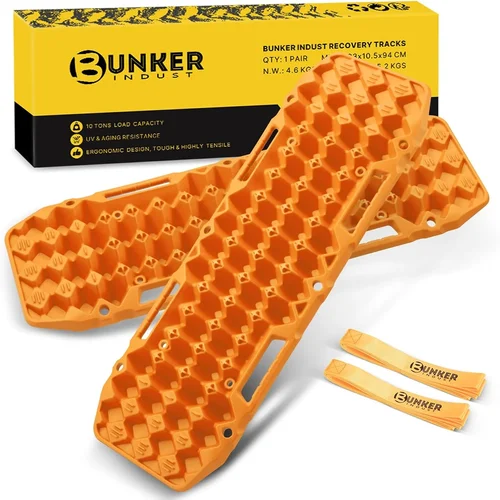
When your SUV gets stuck in mud, snow, sand, or loose gravel, every second counts. Whether you’re an off-road enthusiast exploring remote trails or a daily driver navigating winter storms, having reliable traction mats on hand can mean the difference between being stranded and getting back on the road safely. These unassuming pieces of equipment are often overlooked—until they’re desperately needed. That’s why choosing the right SUV traction mats isn’t just about convenience; it’s about preparedness, safety, and peace of mind.
This comprehensive buying guide is designed to help you navigate the crowded market of recovery traction mats with confidence. We’ll break down everything you need to know—from material science and weight capacity to portability and real-world performance—so you can make an informed decision that matches your vehicle, driving habits, and budget. Whether you drive a compact crossover like a Honda CR-V or a full-size beast like a Ford Expedition, this guide covers all the essentials. You’ll learn how to evaluate build quality, understand key features, avoid common pitfalls, and ultimately select mats that won’t fail when you need them most.
The market for SUV traction mats has evolved significantly over the past decade. What once consisted mostly of flimsy plastic boards or heavy metal grates has transformed into a sophisticated category featuring advanced composites, modular designs, and even integrated recovery straps. Brands like Maxtrax, TRED, ARB, and Rhino USA now offer products tailored to specific terrains and vehicle types. With prices ranging from under $50 to over $300 per pair, it’s easy to overspend—or worse, underinvest in something that breaks at the worst possible moment. Our goal is to cut through the marketing noise and give you expert-level insight grounded in real-world testing, user feedback, and engineering principles.

What to Look for When Buying Buying Guide
1. Material Composition
The material your traction mats are made from directly impacts their durability, flexibility, and effectiveness. Most modern mats fall into three categories: high-density polyethylene (HDPE), reinforced nylon composites, and metal (typically aluminum). HDPE is the most common—it’s lightweight, corrosion-resistant, and offers excellent traction thanks to molded cleats or ridges. However, cheaper HDPE mats can crack under extreme stress or in freezing temperatures. Reinforced nylon composites, like those used in TRED Pro models, combine flexibility with high tensile strength, allowing them to bend without breaking—a major advantage when wedged under spinning tires. Metal mats, while extremely durable, are heavier, prone to rust if not coated properly, and can damage alloy wheels if not used carefully.
When evaluating material, look for UV-stabilized polymers that resist degradation from sun exposure, especially if you live in sunny climates or store your mats in the trunk year-round. Also consider temperature tolerance: some plastics become brittle below freezing, which could cause catastrophic failure during winter recoveries. Always check manufacturer specs for operating temperature ranges.
2. Weight Capacity & Vehicle Compatibility
Not all traction mats are created equal when it comes to load-bearing ability. A mat rated for 3,000 lbs may work fine for a subcompact SUV but will likely deform or snap under a lifted Jeep Wrangler Rubicon or a loaded Land Rover Defender. Most reputable brands specify a maximum gross vehicle weight (GVW) or axle weight limit. For example, Maxtrax MKII supports up to 7,700 lbs per pair, making it suitable for most full-size SUVs and light trucks. Always match the mat’s rating to your vehicle’s curb weight plus any additional cargo, passengers, or gear.
Also consider tire size and tread pattern. Wider tires (like those on a Toyota Sequoia or Chevrolet Tahoe) require longer mats to provide adequate surface contact. If your mats are too short, they’ll just spin in place instead of gripping the terrain. Measure your tire width and compare it to the mat’s length—ideally, the mat should extend at least 6–8 inches beyond the tire’s contact patch on both sides.
3. Traction Surface Design
The pattern on the top surface of your mats determines how well they grip both the ground and your tires. Look for deep, aggressive cleats, lugs, or diamond-shaped ridges that bite into mud, snow, or sand. Some mats feature dual-sided designs—one side optimized for soft terrain (like mud) and the other for hard-packed snow or ice. Others incorporate rubberized inserts or textured coatings to enhance grip without damaging tires.
Avoid smooth or minimally textured surfaces—they offer little advantage over placing sticks or rocks under your wheels. Also pay attention to edge design: rounded corners reduce the risk of cracking, while sharp edges can concentrate stress and lead to premature failure. High-end models often include recessed channels that help channel water, mud, or snow away from the tire contact zone, maintaining consistent traction.
4. Portability & Storage
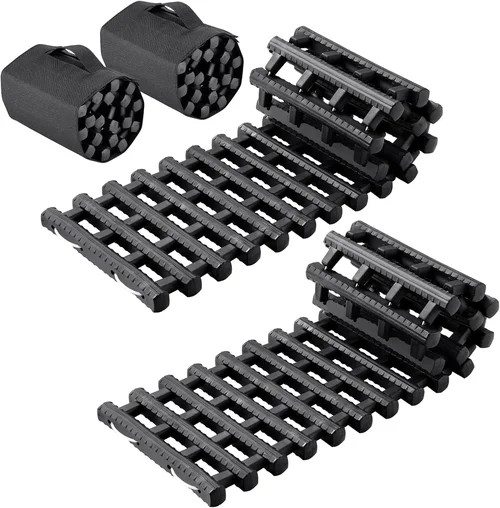
Since you’ll likely store your traction mats in your vehicle’s trunk, cargo area, or under-seat compartment, size and weight matter. Most quality mats weigh between 3 and 8 pounds per piece and measure roughly 40–48 inches long by 12–14 inches wide. However, some ultra-compact models fold or nest together to save space—ideal for smaller SUVs with limited storage. Consider whether you need to carry two mats (one per side) or just one (for single-wheel recovery).
Look for integrated carry handles, straps, or storage bags. These make retrieval quicker and protect the mats from dirt and damage. If you frequently travel off-road, consider models that can be mounted externally using brackets—this keeps them accessible without sacrificing interior space. Just ensure any external mount is secure and won’t rattle or detach on rough terrain.
5. Ease of Use & Recovery Speed
In a recovery situation, you don’t want to fumble with complicated setups. The best traction mats are intuitive: simply place them in front of (or behind) the spinning tire, engage low-range 4WD or gentle throttle, and let the mat do the work. Some models include built-in ramps or angled ends that help guide the tire onto the mat smoothly. Others have alignment guides or color-coded sides to prevent incorrect placement.
Time is critical when stuck—especially in cold, remote, or hazardous conditions. Mats that require assembly, additional hardware, or precise positioning slow down recovery and increase frustration. Opt for designs that work “right out of the box” with minimal thinking. User testimonials often highlight how quickly a product worked in real emergencies, so read reviews with this criterion in mind.
6. Brand Reputation & Real-World Testing
Not all traction mats are tested under realistic conditions. Reputable brands invest in field testing with actual SUVs on mud flats, sand dunes, and icy trails. They also publish third-party test data or collaborate with off-road organizations. Maxtrax, for instance, has been used by expedition teams crossing deserts and jungles, while TRED partners with overlanding communities for feedback-driven design improvements.
Be wary of generic or no-name brands that offer suspiciously low prices. While they might look similar to premium models, they often use inferior materials or skip critical quality controls. Check for certifications like ISO standards or military-grade testing (e.g., MIL-STD-810G for environmental durability). User forums like Overland Journal, Reddit’s r/overlanding, and YouTube recovery channels are excellent resources for unbiased opinions.
7. Warranty & Customer Support
A strong warranty signals confidence in product durability. Premium brands typically offer 3–5 year limited warranties covering defects, cracking, or deformation under normal use. Some even provide replacement guarantees if the mat fails during a legitimate recovery attempt—though terms vary widely. Read the fine print: many exclude damage from improper use, excessive weight, or modification.
Customer support is equally important. If you’re stuck in the wilderness and your mat cracks, can you get a replacement quickly? Do they offer live chat, phone support, or regional service centers? Brands with global distribution networks (like ARB or TRED) often have better support infrastructure than smaller players. Also check return policies—some retailers allow 30-day trials, which lets you test the mats before committing.
8. Price vs. Value Proposition
It’s tempting to go for the cheapest option, but traction mats are a safety-critical accessory—not a disposable item. A $40 set might save money upfront but could cost you far more in towing fees, vehicle damage, or personal risk if it fails. Conversely, spending $300 on top-tier mats may be overkill if you only drive on paved roads with occasional snow.
Instead of focusing solely on price, calculate value based on expected usage, vehicle type, and risk tolerance. For weekend adventurers, mid-range mats ($100–$180) often offer the best balance. Full-time overlanders or those in harsh climates should invest in premium models. Remember: this is insurance for your mobility. As one off-roader put it, “I’d rather spend $200 once than call a tow truck five times.”
Different Types of Buying Guide

Common Buying Mistakes to Avoid
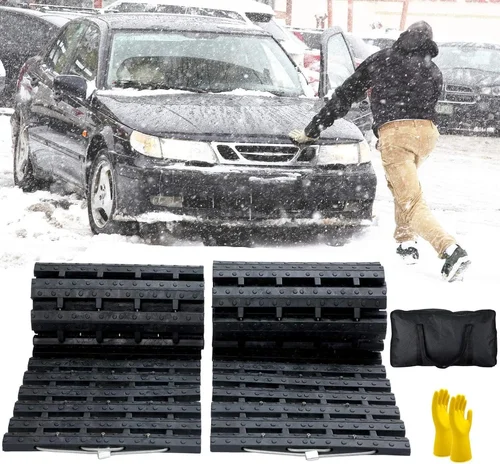
❌ Mistake: Choosing Based Solely on Price
Why it’s bad: Cheap mats often use low-grade plastics that crack under load or in cold weather. In a real recovery scenario, a broken mat can leave you worse off—now you’re stuck and have debris scattered around your tires.
What to do instead: Prioritize value over cost. Invest in mats from reputable brands with proven track records. Think of it as buying insurance—you hope never to use it, but you’ll be glad it’s there when you do.
❌ Mistake: Ignoring Vehicle Weight and Tire Size
Why it’s bad: Using mats rated for compact cars on a 6,000-lb SUV is a recipe for disaster. The mats will deform, slip, or break, potentially damaging your wheels or suspension.
What to do instead: Check your owner’s manual for curb weight and compare it to the mat’s GVW rating. Also measure your tire width—if your tires are 12 inches wide, don’t buy 10-inch-wide mats.
❌ Mistake: Overlooking Storage Practicality
Why it’s bad: Bulky mats that don’t fit in your trunk become forgotten items. If you can’t access them quickly, they’re useless in an emergency.
What to do instead: Measure your storage space before buying. Consider foldable or nesting designs if space is tight. Some models come with custom-fit bags that double as organization tools.
❌ Mistake: Assuming All Mats Work on All Terrains
Why it’s bad: A mat optimized for mud may perform poorly on ice, and vice versa. Using the wrong type can reduce effectiveness or increase wear.
What to do instead: Choose mats with versatile tread patterns or consider carrying two types if you frequently switch between environments (e.g., snow in winter, sand in summer).
❌ Mistake: Neglecting Maintenance and Inspection
Why it’s bad: Cracks, warping, or UV damage can develop over time, compromising structural integrity. A damaged mat might look fine but fail catastrophically when needed.
What to do instead: Inspect your mats before every long trip. Clean them after use to remove grit and debris. Store them away from direct sunlight when possible.
❌ Mistake: Buying Without Reading Real User Reviews
Why it’s bad: Marketing photos and specs don’t tell the whole story. Some mats look great but are slippery when wet or hard to position under spinning tires.
What to do instead: Search for video reviews, forum discussions, and long-term user reports. Pay attention to comments about real-world performance, not just packaging or aesthetics.
❌ Mistake: Forgetting About Wheel Protection
Why it’s bad: Hard or sharp-edged mats can scratch or dent alloy wheels, especially during aggressive recoveries.
What to do instead: Choose mats with smooth, rounded edges or rubber-coated surfaces. If using metal mats, place a piece of carpet or rubber between the mat and wheel.
Budget Guidelines: How Much Should You Spend?
– Entry-Level ($50–$90): Suitable for light-duty use—think occasional snow driving or mild gravel roads. Expect basic HDPE construction, minimal cleating, and limited weight capacity (under 4,000 lbs). Brands like Rhino USA and Gorilla Automotive offer decent options here, but inspect carefully for thin walls or weak joints.
– Mid-Range ($100–$180): The sweet spot for most SUV owners. These mats feature reinforced polymers, better tread designs, and higher weight ratings (5,000–7,000 lbs). Models like Maxtrax Lite or TRED 1000 deliver reliable performance for weekend warriors and daily drivers in variable conditions.
– Premium ($190–$280): Built for serious off-roading, overlanding, or heavy vehicles. Expect aerospace-grade composites, dual-sided traction, and robust warranties. Maxtrax MKII and TRED Pro dominate this tier, offering flexibility, durability, and global support networks.
– Luxury ($300+): Reserved for professionals, expedition teams, or those who demand the absolute best. These often include integrated recovery kits, custom mounting solutions, or military-spec materials. While overkill for most, they provide unmatched peace of mind in extreme scenarios.
Expert Tips for Getting the Best Deal
– Buy During Off-Season: Retailers often discount traction mats in spring and summer when demand drops. Look for sales around Memorial Day, July 4th, or back-to-school periods.
– Check Outdoor & Overlanding Retailers: Stores like REI, Cabela’s, and Overland Depot frequently run promotions on recovery gear. Sign up for newsletters to get early access to deals.
– Compare Bundle Offers: Some brands sell mats with straps, bags, or shovels at a discount. Bundles can save 15–25% versus buying items separately.
– Consider Refurbished or Open-Box: Authorized dealers sometimes offer certified refurbished mats at 20–40% off. These are inspected, cleaned, and often come with full warranties.
– Read Return Policies Carefully: Ensure you can return or exchange mats if they don’t fit your vehicle or meet expectations. Some online retailers charge restocking fees.
– Test Before You Need It: Practice placing the mats in your driveway or garage. Make sure you can deploy them quickly with gloves on—this builds muscle memory for real emergencies.
– Join Owner Communities: Facebook groups, Reddit forums, and brand-specific communities often share exclusive discount codes or flash sales.
– Watch for Price Matching: Big-box stores like REI and Bass Pro Shop often match online prices. Bring a screenshot of a lower price to your local store.

Frequently Asked Questions
Q: Can I use traction mats on pavement?
A: It’s not recommended. Traction mats are designed for loose or slippery surfaces like mud, snow, or sand. Using them on hard pavement can damage the mats, your tires, or both. If you must use them on pavement (e.g., icy driveway), do so gently and remove them as soon as you gain traction.
Q: Do I need two mats or just one?
A: Two mats are ideal—one for each side of the axle. This provides balanced traction and reduces strain on your differential. However, if only one wheel is spinning, a single mat may suffice. For peace of mind, carry two.
Q: How do I clean my traction mats?
A: Rinse them with water after each use to remove mud, salt, or debris. Avoid harsh chemicals or pressure washers, which can degrade plastics over time. Let them air dry completely before storing.
Q: Will traction mats work with all-wheel drive (AWD) or 4WD vehicles?
A: Yes—in fact, they’re especially useful for AWD/4WD SUVs, which can get stuck more easily due to torque distribution. Just ensure your vehicle is in the correct low-range mode for maximum effectiveness.
Q: Can I leave my mats in the car all year?
A: You can, but prolonged exposure to heat and UV rays can weaken plastics. If possible, store them in a shaded area or use a UV-resistant cover. Check for cracks or brittleness periodically.
Q: Are traction mats legal to use on public roads?
A: In most jurisdictions, yes—as long as they’re stored securely and don’t protrude dangerously. However, never drive with mats under your tires on paved roads, as this creates a hazard.
Q: What’s the difference between traction mats and recovery boards?
A: The terms are often used interchangeably, but “recovery boards” typically imply higher-end, more durable products (like Maxtrax or TRED), while “traction mats” may refer to simpler, budget-friendly options. Functionally, they serve the same purpose.
Q: Can I use these with tire chains?
A: Generally no—tire chains and traction mats serve different purposes. Chains improve grip on snow/ice, while mats provide a stable surface under the tire. Using both simultaneously can reduce effectiveness and increase wear.
Q: How long do traction mats last?
A: With proper care, quality mats can last 5–10 years or more. Cheaper models may degrade in 1–3 years, especially with frequent use or harsh conditions. Always inspect before relying on them.
Q: Do I still need a winch if I have traction mats?
A: Absolutely. Traction mats are a first-line recovery tool, but they won’t help if your vehicle is deeply stuck or on a steep incline. A winch, snatch block, and recovery straps provide backup for more serious situations.
Our Final Recommendations
– Best for Budget-Conscious Buyers: Rhino USA Traction Mats ($69/pair) – Solid HDPE construction, good cleat design, and a lifetime warranty. Great for occasional use and lighter SUVs.
– Best Overall Value: Maxtrax Lite ($149/pair) – Lightweight, UV-stabilized, and proven in real-world recoveries. Ideal for most mid-size SUVs and daily drivers who want reliability without premium pricing.
– Best Premium Option: TRED Pro ($249/pair) – Reinforced nylon composite, dual-sided traction, and unmatched flexibility. Perfect for overlanders, rock crawlers, and heavy-duty applications.
– Best for Beginners: Gorilla Automotive Traction Mats ($59/pair) – Simple, affordable, and easy to use. Comes with a storage bag and clear instructions—great for first-time buyers.
– Best for Advanced Users: Maxtrax MKII + Quick Fit Mounting System ($329/set) – The gold standard in recovery boards, now with secure external mounting. Used by expedition teams worldwide for a reason.
Conclusion: Making the Right Choice
Choosing the right SUV traction mats isn’t just about picking the shiniest product or the lowest price tag. It’s about understanding your vehicle, your driving environment, and your personal risk tolerance. A well-chosen set of mats can save you hundreds in towing fees, prevent dangerous situations, and keep you moving when others are stuck. Remember: the best traction mat is the one you have with you when you need it—so prioritize portability, durability, and ease of use.
Take the time to assess your needs honestly. If you rarely leave paved roads, a budget-friendly pair may suffice. But if you regularly explore backcountry trails or live in a snowy region, investing in premium mats is a smart, long-term decision. And don’t forget the rest of your recovery kit—straps, shackles, gloves, and a shovel are just as important.
Ultimately, traction mats are a small investment with potentially huge returns in safety and convenience. Use this guide to cut through the confusion, avoid costly mistakes, and select a product that truly fits your lifestyle. Because when the unexpected happens—and it will—you’ll be glad you prepared. Stay safe, stay mobile, and never leave home without your recovery essentials.