
Choosing the right motor oil for your SUV isn’t just about keeping the engine running—it’s about protecting your investment, ensuring long-term reliability, and maximizing performance under demanding conditions. SUVs are built for versatility: towing trailers, hauling gear, navigating off-road terrain, and commuting daily through stop-and-go traffic. These varied workloads place unique stresses on the engine, making synthetic motor oil not just a luxury, but often a necessity. Unlike conventional oils, full synthetic formulations offer superior thermal stability, better cold-flow properties, and enhanced resistance to breakdown—critical advantages for modern SUV engines that operate at higher temperatures and tighter tolerances.
This comprehensive guide is designed to cut through the noise and confusion surrounding synthetic motor oils in 2026. Whether you drive a rugged full-size SUV like a Chevrolet Tahoe or a compact crossover like a Honda CR-V, understanding what makes one synthetic oil better than another can save you money, extend your vehicle’s life, and prevent costly repairs down the road. We’ll walk you through every critical factor—from viscosity ratings and API certifications to brand reputation and real-world performance—so you can make an informed decision tailored to your specific SUV, driving habits, and climate. By the end of this guide, you’ll know exactly what to look for, which myths to ignore, and how to get the best value without compromising quality.
The market for synthetic motor oil has exploded in recent years, driven by advancements in additive technology, stricter emissions standards, and consumer demand for longer oil change intervals. Major brands like Mobil 1, Castrol, Pennzoil, and Valvoline now offer a dizzying array of formulations—each claiming to be “the best” for SUVs. But not all synthetics are created equal. Some are optimized for fuel economy, others for extreme heat or cold, and a few are engineered specifically for high-mileage engines or turbocharged powertrains. With so many options, it’s easy to overspend on features you don’t need—or worse, choose an oil that doesn’t meet your SUV’s manufacturer specifications. This guide demystifies the process, giving you expert-level insight grounded in real engineering principles and practical experience.

What to Look for When Buying Buying Guide
1. Viscosity Grade (SAE Rating)
The Society of Automotive Engineers (SAE) viscosity grade—like 5W-30 or 0W-20—is arguably the most important specification when selecting synthetic oil for your SUV. This two-part number tells you how the oil flows at cold temperatures (the “W” stands for winter) and how it maintains thickness at operating temperature. For example, a 5W-30 oil flows as easily as a 5-weight oil when cold but thickens to a 30-weight at 100°C. Modern SUVs often specify lower-viscosity oils (like 0W-20 or 5W-20) to improve fuel efficiency and reduce engine wear during cold starts, especially in turbocharged or direct-injection engines.
Always consult your owner’s manual first—using the wrong viscosity can lead to poor lubrication, increased wear, or even engine damage. In colder climates (below freezing), a lower “W” number (like 0W or 5W) ensures easier cold starts and faster oil circulation. In hotter regions or if you frequently tow heavy loads, a slightly higher high-temperature rating (like 40 or 50) may be warranted. Never deviate from your manufacturer’s recommendation unless advised by a certified mechanic or under extreme operating conditions covered by extended service intervals.
2. API and ILSAC Certifications
Look for oils that carry current American Petroleum Institute (API) and International Lubricant Standardization and Approval Committee (ILSAC) certifications. These stamps—such as “API SP” or “ILSAC GF-6A”—indicate that the oil has passed rigorous testing for wear protection, deposit control, fuel economy, and compatibility with modern engine technologies like turbochargers and gasoline direct injection (GDI). As of 2026, API SP and ILSAC GF-6 are the latest standards, offering improved protection against low-speed pre-ignition (LSPI), a common issue in turbocharged small-displacement engines found in many newer SUVs.
Using an oil without these certifications risks voiding your warranty or causing premature engine wear. Always check the back label of the oil container for the official API “donut” symbol and ensure it matches or exceeds your vehicle manufacturer’s requirements. For example, Toyota, Ford, and Hyundai all require API SP or equivalent for models produced after 2020.
3. Base Oil Quality and Synthetic Composition
Not all synthetics are full synthetics. Some products labeled “synthetic blend” mix conventional base oils with synthetic components—offering moderate performance improvements at a lower price but lacking the full benefits of 100% synthetic formulations. Full synthetic oils are engineered from chemically modified petroleum components or synthesized from pure compounds, resulting in uniform molecular structures that resist oxidation, thermal breakdown, and sludge formation far better than conventional oils.
High-quality base stocks—such as Group III, IV (PAO), or V (ester-based)—determine how well the oil performs under stress. Group IV (polyalphaolefin) and Group V (ester) synthetics offer exceptional shear stability and film strength, ideal for high-performance or heavy-duty SUV applications. While Group III oils (highly refined mineral oils) can technically qualify as “synthetic” under current labeling rules, true full synthetics typically use Groups IV and V for superior performance. Always verify whether the product is “full synthetic” or a “synthetic blend” on the packaging.
4. Additive Package and Performance Enhancers
The real magic of synthetic oil lies in its additive package—a sophisticated cocktail of detergents, dispersants, anti-wear agents, friction modifiers, and antioxidants. For SUVs, look for oils with robust anti-wear additives like zinc dialkyldithiophosphate (ZDDP) or newer ashless alternatives that protect camshafts, lifters, and piston rings under high load. Detergents prevent sludge and varnish buildup, while dispersants keep contaminants suspended so they can be filtered out.
Friction modifiers like molybdenum disulfide or organic friction reducers help improve fuel economy—a key concern for larger, less efficient SUVs. Antioxidants extend oil life by slowing oxidation, which is critical if you plan to extend oil change intervals beyond 5,000 miles. Some premium synthetics also include seal conditioners to prevent leaks in older engines and corrosion inhibitors for vehicles driven in salty or humid environments. A well-balanced additive package ensures your SUV’s engine stays clean, cool, and protected mile after mile.
5. Manufacturer Approvals and OEM Specifications
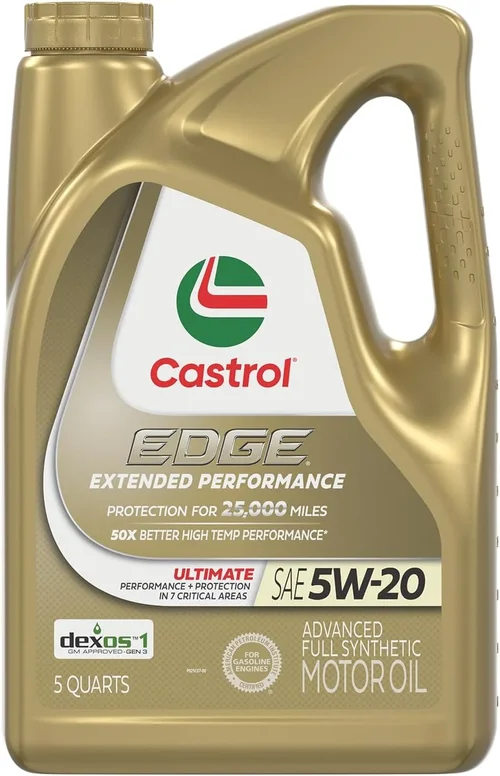
Beyond API and ILSAC standards, many automakers issue their own proprietary specifications—such as GM dexos1 Gen 3, Ford WSS-M2C946-B1, or Honda HTO-06. These approvals ensure the oil meets the specific engineering demands of that brand’s engines, including compatibility with emissions systems, timing chains, and variable valve timing mechanisms. Using an oil that lacks these approvals—even if it meets API SP—can result in warranty denial if an engine issue arises.
For example, General Motors requires dexos1-approved oil for most of its SUVs (like the GMC Yukon or Cadillac Escalade), while European brands like BMW and Mercedes-Benz often require Longlife certifications (e.g., BMW LL-01 or MB-Approval 229.5). Always cross-reference your owner’s manual or the manufacturer’s website to confirm required specs. Reputable oil brands clearly list these approvals on their labels and websites.
6. Oil Change Interval Compatibility
One of the biggest advantages of synthetic oil is its ability to last longer between changes—but only if it’s formulated for extended drain intervals. Many modern SUVs come with oil life monitoring systems (OLMS) that adjust change intervals based on driving conditions, and using a high-quality synthetic allows you to safely follow these extended schedules (often 7,500 to 10,000 miles or more).
However, not all synthetics are built for long drains. Budget synthetics may lack the oxidative stability needed to maintain protection over thousands of miles. Look for oils specifically marketed for “extended performance” or “long-life” use, and ensure they meet your vehicle’s recommended interval. If you frequently drive in severe conditions—short trips, towing, dusty environments, or extreme temperatures—you may still need to change oil more frequently, regardless of the oil type.
7. Climate and Driving Conditions
Your local climate and typical driving patterns heavily influence the best synthetic oil choice. In frigid northern regions (e.g., Minnesota or Alaska), a 0W-20 or 5W-30 oil ensures reliable cold starts and rapid lubrication during winter mornings. In hot desert climates (like Arizona or Texas), a higher high-temperature viscosity (like 10W-40 or 5W-40) may provide better protection under sustained heat, especially when towing or idling in traffic.
City driving with frequent stop-and-go traffic accelerates oil degradation due to moisture buildup and fuel dilution, while highway cruising is gentler on oil. If you use your SUV for off-roading, overlanding, or heavy towing, prioritize oils with enhanced shear stability and thermal resistance. Some synthetics are specifically formulated for “severe service” conditions—look for this designation on the label.
8. Brand Reputation and Independent Testing
While brand name doesn’t guarantee quality, established manufacturers with a history of innovation and transparency tend to deliver more consistent results. Brands like Mobil 1, Castrol EDGE, Pennzoil Platinum, and Royal Purple invest heavily in R&D and third-party testing to validate their claims. Independent labs like Consumer Reports, Noria Corporation, and various automotive engineering forums regularly test oil samples for viscosity retention, TBN (total base number), and contamination levels.
Avoid no-name or store-brand synthetics unless they carry full API/ILSAC certifications and OEM approvals. Reading verified customer reviews on platforms like Amazon, Advance Auto Parts, or forums like Reddit’s r/MechanicAdvice can reveal real-world performance insights—especially regarding sludge formation, fuel economy gains, or compatibility with specific SUV models.
Different Types of Buying Guide

Common Buying Mistakes to Avoid
❌ Mistake: Ignoring the Owner’s Manual
Why it’s bad: The owner’s manual specifies the exact viscosity, certification, and performance requirements for your SUV’s engine. Using an oil that doesn’t meet these specs—even if it’s a premium synthetic—can lead to poor lubrication, increased wear, or warranty denial.
What to do instead: Always check your manual first. If you’ve lost it, download it from the manufacturer’s website or use online VIN decoders to find the correct oil specification.
❌ Mistake: Choosing Based Solely on Price
Why it’s bad: Cheap synthetics often cut corners on additive packages or use lower-quality base oils, leading to faster degradation and reduced protection—especially under heavy loads or extreme temperatures.
What to do instead: Focus on value, not just cost. A mid-range synthetic that meets all your SUV’s requirements will cost less in the long run than replacing worn engine components.
❌ Mistake: Overlooking OEM Approvals
Why it’s bad: Many automakers require specific approvals (like GM dexos1 or Ford WSS-M2C946). Using an unapproved oil—even if it’s API SP certified—can void your powertrain warranty if an engine failure occurs.
What to do instead: Verify that the oil carries all necessary OEM approvals listed in your manual. Reputable brands display these clearly on the bottle.
❌ Mistake: Assuming All Synthetics Are Equal
Why it’s bad: “Synthetic” is a broad category. Synthetic blends, Group III “synthetics,” and true PAO/ester-based full synthetics perform very differently under stress.
What to do instead: Read labels carefully. Look for “full synthetic” and check the base oil type if disclosed. When in doubt, choose a well-reviewed full synthetic from a trusted brand.
❌ Mistake: Extending Oil Changes Too Far
Why it’s bad: While synthetics last longer, pushing beyond 10,000 miles—or ignoring severe driving conditions—can lead to additive depletion, acid buildup, and sludge formation.
What to do instead: Follow your vehicle’s oil life monitor or stick to the manufacturer’s recommended interval. Use oil analysis kits (like Blackstone Labs) if you want to safely extend drains.
❌ Mistake: Buying the Wrong Viscosity for Your Climate
Why it’s bad: A 10W-40 oil in sub-zero winters may not flow quickly enough to protect engine parts during cold starts, causing accelerated wear.
What to do instead: Match the “W” rating to your winter temperatures. Use 0W or 5W for cold climates and consider higher high-temperature grades only if towing or driving in extreme heat.
❌ Mistake: Ignoring High-Mileage Needs
Why it’s bad: Older SUVs with worn seals and bearings need specialized additives to prevent leaks and reduce friction. Standard synthetics may not provide adequate protection.
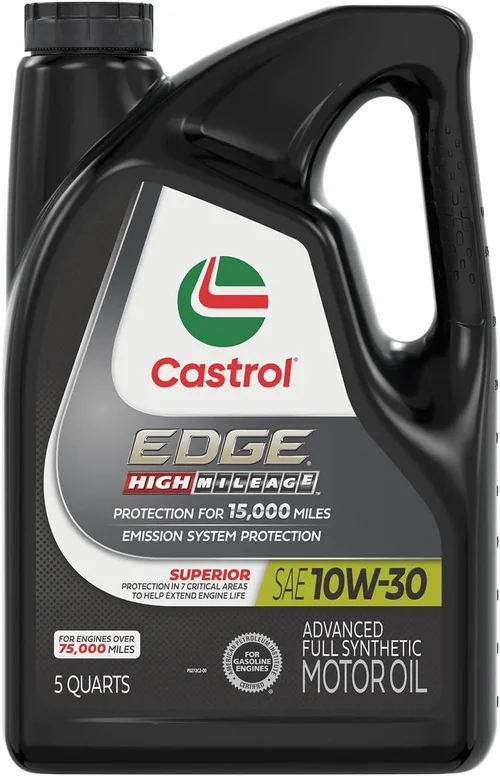
What to do instead: Switch to a high-mileage synthetic once your SUV hits 75,000 miles. These oils contain seal swell agents and extra anti-wear compounds tailored for aging engines.
Budget Guidelines: How Much Should You Spend?
When it comes to synthetic motor oil for your SUV, price often reflects performance—but that doesn’t mean you need to splurge on the most expensive option. Here’s a realistic breakdown of what to expect at different price tiers in 2026:
Entry-Level ($5–$7 per quart): This range includes synthetic blends and budget full synthetics from store brands or lesser-known manufacturers. While some meet basic API SP standards, they often lack robust additive packages or OEM approvals. Best for older SUVs with simple engines and mild driving conditions. Expect shorter drain intervals and less protection under stress.
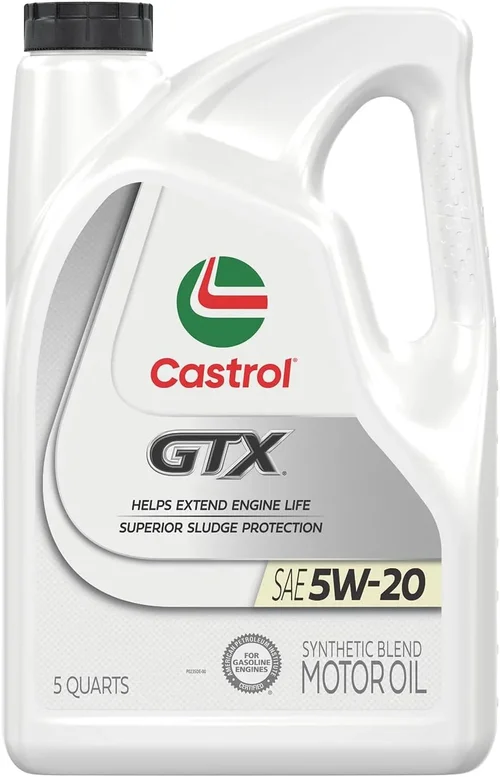
Mid-Range ($7–$10 per quart): This is the sweet spot for most SUV owners. Brands like Mobil 1 Advanced Fuel Economy, Castrol GTX Magnatec, and Pennzoil Platinum offer full synthetic formulations with strong API/ILSAC certifications, good OEM coverage, and reliable performance across climates. These oils balance cost, protection, and longevity—ideal for daily drivers, light towing, and moderate mileage.
Premium ($10–$15 per quart): Designed for high-performance, turbocharged, or luxury SUVs (e.g., BMW X5, Ford Explorer ST, or Toyota Land Cruiser). These oils feature advanced additive systems, PAO or ester base stocks, and full OEM approvals. They offer extended drain intervals (up to 15,000 miles with monitoring), superior thermal stability, and enhanced protection for direct-injection engines. Worth the investment if you demand maximum engine longevity.
Luxury ($15+ per quart): Reserved for racing formulations, boutique synthetics (like Red Line or Amsoil), or specialty applications (e.g., diesel SUVs or extreme off-roading). These oils provide exceptional film strength, rapid heat dissipation, and ultra-low volatility. Only necessary for enthusiasts, professional drivers, or vehicles operating in extreme environments. For most owners, the premium tier offers diminishing returns.
Expert Tips for Getting the Best Deal
- Time your purchase: Major retailers like AutoZone, O’Reilly, and Walmart offer deep discounts on motor oil during spring and fall maintenance seasons. Sign up for email alerts to catch “buy 3, get 1 free” deals.
- Compare online vs. in-store: Online prices are often lower, but factor in shipping costs. Amazon, RockAuto, and Advance Auto Parts frequently run promotions with free shipping on orders over $50.
- Check for rebates: Some oil manufacturers (e.g., Mobil 1, Castrol) offer mail-in rebates of $5–$10 per purchase. These can significantly reduce the effective price per quart.
- Read the fine print on “synthetic” claims: Ensure the product is labeled “full synthetic” and carries current API SP and ILSAC GF-6 certifications. Avoid vague terms like “synthetic technology” or “advanced formula” without proof.
- Consider oil analysis: If you plan to extend drain intervals, send used oil samples to labs like Blackstone or Oil Analyzers Inc. This ensures your oil is still protecting your engine before you skip a change.
- Don’t overlook return policies: If you buy the wrong viscosity or realize the oil isn’t compatible, reputable retailers allow returns within 30–90 days—even for opened containers in some cases.
- Use manufacturer loyalty programs: Brands like Pennzoil and Mobil 1 have reward programs that offer discounts, free oil changes, or gift cards with repeated purchases.
- Match oil to your driving style: If you rarely tow or drive in extreme conditions, a mid-range synthetic is sufficient. Save premium oils for SUVs that work hard—your engine will thank you.

Frequently Asked Questions
Q: Can I mix synthetic and conventional oil?
A: Technically yes—modern oils are compatible—but it’s not recommended. Mixing dilutes the synthetic’s performance benefits and can reduce protection. If you must top off, use the same type and brand. Better yet, wait until your next full change to switch entirely.
Q: How often should I change synthetic oil in my SUV?
A: It depends on your vehicle, driving conditions, and oil type. Most manufacturers recommend 7,500–10,000 miles for full synthetics under normal driving. Severe conditions (towing, short trips, dust) may require changes every 5,000 miles. Always follow your oil life monitor or manual.
Q: Is high-mileage synthetic worth it for my 80,000-mile SUV?
A: Absolutely. High-mileage synthetics contain seal conditioners that reduce leaks and extra anti-wear additives that protect worn components. They’re specifically formulated for engines with higher clearances and aging gaskets.
Q: Will synthetic oil improve my SUV’s fuel economy?
A: Yes, especially with low-viscosity formulations like 0W-20 or 5W-20. Reduced internal friction can improve MPG by 1–3%, which adds up over time—particularly for larger, less efficient SUVs.
Q: Can I use European-car synthetic oil in my American SUV?
A: Only if it meets your SUV’s specifications. European oils (like those approved by VW or BMW) often have different additive packages and may not be compatible with American engines. Stick to oils with your manufacturer’s approvals.
Q: Does synthetic oil cause leaks in older SUVs?
A: This is a myth. Synthetic oil doesn’t “clean” seals aggressively enough to cause leaks. However, if your engine already has worn seals, the better flow properties of synthetic oil might reveal existing leaks sooner. High-mileage synthetics can actually help condition seals and reduce minor leaks.
Q: Are store-brand synthetics reliable?
A: Some are—especially if they carry full API SP and OEM approvals. However, many store brands use generic additive packages and may not perform as well under extreme conditions. Stick to name brands or verify certifications before buying.
Q: What’s the difference between 5W-30 and 10W-30 synthetic oil?
A: The “W” number indicates cold-flow performance. 5W-30 flows better in cold weather than 10W-30, making it safer for winter starts. At operating temperature, both thicken to 30-weight. Use 5W-30 in colder climates unless your manual specifies otherwise.
Q: Can I switch back to conventional oil after using synthetic?
A: Yes, but there’s no benefit. Once you’ve used synthetic, sticking with it provides better long-term protection. Switching back won’t harm your engine, but you’ll lose the advantages of synthetic performance.
Q: How do I dispose of used synthetic oil responsibly?
A: Never pour it down drains or on the ground. Most auto parts stores and service centers accept used oil for recycling free of charge. One quart of used oil can contaminate 250,000 gallons of water—so always recycle.
Our Final Recommendations
Best for Budget-Conscious Buyers: Pennzoil Platinum Full Synthetic 5W-30 – Offers excellent API SP and dexos1 Gen 3 approval at a mid-range price. Great for everyday SUVs like the Honda Pilot or Ford Edge.
Best Overall Value: Mobil 1 Advanced Fuel Economy 0W-20 – Combines fuel efficiency, cold-start protection, and long drain intervals. Ideal for modern turbocharged crossovers like the Toyota RAV4 Hybrid or Subaru Outback.
Best Premium Option: Castrol EDGE Extended Performance 5W-30 – Features titanium additive technology for superior wear protection and is approved by GM, Ford, and Chrysler. Perfect for heavy-duty SUVs like the Ram 1500 or Chevrolet Suburban.
Best for Beginners: Valvoline Full Synthetic High Mileage 5W-30 – Easy to find, clearly labeled, and formulated for engines over 75,000 miles. Great for first-time synthetic users with older SUVs.
Best for Advanced Users: Royal Purple HMX 5W-30 – High-performance ester-based synthetic with exceptional thermal stability and anti-wear properties. Recommended for enthusiasts, towing, or extreme climates.
Conclusion: Making the Right Choice
Selecting the right synthetic motor oil for your SUV in 2026 doesn’t have to be overwhelming. By focusing on key factors—viscosity, certifications, base oil quality, additive packages, OEM approvals, and your specific driving conditions—you can confidently choose an oil that protects your engine, saves you money, and extends your vehicle’s lifespan. Remember, the cheapest option isn’t always the most economical, and the most expensive isn’t always necessary. Prioritize compatibility with your SUV’s engineering requirements, and don’t hesitate to invest in a premium synthetic if you rely on your vehicle for work, travel, or family safety.
Use this guide as your roadmap: consult your owner’s manual, avoid common pitfalls, compare types and prices wisely, and take advantage of expert tips to get the best deal. Whether you’re changing oil at home or visiting a service center, knowing what’s inside that bottle empowers you to make smarter, safer decisions. Your SUV is more than just transportation—it’s a trusted companion. Treat its engine with the care it deserves, and it will reward you with years of reliable performance.
Ready to upgrade? Check your manual today, grab a quality synthetic oil that meets your needs, and drive with confidence knowing your SUV is running on the best protection available.