

Featured image for BMW X5 winter driving
Image source: pictures.dealer.com
Winter cuts BMW X5 range by 15-25% due to cold physics and driving habits. This guide explains the science, quantifies typical losses, and gives actionable steps to reclaim every mile per gallon.
Winter arrives and suddenly your BMW X5 feels thirsty. The fuel gauge drops faster. The estimated range on the dashboard shrinks before your eyes. You are not imagining it. Cold weather attacks fuel economy from every angle. Physics, chemistry, and your own driving habits gang up on your SUV. The good news? Most of this loss is predictable. Even better, you can recover a significant chunk of it with smart habits and simple prep.
This guide breaks down exactly why the bmw x5 winter mpg range loss happens. We will look at the hard data, separate myths from mechanics, and give you a checklist to maximize every drop of fuel. Whether you drive a gas xDrive40i, a plug-in hybrid xDrive50e, or a diesel xDrive30d, the principles are the same. Let’s stop the bleed.
Key Takeaways
- Expect 15-25% range loss: Cold air density, winter fuel blends, and engine warm-up cycles combine to slash efficiency.
- Tire pressure is the silent killer: Every 10°F drop costs 1 PSI, increasing rolling resistance and draining range fast.
- Short trips hurt most: Repeated cold starts prevent the engine from reaching optimal temperature, burning extra fuel.
- Pre-conditioning saves gas: Using plugged-in cabin heating (PHEV) or timed engine starts reduces warm-up idling.
- Winter tires cost 3-5% MPG: Softer compound and aggressive tread increase drag, but safety outweighs the penalty.
- Battery health matters more in cold: A weak 12V battery forces the alternator to work harder, stealing horsepower and MPG.
- Track your actual data: Use the onboard computer or an OBD2 app to separate normal winter loss from mechanical problems.
📑 Table of Contents
- Why Winter Hits Your BMW X5 Range Hardest
- How Much Range Loss Is Normal? Data & Benchmarks
- Hidden Culprits: Tires, Idling & Short Trips
- Proven Strategies to Recover Lost MPG
- Long-Term Prep: Winterizing Your X5 for Next Season
- When to Worry: Signs of Mechanical Issues
- Conclusion: Own the Season, Don’t Let It Own You
Why Winter Hits Your BMW X5 Range Hardest
The Physics of Cold Air and Fuel
Engines are heat engines. They rely on a precise mix of air and fuel. Cold air is denser. That sounds good for power, but the Engine Control Unit (ECU) sees that dense air and adds more fuel to maintain the stoichiometric ratio (14.7:1 for gas). More fuel per combustion cycle means lower MPG instantly. It is like your engine is breathing thick syrup instead of air.
Did you know? At 20°F (-6°C), air density is roughly 10% higher than at 77°F (25°C). The ECU compensates by injecting roughly 10% more fuel just to keep the mixture right. That is an instant 10% penalty before you even move.
Winter Fuel Blends: Less Energy Per Gallon
Refineries switch to “winter blend” gasoline around September. They increase volatility (Reid Vapor Pressure) so the fuel evaporates easier in cold temps for reliable starting. The trade-off? Winter blend has lower energy density. It contains more butane and lighter hydrocarbons. You get roughly 1.5% to 3% less energy per gallon. You burn more volume to do the same work.
The Warm-Up Penalty: Open Loop Operation
When you start a cold X5, the engine runs in “open loop.” It ignores the oxygen sensors because they aren’t hot yet. It dumps extra fuel to heat the catalytic converters fast and prevent stalling. This rich mixture can last 2 to 10 minutes depending on temperature. Every minute of idling or gentle driving in open loop is pure waste. Think of it like pouring a cup of coffee just to warm the mug.
Fluids Turn to Molasses
Engine oil, transmission fluid, differential fluid, and transfer case fluid all thicken dramatically in sub-freezing temps. Your 0W-20 oil might flow like 10W-40 at 0°F. The engine and drivetrain spend the first 15-20 minutes fighting internal friction. That parasitic drag steals horsepower directly from your fuel tank. It takes roughly 10-15 miles of driving for all fluids to hit optimal viscosity.
How Much Range Loss Is Normal? Data & Benchmarks
EPA and Real-World Expectations
The EPA estimates cold weather (20°F) reduces conventional gas vehicle fuel economy by 15% to 25% on short trips. For hybrids, the hit is often worse: 30% to 34% because the battery also hates cold. If your X5 xDrive40i averages 22 MPG combined in summer, expect 16-18 MPG in deep winter. That is normal physics, not a defect.
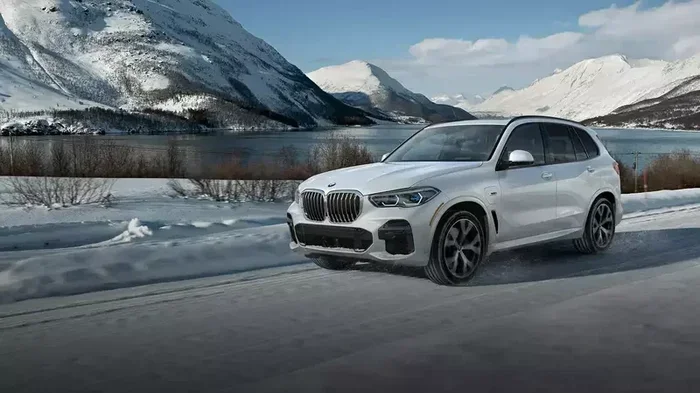
Visual guide about BMW X5 winter driving
Image source: suvpedia.com
The “Short Trip” Multiplier
That 15-25% figure assumes a standard drive cycle. If your commute is 5 miles? The loss skyrockets. The engine never fully warms up. You spend 80% of the trip in open loop. Real-world data from Fuelly and BMW forums shows 30-40% drops are common for sub-10-mile trips in freezing temps. The X5 is heavy (4,800+ lbs). Moving that mass with cold fluids and rich mixture on a 5-mile hop is brutally inefficient.
Plug-In Hybrid (X5 xDrive50e) Specifics
PHEV owners see a double whammy. Lithium-ion battery capacity drops ~20-30% at freezing. Internal resistance rises. Regenerative braking is limited or disabled until the pack warms. The gas engine fires up more often to heat the cabin and battery. Expect 30-50% electric range loss in single digits Fahrenheit. The gas MPG when the engine runs follows the same 15-25% penalty.
Diesel (xDrive30d) Nuances
Diesel engines are thermally efficient but hate cold starts. They rely on compression ignition. Glow plugs and intake heaters draw massive electrical load. Winter diesel (No. 1 blend or additized No. 2) has lower cetane and energy content. Expect a 10-15% hit—slightly better than gas, but the “gel point” risk adds anxiety.
Hidden Culprits: Tires, Idling & Short Trips
The Tire Pressure Trap
This is the single biggest avoidable loss. Physics is ruthless: tire pressure drops 1 PSI for every 10°F temperature drop. If you set 36 PSI at 70°F in October, those same tires read 26 PSI at 0°F in January. Underinflation increases rolling resistance exponentially. The EPA says every 1 PSI drop costs ~0.2% MPG. A 10 PSI deficit? That is a 2% penalty you can fix in 5 minutes at a gas station air pump.
Pro tip: Check pressure cold (car sat 3+ hours). Inflate to the door jamb spec (usually 36-39 PSI front/rear for X5), not the tire sidewall max. Do this monthly. Do it after every major cold snap.
Winter Tires: The Safety Tax
You need winter tires. Period. The X5’s xDrive is brilliant, but physics wins on ice. However, winter tires cost MPG. Softer rubber compound = more hysteresis (energy loss as heat). Aggressive siping and tread blocks = more squirm and air turbulence. Expect a 3-5% MPG penalty versus summer/all-seasons. It is the price of admission for stopping and turning. Do not remove them early. Keep them on until temps consistently stay above 45°F.
Idling to Warm Up: The Myth That Burns Cash
Remote start is tempting. Sitting in a toasty cabin feels great. But idling gets 0 MPG. Modern BMWs (post-2010) do not need long warm-ups. 30 seconds of idling builds oil pressure. Then drive gently. Driving loads the engine, generating heat faster than idling ever could. The cabin heats faster too. Ten minutes of idling burns ~0.2-0.3 gallons. Do that twice daily all winter? You just wasted 12-18 gallons. That is $40-$60 and 300+ miles of range gone.
The Short Trip Death Spiral
We covered the numbers. But the mechanism is vicious. Short trip -> engine cold -> rich mixture -> fuel washes cylinder walls -> oil dilution -> worse lubrication -> more friction -> worse MPG. Condensation builds in oil and exhaust. It never boils off. Acid forms. Wear accelerates. If you have a 4-mile commute, consider combining errands. One 15-mile loop beats three 5-mile trips every time. The engine reaches closed-loop operation and stays there.
Electrical Load: The Silent Parasite
Heated seats, steering wheel, mirrors, rear defroster, blower motor on high. The X5 has a 200A+ alternator. At idle, it might only put out 80A. High electrical load forces the alternator to drag on the engine. The ECU bumps idle RPM to compensate. More fuel burned. Solution: Use heated seats/steering wheel (low draw, high comfort) instead of max blower heat. Turn off rear defroster once clear. Unplug phone chargers, dash cams, fridge coolers when not needed.
Proven Strategies to Recover Lost MPG
Pre-Conditioning: The PHEV Superpower
If you drive an X5 xDrive50e, this is your #1 weapon. Plug in at home. Use the BMW app or iDrive timer to pre-heat the cabin and battery while connected to grid power. You start your trip with a warm battery (full regen, max EV range) and a warm cabin (zero engine heat demand). The engine stays off for the first 10-20 miles. This single habit can cut your winter gas consumption by 30-50% on typical commutes. It turns a 30% range loss into a 10% loss.
Gas Models: The “Drive Off Gently” Protocol
No plug? No problem. Start engine. Wait 30 seconds (count to 30, clear windows). Drive immediately. Keep RPM under 2,500. Light throttle. Avoid hills if possible for first 2 miles. This brings oil, coolant, and cats up to temp 2x faster than idling. The ECU transitions to closed-loop lean burn sooner. You save the 0.2 gallons of idle waste and cut the warm-up rich mixture duration in half.
Tire Pressure Discipline: The Free 2-3% Gain
We said it before. We say it again. Buy a quality digital gauge ($15). Keep it in the glovebox. Check every other fill-up. Top up to door spec. If you run 39 PSI cold (door says 36), you gain a tiny MPG bump and sharper turn-in. Do not exceed sidewall max. Rotate tires every 5,000-7,500 miles. Even wear maintains low rolling resistance.
Reduce Weight and Drag
The X5 is a brick. Cd ~0.33. Roof rails add drag. Roof box? Massive penalty. Remove roof boxes, bike racks, cargo carriers when not in use. A roof box at 70 mph can cost 5-10 MPG. Inside: clear the trunk. Golf bags, strollers, tool kits, sandbags. Every 100 lbs costs ~1% MPG. The spare tire kit is ~50 lbs. Keep it, but ditch the junk.
Use “ECO PRO” Mode Religiously
BMW’s ECO PRO does three things: softens throttle map (reduces tip-in enrichment), shifts earlier/holds higher gears (lower RPM = less friction), and decouples engine on coast (gliding). In winter, it also reduces climate control compressor load. It feels sluggish. That is the point. It forces efficient driving. Use it for commuting. Switch to SPORT for merging/passing only. The coasting function (engine off at speed) works even in cold once temps are stable.
Plan Routes for Continuous Flow
Stop-and-go kills winter MPG. Braking turns kinetic energy into brake dust (heat). Accelerating from 0 burns rich mixture. Use Waze/Google Maps to avoid lights. A 20-mile highway route at steady 55-60 mph often uses less fuel than a 15-mile stoplight route. The X5’s 8-speed ZF transmission loves steady state. Lock it in 8th gear manually (paddle shifters) on flat highways to prevent hunting.
Fuel Quality: Top Tier Only
Carbon buildup on direct-injection valves (N55, B58, S63 engines) hurts atomization. Winter rich mixtures accelerate coking. Top Tier gasoline (Shell, Chevron, Costco, etc.) has enhanced detergents. It keeps valves clean. Clean valves = precise spray pattern = efficient burn = better MPG. The extra $0.10/gallon pays for itself in prevented walnut blasting ($800+) and maintained economy.
Long-Term Prep: Winterizing Your X5 for Next Season
The Pre-Winter Service Checklist (Do in October)
Treat this like a pilot’s pre-flight. It prevents the “why is my MPG 12?!” panic in January.
- Oil Change: Fresh 0W-20 (LL-01 FE or LL-17 FE+) flows better cold. Old oil is thick, acidic, and full of fuel dilution from last winter.
- Battery Load Test: The 12V battery (AGM in trunk) starts the car and runs electronics. Cold kills weak batteries. A failing battery forces alternator max output = 3-5 HP drag = 2-3 MPG loss. Replace proactively at 5-6 years.
- Coolant Check: 50/50 mix protects to -34°F. Old coolant loses freeze protection and corrosion inhibitors. Water pump/thermostat failure strands you.
- Brake Fluid Flush: Hygroscopic fluid absorbs water. Water boils under hard braking (fade) and freezes in lines (no brakes). DOT 4 LV every 2 years.
- Cabin Air Filter: Clogged filter restricts blower airflow. Blower motor draws more amps. Alternator loads up. New filter = less electrical load = better MPG.
- Wheel Alignment: Potholes knock toe out. Toe-out scrubs tires. Scrubbing tires = rolling resistance = MPG loss. Check annually.
Fluid Upgrades for Extreme Cold
If you live where -20°F happens:
- Transmission/Diff/Transfer Case: Switch to full synthetic low-viscosity fluids (BMW DCTF-2, PTF-1, or approved equivalents). They flow at -40°F. Reduces warm-up drag significantly.
- Windshield Washer: Use -30°F or -40°F concentrate. Frozen nozzles = no vision = safety hazard. Do not dilute.
- Fuel Additive (Diesel): Anti-gel + cetane booster every fill below 20°F. Prevents filter waxing. Adds lubricity for HPFP.
Storage Prep (If You Snowbird)
Leaving X5 for 3+ months?
- Fill tank 95% full (prevents condensation). Add fuel stabilizer (STA-BIL 360).
- Connect battery tender (CTEK MXS 5.0) to 12V battery in trunk.
- Overinflate tires to 45 PSI (prevents flat spots).
- Plug in PHEV (set charge limit 80%).
- Steel wool in exhaust tips (mice love warm turbo blankets).
When to Worry: Signs of Mechanical Issues
Normal vs. Abnormal Loss
You know the baseline now: 15-25% on mixed driving, 30%+ on short trips. If your X5 drops 40%+ on highway trips or 50%+ on short trips, something is broken. Do not accept “it’s winter” from a service advisor without data.
Red Flags Requiring Immediate Diagnosis
- Check Engine Light (CEL): Even if flashing then solid. Misfire (coil/plug/injector) dumps raw fuel into cats. Destroys cats ($2,000+). Kills MPG instantly.
- Black Smoke / Rich Smell: Leaking injector, stuck open thermostat (engine thinks it’s cold forever), failed coolant temp sensor, bad MAP/MAF sensor.
- Transmission Flares/Harsh Shifts: Cold fluid pressure issues. Mechatronic sleeve leak (common on ZF 8HP). Torque converter clutch slip = heat = fuel waste.
- Brake Drag: Stuck caliper or parking brake cable frozen. One hot wheel after driving. Massive parasitic loss.
- PHEV “Check Hybrid System”: Battery coolant heater failure, contactor weld, BMS error. Dealer only.
DIY Diagnostics: OBD2 Scanner
Buy a Bluetooth OBD2 dongle ($25) and use Torque Pro, BimmerLink, or Carly app. Monitor in real-time:
- Coolant Temp: Should hit 195-210°F (90-99°C) within 5-8 miles. Stuck at 150°F? Thermostat failed open.
- Short Term Fuel Trim (STFT) / Long Term (LTFT): Should hover near 0%. +10% or more = vacuum leak or weak fuel pump. -10% = leaking injector or bad MAF.
- O2 Sensor Voltage: Should cycle 0.1V-0.9V rapidly in closed loop. Flat line = dead sensor = open loop forever = terrible MPG.
- Battery Voltage: 14.2-14.7V running. <13.8V = alternator/regulator/battery issue.
- Transmission Fluid Temp: Should reach 170-190°F. Stuck low = thermostat bypass stuck open.
The “Dealer Said It’s Normal” Trap
Service advisors see 50 X5s a week in winter. They normalize the complaints. If your gut says it’s excessive, demand a “Fuel Economy Test” per BMW TSB. They drive a prescribed loop with a fuel flow meter. It takes 1 hour. If it fails, they must fix it under warranty (if applicable). Document everything: dates, temps, trip distances, calculated MPG (tank-to-tank, not dash). Photos of dash readouts. Be polite, firm, data-driven.
Conclusion: Own the Season, Don’t Let It Own You
Winter MPG loss in your BMW X5 is inevitable. Physics dictates the baseline. But the gap between “inevitable” and “actual” is entirely in your control. The difference between a 25% drop and a 40% drop is usually just habits: tire pressure, idling, trip combining, mode selection, and maintenance.
Start today. Check your tire pressure. Set your ECO PRO default. Plan your errands into one loop. If you have a PHEV, plug it in every night and pre-condition. Do the October service checklist before the first frost. Track your tank-to-tank MPG in a notebook or app. Knowledge replaces anxiety.
Your X5 is an engineering marvel. It is designed to conquer winter. Treat it right, and it will deliver the range you need to get to the slopes, the office, or the grandparents’ house without the fuel light mocking you. Drive smart. Stay warm. Arrive farther.
Frequently Asked Questions
How much MPG does a BMW X5 lose in winter?
Expect a 15-25% reduction in fuel economy for gas models on typical mixed driving. Short trips under 10 miles can see 30-40% losses. Plug-in hybrids may lose 30-50% of electric range in freezing temperatures due to battery chemistry and cabin heating demands.
Does idling my BMW X5 to warm it up help MPG?
No. Idling gets 0 MPG and prolongs the fuel-rich warm-up phase. Modern BMWs only need 30 seconds of idling for oil pressure. Driving gently immediately warms the engine, transmission, and cabin 2-3x faster, saving significant fuel over the season.
Why does my X5 plug-in hybrid show drastically reduced electric range in cold weather?
Lithium-ion batteries lose 20-30% capacity in freezing temps due to slowed chemical reactions and increased internal resistance. The car also uses high-voltage battery energy to heat the cabin and the battery pack itself, further reducing available driving range.
Will winter tires ruin my BMW X5 gas mileage?
Winter tires typically reduce MPG by 3-5% compared to summer or all-season tires due to softer rubber compounds and aggressive tread patterns. This is a necessary safety trade-off. The grip and stopping distance improvement on snow and ice far outweighs the minor fuel penalty.
What tire pressure should I run in my BMW X5 during winter?
Always inflate to the pressure listed on the driver’s door jamb sticker (usually 36-39 PSI), checked when tires are cold (car parked 3+ hours). Pressure drops 1 PSI per 10°F temperature drop, so check monthly and after every major cold snap to avoid the 2-3% MPG penalty of underinflation.
When should I worry that my winter MPG loss is a mechanical problem?
If your highway MPG drops more than 30% from summer baseline, or you experience rough idle, check engine light, black exhaust smoke, brake drag, or the engine never reaches normal operating temperature (stuck below 180°F), have a shop check fuel trims, thermostat, oxygen sensors, and brakes immediately.