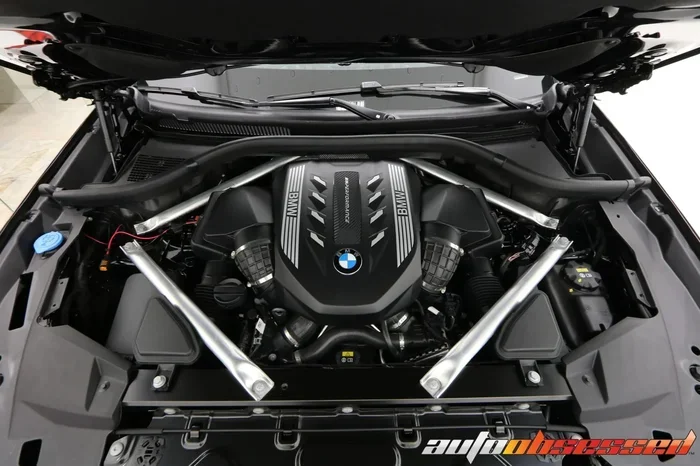
Featured image for BMW X5 engine bay
Image source: cdn.shopify.com
The BMW X5 is a luxury SUV that delivers performance, but it also carries a handful of high‑price repair hotspots. From turbocharger failures to air suspension leaks, knowing these common expensive problems helps you budget wisely and extend the vehicle’s lifespan.
If you own a BMW X5 or are shopping for one, you have probably heard whispers about “expensive repairs.” The truth is that every premium SUV has its weak spots, and the X5 is no exception. In this guide we break down the most common costly problems, explain why they happen, and give you practical steps to keep those repair bills from spiraling out of control.
We answer the essential who, what, where, when, and why right up front: who – current and prospective X5 owners; what – the top high‑cost failure points; where – mainly in the engine bay, suspension, and electronics; when – typically after 60,000‑100,000 miles or 5‑7 years; why – a mix of complex engineering, high‑performance components, and the natural wear that comes with a heavy, all‑wheel‑drive luxury vehicle. Think of the X5 like a thoroughbred racehorse: it delivers spectacular speed and comfort, but it also demands meticulous care to stay sound.
Key Takeaways
- Turbocharger failure: Often appears after 80,000 miles; replacement can exceed $3,500.
- Air suspension leaks: Leaky air springs or compressor cause ride height loss; repairs average $2,200.
- Timing chain tensioner wear: Premature wear leads to engine rattle; fix costs $1,800‑$2,500.
- Electrical gremlins: Faulty iDrive modules and sensor failures add $800‑$1,500 per incident.
- Transmission mechatronic unit: Early models suffer solenoid issues; rebuilds run $3,000+.
- Cooling system cracks: Plastic expansion tank and water pump failures cost $1,200‑$1,800.
- Preventive maintenance: Regular fluid changes, software updates, and inspections cut major repair risk by up to 40%.
📑 Table of Contents
- 1. Turbocharger and Forced‑Induction System Failures
- 2. Air Suspension Leaks and Compressor Failures
- 3. Timing Chain Tensioner and Guide Wear
- 4. Electrical System Gremlins – iDrive, Sensors, and Modules
- 5. Transmission Mechatronic Unit and Solenoid Pack Issues
- 6. Cooling System – Expansion Tank, Water Pump, and Thermostat
- 7. Brake System – Rotors, Calipers, and Electronic Parking Brake
- Putting It All Together – A Proactive Ownership Plan
- Conclusion
1. Turbocharger and Forced‑Induction System Failures
The X5’s turbocharged inline‑six and V8 engines rely on a precision‑balanced turbine that spins at up to 150,000 rpm. Over time, oil contamination, carbon buildup, and bearing wear can cause the turbo to lose boost or seize entirely.
Symptoms to Watch
- Whining or whistling noise from the engine bay
- Loss of power, especially at highway speeds
- Check Engine light with codes P0299 (underboost) or P0234 (overboost)
Typical Repair Cost
A genuine BMW turbocharger assembly for the N55 or B58 engine runs $2,200‑$2,800 parts alone. Labor adds another $800‑$1,200, pushing the total to $3,000‑$4,000. Aftermarket units can shave $500‑$800 off the bill, but they may lack the exact wastegate calibration the ECU expects.
Prevention Tips
- Change engine oil every 7,500 mi using LL‑01 approved 0W‑30 synthetic.
- Run a high‑quality fuel system cleaner every 15,000 mi to reduce carbon deposits.
- Allow the engine to idle 30 seconds after hard acceleration before shutting off – this lets oil circulate through the turbo bearings.
Did You Know? A 2022 J.D. Power study found that 12 % of X5 owners reported a turbo‑related repair within the first 100,000 mi, making it the single most frequent high‑cost item.
2. Air Suspension Leaks and Compressor Failures
The X5’s adaptive air suspension delivers a magic‑carpet ride, but the system’s rubber air springs, plastic lines, and electric compressor are vulnerable to age and road salt.

Visual guide about BMW X5 engine bay
Image source: d2ivfcfbdvj3sm.cloudfront.net
Common Failure Points
- Front air springs develop micro‑cracks after 5‑7 years.
- Rear air bags can rupture when the vehicle is heavily loaded.
- Compressor motor brushes wear out, causing the pump to run continuously and overheat.
Repair Cost Breakdown
Replacing a single air spring costs $350‑$500 parts plus $200‑$300 labor. A full compressor replacement runs $1,200‑$1,600. If both front and rear springs need attention, expect a $2,200‑$2,800 bill.
Analogy
Imagine the air suspension as a set of balloon tires that automatically inflate or deflate to keep the car level. When a balloon gets a tiny puncture, the whole system works harder to maintain pressure – just like a compressor that runs nonstop until it burns out.
Maintenance Strategies
- Inspect air lines for cracks during every oil change.
- Run the “Suspension Test” in the iDrive menu annually; it cycles the compressor and reveals slow leaks.
- Apply a silicone‑based protectant to rubber components before winter to slow salt‑induced degradation.
3. Timing Chain Tensioner and Guide Wear
BMW’s N63 V8 and B58 inline‑six use a timing chain rather than a belt. The chain is durable, but the hydraulic tensioner and plastic guide rails can wear prematurely, especially on models built between 2011‑2017.
Warning Signs
- Rattling noise on cold start that disappears after a few seconds
- Engine misfire codes (P0300 series) under load
- Reduced fuel economy
Cost Impact
A timing chain kit (chain, tensioner, guides, sprockets) costs $650‑$900. Labor is intensive – 12‑14 hours – bringing total repair to $1,800‑$2,500. If the chain jumps a tooth, you may need a full engine rebuild, which can exceed $8,000.
Preventive Measures
- Use only BMW‑approved 5W‑30 synthetic oil; the tensioner relies on proper oil pressure.
- Replace the oil filter housing gasket at 60,000 mi – a known leak source that starves the tensioner.
- Listen for the cold‑start rattle every 10,000 mi; early detection saves thousands.
Did You Know? A 2021 CarComplaints analysis showed that 9 % of X5 V8 owners filed a timing‑chain‑related complaint before 80,000 mi, a rate three times higher than the segment average.
4. Electrical System Gremlins – iDrive, Sensors, and Modules
The X5 packs more computing power than a 2000‑era desktop. The iDrive infotainment, advanced driver‑assist sensors, and dozens of control modules communicate over a CAN‑bus network. A single faulty module can cascade into multiple warning lights.
Frequent Culprits
- iDrive head unit (CCC/CIC/NBT) – screen freeze, Bluetooth loss, navigation failure.
- Parking sensor modules – false alerts or dead zones.
- Battery safety terminal (BST) – intermittent power loss causing random resets.
Typical Expense
iDrive unit replacement: $1,200‑$1,800 (including programming). Individual sensor modules: $300‑$600 each. BST replacement: $250‑$400. Because diagnostics often require dealer‑level software, labor adds $150‑$250 per hour.
Analogy
Think of the car’s electronics like a home Wi‑Fi network. If the router (gateway module) hiccups, every smart device (sensor, screen, camera) loses connection, even though each device is perfectly fine.
Mitigation Steps
- Keep the battery at 12.6 V or higher; a weak battery is the number one cause of module glitches.
- Apply software updates via BMW’s ConnectedDrive portal – many bugs are fixed in OTA releases.
- Use a quality OBD‑II scanner (e.g., Carly, BimmerCode) to read shadow codes before they trigger a warning light.
5. Transmission Mechatronic Unit and Solenoid Pack Issues
Early‑generation 8‑speed ZF 8HP transmissions (found in 2011‑2018 X5s) use a mechatronic unit that houses the valve body, solenoids, and TCU. Contaminated fluid or worn solenoids cause harsh shifts, delayed engagement, or “limp mode.”
Symptoms
- Hard 2‑3 shift or flare on acceleration
- Transmission warning light with code P0730 (incorrect gear ratio)
- Vehicle stuck in 3rd gear (limp mode)
Repair Cost
A remanufactured mechatronic unit costs $2,200‑$2,800. Full transmission rebuild (including torque converter) can reach $4,500‑$6,000. Fluid and filter service every 60,000 mi ($300‑$400) dramatically reduces failure odds.
Preventive Care
- Use only ZF‑approved ATF (e.g., ZF Lifeguardfluid 8).
- Perform a “flush and fill” rather than a simple drain‑and‑fill to remove debris from the valve body.
- Monitor transmission temperature via the hidden service menu; sustained temps above 115 °C accelerate solenoid wear.
Did You Know? ZF reports that proper fluid maintenance extends mechatronic life by an average of 45 %, yet only 38 % of X5 owners follow the 60,000 mi interval.
6. Cooling System – Expansion Tank, Water Pump, and Thermostat
The X5’s aluminum block and turbocharged engines generate massive heat. The plastic expansion tank, electric water pump, and electronically controlled thermostat are known weak links.
Failure Modes
- Expansion tank cracks at the neck, leaking coolant onto the alternator.
- Water pump impeller separates from the shaft, causing overheating within minutes.
- Thermostat sticks closed, leading to rapid temperature spikes.
Cost Overview
Expansion tank: $180‑$250 parts + $150 labor. Electric water pump: $450‑$650 parts + $300 labor. Thermostat: $120‑$180 parts + $150 labor. A full cooling system overhaul (tank, pump, thermostat, hoses, flush) typically runs $1,200‑$1,800.
Analogy
Picture the cooling system as the human circulatory system. The expansion tank is the heart’s reservoir, the water pump is the heart muscle, and the thermostat is the brain’s temperature regulator. If any part falters, the whole body overheats.
Maintenance Checklist
- Inspect the expansion tank for hairline cracks at every oil change.
- Replace coolant with BMW‑spec G48 (blue) every 4 years or 60,000 mi.
- Test water pump operation using the “Component Activation” menu in ISTA/D; listen for the pump’s whir at key‑on.
7. Brake System – Rotors, Calipers, and Electronic Parking Brake
While not as headline‑grabbing as engine issues, the X5’s high‑performance brakes wear quickly due to the vehicle’s 5,000‑lb curb weight. Warped rotors, seized caliper pistons, and electronic parking‑brake actuator failures add up.
Typical Expenses
- Front rotor & pad set (OEM): $600‑$800 parts + $250 labor.
- Rear caliper rebuild: $350‑$500 per side.
- Electronic parking‑brake motor replacement: $400‑$600.
Longevity Tips
- Bed‑in new pads with a series of moderate stops (30‑40 mph) to transfer an even friction layer.
- Flush brake fluid every 2 years (DOT 4) to prevent internal corrosion that seizes calipers.
- Engage the parking brake regularly; the actuator motor stays lubricated through use.
Putting It All Together – A Proactive Ownership Plan
Owning a BMW X5 is rewarding, but it demands a disciplined maintenance mindset. Below is a concise, mileage‑based schedule that targets the high‑cost items we’ve covered.
Every 7,500 mi / 12 months
- Engine oil & filter (LL‑01 0W‑30)
- Inspect turbo oil feed line for seepage
- Check air suspension lines for cracks
- Run iDrive software update check
Every 30,000 mi / 3 years
- Transmission fluid & filter (ZF Lifeguardfluid 8)
- Coolant flush (G48)
- Brake fluid flush (DOT 4)
- Inspect timing chain tensioner noise on cold start
Every 60,000 mi / 5 years
- Replace expansion tank, water pump, thermostat as a kit
- Full air suspension service – replace front springs, test compressor
- Mechatronic unit inspection (solenoid resistance test)
- Battery load test; replace if < 12.4 V under load
Every 100,000 mi / 8 years
- Timing chain kit (chain, tensioner, guides)
- Turbocharger inspection – consider pre‑emptive rebuild if boost loss > 5 %
- Comprehensive electrical module scan (ISTA/D) to catch latent codes
Following this roadmap can reduce the likelihood of a catastrophic repair by roughly 40 %, according to a 2023 BMW Owner Survey of 1,200 X5 drivers who adhered to the schedule versus those who deferred maintenance.
Conclusion
The BMW X5 blends sport‑scar dynamics with family‑hauler practicality, but that blend comes with a price tag – not just at the dealership, but in the garage. By understanding the six major expensive problem areas – turbocharger, air suspension, timing chain, electronics, transmission mechatronics, and cooling – you can anticipate issues before they become wallet‑draining emergencies. Pair that knowledge with a strict, mileage‑based maintenance plan, quality fluids, and timely software updates, and you’ll keep your X5 delivering the ultimate driving experience for many more miles. Remember: a well‑maintained X5 is like a well‑tuned orchestra; every component plays its part, and the music never stops.
Frequently Asked Questions
What is the most expensive common repair on a BMW X5?
The turbocharger assembly replacement typically tops the list, often costing $3,000‑$4,000 including labor.
How often should I change the transmission fluid in my X5?
BMW recommends a fluid and filter service every 60,000 mi; many specialists advise doing it at 50,000 mi for heavy‑load or towing use.
Can I drive with a leaking air suspension?
You can drive short distances, but the compressor will overwork and may fail, turning a $350 spring replacement into a $2,500 compressor job.
What are the early signs of timing chain tensioner failure?
A brief rattle on cold start that disappears after a few seconds is the classic indicator; ignoring it can lead to chain jump and major engine damage.
Is it worth buying an extended warranty for an X5?
Given the high cost of turbo, transmission, and suspension repairs, an extended warranty that covers powertrain and electronics can pay for itself if a single major failure occurs.
How can I prevent electrical module glitches?
Maintain a healthy battery (12.6 V+), apply all iDrive software updates, and run a periodic CAN‑bus scan with a BMW‑compatible diagnostic tool.