
The Volkswagen Tiguan is generally considered a reliable compact SUV, especially in recent model years. While early versions had some mechanical hiccups, improvements in build quality and technology have boosted its dependability.
Key Takeaways
- Improved Reliability Over Time: Earlier Tiguan models (2009–2016) faced issues with timing belts and electrical systems, but post-2017 models show significantly better performance and fewer reported problems.
- Strong Safety Ratings: The Tiguan consistently earns high marks from the IIHS and NHTSA, making it a safe choice for families.
- Fuel Efficiency and Comfort: With competitive fuel economy and a spacious, well-designed interior, the Tiguan balances practicality and comfort.
- Maintenance Costs Are Moderate: Routine maintenance is affordable, but repairs—especially on turbocharged engines—can be pricier than average if issues arise.
- Owner Satisfaction Is High: Many Tiguan owners praise its smooth ride, intuitive tech, and stylish design, contributing to strong long-term satisfaction.
- Warranty and Support: Volkswagen offers a solid 4-year/50,000-mile warranty, and certified pre-owned programs add extra peace of mind.
- Best Value in Recent Models: For reliability, the 2018–2023 Tiguan models are the smartest picks, with fewer recalls and improved engineering.
📑 Table of Contents
- Are Volkswagen Tiguan Reliable? A Complete Reliability Breakdown
- Reliability Ratings and Industry Insights
- Common Issues and How They’ve Been Addressed
- Owner Experiences and Long-Term Satisfaction
- Maintenance Tips to Boost Reliability
- Warranty and Support: What Volkswagen Offers
- Final Verdict: Is the Volkswagen Tiguan Reliable?
Are Volkswagen Tiguan Reliable? A Complete Reliability Breakdown
When shopping for a compact SUV, reliability is often at the top of the list. You want a vehicle that won’t leave you stranded, won’t drain your wallet with constant repairs, and will hold up well over time. So, where does the Volkswagen Tiguan stand in the reliability department? The short answer: it’s a solid choice—especially if you’re looking at models from 2018 onward.
The Tiguan has come a long way since its debut in 2008. Early versions had their share of mechanical troubles, but Volkswagen listened to feedback and made meaningful improvements. Today’s Tiguan offers a blend of German engineering, modern tech, and everyday usability that appeals to a wide range of drivers. Whether you’re a family looking for space, a commuter wanting comfort, or someone who values a smooth ride, the Tiguan checks many boxes—and reliability is increasingly one of them.
Reliability Ratings and Industry Insights
To assess whether the Volkswagen Tiguan is reliable, it helps to look at what the experts say. Organizations like J.D. Power, Consumer Reports, and RepairPal provide valuable data based on owner surveys, repair frequency, and long-term performance.
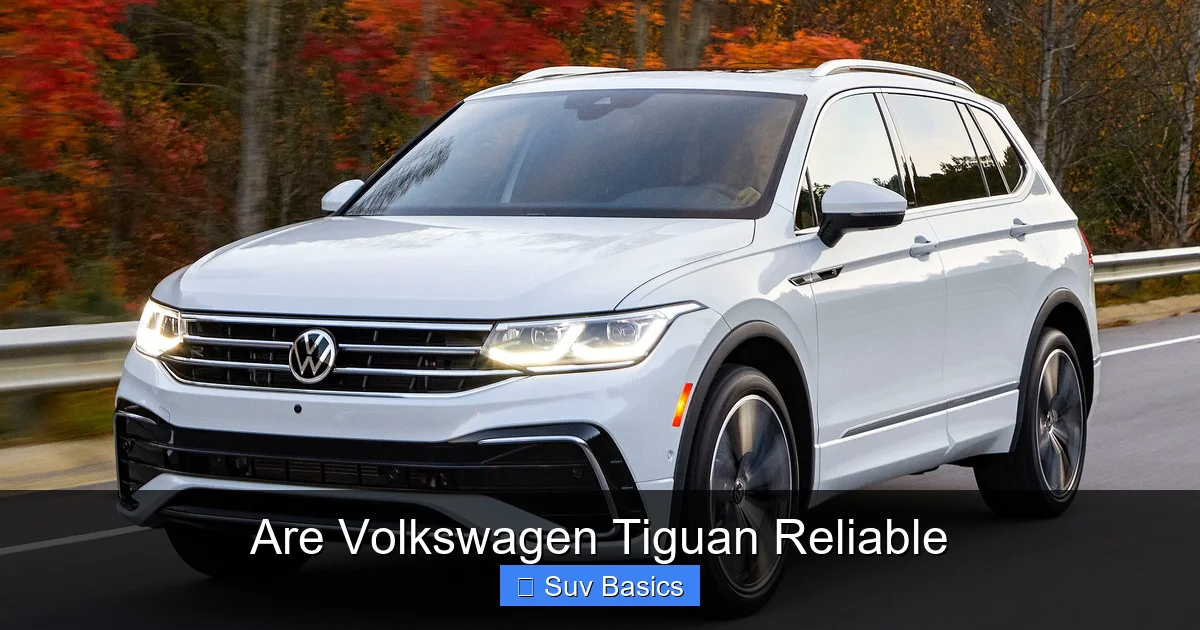
Visual guide about Are Volkswagen Tiguan Reliable
Image source: motorweek.org
J.D. Power and Consumer Reports Scores
J.D. Power gives the 2023 Volkswagen Tiguan a reliability rating of 85 out of 100, which places it in the “Good” category. That’s a noticeable improvement over earlier years. Consumer Reports, meanwhile, has rated recent Tiguan models as “Average” to “Good” in reliability, with the 2020 and 2021 models showing particularly strong performance. These scores reflect fewer reported issues with engines, transmissions, and electronics compared to the first-generation models.
RepairPal Reliability Rating
RepairPal, which analyzes repair costs and frequency across thousands of vehicles, gives the Tiguan a 3.5 out of 5 reliability rating. That’s slightly below the average for compact SUVs, but it’s important to note that this score is pulled down by older models. The average annual repair cost for a Tiguan is around $600, which is reasonable for a vehicle in this class. Common issues include minor electrical glitches and occasional turbocharger concerns—but nothing that suggests systemic failure.
Common Issues and How They’ve Been Addressed
No car is perfect, and the Tiguan has had its share of reported problems. However, understanding these issues—and how Volkswagen has responded—can help you make an informed decision.
Timing Belt and Engine Concerns (Early Models)
One of the most notable issues with first-generation Tiguans (2009–2016) was the timing belt. Unlike many modern engines that use timing chains, the early Tiguan’s 2.0L TSI engine relied on a belt that needed replacement every 60,000 to 100,000 miles. If neglected, a failed timing belt could cause severe engine damage. This was a costly repair and a common headache for owners.
Volkswagen addressed this in later models by improving belt durability and offering extended maintenance reminders. Still, if you’re considering a used Tiguan from this era, make sure the timing belt has been replaced on schedule—or budget for it soon.
Electrical and Infotainment Glitches
Some owners have reported issues with the infotainment system, such as screens freezing, Bluetooth disconnecting, or navigation errors. These problems were more common in 2017–2019 models. Volkswagen has issued software updates over the years to fix many of these bugs. If you’re buying a used Tiguan, check for available updates at a dealership—they’re usually free.
Transmission and DSG Concerns
The Tiguan uses a dual-clutch automatic transmission (DSG), which is efficient and responsive but can be sensitive to driving habits and maintenance. Early DSG units had occasional shuddering or hesitation, especially in stop-and-go traffic. Regular transmission fluid changes and driving smoothly can help prevent issues. Again, newer models have seen improvements in transmission software and hardware.
Owner Experiences and Long-Term Satisfaction
Beyond the numbers, real-world owner experiences offer valuable insight into the Tiguan’s reliability.
Positive Feedback from Recent Owners
Many owners of 2018–2023 Tiguans report high satisfaction. They praise the vehicle’s comfortable ride, spacious interior (especially with the optional third row), and user-friendly tech. One owner from Ohio shared, “I’ve had my 2020 Tiguan for three years and 45,000 miles. Only routine maintenance—oil changes, tire rotations. No surprises.”
Another common theme is the Tiguan’s quiet cabin and smooth handling, which make long drives enjoyable. Families appreciate the ample cargo space and available safety features like adaptive cruise control and blind-spot monitoring.
Complaints and Criticisms
On the flip side, some owners mention higher-than-expected repair costs when issues do arise. For example, replacing a turbocharger or fixing a DSG transmission can cost $1,500 or more. Additionally, parts availability can sometimes be slower than with domestic brands, especially outside major cities.
A few owners also note that the base 2.0L engine, while efficient, can feel underpowered when fully loaded or on steep hills. Opting for the available 4Motion all-wheel drive can help, but it may reduce fuel economy slightly.
Maintenance Tips to Boost Reliability
Like any vehicle, the Tiguan’s longevity depends heavily on how well it’s maintained. Following a few key practices can go a long way in ensuring your Tiguan stays reliable for years.
Stick to the Maintenance Schedule
Volkswagen provides a detailed maintenance schedule in the owner’s manual. Key items include oil changes every 10,000 miles (with synthetic oil), brake fluid replacement every two years, and timing belt inspection/replacement as needed. Skipping these can lead to bigger problems down the road.
Use Quality Parts and Fluids
The Tiguan’s turbocharged engine and advanced transmission require high-quality fluids. Using the correct VW-approved oil and transmission fluid helps prevent wear and overheating. Avoid cheap aftermarket parts—especially for critical components like spark plugs and fuel injectors.
Watch for Warning Signs
Pay attention to unusual noises, dashboard warning lights, or changes in performance. A rough idle, delayed shifting, or a check engine light could indicate a minor issue that’s easy to fix—if caught early. Ignoring these signs can lead to costly repairs.
Consider a Pre-Purchase Inspection
If you’re buying a used Tiguan, especially one from 2016 or earlier, have it inspected by a trusted mechanic. They can check the timing belt, transmission, and electrical systems for hidden problems. This small investment can save you thousands later.
Warranty and Support: What Volkswagen Offers
Volkswagen backs the Tiguan with a competitive warranty package, which adds to its reliability appeal.
New Vehicle Warranty
All new Tiguans come with a 4-year/50,000-mile basic warranty and a 4-year/50,000-mile powertrain warranty. This covers most repairs due to manufacturing defects. Additionally, the first two years of scheduled maintenance are included at no extra cost—a nice perk that helps keep your Tiguan in top shape.
Certified Pre-Owned (CPO) Program
If you’re buying used, consider a Volkswagen CPO Tiguan. These vehicles undergo a 100+ point inspection, come with a 2-year/24,000-mile warranty, and include 24/7 roadside assistance. CPO models are often low-mileage and well-maintained, making them a smart choice for reliability-minded buyers.
Roadside Assistance and Support
Volkswagen includes 24/7 roadside assistance for the first three years, covering towing, flat tires, and lockouts. This can be a lifesaver if you’re stranded far from home.
Final Verdict: Is the Volkswagen Tiguan Reliable?
So, are Volkswagen Tiguan reliable? The answer is a qualified yes—especially if you choose a model from 2018 or later. While early versions had some notable flaws, Volkswagen has made significant improvements in build quality, technology, and engineering. Today’s Tiguan offers a dependable, comfortable, and stylish driving experience that holds up well over time.
It’s not the most reliable SUV in its class—brands like Toyota and Honda still edge it out in long-term dependability—but it’s a strong contender, particularly for buyers who value European design and driving dynamics. With proper maintenance and attention to potential weak points, the Tiguan can serve you well for 150,000 miles or more.
If you’re in the market for a compact SUV that balances space, safety, and sophistication, the Tiguan is worth a serious look. Just be sure to do your homework, especially if buying used, and take advantage of Volkswagen’s warranty and support programs.
Frequently Asked Questions
Is the Volkswagen Tiguan reliable long-term?
Yes, especially models from 2018 onward. With proper maintenance, many owners report trouble-free driving beyond 100,000 miles. Earlier models may require more attention to timing belts and electrical systems.
What are the most common problems with the Tiguan?
Common issues include timing belt wear (in older models), infotainment glitches, and occasional DSG transmission hiccups. Most of these have been addressed in newer versions through software updates and design improvements.
How does the Tiguan compare to the Honda CR-V in reliability?
The Honda CR-V generally scores higher in long-term reliability surveys. However, the Tiguan offers more interior space and a more premium feel, making it a good alternative if you prioritize comfort and style.
Is the Tiguan expensive to maintain?
Routine maintenance is affordable, but repairs—especially on the turbo engine or transmission—can be costly. Using certified technicians and OEM parts helps ensure quality and longevity.
Does the Tiguan have a good safety record?
Yes. The Tiguan earns top safety picks from the IIHS and high ratings from the NHTSA, with standard features like automatic emergency braking and lane-keeping assist on most trims.
Should I buy a used Volkswagen Tiguan?
Yes, if it’s a 2018 or newer model with a clean maintenance history. Avoid high-mileage first-gen models unless the timing belt has been replaced. A pre-purchase inspection is highly recommended.