
Are Volkswagen Beetles safe cars? The answer depends on the model year and trim level. While newer Beetles (2012–2019) offer solid safety ratings and modern features, older models may lack advanced protections. This guide breaks down everything you need to know.
Key Takeaways
- Newer Beetles score well in crash tests: Models from 2012 onward earned top marks from the IIHS and NHTSA, especially in frontal and side-impact tests.
- Older models lack modern safety tech: Pre-2012 Beetles often miss features like electronic stability control and side airbags, lowering their safety profile.
- Standard safety features vary by year: Newer trims include anti-lock brakes, traction control, and multiple airbags, but base models may have fewer.
- Real-world safety is decent but not class-leading: Beetles perform reliably in everyday driving but aren’t top picks for families seeking maximum protection.
- Maintenance affects safety: Regular upkeep of brakes, tires, and suspension is crucial—especially in older Beetles—to maintain safe handling.
- Convertible models have slightly lower structural rigidity: While still safe, soft-top Beetles may not perform as well in rollover scenarios compared to hardtops.
- Driver behavior matters most: No car is 100% safe, but safe driving habits dramatically reduce risk in any vehicle, including the Beetle.
📑 Table of Contents
- Are Volkswagen Beetles Safe Cars? A Complete Safety Breakdown
- Crash Test Ratings: What the Experts Say
- Standard and Available Safety Features
- Older Beetles: Style Over Safety?
- Real-World Safety: Owner Experiences and Common Concerns
- Beetle Convertible: Is the Soft Top Less Safe?
- How Do Beetles Compare to Other Compact Cars?
- Final Verdict: Are Volkswagen Beetles Safe Cars?
Are Volkswagen Beetles Safe Cars? A Complete Safety Breakdown
When you think of a Volkswagen Beetle, images of retro curves, flower power, and sunny drives often come to mind. But beyond its iconic style, many buyers wonder: Are Volkswagen Beetles safe cars? It’s a fair question—especially if you’re considering one for daily commuting, family use, or even as a first car for a teen driver.
The short answer? It depends. Safety in the Beetle has evolved significantly over the decades. The original Beetle, produced from the 1930s to the early 2000s, was built for simplicity and affordability—not modern safety standards. But the reimagined New Beetle (launched in 1998) and the later Beetle (2012–2019) brought the car into the 21st century with updated engineering, better crash protection, and advanced safety tech. So, whether a Beetle is safe hinges largely on which generation you’re looking at.
Crash Test Ratings: What the Experts Say
To truly assess whether Volkswagen Beetles are safe cars, we need to look at independent crash test results from trusted organizations like the Insurance Institute for Highway Safety (IIHS) and the National Highway Traffic Safety Administration (NHTSA).
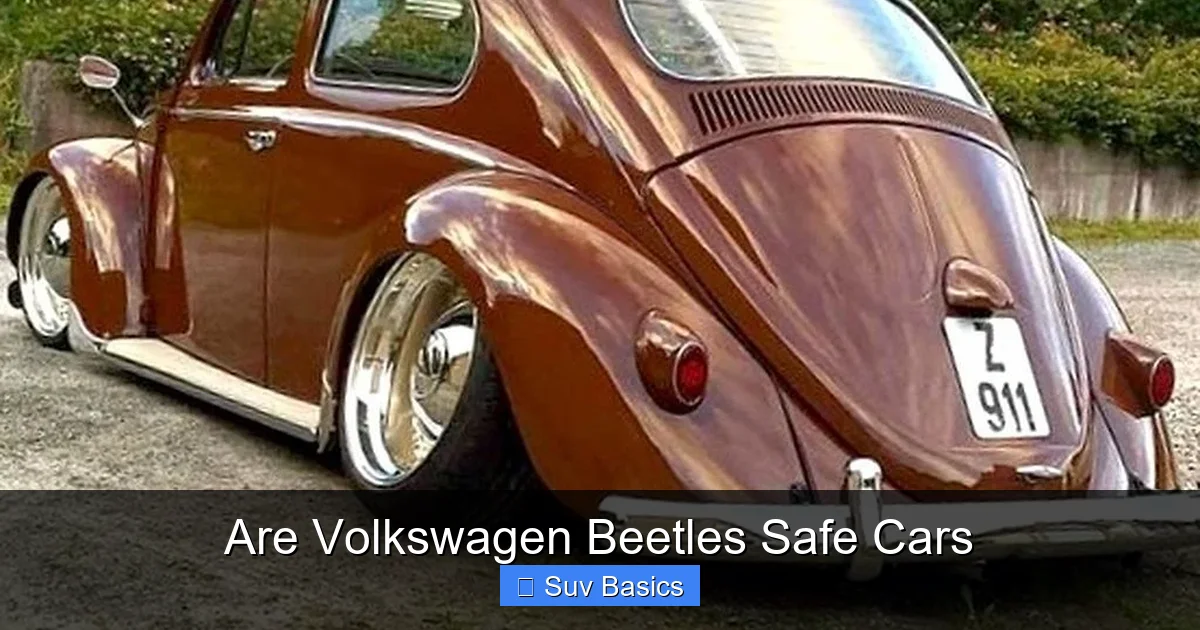
Visual guide about Are Volkswagen Beetles Safe Cars
Image source: i.pinimg.com
IIHS Ratings for Newer Beetles (2012–2019)
The IIHS tested the 2012–2019 Volkswagen Beetle and gave it an overall rating of “Good”—the highest possible—in most categories. It earned top marks in:
- Moderate overlap front crash
- Side impact protection
- Roof strength
- Head restraints and seats (for whiplash protection)
However, the Beetle received an “Acceptable” rating in the small overlap front test, which simulates hitting a tree or pole with just the front corner of the car. This is a common weakness in many compact cars, but it’s worth noting if you’re prioritizing front-end protection.
NHTSA 5-Star Safety Ratings
The NHTSA awarded the 2013–2019 Beetle an overall 4 out of 5 stars. It scored:
- 4 stars in frontal crash
- 5 stars in side crash
- 4 stars in rollover resistance
These scores are solid for a compact car, especially in side-impact scenarios. The high side-crash rating is partly due to standard side airbags and reinforced door structures in newer models.
Standard and Available Safety Features
One of the biggest factors in determining if Volkswagen Beetles are safe cars is the technology under the hood—or rather, under the dashboard. Let’s break down what you can expect.
Standard Safety Tech in Newer Models
Starting around 2012, Volkswagen began equipping the Beetle with a robust suite of standard safety features, including:
- Anti-lock braking system (ABS): Prevents wheel lockup during hard braking.
- Electronic stability control (ESC): Helps maintain control during skids or sharp turns.
- Traction control: Reduces wheel spin on slippery surfaces.
- Dual front airbags and side-impact airbags: Protect driver and front passenger in collisions.
- Tire pressure monitoring system (TPMS): Alerts you if a tire is underinflated.
These features were not standard in older Beetles, especially those from the 1990s or early 2000s. If you’re shopping for a used Beetle, always check the model year and trim level to confirm what’s included.
Available Advanced Driver Assistance Systems
While the Beetle was never packed with the latest driver aids like some SUVs or luxury sedans, higher trims (like the Beetle Turbo or Final Edition) offered optional upgrades such as:
- Rearview camera (standard on most 2015+ models)
- Parking sensors
- Blind-spot monitoring (on select trims)
- Forward collision warning (rare, but available on late models)
Keep in mind: These features were not standard across the board. If advanced safety tech is a priority, look for a well-equipped 2017–2019 model.
Older Beetles: Style Over Safety?
Now, let’s talk about the classic Beetles—the ones with the split rear window, air-cooled engine, and charming simplicity. While they’re beloved for their nostalgia and affordability, they fall short in modern safety standards.
Limited Crash Protection
Pre-1998 Beetles (and even early New Beetles from 1998–2005) were not designed with today’s crash safety in mind. They lack:
- Airbags (many had none at all)
- Crush zones to absorb impact energy
- Reinforced passenger cabins
- Electronic stability control
In fact, the NHTSA stopped crash-testing Beetles after 2005 due to outdated design. That doesn’t mean they’re death traps—but they’re not as safe as modern vehicles in a collision.
Handling and Braking Limitations
Older Beetles have rear-engine, rear-wheel-drive layouts, which can make them less stable in wet or icy conditions. Combined with drum brakes (on very early models) and minimal suspension tuning, they’re not ideal for high-speed or emergency maneuvers.
Tip: If you own or are buying an older Beetle, consider upgrading to disc brakes, modern tires, and a suspension refresh to improve safety.
Real-World Safety: Owner Experiences and Common Concerns
Beyond crash tests and specs, it’s helpful to hear from real Beetle owners. Online forums, owner reviews, and insurance data give us a clearer picture of everyday safety.
Reliability and Maintenance Impact Safety
Many Beetle owners praise the car’s reliability—especially the newer models with the 2.0L or 2.5L engines. However, safety can be compromised if the car isn’t well-maintained. Common issues include:
- Worn brake pads or rotors (leading to longer stopping distances)
- Failing suspension components (affecting handling)
- Electrical gremlins (impacting lights, sensors, or ABS)
Regular maintenance is key. A well-kept Beetle is a safe Beetle—especially important for older models with higher mileage.
Size and Visibility: Pros and Cons
The Beetle’s compact size makes it easy to park and maneuver in cities, but it also means less mass in a collision. In a crash with a larger vehicle—like an SUV or truck—the Beetle will absorb more force.
On the plus side, the Beetle offers good forward visibility, and newer models have large windows and minimal blind spots. The rearview can be tricky, especially in convertibles, but a rear camera helps.
Beetle Convertible: Is the Soft Top Less Safe?
One popular variant of the Beetle is the convertible. But does removing the roof affect safety?
Structural Rigidity and Rollover Risk
Convertibles generally have less structural rigidity than hardtops because the roof contributes to the car’s strength. To compensate, Volkswagen reinforced the Beetle convertible’s frame with additional bracing.
Still, in a rollover, a soft-top Beetle may not perform as well as a hardtop. The IIHS doesn’t specifically test convertibles for rollover, but NHTSA data shows the convertible scores slightly lower in rollover resistance (4 stars vs. 5 for some hardtops).
Airbag and Safety System Adjustments
Volkswagen equipped the convertible with roll bars that deploy automatically in a rollover, along with side airbags that extend higher to protect occupants. These features help offset the reduced roof strength.
Bottom line: The convertible is still a safe car—especially in newer models—but it’s not quite as robust as the hardtop in extreme scenarios.
How Do Beetles Compare to Other Compact Cars?
So, where does the Beetle stand among its peers? Let’s compare it to other popular compact cars like the Honda Civic, Toyota Corolla, and Mazda3.
- Crash ratings: The Beetle matches or slightly trails the Civic and Corolla, which often earn “Top Safety Pick” awards from IIHS.
- Safety features: The Beetle lags behind in standard advanced driver aids. Most competitors now include automatic emergency braking and lane departure warning as standard.
- Reliability: Beetles are generally reliable but have slightly higher repair costs than Japanese rivals.
Verdict: The Beetle is a safe compact car, but it’s not the safest in its class. If safety is your top priority, consider a Honda Civic or Subaru Impreza instead.
Final Verdict: Are Volkswagen Beetles Safe Cars?
So, are Volkswagen Beetles safe cars? The answer is yes—with caveats.
Newer Beetles (2012–2019) are well-engineered, earn solid crash test scores, and come with a full suite of modern safety features. They’re suitable for daily driving, city commutes, and even small families—especially in hardtop form.
Older Beetles, however, are more about style and nostalgia than safety. If you’re buying a classic or early New Beetle, understand the limitations and consider upgrades to improve protection.
Ultimately, no car is 100% safe. But with proper maintenance, cautious driving, and the right model year, a Volkswagen Beetle can be a safe and enjoyable ride.
Frequently Asked Questions
Are Volkswagen Beetles safe in crashes?
Yes, especially newer models (2012–2019), which earned “Good” ratings from the IIHS and 4-star overall scores from NHTSA. Older Beetles lack modern safety tech and perform less well in collisions.
Do all Beetles have airbags?
No. Pre-2000 Beetles often had no airbags. Newer models (2012+) come standard with front and side airbags, but always check the specific trim and year.
Is the Beetle convertible less safe than the hardtop?
Slightly. Convertibles have less structural rigidity, but Volkswagen added roll bars and reinforced frames. They’re still safe but not as strong in rollover scenarios.
What safety features should I look for in a used Beetle?
Look for electronic stability control, ABS, side airbags, and a rearview camera. These were standard on most 2015+ models but optional or missing on older ones.
Can I make an older Beetle safer?
Yes. Upgrades like disc brakes, modern tires, suspension improvements, and adding a backup camera can significantly improve safety in older models.
Are Beetles good first cars for teens?
Newer Beetles can be decent first cars due to their size and safety ratings, but their higher repair costs and lack of advanced driver aids make them less ideal than some competitors.