
Ford officially ended production of the Fiesta in 2023, marking the end of an era for one of Europe’s most beloved compact cars. While the model is no longer in production, its legacy lives on through used models and Ford’s shift toward SUVs and electric vehicles.
If you’ve been wondering, “Are they still making Ford Fiesta?” the short answer is no—but the story behind this iconic compact car is far from over. For nearly five decades, the Ford Fiesta has been a staple on roads across Europe, the UK, and beyond. Known for its nimble handling, fuel efficiency, and affordable price tag, the Fiesta became a favorite among first-time drivers, city commuters, and even performance enthusiasts with the high-octane ST variant.
But times change, and so do automotive trends. In recent years, Ford made the tough decision to discontinue the Fiesta, aligning its strategy with shifting consumer preferences toward larger vehicles like SUVs and crossovers, as well as a growing demand for electric mobility. The final Ford Fiesta rolled off the production line at the Cologne plant in Germany in June 2023, marking the end of an era. While it’s no longer in production, the Fiesta’s impact on the automotive world remains significant—and its presence in the used car market ensures it won’t disappear from our streets anytime soon.
Key Takeaways
- Ford Fiesta production has ended: The final Fiesta rolled off the assembly line in June 2023, concluding over 47 years of production.
- Focus shifted to SUVs and EVs: Ford is prioritizing larger vehicles like the Puma, Kuga, and Mustang Mach-E to meet changing consumer demands.
- The Fiesta remains popular in the used market: Reliability, affordability, and fun driving dynamics keep it a top choice for used car buyers.
- No direct successor announced: Ford has not revealed plans for a new compact car to replace the Fiesta in its current lineup.
- Special editions honored the Fiesta’s legacy: The final models included commemorative trims celebrating the car’s long history.
- Global availability varied: While discontinued in Europe and the UK, the Fiesta nameplate had limited use in other markets, such as Mexico, until recently.
- Enthusiasts and collectors value Fiestas: ST performance models and rare editions are gaining attention among car collectors.
📑 Table of Contents
The End of an Era: Ford Fiesta Production Ends
After 47 years and over 16 million units sold globally, Ford officially ended production of the Fiesta in 2023. The decision came as part of a broader restructuring plan by Ford Europe to streamline its vehicle lineup and focus on more profitable segments. The Fiesta, once a best-seller in the compact car category, found itself squeezed out by changing market dynamics.
Why Did Ford Discontinue the Fiesta?
Several factors contributed to Ford’s decision to retire the Fiesta. First and foremost was the dramatic shift in consumer preferences. Over the past decade, buyers have increasingly favored SUVs and crossovers over traditional hatchbacks. These larger vehicles offer more space, higher driving positions, and a sense of ruggedness that appeals to modern drivers—even in urban environments.
Additionally, stricter emissions regulations in Europe pushed automakers to invest heavily in electrification. Ford responded by accelerating its electric vehicle (EV) strategy, launching models like the Mustang Mach-E and the upcoming Explorer EV. With limited resources and factory capacity, Ford had to make tough choices—and the Fiesta, despite its popularity, was deemed less critical to the brand’s future.
The Final Fiesta: A Farewell to Fans
Ford didn’t let the Fiesta go quietly. To honor its legacy, the company released special “Final Edition” models in select markets. These versions featured unique badging, exclusive paint colors, and upgraded interiors. The Final Edition Fiesta ST, in particular, became a sought-after collector’s item, combining the car’s legendary performance with a sense of nostalgia.
For many drivers, the Fiesta represented more than just transportation—it was a symbol of freedom, affordability, and driving joy. Its discontinuation marked the end of a chapter not just for Ford, but for an entire generation of car lovers.
Ford’s Shift Toward SUVs and Electric Vehicles
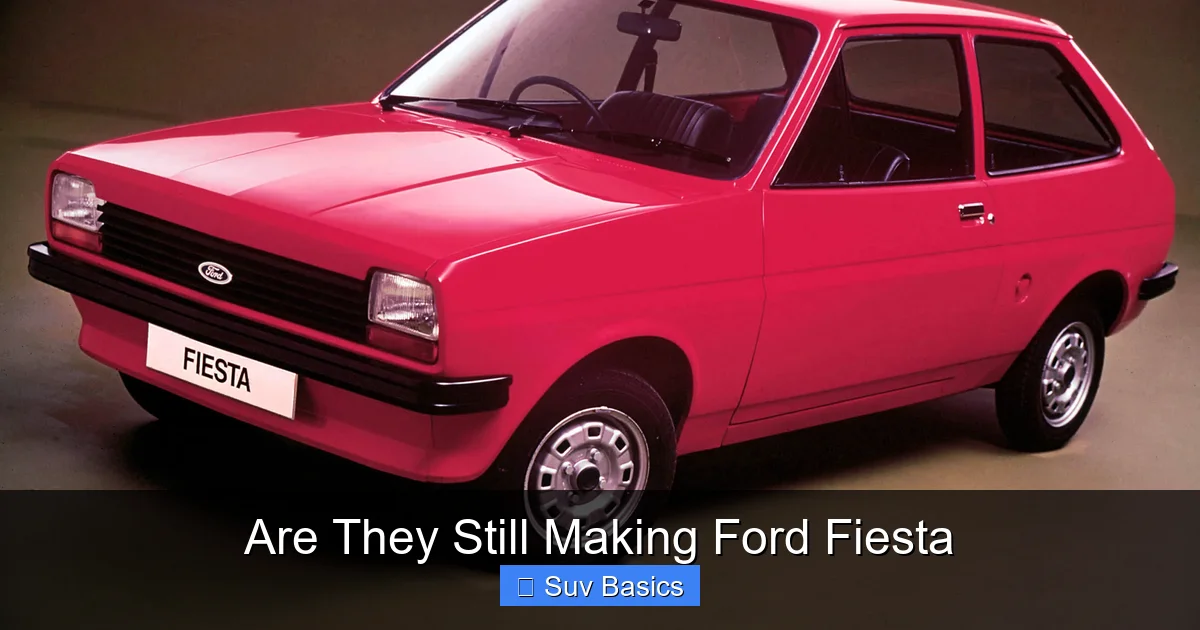
Visual guide about Are They Still Making Ford Fiesta
Image source: mediacloud.carbuyer.co.uk
With the Fiesta gone, Ford is doubling down on SUVs and electric vehicles. This strategic pivot reflects broader industry trends and aligns with Ford’s goal of becoming a leader in sustainable mobility.
The Rise of the Ford Puma
One of the key beneficiaries of the Fiesta’s discontinuation is the Ford Puma. This compact crossover, introduced in 2019, shares some of the Fiesta’s DNA—particularly its platform and efficient engines—but offers the higher ride height and cargo space that today’s buyers want. The Puma has quickly become one of Ford’s best-selling models in Europe, proving that Ford can still deliver fun-to-drive compact vehicles—just in a different shape.
Electrification Takes Center Stage
Ford’s commitment to electrification is evident in its growing EV lineup. The Mustang Mach-E, a fully electric SUV, has received critical acclaim for its performance and range. Meanwhile, the E-Transit and upcoming Explorer EV signal Ford’s ambition to electrify both passenger and commercial vehicles.
While there’s no electric Fiesta in the pipeline, Ford has hinted at smaller EV models in the future. The company’s partnership with Volkswagen on electric platforms could eventually lead to a compact electric car that fills the Fiesta’s shoes—though it would likely carry a new name and modern design.
The Ford Fiesta in the Used Car Market
Even though new Fiestas are no longer being made, the model remains incredibly popular in the used car market. Its reputation for reliability, low running costs, and enjoyable driving dynamics ensures strong demand among budget-conscious buyers.
Why Buy a Used Ford Fiesta?
There are plenty of reasons to consider a used Fiesta. First, they’re affordable. Depending on the year, mileage, and trim, you can find a well-maintained Fiesta for under £10,000—sometimes much less. Second, they’re fuel-efficient. Most models come with small, turbocharged engines that deliver excellent miles per gallon, making them ideal for city driving and long commutes.
Third, the Fiesta is known for its engaging handling. Unlike many compact cars that feel bland or underpowered, the Fiesta—especially the ST version—offers a sporty driving experience with sharp steering and responsive suspension. It’s the kind of car that makes you smile when you take a corner.
What to Look for When Buying a Used Fiesta
If you’re in the market for a used Fiesta, here are a few tips to keep in mind:
– Check the service history: Regular maintenance is key to longevity. Look for a car with a full service record.
– Inspect for rust: Older Fiestas, especially those from the early 2000s, can develop rust around the wheel arches and sills.
– Test the clutch and gearbox: Manual Fiestas are common, so make sure the clutch isn’t slipping and the gears engage smoothly.
– Consider the ST model: If you want more power, the Fiesta ST packs a 1.6L turbo engine with around 182 horsepower—plenty for spirited driving.
The Legacy of the Ford Fiesta
The Ford Fiesta wasn’t just a car—it was a cultural icon. Launched in 1976, it helped democratize car ownership in Europe, offering an affordable, stylish, and practical option for millions of drivers. Over the years, it evolved through eight generations, each improving on the last with better technology, safety, and performance.
A History of Innovation
The Fiesta was often ahead of its time. It was one of the first small cars to offer front-wheel drive, five-speed manual transmissions, and advanced safety features like ABS and airbags. In the 1990s, it became a favorite among rally drivers, with the Fiesta RS WRC dominating the World Rally Championship.
The ST performance version, introduced in the 2000s, brought hot hatch excitement to the compact segment. With its turbocharged engine, sport-tuned suspension, and aggressive styling, the Fiesta ST proved that small cars could be both fun and functional.
Why the Fiesta Mattered
Beyond its technical achievements, the Fiesta mattered because it was accessible. It wasn’t a luxury car, but it didn’t pretend to be. It was honest, reliable, and—above all—fun to drive. For many people, their first car was a Fiesta. For others, it was the car they drove through college, started a family in, or used to explore new cities.
Its discontinuation feels like the end of a simpler time in the automotive world—one where small, efficient cars were celebrated, not sidelined.
Will There Be a New Ford Fiesta?
As of now, Ford has not announced any plans to revive the Fiesta nameplate. The company’s focus is firmly on SUVs, crossovers, and electric vehicles. However, the automotive landscape is always evolving, and consumer demand could shift again.
Could an Electric Fiesta Return?
It’s not impossible. As battery technology improves and production costs decrease, smaller electric cars are becoming more viable. Ford has already shown interest in compact EVs, and a spiritual successor to the Fiesta—perhaps called the “Ford E-Fiesta” or something entirely new—could emerge in the coming years.
Such a vehicle would likely share components with other Ford EVs, feature a modern design, and offer a range of around 200–250 miles. It might not look or feel exactly like the old Fiesta, but it could capture the same spirit of affordability and driving enjoyment.
What About the Fiesta Name?
The Fiesta name itself holds strong brand recognition. Ford could choose to reuse it on a future electric model, much like it did with the Mustang Mach-E. Alternatively, it might retire the name for good, opting for something fresh and futuristic.
Only time will tell. But one thing is certain: the Fiesta’s legacy will influence Ford’s next generation of compact vehicles.
Conclusion: A Fond Farewell to the Ford Fiesta
So, are they still making Ford Fiesta? The answer is no—but that doesn’t mean the Fiesta is gone for good. While production has ended, the car lives on in the hearts of drivers, the used car market, and the memories of those who grew up with it.
Ford’s decision to discontinue the Fiesta reflects broader changes in the automotive industry. As we move toward a future dominated by SUVs and electric vehicles, smaller cars like the Fiesta are becoming rare. But their impact shouldn’t be underestimated. The Fiesta proved that you don’t need a big engine or a luxury badge to enjoy driving.
For now, fans can take comfort in knowing that used Fiestas are still widely available, affordable, and fun to drive. And who knows? Maybe one day, a new compact car will rise to take its place—carrying forward the Fiesta’s spirit of innovation, accessibility, and pure driving joy.
Frequently Asked Questions
Are they still making Ford Fiesta?
No, Ford ended production of the Fiesta in June 2023. The final models were built at the Cologne plant in Germany, marking the end of the model’s 47-year run.
Why did Ford stop making the Fiesta?
Ford discontinued the Fiesta due to shifting consumer preferences toward SUVs and crossovers, as well as the need to invest in electric vehicle development and comply with stricter emissions regulations.
Is there a replacement for the Ford Fiesta?
Ford has not announced a direct replacement. The compact Ford Puma shares some similarities and is now the brand’s focus in the small vehicle segment.
Can I still buy a new Ford Fiesta?
No new Fiestas are being produced, but you may find leftover stock at some dealerships. Most buyers now look to the used car market.
Will Ford bring back the Fiesta as an electric car?
Ford has not confirmed plans for an electric Fiesta, but the company is developing smaller EVs. A spiritual successor could emerge in the future.
What’s the best used Ford Fiesta to buy?
The Fiesta ST is highly recommended for performance, while newer models (2017–2023) offer updated tech and better fuel efficiency. Always check service history and condition.