
The Porsche Cayman is widely regarded as a reliable sports car when properly maintained, thanks to its solid engineering and high-quality build. While not immune to mechanical quirks, most owners report strong long-term dependability, especially with timely servicing and attention to known weak points.
Key Takeaways
- Generally Reliable: The Porsche Cayman earns high marks for reliability among sports cars, especially models from 2013 onward with updated engines and electronics.
- Maintenance Is Key: Like all Porsches, the Cayman requires consistent, high-quality maintenance to stay trouble-free—cutting corners can lead to costly repairs.
- Engine Strengths and Weaknesses: Early models (2006–2012) with the M97 engine may face IMS bearing concerns, but newer N/A and turbocharged engines are more robust.
- Electrical and Suspension Quirks: Some owners report minor electrical glitches or suspension wear, but these are typically manageable with proper care.
- High Owner Satisfaction: Despite being a performance car, the Cayman scores well in owner satisfaction surveys, often praised for its balance of fun and daily usability.
- Depreciation and Value Retention: Well-maintained Caymans hold their value better than many rivals, making them a smart long-term investment.
- DIY-Friendly for Enthusiasts: With accessible components and strong community support, many owners perform their own maintenance, reducing ownership costs.
📑 Table of Contents
- Are Porsche Cayman Reliable? A Deep Dive into Real-World Ownership
- Understanding Porsche Cayman Reliability Over the Generations
- Common Reliability Concerns and How to Avoid Them
- Maintenance Tips for Long-Term Reliability
- Owner Experiences and Real-World Reliability
- Is the Porsche Cayman Right for You?
Are Porsche Cayman Reliable? A Deep Dive into Real-World Ownership
If you’re considering a Porsche Cayman, you’re likely drawn to its sleek design, mid-engine balance, and thrilling driving dynamics. But beyond the adrenaline rush, one question looms large for any potential buyer: *Are Porsche Cayman reliable?* After all, no one wants a beautiful sports car that spends more time in the shop than on the road.
The short answer? Yes—the Porsche Cayman is generally reliable, especially when compared to other high-performance sports cars. But like any precision machine, it demands respect, proper care, and a bit of know-how. Over the years, the Cayman has evolved from a niche enthusiast favorite to a well-rounded, daily-drivable sports car with a strong reputation for durability. That said, reliability isn’t just about the car—it’s also about how you treat it.
Understanding Porsche Cayman Reliability Over the Generations
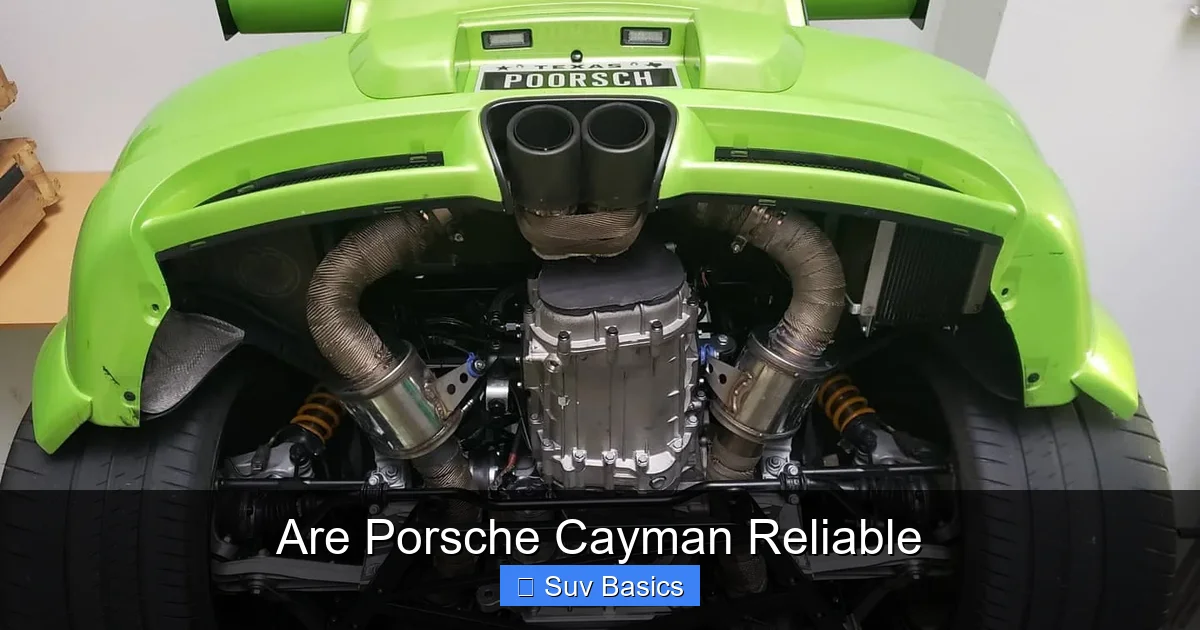
Visual guide about Are Porsche Cayman Reliable
Image source: corvsport.com
To truly answer whether the Porsche Cayman is reliable, it helps to break it down by generation. Each iteration brought improvements in engineering, materials, and technology, which directly impacted long-term dependability.
First Generation (2006–2012): The Foundation
The original Cayman, based on the Boxster platform, was a revelation when it launched. It offered near-perfect weight distribution and handling at a more accessible price point than the 911. However, early models came with the M97 engine—a derivative of the 996-era flat-six. While smooth and powerful, this engine carried some of the same concerns as its 911 sibling, most notably the infamous Intermediate Shaft (IMS) bearing issue.
The IMS bearing, if it fails, can cause catastrophic engine damage. That said, not every M97 engine fails—many run flawlessly for 150,000+ miles. The key is proactive maintenance: replacing the IMS bearing with an upgraded unit (a common and relatively affordable upgrade) significantly reduces risk. Other common issues in this era include bore scoring (more prevalent in high-mileage or poorly maintained engines) and minor oil leaks from the rear main seal or valve cover gaskets.
Second Generation (2013–2016): The Refinement
With the introduction of the 981 platform, Porsche addressed many of the earlier concerns. The new 2.7L and 3.4L flat-six engines (based on the more modern MA1 architecture) eliminated the IMS bearing issue entirely. These engines are widely regarded as more reliable, with better cooling, improved lubrication, and fewer reported failures.
Owners of 981 Caymans often praise the car’s daily usability, refined interior, and enhanced electronics. That said, some early 981 models experienced issues with the PDK dual-clutch transmission (if equipped), including rough shifts or software glitches. Most of these were resolved via dealer updates, and later production models saw significant improvements.
Third Generation (2017–2021): The Turbocharged Era
The 982 platform brought a major shift: turbocharged four-cylinder and flat-six engines. The base Cayman now used a 2.0L turbocharged flat-four (shared with the 718 Boxster), while the Cayman S and GTS models got a 2.5L turbo flat-four or 3.0L turbo flat-six.
Turbocharged engines can be more complex, but Porsche engineered these powerplants with reliability in mind. The 2.0L and 2.5L engines have proven durable, with fewer reported issues than some competitors’ turbo engines. However, turbo systems do require attention—regular oil changes with high-quality synthetic oil, proper warm-up and cool-down routines, and avoiding excessive boost on modified cars are all essential.
One note: some 982 owners have reported minor electrical gremlins, such as infotainment screen freezes or sensor malfunctions. These are usually resolved with software updates or component replacements under warranty.
Common Reliability Concerns and How to Avoid Them
No car is perfect, and the Cayman is no exception. But knowing what to watch for can save you thousands and keep your Porsche running smoothly for years.
Engine and Drivetrain
As mentioned, early M97 engines require vigilance. If you’re buying a first-gen Cayman, have a pre-purchase inspection (PPI) done by a Porsche specialist. They’ll check for bore scoring, oil consumption, and IMS bearing condition. Upgrading the IMS bearing and using high-quality oil (like Mobil 1 or Porsche-approved equivalents) can extend engine life significantly.
For turbocharged models, stick to the recommended oil change intervals—every 10,000 miles or annually, whichever comes first. Turbo engines are sensitive to oil degradation, and skipping changes can lead to turbo failure or carbon buildup.
Suspension and Steering
The Cayman’s suspension is tuned for performance, which means components wear faster than on a typical commuter car. Common wear items include:
– Front control arm bushings
– Rear toe links
– Strut mounts
These parts can develop play or noise over time, especially on high-mileage or track-driven cars. Replacing them with OEM or high-quality aftermarket parts (like those from Elephant Racing or Tarrett Engineering) restores ride quality and handling precision.
Electrical and Infotainment
Modern Caymans come loaded with tech, from PCM (Porsche Communication Management) to adaptive cruise control and parking sensors. While generally reliable, the PCM system can occasionally freeze or reboot. A software update from your dealer usually fixes this. Also, keep an eye on the battery—Porsche’s electrical systems draw more power, and a weak battery can cause odd behavior.
Brake and Cooling Systems
Performance brakes are a joy, but they wear faster. Brake pads and rotors may need replacement every 20,000–40,000 miles, depending on driving style. Ceramic composite brakes (PCCB) last longer but are expensive to replace—factor that into your budget if you’re considering a used model with them.
Cooling is generally excellent, but track use or hot climates demand extra care. Ensure the radiator, coolant reservoir, and auxiliary fans are in good condition. Overheating can damage the engine or turbocharger.
Maintenance Tips for Long-Term Reliability
Owning a Porsche Cayman doesn’t have to be expensive—if you stay on top of maintenance. Here are some practical tips to keep your Cayman running like new:
- Follow the Maintenance Schedule: Porsche provides a detailed service plan. Stick to it, especially for oil changes, brake fluid flushes, and spark plug replacements.
- Use OEM or High-Quality Parts: While aftermarket parts can save money, critical components like brakes, suspension, and engine parts should be OEM or from trusted brands.
- Warm Up and Cool Down: Especially important for turbocharged models. Let the engine idle for 30–60 seconds before driving hard, and allow turbos to cool after spirited driving.
- Store Properly in Winter: If you live in a cold climate, use a battery tender and consider a climate-controlled garage. Cold starts are harder on engines.
- Join the Community: Online forums like Rennlist, Planet9, and Facebook groups are goldmines of advice, DIY guides, and troubleshooting tips.
Many Cayman owners perform their own maintenance—oil changes, brake jobs, and even suspension work are manageable with basic tools and patience. This not only saves money but deepens your connection to the car.
Owner Experiences and Real-World Reliability
So, what do actual owners say? Across forums, review sites, and owner surveys, the consensus is clear: the Cayman is a reliable sports car when treated right.
Owners of 981 and 982 models frequently report 100,000+ miles with only routine maintenance. One owner on Rennlist shared that his 2014 Cayman S had 130,000 miles and still ran like new, with only minor suspension updates and regular oil changes. Another praised the 2019 Cayman GTS for its daily drivability and trouble-free ownership over 60,000 miles.
Even first-gen owners report positive experiences—provided they addressed the IMS issue early. A common theme? Enthusiasts love the Cayman not just for its performance, but for its balance of reliability and driving joy.
Is the Porsche Cayman Right for You?
The Porsche Cayman isn’t just a weekend toy—it’s a capable daily driver that rewards careful ownership. If you’re willing to invest in maintenance and understand the car’s needs, it can be one of the most reliable sports cars you’ll ever own.
Whether you’re eyeing a used 987, a well-maintained 981, or a newer 982, the Cayman offers a compelling blend of performance, style, and long-term dependability. Just remember: reliability isn’t magic—it’s the result of good habits, quality parts, and a little love.
In the end, the answer to “Are Porsche Cayman reliable?” is a confident *yes*—with the right care, this mid-engine marvel will deliver smiles for miles.
Frequently Asked Questions
Is the Porsche Cayman reliable for daily driving?
Yes, the Porsche Cayman is reliable enough for daily use, especially models from 2013 onward. With proper maintenance, many owners drive their Caymans as primary vehicles without major issues.
What are the most common problems with the Porsche Cayman?
Common issues include IMS bearing failure in early models, minor oil leaks, suspension wear, and occasional electrical glitches. Most can be prevented or resolved with timely maintenance.
Do Porsche Caymans have expensive repair costs?
Repairs can be costly due to labor rates and parts pricing, but regular maintenance and DIY work can reduce expenses. Budgeting for annual servicing helps avoid surprises.
How long do Porsche Cayman engines last?
With proper care, Cayman engines can last 150,000–200,000 miles or more. Turbocharged models require more attention to oil and cooling but are still durable.
Should I buy a used Porsche Cayman?
Yes, if it has a clean history, full service records, and a pre-purchase inspection. Focus on well-maintained examples, especially from 2013 onward.
Is the Cayman more reliable than the Boxster?
The Cayman and Boxster share the same platform and engines, so reliability is very similar. The Cayman’s fixed roof may offer slightly better structural rigidity, but both are dependable when maintained.