
The Nissan Juke offers bold styling and fun driving dynamics, but its reliability varies by model year and engine type. While early models faced transmission and turbo issues, later Jukes improved significantly—making them a decent pick if you avoid problem years and maintain them well.
Key Takeaways
- Early models (2011–2014) have reliability concerns: The continuously variable transmission (CVT) and turbocharged 1.6L engine were prone to failures, leading to costly repairs.
- 2015 and newer Jukes are more dependable: Nissan addressed many early flaws, improving build quality and reducing common breakdowns.
- Regular maintenance is critical: Skipping oil changes or ignoring warning lights can drastically shorten the Juke’s lifespan.
- Fuel economy is a strong point: The Juke delivers up to 31 mpg on the highway, making it efficient for city and suburban driving.
- Resale value is below average: Due to reliability reputation, Jukes depreciate faster than rivals like the Honda HR-V or Toyota C-HR.
- Safety ratings are decent but not top-tier: The Juke earned 4-star overall NHTSA ratings, with good crash protection but limited advanced driver aids in base trims.
- Best for budget-conscious buyers who value style: If you find a well-maintained 2015+ model with service records, the Juke can be a fun, affordable compact SUV.
📑 Table of Contents
- Introduction: The Nissan Juke’s Bold Personality
- Understanding the Nissan Juke’s Reliability Over Time
- Common Problems and How to Avoid Them
- Real Owner Experiences: The Good and the Bad
- Fuel Economy and Running Costs
- Safety and Practicality: What You Need to Know
- Should You Buy a Nissan Juke?
- Final Verdict: A Quirky Choice with Caveats
Introduction: The Nissan Juke’s Bold Personality
The Nissan Juke burst onto the scene in 2011 with a design that turned heads. It wasn’t your typical boxy SUV—it was a crossover with flair, blending coupe-like styling, a high driving position, and a turbocharged engine. For drivers who wanted something different from the usual Honda CR-V or Toyota RAV4, the Juke offered personality and a sporty feel at an affordable price.
But style and fun don’t always mean reliability. Over the years, the Juke developed a mixed reputation. Some owners love their quirky little SUVs, while others have faced frustrating mechanical issues. So, are Nissan Jukes reliable cars? The answer isn’t black and white—it depends on the year, engine, how it was driven, and whether it was properly maintained.
Understanding the Nissan Juke’s Reliability Over Time
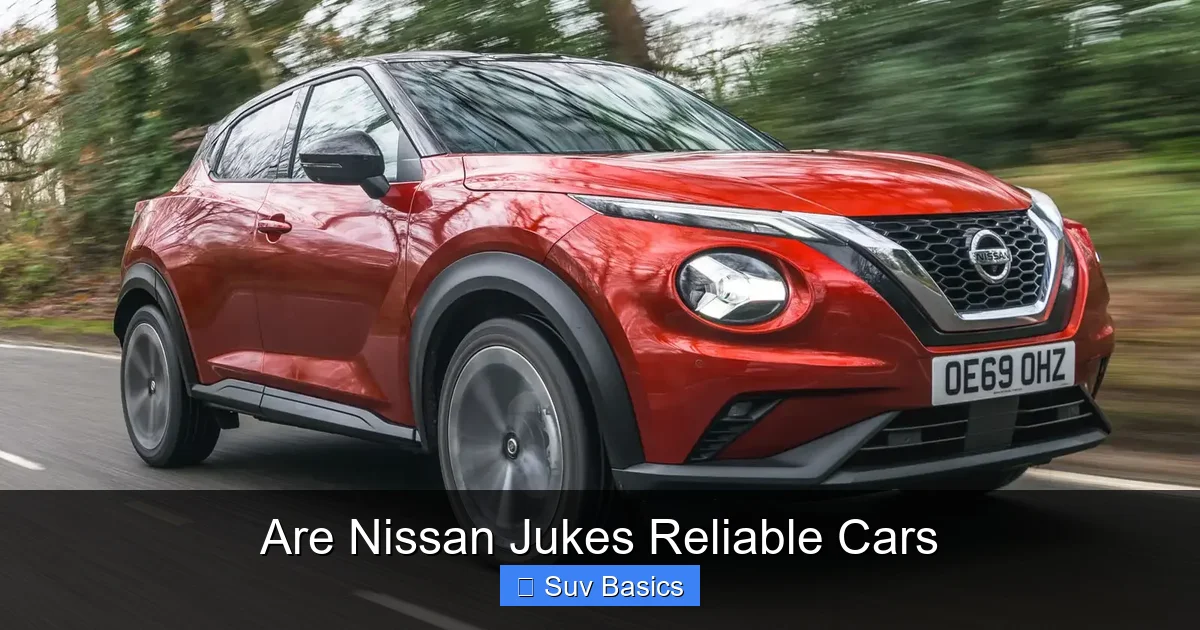
Visual guide about Are Nissan Jukes Reliable Cars
Image source: autocar.co.uk
To truly assess whether the Nissan Juke is reliable, you need to look at its history. The first-generation Juke (2011–2017) had several well-documented problems, especially in the early years. The second generation (2019–2020) brought improvements, but the Juke was discontinued in the U.S. after 2020, partly due to declining sales and evolving consumer preferences toward larger, more practical SUVs.
Early Models (2011–2014): A Rocky Start
The earliest Jukes came with a 1.6-liter turbocharged four-cylinder engine paired with a continuously variable transmission (CVT). While the engine delivered peppy performance—188 horsepower, which was impressive for its size—it also introduced complexity. Turbocharged engines need precise maintenance, and the CVT, while smooth in theory, had a reputation for premature failure in these models.
Common issues included:
- CVT shuddering or slipping, especially in cold weather
- Turbocharger failures due to oil starvation or carbon buildup
- Electrical glitches, including faulty sensors and dashboard warning lights
Many owners reported transmission replacements under warranty, and some faced out-of-pocket costs after coverage expired. Consumer Reports and J.D. Power gave early Jukes below-average reliability scores, citing frequent repairs and owner dissatisfaction.
Mid-Cycle Updates (2015–2017): Signs of Improvement
Nissan listened to feedback and made key changes starting in 2015. The CVT software was updated to reduce shuddering, and the engine received minor tweaks for better durability. Build quality also improved, with better interior materials and fewer reported electrical issues.
Owners of 2015 and newer Jukes generally report fewer major problems. While the turbo engine still requires careful maintenance, it’s less prone to catastrophic failure if oil changes are done on time and the cooling system is monitored. Reliability ratings began to climb, though they still lagged behind segment leaders.
Second Generation (2019–2020): A Short-Lived Revival
The redesigned Juke arrived in global markets in 2019, but it never made it to the U.S. in significant numbers. However, Canadian and European buyers got a more refined version with a 1.0-liter turbo three-cylinder engine, improved infotainment, and better fuel efficiency. This model showed Nissan’s commitment to fixing past flaws, but its limited availability in the U.S. means most American buyers are dealing with first-gen models.
Common Problems and How to Avoid Them
Even with improvements, the Nissan Juke isn’t immune to mechanical issues. Knowing what to watch for can save you thousands in repairs.
CVT Transmission Troubles
The CVT is the Juke’s Achilles’ heel, especially in 2011–2014 models. Symptoms include:
- A jerking or hesitation during acceleration
- A whining noise from the transmission
- The “limp mode” warning, where the car limits speed to protect the transmission
Tip: If you’re buying a used Juke, always check the transmission fluid. It should be clean and red, not burnt or gritty. Avoid cars with a history of towing or aggressive driving, as CVTs hate heavy loads.
Turbocharger and Engine Concerns
The 1.6L turbo engine is powerful but sensitive. Common issues include:
- Oil leaks from the turbo seals
- Carbon buildup on intake valves (direct injection engines don’t wash the valves like port injection)
- Premature turbo failure due to poor oil circulation
Tip: Use high-quality synthetic oil and change it every 5,000 miles—not the 7,500-mile interval some manuals suggest. Consider a walnut blasting service every 60,000 miles to clean carbon deposits.
Electrical and Infotainment Glitches
Some Jukes experience random electrical issues, such as:
- Dashboard warning lights flashing for no reason
- Infotainment system freezing or rebooting
- Power window or door lock malfunctions
These are often due to software bugs or loose wiring. A dealership software update can fix many of these, but older models may not be supported anymore.
Real Owner Experiences: The Good and the Bad
To get a real sense of Juke reliability, it helps to hear from actual owners.
Sarah M., a 2016 Juke owner from Ohio, says:
“I’ve put 80,000 miles on my Juke with no major issues. I change the oil every 5,000 miles and use premium fuel. It’s fun to drive, gets great gas mileage, and still turns heads. I’d buy another one.”
On the flip side, Mike T., who owned a 2012 Juke, shares:
“My transmission failed at 65,000 miles. The repair cost $3,200. Nissan denied my warranty claim because I missed one oil change by 1,000 miles. I loved the car, but I’ll never own another Nissan.”
These stories highlight a key point: maintenance matters more than the car itself. A well-cared-for Juke can last 150,000+ miles, while a neglected one may die early.
Fuel Economy and Running Costs
One area where the Juke shines is fuel efficiency. The 1.6L turbo engine delivers:
- 27 mpg city
- 31 mpg highway
- 29 mpg combined
That’s competitive with other small SUVs like the Mazda CX-3 and Ford EcoSport. Plus, the Juke’s compact size makes it easy to park and maneuver in tight city spaces.
Running costs are generally low, but be prepared for:
- Higher repair bills if the CVT or turbo fails
- Premium fuel recommended (though not always required)
- Limited availability of parts as the model ages
Insurance and routine maintenance (oil changes, brakes, tires) are affordable, but major repairs can be pricey—especially if you’re out of warranty.
Safety and Practicality: What You Need to Know
The Nissan Juke earned a 4-star overall safety rating from the National Highway Traffic Safety Administration (NHTSA). It performed well in frontal and side crash tests but scored lower in rollover resistance due to its tall, narrow design.
Standard safety features on most trims include:
- Anti-lock brakes (ABS)
- Electronic stability control
- Six airbags
However, advanced safety tech like automatic emergency braking, blind-spot monitoring, and adaptive cruise control were rare, especially on base models. If safety tech is a priority, consider a newer SUV.
Practicality is another mixed bag. The Juke’s rear seats are tight for adults, and cargo space is limited—about 10.5 cubic feet behind the rear seats, expanding to 35.9 with the seats folded. That’s less than the Honda HR-V or Subaru Crosstrek.
But for singles, couples, or small families who don’t haul much, the Juke’s compact size is a benefit, not a drawback.
Should You Buy a Nissan Juke?
So, are Nissan Jukes reliable cars? The short answer: They can be—if you choose the right one and take care of it.
Here’s a quick checklist if you’re considering a used Juke:
- Stick to 2015 or newer models to avoid the worst CVT and engine issues.
- Check the service history—look for regular oil changes and no major repairs.
- Get a pre-purchase inspection by a trusted mechanic, especially for the transmission and turbo.
- Avoid high-mileage examples with no records—they’re risky.
- Consider certified pre-owned (CPO) if available, for added peace of mind.
If you find a well-maintained Juke with under 80,000 miles, it can be a stylish, efficient, and fun daily driver. But if you need maximum reliability, low repair risk, and strong resale value, you might be better off with a Honda HR-V, Toyota C-HR, or Mazda CX-30.
Final Verdict: A Quirky Choice with Caveats
The Nissan Juke is a car that divides opinion. It’s not the most practical, safest, or most reliable SUV in its class. But it’s also not the disaster some reviews make it out to be. With the right model year and proper care, the Juke can deliver years of enjoyable, economical driving.
Its bold design and sporty handling still stand out in a sea of bland crossovers. And for buyers who value personality over perfection, the Juke offers a unique blend of style and value.
Just remember: reliability isn’t just about the car—it’s about how you treat it. Keep up with maintenance, drive it sensibly, and your Juke might just surprise you.
Frequently Asked Questions
Are Nissan Jukes reliable after 100,000 miles?
Yes, but only if they’ve been well-maintained. Jukes with regular oil changes, timely transmission service, and no major accidents can last beyond 150,000 miles. However, high-mileage examples are more prone to CVT and turbo issues.
What year Nissan Juke is the most reliable?
The 2015–2017 models are the most reliable. Nissan fixed many early CVT and engine problems by then, and these years have fewer reported issues compared to 2011–2014 models.
Do Nissan Jukes have transmission problems?
Yes, especially the 2011–2014 models with the CVT. Shuddering, slipping, and complete failures were common. Later models improved, but the CVT remains a potential weak point if not maintained properly.
Is the Nissan Juke expensive to maintain?
Routine maintenance is affordable, but major repairs—like CVT or turbo replacements—can cost $2,000–$4,000. Using synthetic oil and following the maintenance schedule helps reduce long-term costs.
Can a Nissan Juke be used for long road trips?
Yes, but comfort and cargo space are limited. The Juke gets great highway mileage and handles well, but rear-seat passengers and luggage space may be tight on longer journeys.
Why was the Nissan Juke discontinued?
Nissan discontinued the Juke in the U.S. after 2020 due to declining sales, shifting consumer preferences toward larger SUVs, and the model’s mixed reliability reputation. It remains available in other markets.