
Most cars today are NOT rear wheel drive. In fact, front-wheel drive (FWD) dominates the passenger car market due to better fuel efficiency, lower cost, and improved traction in everyday driving. While rear wheel drive remains popular in performance and luxury vehicles, it’s far from the standard for the average driver.
Key Takeaways
- Most modern cars use front-wheel drive (FWD): FWD is the dominant layout in compact, midsize, and family cars due to its cost-effectiveness and space efficiency.
- Rear wheel drive (RWD) is common in performance and luxury vehicles: Brands like BMW, Mercedes-Benz, and Porsche favor RWD for better handling and power delivery.
- All-wheel drive (AWD) and four-wheel drive (4WD) are growing in popularity: SUVs and crossovers often come with AWD for enhanced traction and safety in various weather conditions.
- RWD offers better weight balance and driving dynamics: Ideal for spirited driving, RWD provides a more engaging experience but can be trickier in snow or rain.
- FWD is more practical for daily commuting: It’s cheaper to build and maintain, uses less fuel, and performs well in most urban and highway conditions.
- The shift away from RWD began in the 1980s: Automakers moved to FWD to meet fuel economy standards and reduce production costs.
- Electric vehicles are changing the game: Many EVs use dual-motor setups for AWD, making traditional drivetrain layouts less relevant.
📑 Table of Contents
- Are Most Cars Rear Wheel Drive? The Surprising Truth
- What Is Rear Wheel Drive and How Does It Work?
- Why Front-Wheel Drive Dominates the Market
- The Rise of All-Wheel Drive and Four-Wheel Drive
- Where Does RWD Still Shine?
- The Future of Drivetrains: Electrification and Beyond
- Conclusion: So, Are Most Cars Rear Wheel Drive?
Are Most Cars Rear Wheel Drive? The Surprising Truth
If you’re new to the world of cars or just brushing up on your automotive knowledge, you might assume that most vehicles send power to the rear wheels—especially if you’ve seen sports cars or classic muscle machines roaring down the road. But here’s the reality: most cars on the road today are NOT rear wheel drive. In fact, front-wheel drive (FWD) has become the standard for the majority of passenger vehicles, especially in the compact and midsize segments.
This shift didn’t happen overnight. It was driven by a combination of engineering advancements, economic pressures, and changing consumer needs. While rear wheel drive (RWD) still holds a special place in the hearts of driving enthusiasts, it’s no longer the default choice for everyday drivers. Understanding why can help you make smarter decisions when buying your next car—whether you’re looking for a fuel-efficient commuter or a thrilling weekend cruiser.
What Is Rear Wheel Drive and How Does It Work?
Visual guide about Are Most Cars Rear Wheel Drive
Image source: s3-id-jkt-1.kilatstorage.id
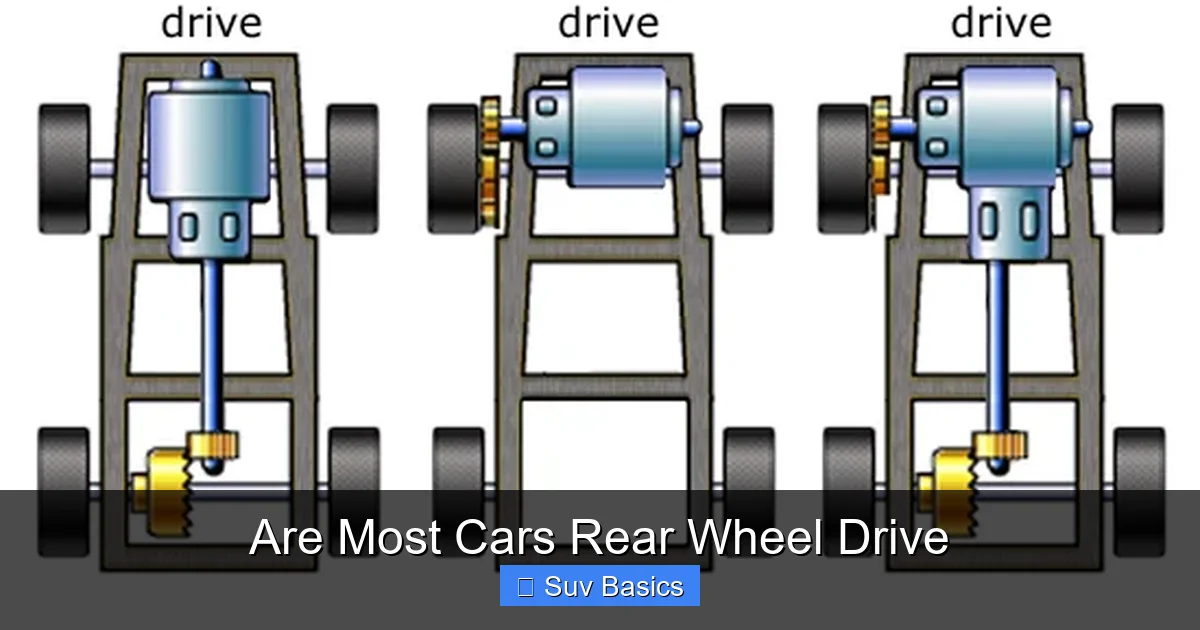
Rear wheel drive (RWD) is a drivetrain configuration where the engine sends power to the rear wheels, propelling the vehicle forward. This layout has been around since the early days of the automobile and was once the standard for nearly all cars. The engine typically sits in the front, and a driveshaft runs underneath the car to transfer power to the rear differential, which then turns the rear wheels.
Advantages of RWD
One of the biggest benefits of RWD is its balanced weight distribution. Because the engine is in the front and the driven wheels are in the back, the car tends to have a near 50/50 front-to-rear weight balance. This improves handling, especially during cornering, and gives the car a more responsive feel. That’s why performance cars like the BMW 3 Series, Ford Mustang, and Chevrolet Corvette use RWD—they’re built for driving enjoyment.
RWD also handles heavy loads better. Trucks and large SUVs often use RWD (or 4WD with RWD as the base) because it provides better traction when towing or hauling. Additionally, RWD allows for a straighter, more efficient power path from the engine to the wheels, which can improve acceleration in high-performance applications.
Disadvantages of RWD
However, RWD isn’t perfect. In slippery conditions like snow, ice, or heavy rain, rear-wheel-drive cars can be more prone to losing traction. Without weight over the driven wheels (since the engine is in the front), the rear tires can spin or slide, especially during acceleration. This is why many drivers in colder climates prefer front-wheel or all-wheel drive.
Another downside is cost and complexity. RWD systems require a driveshaft, differential, and more components under the car, which increases manufacturing costs and reduces interior space—especially in the rear footwell. That’s why most economy cars avoid RWD in favor of simpler, cheaper layouts.
Why Front-Wheel Drive Dominates the Market
So if RWD has so many performance benefits, why don’t most cars use it? The answer lies in practicality. Front-wheel drive (FWD) has become the go-to choice for automakers because it’s more efficient, affordable, and space-saving.
How FWD Works
In a front-wheel-drive car, the engine sends power directly to the front wheels. The engine, transmission, and differential are all packaged together in the front of the vehicle, creating a compact “transaxle” unit. This design eliminates the need for a driveshaft tunnel running through the cabin, freeing up space for passengers and cargo.
Benefits of FWD for Everyday Driving
FWD cars are generally more fuel-efficient because they have fewer moving parts and less drivetrain loss. They’re also lighter, which improves gas mileage—a major selling point in an era of rising fuel prices and environmental awareness.
Another big advantage is traction. With the engine’s weight directly over the driven wheels, FWD cars grip the road better in rain and light snow. This makes them ideal for city driving and daily commutes, where safety and reliability matter more than high-speed handling.
From a manufacturing standpoint, FWD is cheaper and easier to produce. Automakers can use the same platform across multiple models, reducing development costs. That’s why you’ll find FWD in everything from the Honda Civic and Toyota Camry to the Nissan Altima and Hyundai Elantra.
The Rise of All-Wheel Drive and Four-Wheel Drive
While FWD dominates passenger cars, all-wheel drive (AWD) and four-wheel drive (4WD) are becoming increasingly common—especially in SUVs and crossovers. These systems send power to all four wheels, improving traction and stability in challenging conditions.
AWD vs. 4WD: What’s the Difference?
AWD systems are typically automatic and always active, sending power to all wheels as needed. They’re great for everyday driving in rain, snow, or light off-roading. Most modern AWD systems are electronically controlled and can adjust torque distribution in real time.
4WD, on the other hand, is more robust and often manually engaged. It’s common in trucks and off-road vehicles like the Jeep Wrangler or Ford F-150. 4WD is better for serious off-roading or towing heavy loads, but it’s less efficient and not ideal for daily city driving.
Why AWD Is Growing in Popularity
Consumers are increasingly choosing AWD for peace of mind. Whether it’s driving through a snowstorm or navigating a muddy campsite, AWD provides extra confidence. Many automakers now offer AWD as an option—or even standard—on popular models like the Subaru Outback, Toyota RAV4, and Honda CR-V.
Electric vehicles (EVs) are also accelerating the shift toward AWD. Many EVs, like the Tesla Model Y or Ford Mustang Mach-E, use dual motors—one on each axle—to provide instant AWD without the need for mechanical linkages. This makes AWD more accessible and efficient than ever.
Where Does RWD Still Shine?
Despite the dominance of FWD and AWD, rear wheel drive still has a strong foothold—especially in certain vehicle categories.
Performance and Sports Cars
If you’re looking for a car that’s fun to drive, RWD is often the best choice. The balanced weight distribution and direct power delivery make RWD cars more responsive and engaging. That’s why iconic sports cars like the Porsche 911, Chevrolet Corvette, and Mazda MX-5 Miata use RWD.
Even some sedans, like the BMW 3 Series and Mercedes-Benz C-Class, offer RWD as the base configuration (with AWD as an option). These cars are designed for drivers who value handling and driving dynamics over maximum practicality.
Luxury and Full-Size Vehicles
RWD is also common in luxury sedans and large SUVs. Vehicles like the Lexus LS, Cadillac Escalade, and Range Rover use RWD or RWD-based AWD systems to deliver a smooth, refined ride. The extra space under the hood and cabin allows for more powerful engines and premium features.
Trucks and Commercial Vehicles
Pickup trucks and commercial vans often use RWD or 4WD because they need strong towing and hauling capabilities. The rear wheels can handle heavy loads better, and the simple, durable design is ideal for work environments.
The Future of Drivetrains: Electrification and Beyond
As the automotive industry evolves, traditional drivetrain layouts are being rethought—especially with the rise of electric vehicles.
How EVs Are Changing the Game
Electric motors are compact and can be placed almost anywhere. Many EVs use a single motor on the rear axle (RWD) or front axle (FWD), but dual-motor setups are becoming standard for AWD models. This allows for instant torque, better efficiency, and improved performance without the complexity of mechanical systems.
For example, the Tesla Model 3 comes in RWD and AWD versions, while the Rivian R1T pickup uses four motors—one for each wheel—for maximum control and off-road capability.
The Decline of the Drivetrain Debate?
As EVs become more common, the old debate between FWD, RWD, and AWD may become less relevant. With software-controlled torque vectoring and regenerative braking, electric cars can adapt to driving conditions in real time—making the physical layout of the drivetrain less of a deciding factor.
That said, RWD will likely remain popular in performance EVs due to its handling benefits. And for traditional automakers, RWD platforms are still used as the foundation for many luxury and performance models.
Conclusion: So, Are Most Cars Rear Wheel Drive?
The short answer is no—most cars are not rear wheel drive. Front-wheel drive dominates the market, especially in compact and midsize vehicles, thanks to its affordability, fuel efficiency, and practicality. All-wheel drive is also on the rise, particularly in SUVs and crossovers, as drivers seek better traction and safety.
However, rear wheel drive still plays a vital role in performance, luxury, and commercial vehicles. It offers superior handling, better weight balance, and a more engaging driving experience—qualities that matter to enthusiasts and professionals alike.
As electric vehicles reshape the industry, the lines between drivetrain types may blur even further. But for now, understanding the strengths and weaknesses of each layout can help you choose the right car for your needs—whether you’re commuting to work, hitting the open road, or tackling off-road trails.
Frequently Asked Questions
Are most new cars rear wheel drive?
No, most new cars are not rear wheel drive. The majority of passenger vehicles today use front-wheel drive due to its cost-effectiveness, fuel efficiency, and space-saving design. RWD is mostly found in performance, luxury, and commercial vehicles.
Is rear wheel drive better than front wheel drive?
It depends on your needs. RWD offers better handling and weight balance, making it ideal for performance driving. FWD is more practical for daily use, with better traction in rain and snow and lower manufacturing costs.
Do SUVs use rear wheel drive?
Some SUVs use rear wheel drive, especially full-size and luxury models like the Cadillac Escalade or Range Rover. However, most modern SUVs and crossovers come with front-wheel drive or all-wheel drive as standard or optional.
Can rear wheel drive cars drive in the snow?
Yes, but they require extra caution. RWD cars can lose traction in snow because the driven wheels don’t have the engine’s weight over them. Winter tires and careful driving can help, but AWD or FWD is generally safer in snowy conditions.
Why did automakers switch from RWD to FWD?
Automakers shifted to FWD in the 1980s to improve fuel economy, reduce production costs, and maximize interior space. FWD also performs better in everyday driving conditions, making it a better fit for mass-market vehicles.
Are electric cars rear wheel drive?
Many electric cars offer rear wheel drive, especially performance models like the Tesla Model 3 RWD or Ford Mustang Mach-E RWD. However, dual-motor AWD setups are also common, providing better traction and efficiency.