
Yes, most cars today are front wheel drive (FWD). This design dominates the market due to its space efficiency, fuel economy, and cost-effectiveness. From compact sedans to popular SUVs, FWD remains the go-to layout for everyday drivers.
Key Takeaways
- Front wheel drive is the most common drivetrain in modern cars. Over 60% of new vehicles sold globally use FWD, especially in compact and midsize segments.
- FWD offers better fuel efficiency and interior space. With the engine and transmission mounted transversely, FWD frees up cabin and trunk room.
- It performs well in everyday driving conditions. FWD provides good traction in rain and light snow, making it ideal for city and suburban use.
- FWD vehicles are typically more affordable to buy and maintain. Fewer components and simpler mechanics reduce manufacturing and repair costs.
- All-wheel drive (AWD) and rear-wheel drive (RWD) are alternatives. These are common in performance cars, trucks, and luxury SUVs but less prevalent in mainstream models.
- Many SUVs now use FWD as a base option. Even in the SUV category, front wheel drive is standard on many models, with AWD available as an upgrade.
- Understanding drivetrain types helps you choose the right vehicle. Knowing the pros and cons of FWD vs. RWD vs. AWD ensures a smarter car purchase.
📑 Table of Contents
- Why Front Wheel Drive Dominates the Automotive Market
- The Rise of Front Wheel Drive: A Historical Perspective
- Advantages of Front Wheel Drive
- Front Wheel Drive in SUVs: The New Normal
- When Front Wheel Drive Isn’t the Best Choice
- How to Choose the Right Drivetrain for Your Needs
- The Future of Front Wheel Drive
- Conclusion
Why Front Wheel Drive Dominates the Automotive Market
If you’ve shopped for a car in the last decade, chances are you’ve noticed something: most of them send power to the front wheels. From compact sedans like the Honda Civic to family-friendly SUVs like the Toyota RAV4, front wheel drive (FWD) has become the standard. But why is that? And does it really matter to the average driver?
The short answer is yes—front wheel drive is not just common, it’s the dominant layout in today’s automotive world. Manufacturers favor FWD for its practical advantages, especially in the types of vehicles most people drive every day. Whether you’re commuting to work, dropping kids at school, or running weekend errands, FWD vehicles offer a blend of efficiency, comfort, and affordability that’s hard to beat.
But before we dive deeper, let’s clarify what front wheel drive actually means. In a FWD vehicle, the engine’s power is sent to the front wheels, which both steer and pull the car forward. This contrasts with rear-wheel drive (RWD), where the rear wheels provide propulsion, and all-wheel drive (AWD), which powers all four wheels. Each system has its strengths, but FWD has won the popularity contest—especially in the SUV and passenger car categories.
The Rise of Front Wheel Drive: A Historical Perspective
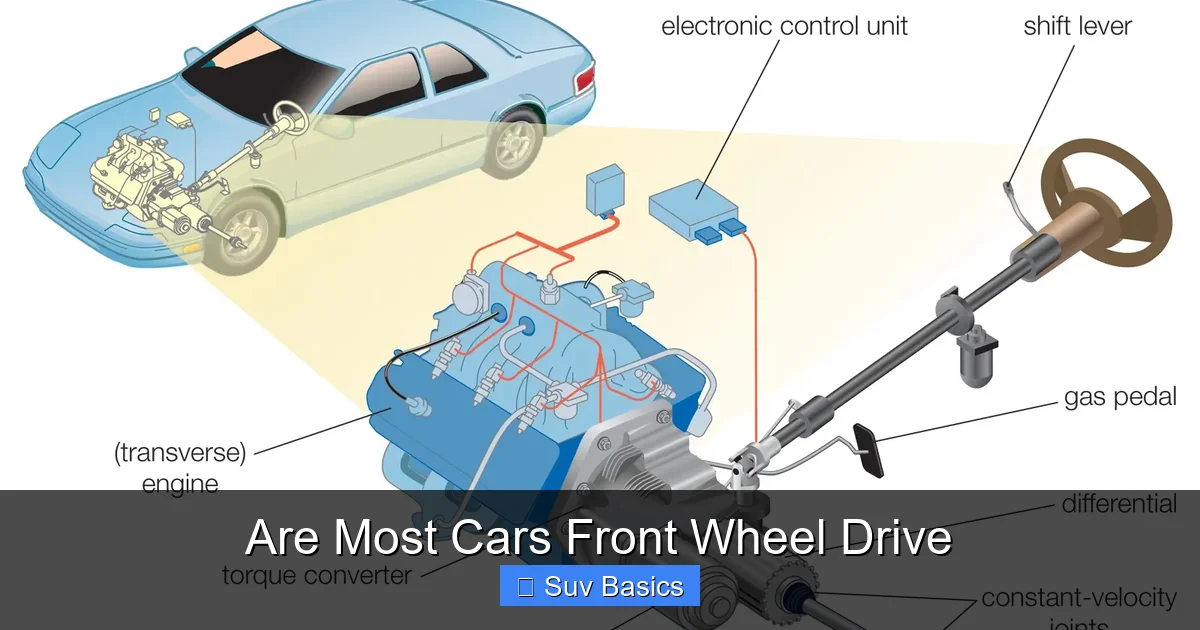
Visual guide about Are Most Cars Front Wheel Drive
Image source: cdn.britannica.com
Front wheel drive wasn’t always the norm. In the early days of automobiles, most cars used rear-wheel drive. It was simpler, more reliable, and worked well with the longitudinal engine layouts of the time. But as cars evolved, so did engineering priorities.
The shift toward FWD began in earnest in the 1970s and 1980s, driven by the need for better fuel economy and more interior space. The oil crises of that era pushed automakers to design smaller, more efficient vehicles. FWD offered a clever solution: by mounting the engine and transmission side-by-side (transversely), engineers could package everything into a compact front end. This freed up space inside the cabin and allowed for smaller overall vehicle footprints.
One of the earliest and most influential FWD cars was the 1966 Austin Mini. Though small, it proved that front wheel drive could deliver impressive handling and interior room. Over time, brands like Honda, Toyota, and Ford embraced the layout, refining it for mass production. By the 1990s, FWD had become the default for compact and midsize cars—and eventually, for many SUVs too.
Today, FWD is so widespread that it’s easy to forget there are other options. But understanding its history helps explain why it’s the go-to choice for so many drivers.
Advantages of Front Wheel Drive
So, what makes front wheel drive so appealing? Let’s break down the key benefits that have made FWD the favorite among automakers and everyday drivers alike.
Better Fuel Efficiency
One of the biggest reasons FWD dominates is fuel economy. Because the engine and transmission are mounted transversely, the drivetrain is more compact and lighter. There’s no long driveshaft running to the rear wheels, which reduces weight and mechanical losses. Less weight and fewer moving parts mean the engine doesn’t have to work as hard, resulting in better gas mileage.
For example, a FWD Honda CR-V might get around 30 miles per gallon on the highway, while a similar RWD SUV could fall short by 3–5 mpg. Over time, that adds up in savings at the pump.
More Interior and Cargo Space
With no rear differential or driveshaft tunnel, FWD vehicles have a flatter floor in the back seat and trunk. This means more legroom for passengers and easier access to cargo. Families, in particular, appreciate the extra space—whether it’s for car seats, strollers, or luggage.
Take the Toyota Camry: its FWD layout allows for a spacious back seat and a wide-opening trunk, making it a top pick for daily driving. Even in compact SUVs like the Nissan Rogue, FWD enables a roomy interior despite a relatively small exterior size.
Improved Traction in Wet and Snowy Conditions
Because the engine sits directly over the front wheels, FWD vehicles have better weight distribution over the driven wheels. This extra weight helps improve grip, especially in rain or light snow. The front wheels are both steering and pulling, which can enhance stability when accelerating from a stop on slippery surfaces.
Of course, FWD isn’t a substitute for winter tires or AWD in severe conditions, but for most drivers in moderate climates, it provides reliable traction year-round.
Lower Cost to Buy and Maintain
FWD systems are simpler and have fewer components than RWD or AWD setups. That translates to lower manufacturing costs, which often means a lower price tag for consumers. Maintenance is also generally cheaper—there’s no rear differential to service, and fewer parts mean fewer things that can go wrong.
For budget-conscious buyers, this is a major plus. A FWD compact car or SUV offers great value without sacrificing everyday usability.
Front Wheel Drive in SUVs: The New Normal
You might think SUVs, with their rugged image, would favor rear-wheel or all-wheel drive. But the reality is quite different. Many of today’s most popular SUVs—like the Honda CR-V, Toyota RAV4, and Ford Escape—come standard with front wheel drive.
Why SUVs Are Going FWD
The shift to FWD in SUVs mirrors the trends in passenger cars. As SUVs have become more car-like in design—prioritizing comfort, fuel economy, and interior space—FWD has become the logical choice. Most SUV buyers aren’t off-roading; they’re using their vehicles for daily commutes, school runs, and weekend trips.
FWD allows automakers to build SUVs that are efficient, affordable, and easy to drive. It also simplifies production, especially for models that offer optional AWD. Many SUVs use a “FWD-based” platform, where AWD is added by sending power to the rear wheels when needed. This hybrid approach gives drivers the best of both worlds: efficiency when it’s dry, and extra traction when conditions demand it.
FWD vs. AWD in SUVs: What’s the Difference?
It’s important to note that FWD and AWD aren’t mutually exclusive. Many SUVs start with FWD and offer AWD as an upgrade. For example, the base model Subaru Forester comes with AWD standard, but the Mazda CX-5 offers FWD standard with AWD optional.
So, when should you choose FWD over AWD? If you live in a mild climate with little snow or rain, FWD is often more than enough. It saves money upfront and at the pump. But if you frequently drive in heavy rain, snow, or on unpaved roads, AWD can provide added confidence and control.
When Front Wheel Drive Isn’t the Best Choice
Despite its many advantages, front wheel drive isn’t perfect for every situation. There are scenarios where other drivetrains shine.
Performance and Handling Limitations
In high-performance cars, FWD can struggle with weight transfer during hard acceleration. The front wheels have to handle both steering and power delivery, which can lead to understeer—where the car pushes wide in a turn. That’s why sports cars and luxury sedans often use RWD or AWD for better balance and responsiveness.
For example, the BMW 3 Series and Ford Mustang use RWD to deliver a more dynamic driving experience. Enthusiasts often prefer this setup for its precision and feel.
Towing and Heavy Loads
FWD vehicles are generally not ideal for towing heavy trailers or carrying large loads. The front wheels can lose traction when pulling significant weight, especially uphill. If you plan to tow a boat or camper regularly, a RWD or AWD truck or SUV is a better choice.
Off-Road Capability
While some FWD SUVs can handle light trails, they’re not built for serious off-roading. Without power to all four wheels, they lack the traction needed for mud, rocks, or steep inclines. If adventure is your goal, look for a vehicle with AWD or four-wheel drive (4WD) and high ground clearance.
How to Choose the Right Drivetrain for Your Needs
With so many options, how do you decide what’s right for you? Here are a few practical tips:
- Consider your climate. If you live in a snowy or rainy area, AWD might be worth the extra cost. But for mild weather, FWD is often sufficient.
- Think about your driving habits. Daily commuters and city drivers benefit most from FWD’s efficiency and space. Performance seekers may prefer RWD or AWD.
- Evaluate your budget. FWD vehicles are typically more affordable to buy and maintain. If cost is a concern, start with a FWD model.
- Test drive different setups. Nothing beats real-world experience. Try driving a FWD, RWD, and AWD vehicle back-to-back to see what feels best.
The Future of Front Wheel Drive
As the automotive industry evolves, front wheel drive isn’t going anywhere—at least not anytime soon. With the rise of electric vehicles (EVs), the drivetrain landscape is changing, but FWD principles still apply. Many EVs use a single front motor for efficiency, especially in compact models like the Nissan Leaf or Chevrolet Bolt.
Even as automakers push toward electrification and advanced AWD systems, FWD will remain a staple for everyday vehicles. Its blend of practicality, affordability, and efficiency makes it the perfect fit for the majority of drivers.
Conclusion
So, are most cars front wheel drive? The answer is a resounding yes. From compact sedans to popular SUVs, FWD has become the standard for good reason. It delivers excellent fuel economy, more interior space, and reliable performance in everyday conditions. While RWD and AWD have their place—especially in performance and off-road vehicles—FWD continues to dominate the mainstream market.
Whether you’re buying your first car or upgrading to a new SUV, understanding drivetrain options helps you make a smarter choice. For most people, front wheel drive offers the best balance of value, comfort, and efficiency. And as long as drivers prioritize those qualities, FWD will remain king of the road.
Frequently Asked Questions
Are most new cars front wheel drive?
Yes, the majority of new cars sold today are front wheel drive. This includes most compact sedans, midsize cars, and many SUVs. FWD is favored for its efficiency, space-saving design, and affordability.
Is front wheel drive better than rear wheel drive?
It depends on your needs. FWD is better for fuel economy, interior space, and everyday driving. RWD offers better handling and performance, especially in sports cars, but is less common in mainstream vehicles.
Can front wheel drive cars handle snow?
Yes, FWD cars generally perform well in light to moderate snow due to the weight of the engine over the front wheels. However, for heavy snow or icy conditions, AWD with winter tires is more effective.
Do SUVs come with front wheel drive?
Yes, many SUVs come standard with front wheel drive. Models like the Honda CR-V, Toyota RAV4, and Ford Escape offer FWD as the base option, with AWD available as an upgrade.
Is front wheel drive cheaper to maintain?
Generally, yes. FWD systems have fewer components than RWD or AWD, which means lower repair and maintenance costs over time. There’s no rear differential or driveshaft to service.
Should I choose FWD or AWD for my next car?
If you live in a mild climate and prioritize fuel economy and cost, FWD is a great choice. If you frequently drive in rain, snow, or off-road, AWD provides better traction and peace of mind.