
The Mercedes G-Class, or G Wagon, blends rugged off-road capability with luxury—but is it reliable? While it’s built to last with a robust design and high-quality materials, some models face electrical and mechanical quirks. With proper maintenance, many owners enjoy decades of dependable service.
Key Takeaways
- Built for durability: The G Wagon’s boxy, military-inspired design and solid construction make it one of the most rugged luxury SUVs on the market.
- Mixed reliability ratings: While newer models have improved, older G Wagons (especially pre-2010) are known for electrical glitches and suspension issues.
- High maintenance costs: Parts and labor are expensive due to the vehicle’s complexity and premium branding—budget accordingly.
- Strong long-term value: Well-maintained G Wagons hold their value better than most SUVs, thanks to their iconic status and limited production.
- Regular servicing is key: Following the manufacturer’s maintenance schedule drastically improves reliability and prevents costly repairs.
- Off-road resilience: The G Wagon excels in tough terrain, but frequent off-roading can accelerate wear on components like shocks and drivetrain parts.
- Modern tech brings new challenges: Newer models with advanced infotainment and driver-assist systems may experience software bugs or sensor malfunctions.
📑 Table of Contents
Are Mercedes G Wagons Reliable? A Deep Dive into the Iconic SUV
The Mercedes-Benz G-Class, affectionately known as the G Wagon, is more than just a vehicle—it’s a statement. With its unmistakable boxy silhouette, imposing stance, and luxury interior, it’s become a symbol of status, adventure, and engineering excellence. But beneath the chrome trim and leather seats lies a question many prospective buyers ask: Are Mercedes G Wagons reliable?
At first glance, the G Wagon seems like it could handle anything. Originally designed for military use in the 1970s, it was built to conquer rough terrain and withstand extreme conditions. Today’s version retains that rugged DNA while adding high-end tech, plush interiors, and performance engines. But does that blend of old-school toughness and modern luxury translate into long-term reliability?
The short answer? It depends. The G Wagon isn’t the most trouble-free SUV on the market, but it’s far from unreliable—especially if you know what to expect and how to care for it. Like any high-performance luxury vehicle, it demands attention, proper maintenance, and a willingness to invest in repairs when needed. In this article, we’ll break down the reliability of the Mercedes G Wagon across different model years, common issues, maintenance tips, and what real owners are saying.
What Makes the G Wagon Stand Out?
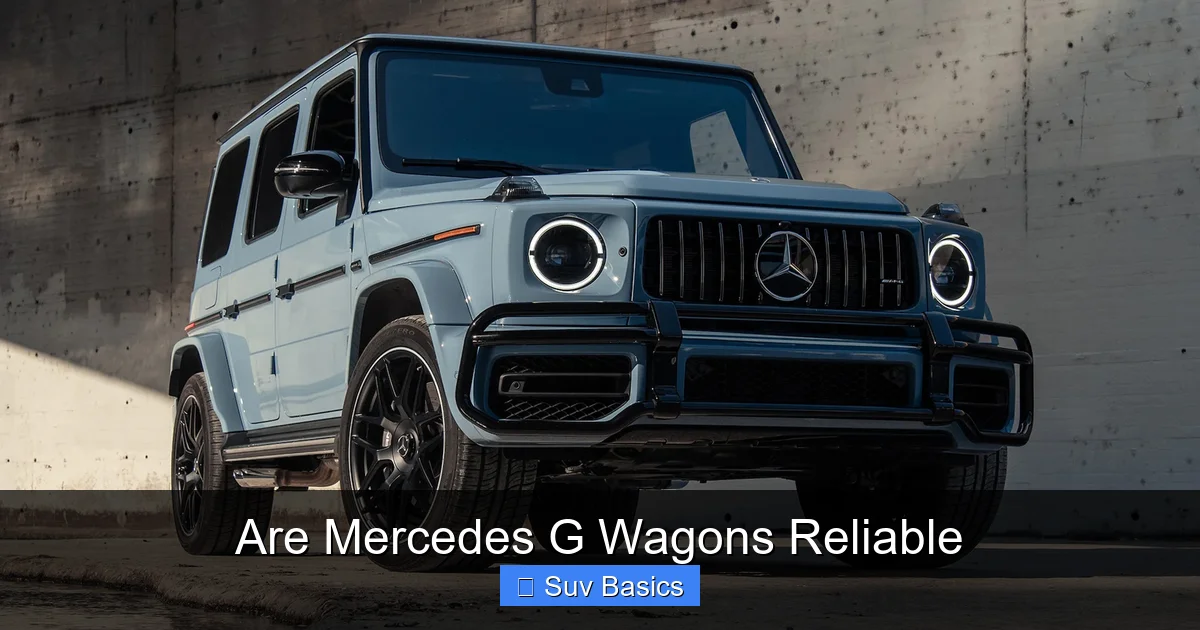
Visual guide about Are Mercedes G Wagons Reliable
Image source: motortrend.com
Before diving into reliability, it’s important to understand what sets the G-Class apart. Unlike most SUVs that prioritize comfort or fuel efficiency, the G Wagon was built for capability. Its three locking differentials, rigid axle suspension, and body-on-frame construction give it off-road prowess that few rivals can match. Even today, it’s one of the few luxury SUVs that can genuinely tackle rock crawling, deep mud, and steep inclines without breaking a sweat.
But that ruggedness comes with trade-offs. The same solid axles that make it great off-road can lead to a stiffer, less comfortable ride on pavement. And because it’s built like a tank, repairs can be complex and costly. Still, for many owners, the G Wagon’s unique blend of luxury and toughness is worth the extra effort.
Design and Engineering Philosophy
Mercedes has kept the G-Class’s core design nearly unchanged for decades—a testament to its effectiveness. While other SUVs evolve rapidly, the G Wagon evolves slowly, with updates focused on improving performance, safety, and technology without compromising its original character. This conservative approach helps maintain durability but can also mean older components linger longer than in more modern vehicles.
Reliability Ratings and Owner Feedback
So, what do the numbers say about G Wagon reliability? According to sources like J.D. Power, Consumer Reports, and RepairPal, the G-Class scores average to below-average in long-term reliability—especially when compared to more mainstream luxury SUVs like the Lexus LX or BMW X5.
For example, RepairPal gives the G-Class a reliability rating of 2.0 out of 5.0, citing higher-than-average repair frequency and cost. The average annual repair cost for a G Wagon is around $1,200—nearly double the average for all vehicles. That said, these ratings often reflect older models, and newer G Wagons (2019 and later) have shown improvement.
Owner Experiences: The Good and the Bad
Talk to G Wagon owners, and you’ll hear a mix of love and frustration. Many praise the vehicle’s build quality, driving feel, and timeless design. “I’ve had my 2016 G550 for eight years,” says Mark T., a G Wagon enthusiast from Colorado. “It’s been through three cross-country trips, countless mountain trails, and still runs like new—as long as I keep up with maintenance.”
But others report recurring issues. Electrical problems are common, especially in models from the 2000s and early 2010s. Dashboard warning lights, faulty sensors, and glitchy infotainment systems pop up frequently. Suspension components, like control arms and bushings, also wear out faster than expected, particularly in vehicles used off-road.
Common Reliability Issues by Model Year
Not all G Wagons are created equal. Reliability varies significantly depending on the model year and engine type. Here’s a breakdown of the most common issues by era.
Early Models (1990s–2005)
These older G Wagons are the most prone to problems. The 5.0L V8 engines are generally robust, but electrical systems are a weak point. Owners often report issues with the central locking system, window regulators, and instrument clusters. Rust can also be a concern, especially in humid or salty climates.
Mid-2000s to 2018
This era saw improvements in build quality and technology, but new problems emerged. The introduction of more complex electronics brought issues with the COMAND infotainment system, which could freeze or fail entirely. The 7G-Tronic automatic transmission, while smooth, is known for costly repairs if not serviced regularly.
The G55 AMG (supercharged V8) is particularly notorious for high maintenance costs. The supercharger and cooling system require meticulous care, and neglect can lead to engine damage.
2019 and Newer: The Modern G-Class
The 2019 redesign marked a major leap forward. Mercedes updated the platform, suspension, and interior while keeping the classic look. The new G Wagon features a more refined independent front suspension, improved fuel efficiency, and a state-of-the-art MBUX infotainment system.
Reliability has improved, but it’s not perfect. Some owners report software bugs in the MBUX system, such as navigation glitches or voice command failures. Adaptive cruise control and lane-keeping assist features can also act up, especially in older software versions.
Maintenance Tips to Boost Reliability
The best way to ensure your G Wagon stays reliable is through proactive maintenance. This isn’t a car you can just drive and forget. Here are some essential tips:
Follow the Service Schedule
Mercedes recommends servicing the G-Class every 10,000 miles or once a year, whichever comes first. This includes oil changes, brake inspections, and fluid checks. Skipping services can lead to premature wear and expensive repairs.
Use High-Quality Parts and Fluids
The G Wagon’s engine and transmission are precision-tuned. Using cheap oil or generic parts can cause long-term damage. Stick to OEM (original equipment manufacturer) parts and synthetic oil rated for Mercedes vehicles.
Address Electrical Issues Early
If you notice warning lights or erratic behavior in the infotainment system, don’t ignore it. Electrical problems can escalate quickly. Have a qualified Mercedes technician run diagnostics—many issues can be resolved with a software update.
Inspect Suspension and Drivetrain Regularly
Off-road use puts extra stress on suspension components. Check for worn bushings, leaking shocks, and loose bolts. The transfer case and differentials should also be serviced according to the manual.
Protect Against Rust
Even though the G Wagon has a galvanized body, rust can still develop in hidden areas like the frame, wheel wells, and undercarriage. Wash your vehicle regularly, especially after driving in snow or salt, and consider applying an undercoating.
Cost of Ownership: What to Expect
Owning a G Wagon isn’t cheap—and that goes beyond the purchase price. Insurance, fuel, and maintenance all add up. The average G550 gets around 15 mpg combined, so fuel costs are high, especially if you drive frequently.
Insurance premiums are also steep due to the vehicle’s value and repair costs. And when something breaks, expect to pay a premium. A new air suspension strut can cost over $2,000, and a transmission rebuild can exceed $8,000.
That said, the G Wagon holds its value remarkably well. A well-maintained 2015 model might still fetch over $70,000, while a new one starts around $140,000. This strong resale value helps offset some of the ownership costs.
Is the G Wagon Right for You?
So, are Mercedes G Wagons reliable? The answer isn’t black and white. If you’re looking for a trouble-free daily driver with low running costs, the G Wagon might not be the best choice. But if you value durability, off-road capability, and iconic design—and you’re willing to invest in maintenance—it can be an incredibly rewarding vehicle.
For buyers considering a used G Wagon, focus on well-documented service history and avoid high-mileage examples with signs of neglect. Newer models (2019+) offer the best balance of modern tech and improved reliability.
Ultimately, the G Wagon isn’t for everyone. But for those who appreciate its unique character and are prepared for the responsibilities of ownership, it’s a machine that can deliver decades of adventure and pride.
Final Thoughts
The Mercedes G-Class is a legend for good reason. It’s tough, stylish, and capable in ways few SUVs can match. While it’s not the most reliable vehicle on the road, it’s far from unreliable—especially with proper care. By understanding its strengths and weaknesses, staying on top of maintenance, and choosing the right model year, you can enjoy a G Wagon that’s as dependable as it is impressive.
Whether you’re conquering mountain trails or cruising city streets, the G Wagon offers an experience unlike any other. Just remember: with great power, luxury, and off-road prowess comes great responsibility—and a healthy maintenance budget.
Frequently Asked Questions
Are Mercedes G Wagons reliable long-term?
Yes, with proper maintenance, many G Wagons last well over 200,000 miles. However, older models may require more frequent repairs, especially for electrical and suspension systems.
What are the most common problems with G Wagons?
Common issues include electrical glitches, infotainment system failures, suspension wear, and high repair costs. The supercharged G55 AMG is also known for expensive maintenance.
Is the G Wagon expensive to maintain?
Yes, maintenance and repairs are significantly more expensive than average due to premium parts, specialized labor, and the vehicle’s complexity.
Do G Wagons hold their value?
Absolutely. The G-Class retains its value better than most SUVs, thanks to its iconic status, limited production, and strong demand in the used market.
Are newer G Wagons more reliable than older ones?
Generally, yes. The 2019 and newer models feature updated engineering, better electronics, and improved reliability compared to earlier versions.
Can I use a G Wagon for daily driving?
Yes, many owners use their G Wagons as daily drivers. However, the stiff ride, poor fuel economy, and high running costs may make it less practical than other luxury SUVs.