
The Mazda 3 is widely regarded as one of the most reliable compact cars on the market, combining strong build quality, low maintenance costs, and excellent owner satisfaction. With high safety ratings, efficient engines, and a reputation for longevity, it’s a smart choice for drivers seeking dependability without sacrificing style or driving enjoyment.
Key Takeaways
- High Reliability Ratings: The Mazda 3 consistently earns top marks from J.D. Power, Consumer Reports, and other trusted automotive evaluators for long-term dependability.
- Strong Build Quality: Mazda uses premium materials and rigorous engineering standards, resulting in a solid, well-crafted vehicle that holds up over time.
- Low Maintenance Costs: Owners report fewer unexpected repairs and affordable routine maintenance compared to many competitors in the compact car segment.
- Excellent Safety Features: With top safety scores from the IIHS and NHTSA, the Mazda 3 offers advanced driver-assist technologies standard across most trims.
- Fuel Efficiency and Performance: Skyactiv engines deliver a balance of power and efficiency, making the Mazda 3 both fun to drive and economical to own.
- Owner Satisfaction: Long-term Mazda 3 owners frequently praise the car’s reliability, comfort, and driving dynamics in reviews and surveys.
- Resale Value: Thanks to its reputation for reliability, the Mazda 3 retains value better than many rivals, making it a smart investment.
📑 Table of Contents
- Are Mazda 3 Reliable? A Deep Dive into Long-Term Performance
- What the Experts Say About Mazda 3 Reliability
- Engine and Transmission: Built to Last
- Maintenance and Ownership Costs
- Safety and Technology: Reliability Beyond the Mechanics
- Resale Value and Long-Term Ownership
- Conclusion: Yes, the Mazda 3 Is Reliable
Are Mazda 3 Reliable? A Deep Dive into Long-Term Performance
If you’re shopping for a compact car that won’t leave you stranded or drain your wallet with constant repairs, the Mazda 3 deserves serious consideration. Over the past decade, Mazda has transformed its reputation from a budget-friendly brand to a leader in quality, design, and reliability. The Mazda 3, available as a sedan or hatchback, stands out not just for its sleek styling and engaging driving experience, but for its consistent performance over time.
Reliability isn’t just about avoiding breakdowns—it’s about peace of mind. It’s knowing your car will start on a cold morning, handle daily commutes without fuss, and still feel solid after 100,000 miles. For many drivers, the Mazda 3 delivers exactly that. Whether you’re a first-time car buyer, a family looking for a dependable commuter, or someone who simply appreciates a well-built vehicle, understanding the Mazda 3’s reliability can help you make a confident decision.
What the Experts Say About Mazda 3 Reliability
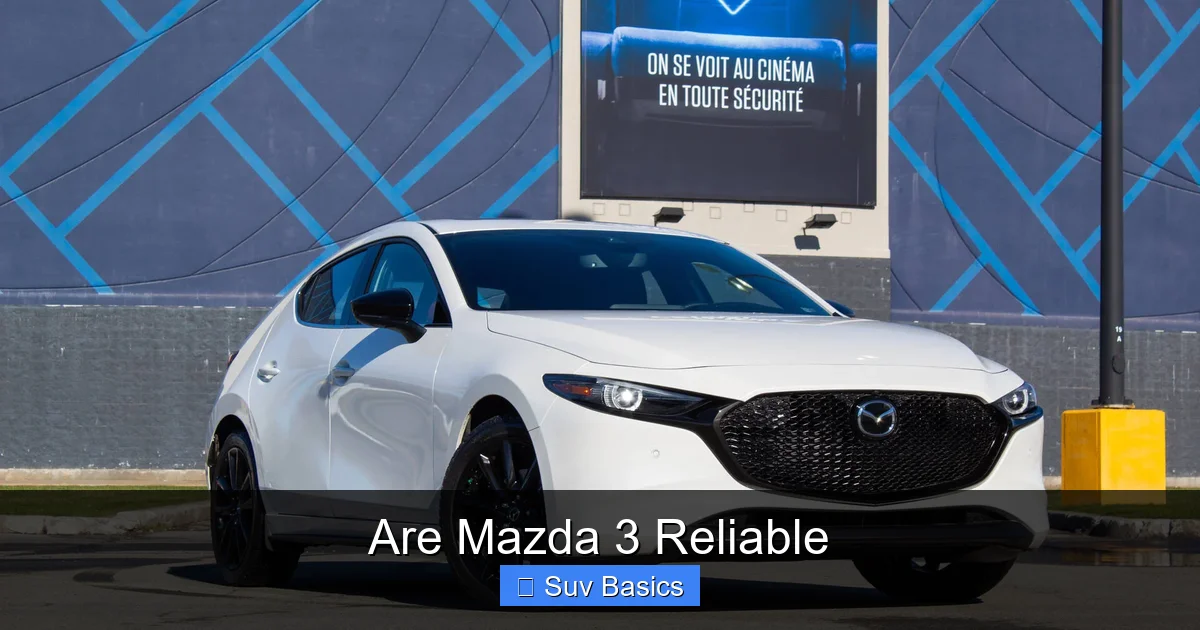
Visual guide about Are Mazda 3 Reliable
Image source: i.gaw.to
When evaluating whether a car is reliable, it helps to look at what independent experts and testing organizations have to say. The Mazda 3 consistently earns high marks across the board.
J.D. Power, a trusted name in automotive rankings, has given the Mazda 3 excellent scores in its Vehicle Dependability Study (VDS), which tracks problems experienced by original owners of three-year-old vehicles. In recent years, the Mazda 3 has ranked above average or better in categories like engine and transmission, electrical systems, and overall build quality.
Consumer Reports also places the Mazda 3 among its top recommended compact cars. Their reliability predictions are based on extensive owner surveys, and the Mazda 3 has earned “Excellent” or “Very Good” ratings for predicted reliability in multiple model years. Notably, the 2019, 2020, and 2021 models received top-tier scores, with few reported issues in critical areas like the engine, transmission, and suspension.
Real-World Owner Experiences
Beyond the numbers, real Mazda 3 owners consistently report high satisfaction with their vehicles. Online forums, review sites like Edmunds and Cars.com, and social media groups are filled with stories of Mazda 3s hitting 150,000, 200,000, and even 250,000 miles with minimal major repairs.
For example, one owner on a popular Mazda forum shared that their 2014 Mazda 3 sedan reached 180,000 miles with only routine maintenance—oil changes, brake pads, and tires. Another driver reported driving a 2017 Mazda 3 hatchback across the country multiple times, praising its smooth ride and lack of mechanical issues.
These anecdotes aren’t outliers. They reflect a broader trend: Mazda 3 owners tend to keep their cars longer than average, which is a strong indicator of reliability and satisfaction.
Engine and Transmission: Built to Last
At the heart of any car’s reliability is its powertrain—the engine and transmission. The Mazda 3 uses Mazda’s Skyactiv technology, which focuses on efficiency, performance, and durability.
Most Mazda 3 models from 2014 onward are equipped with either a 2.0L or 2.5L four-cylinder Skyactiv-G engine. These engines are known for their smooth operation, good fuel economy, and long service life. Unlike some competitors that rely on turbocharging for power, Mazda’s naturally aspirated engines are simpler in design, which often translates to fewer points of failure.
The 2.5L engine, in particular, has earned praise for its responsiveness and reliability. It produces around 186 horsepower and pairs well with either a six-speed manual or six-speed automatic transmission. Both transmissions are well-regarded for their smooth shifting and durability.
Common Issues and How Mazda Addresses Them
No car is perfect, and the Mazda 3 is no exception. Some owners have reported minor issues over the years, but Mazda has been proactive in addressing them.
One known issue in earlier models (2014–2016) was a rattling noise from the infotainment system, often caused by loose components. Mazda issued service bulletins and offered free repairs under warranty. Another occasional complaint involved the automatic transmission’s shift logic in cold weather, but this was improved in later model years with software updates.
Importantly, these issues are not widespread and don’t significantly impact overall reliability. In fact, Mazda’s warranty coverage—3 years/36,000 miles basic and 5 years/60,000 miles powertrain—provides solid protection for new buyers.
Maintenance and Ownership Costs
One of the biggest factors in long-term reliability is how much it costs to keep a car running. The Mazda 3 shines in this area, offering low maintenance costs compared to many rivals.
Routine maintenance—oil changes, tire rotations, brake inspections—is straightforward and affordable. Mazda recommends oil changes every 7,500 to 10,000 miles with synthetic oil, which is less frequent than some competitors. This not only saves money but also reduces downtime.
Parts availability is excellent, and many repairs can be handled by independent mechanics, keeping labor costs down. According to RepairPal, the average annual repair cost for a Mazda 3 is around $433, which is lower than the average for compact cars ($526).
Tips for Maximizing Reliability
To get the most out of your Mazda 3, follow these simple tips:
– Stick to the manufacturer’s maintenance schedule. Don’t skip oil changes or ignore warning lights.
– Use high-quality synthetic oil and genuine Mazda parts when possible.
– Keep the car clean, especially the undercarriage, to prevent rust—especially important in snowy or coastal climates.
– Address small issues early. A squeaky brake or odd noise is easier (and cheaper) to fix before it becomes a major problem.
By treating your Mazda 3 with care, you can expect it to serve you well for many years.
Safety and Technology: Reliability Beyond the Mechanics
Reliability isn’t just about avoiding breakdowns—it’s also about feeling safe and confident behind the wheel. The Mazda 3 excels in this area, earning top safety ratings and offering advanced technology that enhances both safety and convenience.
The Insurance Institute for Highway Safety (IIHS) has named the Mazda 3 a Top Safety Pick+ in multiple years, the organization’s highest honor. It earns “Good” ratings in all crash tests and has strong scores for headlights, child seat anchors, and front crash prevention.
Standard safety features on most Mazda 3 trims include:
– Automatic emergency braking
– Lane departure warning
– Blind-spot monitoring
– Rear cross-traffic alert
– Adaptive cruise control (on higher trims)
These systems don’t just prevent accidents—they also reduce wear and tear on the car by helping drivers avoid collisions and maintain smoother driving habits.
Infotainment and Electronics: Staying Connected
Modern cars rely heavily on electronics, and glitches can hurt perceived reliability. The Mazda 3 uses a user-friendly infotainment system with a central display and intuitive controls. While earlier models used a rotary knob interface that some found less responsive, newer versions (2019 and later) feature faster processors and improved software.
Apple CarPlay and Android Auto are standard on most trims, making it easy to stay connected without relying on the built-in navigation. Owners report few issues with the system freezing or crashing, which is a common complaint in other brands.
Resale Value and Long-Term Ownership
A reliable car holds its value better over time, and the Mazda 3 is a strong performer in the resale market. According to Kelley Blue Book (KBB), the Mazda 3 retains more of its value after three years than many competitors, including the Honda Civic and Toyota Corolla in some model years.
This strong resale value is a direct result of the car’s reputation for reliability, stylish design, and driving enjoyment. Buyers know they’re getting a well-built car that will last, which keeps demand high.
For example, a 2020 Mazda 3 sedan with average mileage might retain around 60% of its original value after three years—compared to the industry average of about 50–55%.
Is the Mazda 3 Right for You?
If you’re looking for a compact car that’s reliable, fun to drive, and built to last, the Mazda 3 is an excellent choice. It’s ideal for:
– Daily commuters who need a dependable ride
– Young professionals who want style and substance
– Small families needing a safe, efficient vehicle
– Anyone who values driving dynamics and premium feel
While it may not have the brand recognition of Toyota or Honda, the Mazda 3 has quietly built a reputation for excellence—especially when it comes to reliability.
Conclusion: Yes, the Mazda 3 Is Reliable
So, are Mazda 3 reliable? The answer is a resounding yes. Backed by expert ratings, real owner experiences, and strong performance over time, the Mazda 3 stands out as one of the most dependable compact cars available today.
From its durable Skyactiv engines to its top safety scores and low maintenance costs, the Mazda 3 delivers on its promise of reliability without sacrificing style or driving pleasure. Whether you choose the sleek sedan or the versatile hatchback, you’re getting a car that’s built to last—and to enjoy.
If you’re in the market for a compact car that won’t let you down, the Mazda 3 deserves a top spot on your test drive list. It’s proof that reliability and refinement can go hand in hand.
Frequently Asked Questions
How long do Mazda 3 engines last?
With proper maintenance, Mazda 3 engines can easily last 200,000 miles or more. Many owners report reaching high mileage with only routine service, thanks to the durable Skyactiv engine design.
Are Mazda 3 expensive to maintain?
No, the Mazda 3 is relatively affordable to maintain. Annual repair costs average around $433, which is lower than the compact car average, and parts are widely available.
Do Mazda 3 have transmission problems?
Transmission issues are rare in the Mazda 3. The six-speed automatic and manual transmissions are well-built, and any early cold-weather shifting concerns were resolved in later model years.
Is the Mazda 3 reliable in cold climates?
Yes, the Mazda 3 performs well in cold weather. The engine starts reliably, and features like heated seats and remote start (on higher trims) improve winter comfort.
How does the Mazda 3 compare to the Honda Civic in reliability?
Both are highly reliable, but the Mazda 3 often edges out the Civic in owner satisfaction and build quality. Consumer Reports and J.D. Power frequently rank them close, with slight yearly variations.
Can I trust a used Mazda 3?
Yes, used Mazda 3 models—especially from 2014 onward—are generally trustworthy. Check service history, get a pre-purchase inspection, and look for models with lower mileage for the best experience.