
Kia, Hyundai, and Genesis are not the same company, but they are all part of the Hyundai Motor Group. While they operate as separate brands with distinct identities, they share engineering, platforms, and technology—especially in their SUV lineups.
[FEATURED_IMAGE_PLACEOLDER]
Key Takeaways
- Hyundai Motor Group owns all three brands: Kia, Hyundai, and Genesis operate under this South Korean automotive giant, but each maintains its own brand identity and market positioning.
- Shared platforms and technology: Many SUVs from these brands use the same underlying architecture, engines, and infotainment systems, leading to similarities in performance and features.
- Genesis is the luxury division: Positioned as Hyundai’s premium brand, Genesis offers high-end SUVs with refined interiors, advanced tech, and upscale materials.
- Hyundai focuses on value and innovation: Known for reliable, feature-packed SUVs at competitive prices, Hyundai balances affordability with modern design and safety tech.
- Kia emphasizes sporty design and affordability: Kia SUVs often feature bold styling, strong warranties, and great value, appealing to younger buyers and families alike.
- Separate dealerships and service networks: Even though they’re under the same parent company, each brand has its own dealers, warranties, and customer service channels.
- Collaboration drives efficiency: Shared R&D and manufacturing help keep costs down and innovation high across all three brands.
📑 Table of Contents
- Are Kia, Hyundai, and Genesis the Same Company? The Truth Behind the Brands
- The Hyundai Motor Group: The Parent Company Explained
- Hyundai: The Mainstream Innovator
- Kia: Bold Design and Great Value
- Genesis: The Luxury Division
- Shared Technology and Platforms: What’s Under the Hood?
- Why Separate Brands? The Strategy Behind the Structure
- Conclusion: Different Names, Same Family
Are Kia, Hyundai, and Genesis the Same Company? The Truth Behind the Brands
If you’ve ever shopped for an SUV and noticed similar designs, engines, or features across Kia, Hyundai, and Genesis models, you’re not imagining things. These three brands often feel like siblings—close in many ways, but definitely not identical twins. So, are Kia, Hyundai, and Genesis the same company? The short answer is no—but they’re all part of the same family.
Understanding the relationship between these brands can help you make smarter decisions when buying an SUV. Whether you’re looking for affordability, luxury, or cutting-edge tech, knowing how these companies work together (and where they differ) gives you an edge. Let’s dive into the details and clear up the confusion once and for all.
The Hyundai Motor Group: The Parent Company Explained
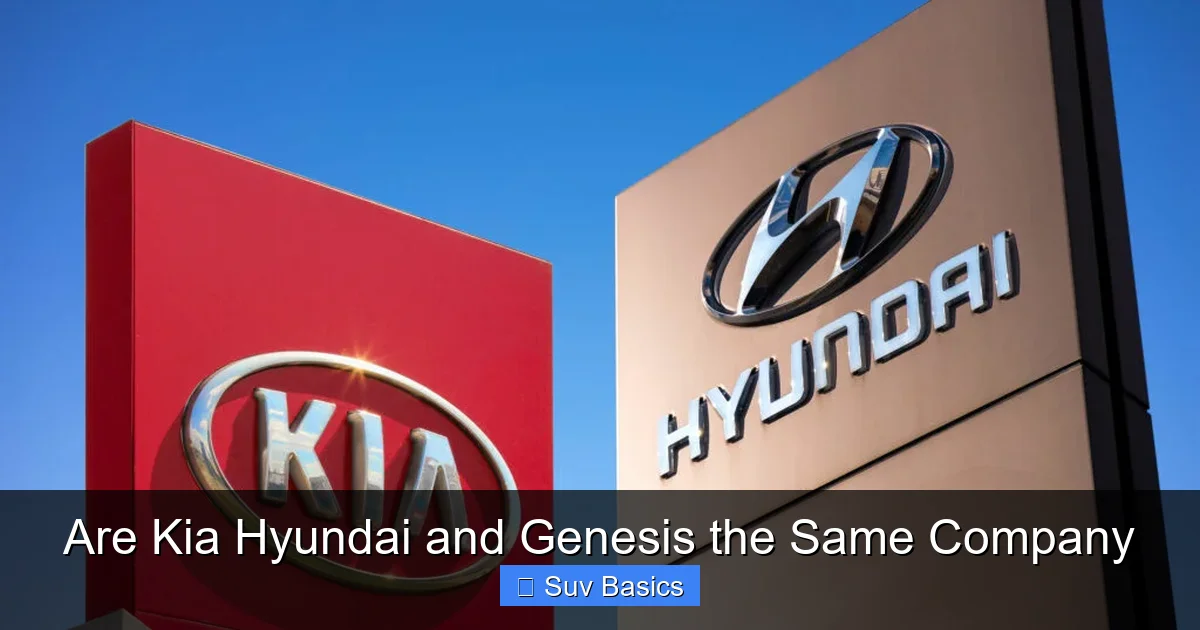
Visual guide about Are Kia Hyundai and Genesis the Same Company
Image source: motomotar.com
At the top of the pyramid is the Hyundai Motor Group, one of the largest automotive conglomerates in the world. Headquartered in Seoul, South Korea, this group was founded in 1967 and has grown into a global powerhouse. It oversees not just Hyundai, Kia, and Genesis, but also various subsidiaries involved in parts manufacturing, logistics, and even robotics.
Think of the Hyundai Motor Group like a big tree. Hyundai is one major branch, Kia is another, and Genesis is a newer, more refined offshoot. Each branch grows in its own direction, but they all draw from the same roots—shared engineering, manufacturing plants, and research and development resources.
This structure allows the group to compete across multiple market segments. Hyundai targets mainstream buyers who want reliability and value. Kia appeals to those who want bold design and sporty performance at a great price. Genesis steps into the luxury space, rivaling brands like Lexus, Acura, and even BMW.
How the Brands Are Structured
Each brand operates independently in terms of marketing, dealership networks, and brand identity. You won’t find a Genesis SUV sold at a Kia dealership, for example. But behind the scenes, there’s a lot of collaboration.
For instance, the Hyundai Tucson, Kia Sportage, and Genesis GV70 all use similar platforms—meaning their basic chassis and suspension setups are closely related. They may share engines, transmissions, and even infotainment systems. This shared DNA helps reduce development costs and speeds up innovation.
But don’t mistake similarity for sameness. Each brand puts its own spin on design, interior quality, and driving experience. That’s what keeps them distinct in a crowded SUV market.
Hyundai: The Mainstream Innovator
Hyundai has built its reputation on offering well-equipped, reliable SUVs at competitive prices. Models like the Hyundai Santa Fe, Tucson, and Palisade are popular choices for families and commuters alike. Hyundai focuses on value, safety, and modern technology—often packing features into their SUVs that you’d expect to find in more expensive vehicles.
One of Hyundai’s biggest strengths is its warranty. The brand offers one of the best in the industry: 10 years or 100,000 miles on the powertrain, and 5 years or 60,000 miles bumper-to-bumper. That kind of confidence speaks volumes about their build quality.
Popular Hyundai SUVs and What Sets Them Apart
The Hyundai Palisade is a great example of Hyundai’s approach. It’s a three-row SUV that rivals luxury brands in terms of interior space and tech, but at a much lower price point. With features like a 12.3-inch touchscreen, wireless Apple CarPlay, and available all-wheel drive, it’s a strong contender in the midsize SUV class.
The Tucson, on the other hand, is more compact and fuel-efficient. It’s perfect for city driving and weekend getaways. With a sleek design and available hybrid powertrain, it appeals to eco-conscious buyers who don’t want to sacrifice style.
Hyundai also leads in safety. Most of their SUVs come standard with Hyundai SmartSense, a suite of driver-assist features like forward collision warning, lane-keeping assist, and adaptive cruise control. This focus on safety makes Hyundai a top pick for families.
Kia: Bold Design and Great Value
If Hyundai is the practical older sibling, Kia is the stylish, fun-loving younger one. Kia has transformed its image over the past decade, shifting from a budget brand to a design-forward automaker with a strong focus on value and performance.
Kia SUVs like the Sportage, Sorento, and Telluride are known for their sharp lines, aggressive grilles, and sporty stances. The Telluride, in particular, has won numerous awards for its upscale interior and smooth ride—often compared to luxury SUVs that cost thousands more.
What Makes Kia SUVs Stand Out
One of Kia’s biggest selling points is its warranty—nearly identical to Hyundai’s. That 10-year/100,000-mile powertrain warranty gives buyers peace of mind, especially when compared to competitors like Toyota or Honda.
Kia also excels in interior design. Even in base models, you’ll find soft-touch materials, intuitive controls, and modern tech. The Kia Sorento, for example, offers a third row of seating and available hybrid or plug-in hybrid options, making it a versatile choice for growing families.
And let’s not forget the Telluride. Since its launch, it’s been a hit with critics and consumers alike. It combines rugged good looks with a quiet, comfortable ride and a long list of standard features. It’s proof that you don’t need to spend luxury money to get a luxury-like experience.
Genesis: The Luxury Division
Genesis is the newest member of the family, officially spun off as a standalone luxury brand in 2015. Before that, it was just a line of upscale Hyundai models. Now, Genesis competes directly with brands like Lexus, Acura, and even Mercedes-Benz in the premium SUV segment.
Genesis SUVs—like the GV80, GV70, and GV60 (an electric model)—are designed to impress. They feature hand-stitched leather, real wood trim, advanced sound systems, and cutting-edge driver aids. The focus is on comfort, refinement, and a quiet, serene driving experience.
Genesis SUVs: Luxury Without the German Price Tag
Take the Genesis GV80, for example. It’s a midsize luxury SUV that offers a smooth ride, powerful engine options (including a turbocharged V6), and a cabin that feels more like a high-end hotel than a car. Features like a 21-speaker Lexicon audio system, massaging seats, and a heads-up display put it in the same league as the BMW X5 or Audi Q7.
But here’s the kicker: the GV80 often costs significantly less than its German rivals. That’s one of Genesis’s biggest advantages—luxury at a more accessible price point.
The GV60, Genesis’s first fully electric SUV, shows the brand’s commitment to innovation. With over 400 horsepower, fast charging, and a futuristic interior, it’s a serious contender in the EV market.
Shared Technology and Platforms: What’s Under the Hood?
Now, let’s talk about what ties these brands together: shared platforms and technology. This is where the “same company” idea starts to make sense.
Many Hyundai, Kia, and Genesis SUVs are built on the same underlying architecture. For example, the Hyundai Santa Fe and Kia Sorento share a platform, as do the Hyundai Tucson and Kia Sportage. This means they have similar wheelbases, suspension setups, and structural designs.
They also often use the same engines and transmissions. The 2.5-liter turbocharged four-cylinder engine, for instance, can be found in the Hyundai Santa Fe, Kia Sorento, and Genesis GV70. The eight-speed automatic transmission is another common thread.
Infotainment and Driver Assistance Systems
Even the tech inside is often shared. All three brands use similar infotainment systems with large touchscreens, wireless connectivity, and over-the-air updates. Hyundai’s Bluelink, Kia’s UVO, and Genesis’s Connected Services all offer remote start, vehicle tracking, and maintenance alerts.
Driver-assist features are also closely aligned. Whether it’s Hyundai SmartSense, Kia Drive Wise, or Genesis Active Safety, you’ll find similar packages with adaptive cruise control, blind-spot monitoring, and automatic emergency braking.
This shared tech doesn’t mean the experience is identical. Genesis systems are often more refined, with better graphics and faster response times. But the core functionality is the same.
Why Separate Brands? The Strategy Behind the Structure
So why keep them as separate brands if they’re so similar? The answer lies in marketing and brand positioning.
By maintaining distinct identities, the Hyundai Motor Group can target different customer segments without confusing buyers. A family looking for a reliable, affordable SUV might choose a Hyundai Tucson. A young professional who wants style and performance might go for a Kia Sportage. And someone seeking luxury and prestige will lean toward a Genesis GV70.
This strategy also allows each brand to build its own reputation. Hyundai is known for value and innovation. Kia for design and fun. Genesis for luxury and refinement. If they were all merged into one brand, that clarity would be lost.
Conclusion: Different Names, Same Family
To sum it up: Kia, Hyundai, and Genesis are not the same company, but they are all part of the Hyundai Motor Group. They share platforms, engines, and technology—especially in their SUV lineups—but each brand has its own identity, design language, and target audience.
Whether you’re shopping for a budget-friendly compact SUV, a stylish family hauler, or a luxury cruiser, understanding this relationship helps you see the bigger picture. You’re not just choosing a car—you’re choosing a brand experience.
And with shared innovation and strong warranties across the board, you really can’t go wrong. Just pick the one that fits your lifestyle, budget, and taste.
Frequently Asked Questions
Are Kia and Hyundai the same company?
No, Kia and Hyundai are not the same company, but both are owned by the Hyundai Motor Group. They operate as separate brands with their own identities, dealerships, and marketing strategies.
Is Genesis a Hyundai or Kia brand?
Genesis is a luxury brand under the Hyundai Motor Group, separate from both Hyundai and Kia. It was originally part of Hyundai but became an independent luxury division in 2015.
Do Kia, Hyundai, and Genesis share engines?
Yes, many models from these brands share engines and transmissions. For example, the 2.5-liter turbo engine is used in the Hyundai Santa Fe, Kia Sorento, and Genesis GV70.
Can I service my Kia at a Hyundai dealership?
No, Kia, Hyundai, and Genesis have separate dealership networks and service centers. You’ll need to visit a Kia dealer for Kia vehicles, even though they’re under the same parent company.
Which brand offers the best SUV warranty?
Both Hyundai and Kia offer one of the best warranties in the industry: 10 years or 100,000 miles on the powertrain. Genesis offers a similar warranty, though slightly shorter at 6 years or 70,000 miles.
Are Genesis SUVs worth the extra cost compared to Hyundai or Kia?
Genesis SUVs offer higher-quality materials, more advanced tech, and a more refined driving experience. If luxury and comfort are priorities, the extra cost may be worth it compared to Hyundai or Kia models.