
The Hyundai Kona is generally considered a reliable compact SUV, offering strong safety scores, low ownership costs, and dependable performance over time. While early electric models had some reported issues, recent gas-powered and updated EV versions show improved reliability and customer satisfaction.
If you’re in the market for a compact SUV that blends style, efficiency, and everyday practicality, the Hyundai Kona has likely landed on your radar. With its bold design, peppy driving dynamics, and a range of powertrain options—including gas, hybrid, and fully electric—the Kona stands out in a crowded segment. But beyond the flashy exterior and tech-savvy interior, one question keeps popping up: Are Hyundai Kona reliable?
Reliability is a make-or-break factor for most car buyers. After all, no one wants to spend their weekends at the dealership or worry about unexpected repair bills. So, let’s dive deep into the real-world performance of the Hyundai Kona, examining owner feedback, expert reviews, and long-term data to give you a clear picture of what to expect.
Over the past few years, the Kona has built a solid reputation for dependability, especially in its gasoline-powered forms. While the electric version had a rocky start, Hyundai has made significant improvements. Whether you’re commuting to work, road-tripping with the family, or just need a trusty daily driver, the Kona delivers—most of the time. Let’s break down the factors that contribute to its reliability and where it might fall short.
Key Takeaways
- Strong Safety Ratings: The Kona consistently earns top marks from the IIHS and NHTSA, making it a safe choice for families.
- Low Maintenance Costs: Hyundai’s reputation for affordability extends to the Kona, with inexpensive parts and routine service.
- Reliable Gas Engines: The 2.0L and 1.6L turbo engines have proven durable with proper maintenance.
- EV Model Concerns: Early electric Konas faced battery and software glitches, but newer models are more stable.
- Long Warranty Coverage: Hyundai’s 10-year/100,000-mile powertrain warranty adds peace of mind.
- Good Resale Value: The Kona holds its value well compared to rivals in the subcompact SUV class.
- User-Friendly Tech: Infotainment and driver-assist features work reliably and are easy to use.
📑 Table of Contents
Hyundai Kona Reliability Overview
When evaluating whether the Hyundai Kona is reliable, it’s important to look at multiple sources: consumer reports, expert reviews, and real owner experiences. Overall, the Kona earns solid marks for dependability, particularly in its traditional gasoline variants.
According to J.D. Power, the 2023 Hyundai Kona scored a respectable 82 out of 100 in reliability, placing it above average among compact SUVs. Similarly, Consumer Reports gives the Kona a “Good” reliability prediction, noting that most owners report few mechanical issues over the first few years of ownership.
One of the biggest strengths of the Kona is Hyundai’s commitment to quality control and long-term durability. The brand has worked hard to shed its old reputation for questionable reliability, and the Kona is a testament to that progress. With proper maintenance—oil changes, tire rotations, and timely inspections—the Kona can easily last 150,000 miles or more without major problems.
What Owners Are Saying
Real-world feedback from Kona owners paints a mostly positive picture. On forums like Reddit, Edmunds, and Hyundai-specific communities, many drivers praise the SUV for its smooth ride, responsive handling, and low cost of ownership.
For example, Sarah T., a Kona owner from Ohio, shared: “I’ve had my 2021 Kona SEL for three years and 45,000 miles. I’ve only done regular maintenance—no surprises. It’s been perfect for my daily commute and weekend trips.”
That said, not all experiences are flawless. Some owners report minor annoyances like infotainment glitches or cabin noise at highway speeds. But these are typically not deal-breakers and often get resolved with software updates or simple fixes.
Engine and Drivetrain Performance
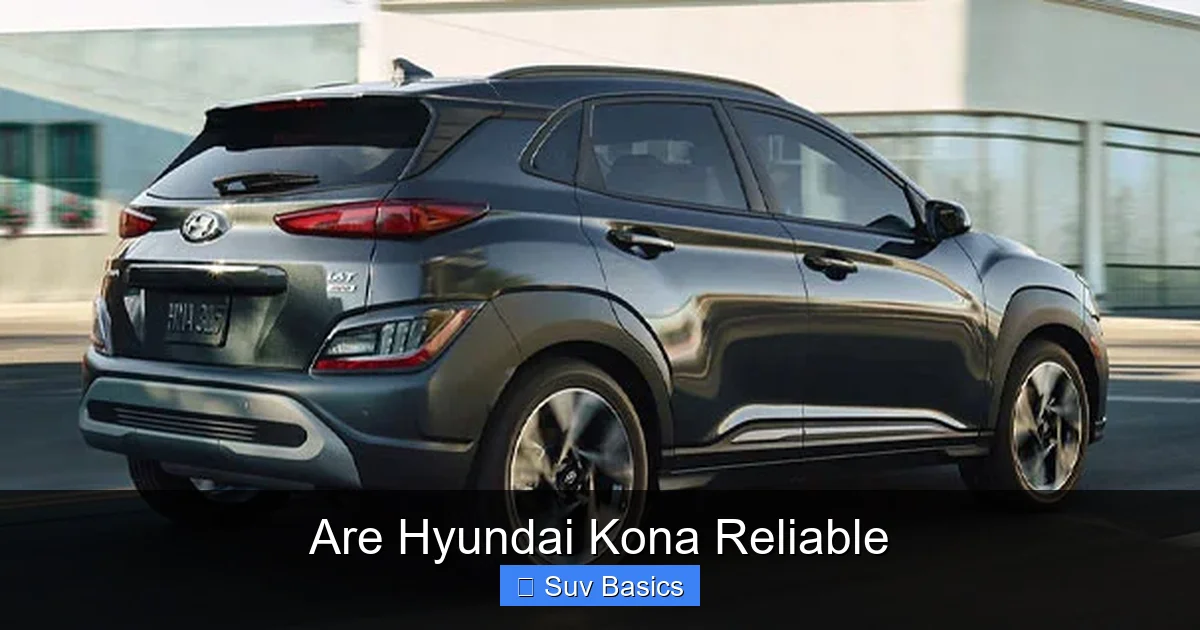
Visual guide about Are Hyundai Kona Reliable
Image source: bhaimg.com
The heart of any vehicle’s reliability is its engine and drivetrain. The Hyundai Kona offers two main gasoline engines: a 2.0-liter four-cylinder and a more powerful 1.6-liter turbocharged four-cylinder. Both have proven to be solid performers over time.
2.0L Four-Cylinder Engine
The base 2.0L engine delivers 147 horsepower and is paired with a continuously variable transmission (CVT). While it’s not the most exciting drive, it’s smooth, efficient, and—most importantly—durable. Owners report excellent longevity with this setup, especially when following the recommended maintenance schedule.
This engine is ideal for city driving and light highway use. It’s not built for towing or high-performance thrills, but it gets the job done reliably. With regular oil changes and timely transmission fluid checks, this powertrain can easily surpass 200,000 miles.
1.6L Turbocharged Engine
For those who want a bit more zip, the 1.6L turbo offers 175 horsepower and comes with a seven-speed dual-clutch automatic transmission. This setup provides quicker acceleration and a more engaging drive, especially on highways and mountain roads.
While the turbo engine is generally reliable, some early models (2018–2020) had reports of turbo lag or occasional hesitation. However, Hyundai issued software updates to address these issues, and newer models show improved responsiveness and smoother power delivery.
One tip for turbo owners: Use high-quality synthetic oil and change it every 5,000 to 7,500 miles to keep the turbocharger in top shape. This small step can prevent costly repairs down the road.
Electric Kona: Reliability Concerns and Improvements
The Hyundai Kona Electric (Kona EV) introduced a new dimension to the lineup—zero emissions and instant torque. But with innovation comes risk, and the early electric models faced some reliability challenges.
Early Battery and Software Issues
When the Kona EV first launched, some owners reported problems with the battery management system, leading to reduced range or sudden power loss. In rare cases, vehicles would enter “limp mode” or fail to charge properly.
Hyundai responded quickly, issuing recalls and software updates to fix battery calibration and thermal management issues. These steps significantly improved the driving experience and restored confidence in the EV variant.
Current EV Reliability
Today’s Kona EV (2022 and newer) is much more dependable. With an EPA-estimated range of up to 258 miles and a refined charging system, it’s a strong contender in the affordable EV market.
Owners of newer models report smooth performance, reliable range, and minimal issues. Charging infrastructure compatibility has also improved, making long-distance travel more practical.
That said, electric vehicles still require different maintenance habits. For example, keeping the battery between 20% and 80% charge when possible can extend its lifespan. Also, avoid extreme temperatures when charging to prevent degradation.
Safety and Build Quality
Reliability isn’t just about mechanical performance—it’s also about safety and how well the vehicle holds up over time. The Hyundai Kona excels in both areas.
Top Safety Ratings
The Kona has earned top honors from major safety organizations. The Insurance Institute for Highway Safety (IIHS) awarded it a “Top Safety Pick” rating in recent years, praising its crashworthiness and advanced driver-assist features.
Standard safety tech includes forward collision warning, automatic emergency braking, lane-keeping assist, and driver attention monitoring. Higher trims add blind-spot monitoring, rear cross-traffic alert, and adaptive cruise control.
These features not only protect you but also reduce the likelihood of accidents—contributing to long-term reliability by preventing damage.
Interior and Exterior Durability
The Kona’s interior materials are a mix of soft-touch plastics and durable fabrics. While not luxury-grade, they hold up well to daily use. Owners report minimal wear on seats, dashboards, and controls after several years.
Exterior paint and body panels are also well-protected. Hyundai uses corrosion-resistant coatings, and the Kona has shown little rust or paint fading in most climates.
One note: Some owners mention that the rear hatch can be a bit flimsy in older models. If you’re buying used, check the hinges and seals for wear.
Maintenance and Ownership Costs
One of the biggest advantages of the Hyundai Kona is its low cost of ownership. From fuel efficiency to maintenance, it’s designed to be budget-friendly.
Fuel Economy
The gas-powered Kona delivers excellent fuel economy. The 2.0L engine averages around 28 mpg city and 35 mpg highway, while the 1.6L turbo gets about 26 mpg city and 32 mpg highway. The EV, of course, costs pennies per mile to “fuel” with electricity.
This efficiency translates to lower monthly expenses, especially for commuters.
Routine Maintenance
Hyundai recommends oil changes every 7,500 miles (or annually), tire rotations every 7,500 miles, and brake inspections every 15,000 miles. These intervals are longer than many competitors, reducing time and money spent at the shop.
Parts are widely available and affordable. A set of brake pads might cost $120–$180, and a new battery around $150–$200. Even major services like timing belt replacements (if applicable) are reasonably priced.
Warranty Coverage
Hyundai’s warranty is one of the best in the industry. The Kona comes with a 5-year/60,000-mile basic warranty and a 10-year/100,000-mile powertrain warranty. This coverage provides strong protection against unexpected repairs, especially in the first decade of ownership.
For EV buyers, the battery is covered for 8 years or 100,000 miles—giving peace of mind about one of the most expensive components.
Resale Value and Long-Term Ownership
A reliable car should also hold its value well. The Hyundai Kona performs admirably in this category.
According to Kelley Blue Book, the Kona retains about 50–55% of its value after three years, which is competitive for the segment. Factors like low mileage, clean history, and popular trims (like the SEL or Limited) can boost resale prices.
Long-term owners often report satisfaction with their purchase. Many say they’d buy another Kona, citing its practicality, style, and dependability.
One tip: Keep detailed maintenance records and avoid modifications that could hurt resale value. A well-documented service history can add hundreds to your trade-in or private sale price.
Final Verdict: Is the Hyundai Kona Reliable?
So, are Hyundai Kona reliable? The short answer is yes—especially if you choose a recent model with a gasoline engine.
The Kona combines strong safety ratings, low ownership costs, and proven mechanical durability. While the early electric version had some hiccups, Hyundai has addressed most concerns, making the current EV a viable option for eco-conscious buyers.
With proper care, the Kona can be a trustworthy companion for years. Whether you’re navigating city streets or exploring backroads, it delivers a balanced mix of efficiency, comfort, and peace of mind.
If reliability is your top priority, the Hyundai Kona is a smart choice in the compact SUV market.
Frequently Asked Questions
Is the Hyundai Kona reliable long-term?
Yes, the Hyundai Kona is reliable long-term, especially gas-powered models. With proper maintenance, many owners report trouble-free driving beyond 150,000 miles.
Do Hyundai Kona EVs have reliability issues?
Early Kona EVs had battery and software problems, but Hyundai has fixed most through recalls and updates. Newer models are much more dependable.
What is the most reliable Kona engine?
The 2.0L four-cylinder engine is the most reliable, known for its simplicity, fuel efficiency, and long lifespan with regular maintenance.
How often does a Hyundai Kona need maintenance?
Routine maintenance is needed every 7,500 miles or annually, including oil changes, tire rotations, and brake checks. This is less frequent than many rivals.
Does the Hyundai Kona have a good warranty?
Yes, it comes with a 5-year/60,000-mile basic warranty and a 10-year/100,000-mile powertrain warranty—one of the best in the industry.
Is the Hyundai Kona expensive to insure?
Insurance costs are average for the segment. Factors like driving record, location, and trim level affect rates, but it’s not considered high-risk.