
BYD cars are increasingly recognized for their reliability, especially in the electric and hybrid SUV segments. Backed by strong build quality, long battery warranties, and impressive real-world performance, BYD is quickly earning trust among global drivers.
Key Takeaways
- High Build Quality: BYD vehicles are built with durable materials and undergo rigorous testing, contributing to long-term reliability.
- Long Battery Warranties: Most BYD EVs come with 8-year/150,000-mile battery warranties, offering peace of mind on one of the most critical components.
- Growing Global Reputation: With over 6 million vehicles sold worldwide, BYD has proven its reliability across diverse climates and driving conditions.
- Positive Owner Feedback: Many BYD owners report low maintenance costs and minimal mechanical issues after several years of use.
- Advanced Technology Integration: BYD’s in-house developed Blade Battery and smart systems enhance both safety and dependability.
- Strong Safety Ratings: Several BYD models have earned top safety scores from international agencies like Euro NCAP.
- Expanding Service Network: As BYD grows globally, its service and support infrastructure is improving, making maintenance more accessible.
📑 Table of Contents
- Are BYD Cars Reliable? A Deep Dive into Real-World Performance
- BYD’s Engineering and Manufacturing Standards
- Battery Technology and Longevity
- Owner Experiences and Reliability Ratings
- Safety and Structural Integrity
- Global Expansion and Support Infrastructure
- Comparing BYD to Competitors
- Conclusion: Are BYD Cars Reliable?
Are BYD Cars Reliable? A Deep Dive into Real-World Performance
If you’re shopping for a new SUV—especially an electric or hybrid model—you’ve probably come across BYD. This Chinese automaker has exploded onto the global stage in recent years, selling over 3 million vehicles in 2023 alone. But with rapid growth comes skepticism: Are BYD cars reliable? Can they stand up to daily driving, harsh weather, and long-term use?
The short answer? Yes—BYD cars are proving to be highly reliable, particularly in the SUV category. From the compact BYD Atto 3 to the spacious BYD Tang, these vehicles are built with modern engineering, cutting-edge battery technology, and a focus on durability. Owners and experts alike are noticing fewer breakdowns, lower repair costs, and impressive longevity—especially when compared to early-generation EVs.
But let’s not just take their word for it. In this article, we’ll explore what makes BYD vehicles dependable, how they perform in real-world conditions, and what drivers should know before making a purchase. Whether you’re considering your first electric SUV or upgrading from a traditional gas-powered model, understanding BYD’s reliability is key to making a smart decision.
BYD’s Engineering and Manufacturing Standards
One of the biggest factors behind BYD’s reliability is its vertically integrated manufacturing process. Unlike many automakers that rely on third-party suppliers for critical components, BYD produces most of its parts in-house—including batteries, electric motors, and power electronics. This control over production allows for tighter quality assurance and fewer compatibility issues.
Vertical Integration: A Game-Changer
BYD doesn’t just assemble cars—it builds them from the ground up. The company manufactures its own lithium iron phosphate (LFP) Blade Batteries, which are known for their safety, longevity, and resistance to thermal runaway. Because BYD controls the entire supply chain, it can ensure consistent quality and reduce the risk of defective parts slipping through.
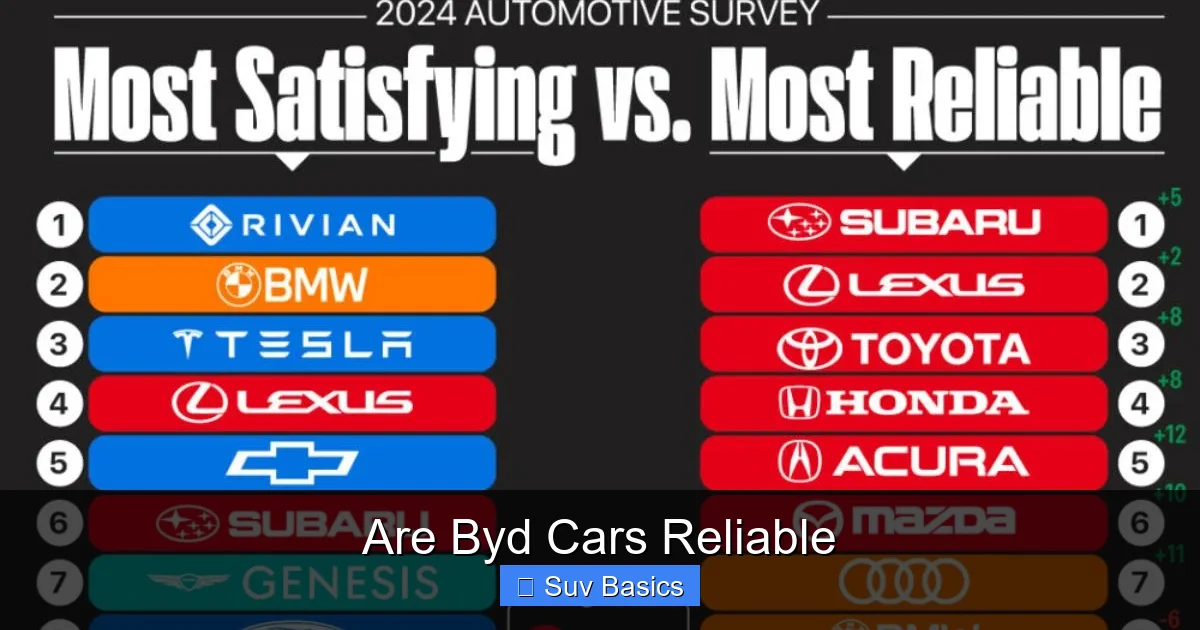
Visual guide about Are Byd Cars Reliable
Image source: rooziato.com
Rigorous Testing Procedures
Before any BYD SUV hits the road, it undergoes extensive testing. Vehicles are subjected to extreme temperatures, from -30°C in Arctic conditions to 50°C in desert environments. They’re also tested for durability on rough terrain, high-speed stability, and long-term wear. This level of testing helps identify potential weaknesses early, leading to more reliable production models.
Global Quality Certifications
BYD vehicles meet or exceed international safety and quality standards. The BYD Atto 3, for example, earned a 5-star Euro NCAP safety rating, while the BYD Tang scored highly in crash tests conducted by C-NCAP in China. These certifications aren’t just about safety—they reflect overall build quality and engineering precision.
Battery Technology and Longevity
When it comes to electric SUVs, the battery is the heart of the vehicle. And BYD’s Blade Battery is one of the most innovative and reliable systems on the market today.
The Blade Battery Advantage
Introduced in 2020, the Blade Battery uses LFP chemistry, which is inherently safer and more stable than traditional nickel-rich batteries. It’s less prone to overheating and can withstand more charge cycles—meaning it lasts longer. In real-world use, many BYD owners report battery health above 90% even after 100,000 kilometers.
Warranty Coverage
BYD backs its batteries with some of the best warranties in the industry. Most models come with an 8-year or 150,000-mile warranty on the battery pack. Some regions even offer extended coverage. This level of protection gives drivers confidence that their investment is secure.
Real-World Battery Performance
Take the BYD Atto 3, for example. Owners in Australia, Europe, and Southeast Asia have reported consistent range and minimal degradation over time. Even in hot climates like Thailand or the Middle East, where battery stress is high, the Blade Battery maintains strong performance. Charging speed remains stable, and fast-charging capability doesn’t degrade significantly over time.
Owner Experiences and Reliability Ratings
One of the best ways to assess reliability is by listening to real owners. Across forums, review sites, and social media, BYD drivers are sharing positive experiences.
Low Maintenance and Repair Costs
Many BYD owners report minimal mechanical issues. Because electric motors have fewer moving parts than internal combustion engines, there’s less that can go wrong. Routine maintenance is simple—tire rotations, brake fluid checks, and cabin air filter replacements. No oil changes, no spark plugs, no exhaust systems to worry about.
Common Issues and How BYD Responds
No car is perfect, and BYD is no exception. Some early Atto 3 owners reported minor software glitches or infotainment lag. However, BYD has been quick to release over-the-air (OTA) updates to fix these issues. Unlike traditional automakers, BYD can push software improvements directly to vehicles, improving reliability over time without requiring a dealership visit.
Long-Term Reliability Data
While BYD is still a relatively new player in Western markets, data from Asia and Australia shows strong long-term performance. Fleet operators in Singapore and Shenzhen have been using BYD electric SUVs and buses for years with high uptime and low failure rates. These real-world applications demonstrate the brand’s durability under heavy use.
Safety and Structural Integrity
Reliability isn’t just about avoiding breakdowns—it’s also about staying safe on the road. BYD takes safety seriously, and it shows in their vehicle designs.
High-Strength Body Structures
BYD SUVs are built with high-strength steel frames that absorb impact energy effectively. The Atto 3, for instance, features a 360-degree collision protection system with reinforced pillars and crumple zones. This not only improves crash safety but also contributes to long-term structural integrity.
Advanced Driver Assistance Systems (ADAS)
Most BYD SUVs come equipped with ADAS features like adaptive cruise control, lane-keeping assist, automatic emergency braking, and blind-spot monitoring. These systems don’t just enhance safety—they also reduce driver fatigue and the likelihood of accidents, indirectly boosting reliability by preventing damage.
Top Safety Ratings
As mentioned earlier, the BYD Atto 3 earned a 5-star Euro NCAP rating, scoring highly in adult occupant protection, child safety, and vulnerable road user safety. The BYD Tang also received strong marks in Chinese crash tests. These ratings reflect not just crash performance but also the overall robustness of the vehicle’s design.
Global Expansion and Support Infrastructure
A car can be reliable in theory, but if you can’t get it serviced, it’s not practical. BYD is rapidly expanding its global footprint, and with it, its support network.
Growing Service Networks
In countries like Germany, Australia, Thailand, and Brazil, BYD is partnering with established dealerships and service centers. These partners are trained to handle BYD-specific systems, including battery diagnostics and software updates. As the brand grows, so does the availability of qualified technicians.
Warranty and Support Policies
BYD offers comprehensive warranties that cover the vehicle, battery, and electric motor. In many markets, the warranty includes roadside assistance and battery health checks. Some regions even offer mobile service units that can perform minor repairs at your home or workplace.
Over-the-Air Updates
One of BYD’s biggest advantages is its ability to improve vehicles remotely. Software updates can fix bugs, enhance performance, and even add new features—all without a trip to the shop. This proactive approach helps maintain reliability and keeps vehicles up to date.
Comparing BYD to Competitors
How does BYD stack up against other electric SUVs like the Tesla Model Y, Hyundai Ioniq 5, or Volkswagen ID.4?
Reliability vs. Tesla
Tesla leads in software and performance, but has faced criticism for build quality inconsistencies. BYD, by contrast, offers more consistent fit and finish, with fewer reports of panel gaps or interior defects. While Tesla’s Supercharger network is superior, BYD’s Blade Battery offers better thermal safety and longevity.
Value for Money
BYD SUVs are often more affordable than their European or American counterparts, yet they offer similar or better features. The Atto 3, for example, costs less than the Model Y but includes a larger infotainment screen, better rear legroom, and a more comprehensive warranty.
Environmental and Ethical Considerations
BYD’s use of LFP batteries reduces reliance on cobalt and nickel, which are linked to environmental and ethical concerns in mining. This makes BYD a more sustainable choice for eco-conscious buyers—without sacrificing reliability.
Conclusion: Are BYD Cars Reliable?
So, are BYD cars reliable? Based on engineering quality, real-world performance, owner feedback, and safety ratings, the answer is a resounding yes—especially in the SUV category. BYD has built a reputation for durable, well-designed vehicles that stand up to daily use and harsh conditions.
From the innovative Blade Battery to rigorous testing and global safety certifications, BYD is proving that it’s more than just a fast-growing automaker—it’s a serious contender in the reliable electric SUV market. While the brand is still expanding its service network in some regions, the overall trend is positive, with more support and infrastructure coming online every year.
If you’re looking for an affordable, efficient, and dependable electric SUV, BYD deserves a spot on your shortlist. With strong warranties, low maintenance costs, and impressive technology, these vehicles offer excellent long-term value. As more drivers make the switch, BYD’s reliability will only become more evident.
Frequently Asked Questions
Are BYD cars reliable in cold weather?
Yes, BYD vehicles are designed to perform well in cold climates. The Blade Battery maintains stable performance in low temperatures, and many models include battery thermal management systems to prevent degradation. Owners in Scandinavia and Canada report reliable winter operation.
How long do BYD batteries last?
BYD batteries are built to last. With proper care, the Blade Battery can retain over 80% of its capacity after 10 years or 240,000 kilometers. The 8-year/150,000-mile warranty also ensures long-term protection.
Do BYD cars have good resale value?
Resale values are improving as BYD gains market trust. While still below Tesla or Toyota, BYD vehicles are holding value better than many new EV brands, thanks to strong reliability and low running costs.
Are BYD SUVs safe in crashes?
Yes. Multiple BYD SUVs have earned top safety ratings from Euro NCAP and C-NCAP, with high scores in crash protection, pedestrian safety, and ADAS performance.
Can I service a BYD car outside China?
Absolutely. BYD is expanding its global service network in Europe, Australia, Southeast Asia, and Latin America. Authorized dealers and trained technicians are available in most major markets.
Do BYD cars come with over-the-air updates?
Yes. Most modern BYD SUVs support over-the-air software updates, allowing the brand to fix bugs, improve performance, and add features remotely—keeping your vehicle up to date without a dealership visit.