
BYD cars are increasingly recognized for their reliability, especially in the electric vehicle (EV) segment. With strong safety ratings, solid build quality, and impressive battery longevity, BYD models like the Atto 3 and Seal offer dependable performance backed by extensive warranties.
Key Takeaways
- High Safety Ratings: Many BYD models, including the Atto 3, have earned top scores from global safety organizations like ANCAP and Euro NCAP.
- Long Battery Life: BYD’s Blade Battery technology offers excellent durability, with many owners reporting minimal degradation after years of use.
- Comprehensive Warranties: BYD provides generous warranties—up to 6 years on the vehicle and 8 years on the battery—boosting confidence in long-term reliability.
- Growing Global Presence: With expanding service networks in Europe, Australia, and Southeast Asia, support and parts availability are improving steadily.
- Owner Satisfaction: Real-world feedback from drivers highlights smooth performance, low maintenance costs, and few mechanical issues.
- Quality Control Improvements: Recent models show refined interiors, better fit-and-finish, and fewer reported defects compared to earlier versions.
- Competitive Value: BYD cars deliver strong reliability at a lower price point than many rivals, making them a smart long-term investment.
📑 Table of Contents
- Are BYD Cars Reliable? A Deep Dive into Real-World Performance
- BYD’s Rise in the Global Automotive Market
- Safety Ratings and Crash Test Performance
- BYD’s Blade Battery: The Heart of Reliability
- Owner Experiences and Long-Term Reliability
- How BYD Compares to Competitors
- Tips for Ensuring Long-Term Reliability with a BYD
- Conclusion: Are BYD Cars Reliable? The Verdict
Are BYD Cars Reliable? A Deep Dive into Real-World Performance
If you’re considering an electric SUV or sedan and have come across BYD—short for Build Your Dreams—you’re not alone. This Chinese automaker has exploded onto the global stage in recent years, especially in the EV market. But with rapid growth comes skepticism: Are BYD cars reliable? Can they really stand up to daily driving, harsh weather, and years of use?
The short answer? Yes—BYD cars are proving to be remarkably reliable, particularly when it comes to their electric powertrains and battery systems. While they may not yet have the decades-long reputation of Toyota or Honda, BYD is quickly building trust through real-world performance, strong safety records, and owner satisfaction. In this article, we’ll explore what makes BYD vehicles dependable, how they compare to competitors, and what you should know before buying one.
BYD’s Rise in the Global Automotive Market
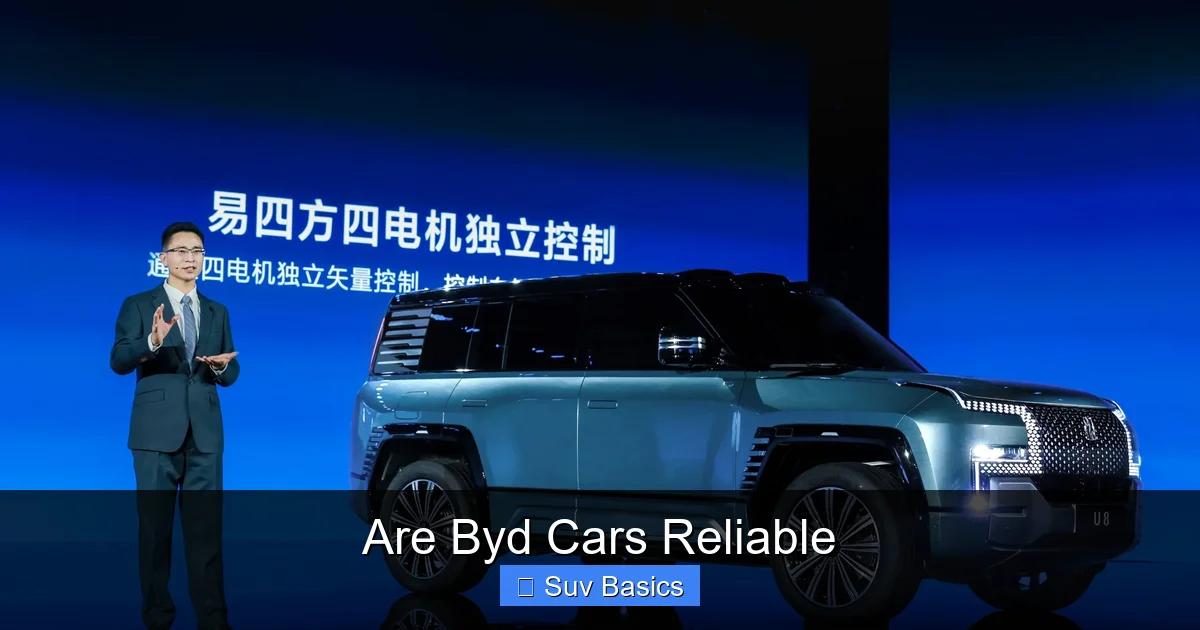
Visual guide about Are Byd Cars Reliable
Image source: assets.bwbx.io
BYD isn’t just another EV startup. Founded in 1995, the company started as a battery manufacturer and has since evolved into one of the world’s largest producers of electric vehicles. In fact, BYD surpassed Tesla in global EV sales in 2023, selling over 3 million vehicles—most of them fully electric or plug-in hybrids.
What sets BYD apart is its vertical integration. The company designs and manufactures its own batteries, motors, and even semiconductors. This control over the supply chain allows for tighter quality control and faster innovation. For example, BYD’s proprietary Blade Battery—a lithium iron phosphate (LFP) battery—is known for its safety, longevity, and resistance to thermal runaway, a common concern with traditional lithium-ion batteries.
Global Expansion and Consumer Trust
BYD’s reliability isn’t just a claim—it’s backed by real-world adoption. The brand has entered markets like Australia, Germany, Thailand, and Brazil, where consumers are known for being discerning about vehicle quality. In Australia, the BYD Atto 3 became one of the top-selling EVs in its category within months of launch, praised for its value, range, and build quality.
This global expansion has also forced BYD to meet stringent international standards. Vehicles sold in Europe and Australia must pass rigorous crash tests, emissions checks, and durability trials. The fact that BYD models are not only passing but excelling in these tests is a strong indicator of their reliability.
Safety Ratings and Crash Test Performance
One of the most objective ways to assess a car’s reliability is through safety ratings. BYD has made significant strides here, with several models earning top marks from respected organizations.
ANCAP and Euro NCAP Scores
The BYD Atto 3, for instance, received a five-star safety rating from ANCAP (Australasian New Car Assessment Program) in 2022. It scored highly in adult occupant protection, child occupant protection, and safety assist technologies. Similarly, the BYD Seal achieved a five-star Euro NCAP rating in 2023, with excellent scores in frontal impact, side impact, and pedestrian protection.
These ratings aren’t just about airbags and crumple zones—they reflect the overall structural integrity and engineering quality of the vehicle. A car that performs well in crash tests is likely to be well-built and durable over time.
Advanced Driver Assistance Systems (ADAS)
BYD equips its vehicles with a suite of ADAS features, including automatic emergency braking, lane-keeping assist, adaptive cruise control, and blind-spot monitoring. These systems not only enhance safety but also reduce driver fatigue and the likelihood of accidents—contributing to long-term reliability by minimizing wear and tear from collisions or harsh driving.
BYD’s Blade Battery: The Heart of Reliability
When it comes to EV reliability, the battery is king. A failing or degraded battery can turn a great car into a costly headache. BYD’s Blade Battery is a game-changer in this regard.
Why the Blade Battery Stands Out
Unlike traditional cylindrical or prismatic batteries, the Blade Battery uses a unique flat, elongated design that maximizes space efficiency and thermal stability. It’s made with lithium iron phosphate (LFP), a chemistry known for its safety and longevity. LFP batteries are less prone to overheating and can withstand more charge cycles than nickel-rich alternatives.
In real-world tests, BYD claims the Blade Battery can last over 3,000 charge cycles with minimal degradation—meaning it could easily last 10+ years or 240,000 kilometers (150,000 miles) before dropping below 80% capacity. Many early adopters in China and Southeast Asia report their BYD vehicles still retaining over 90% battery health after 5 years of daily use.
Thermal Management and Cold Weather Performance
Another reliability advantage is BYD’s advanced thermal management system. The Blade Battery is cooled and heated efficiently, which helps maintain performance in extreme temperatures. This is especially important for SUVs used in cold climates, where battery range can drop significantly. Owners in Norway and Canada have reported that BYD vehicles perform reliably even in sub-zero conditions, thanks to this system.
Owner Experiences and Long-Term Reliability
While specs and ratings are important, nothing beats real-world feedback. Let’s look at what actual BYD owners are saying.
Low Maintenance and Fewer Repairs
One of the biggest advantages of electric vehicles is reduced mechanical complexity. No oil changes, no exhaust systems, fewer moving parts—BYD owners consistently report lower maintenance costs compared to internal combustion engine (ICE) vehicles. Many say they’ve only needed routine tire rotations, brake checks, and software updates.
For example, a BYD Atto 3 owner in Melbourne shared that after 18 months and 30,000 km, their only service was a tire rotation and cabin air filter replacement—costing under $150. No unexpected repairs, no engine troubles.
Software and Infotainment Reliability
Some early BYD models faced criticism for glitchy infotainment systems or slow software updates. However, recent models like the 2023 Atto 3 and Seal feature upgraded processors, smoother interfaces, and over-the-air (OTA) update capabilities. Owners now report responsive touchscreens, reliable navigation, and seamless smartphone integration via Apple CarPlay and Android Auto.
Warranty and After-Sales Support
BYD offers some of the most generous warranties in the industry. In most markets, the vehicle comes with a 6-year/150,000 km warranty, while the battery is covered for 8 years or 160,000 km. This level of coverage shows confidence in their products and gives buyers peace of mind.
Service networks are expanding rapidly. In Australia, BYD has partnered with major dealership groups like Eagers Automotive, ensuring access to trained technicians and genuine parts. Similar partnerships exist in Europe and Southeast Asia.
How BYD Compares to Competitors
So, how does BYD stack up against brands like Tesla, Hyundai, or Volkswagen?
Price vs. Reliability
BYD vehicles are often priced lower than comparable EVs from Western brands. For example, the BYD Atto 3 starts around AUD $48,000 in Australia, while the Tesla Model Y begins at over AUD $65,000. Despite the lower price, the Atto 3 offers similar range, safety features, and build quality.
In terms of reliability, BYD holds its own. While Tesla leads in software and charging infrastructure, BYD wins on battery longevity and value. Hyundai and Kia offer strong warranties and reliability, but BYD’s vertical integration gives it an edge in cost control and innovation speed.
Resale Value and Depreciation
Resale value is a key indicator of long-term reliability. While BYD is still building its resale reputation, early signs are positive. In Thailand and China, BYD models retain value well due to high demand and low reported failure rates. As global awareness grows, resale values are expected to stabilize and improve.
Tips for Ensuring Long-Term Reliability with a BYD
If you’re considering a BYD, here are a few tips to maximize reliability:
- Follow the Maintenance Schedule: Even though EVs need less maintenance, regular checks on brakes, tires, and software are essential.
- Use Official Charging Equipment: Stick to BYD-approved chargers and avoid ultra-fast charging unless necessary to prolong battery life.
- Keep Software Updated: Take advantage of OTA updates to fix bugs and improve performance.
- Store in Moderate Temperatures: If possible, park in a garage or shaded area to reduce battery stress from extreme heat or cold.
- Choose Authorized Service Centers: Always use certified technicians for repairs to maintain warranty coverage.
Conclusion: Are BYD Cars Reliable? The Verdict
So, are BYD cars reliable? Based on safety ratings, battery technology, owner feedback, and global market performance, the answer is a resounding yes—especially for electric SUVs and sedans. BYD has transformed from an unknown Chinese brand into a serious global player, offering vehicles that are not only affordable and efficient but also built to last.
While no car is perfect, BYD’s focus on vertical integration, safety, and battery innovation gives it a strong foundation for long-term reliability. If you’re looking for a dependable EV with modern features, strong warranties, and low running costs, a BYD could be an excellent choice.
As the brand continues to expand and refine its offerings, its reputation for reliability is only set to grow. Whether you’re commuting in the city or embarking on a road trip, a BYD might just be the reliable, forward-thinking vehicle you’ve been waiting for.
Frequently Asked Questions
Are BYD cars safe in crashes?
Yes, many BYD models have earned top safety ratings from organizations like ANCAP and Euro NCAP. The Atto 3 and Seal both received five-star ratings, reflecting strong structural design and advanced safety features.
How long does a BYD battery last?
BYD’s Blade Battery is designed to last over 3,000 charge cycles, which typically translates to 10+ years or 240,000+ kilometers with minimal degradation. Many owners report over 90% battery health after 5 years.
Do BYD cars have good resale value?
While resale values are still stabilizing in new markets, BYD vehicles are holding value well in regions like China and Thailand due to high demand and low failure rates. As brand recognition grows, resale values are expected to improve.
Is it expensive to maintain a BYD?
No, BYD cars are generally low-maintenance. With no engine oil, exhaust system, or complex transmission, routine costs are minimal—mostly limited to tires, brakes, and software updates.
Where can I service a BYD car?
BYD is expanding its service network globally. In countries like Australia, Germany, and Thailand, authorized dealers and service centers are available. Check BYD’s official website for local support.
Are BYD cars reliable in cold weather?
Yes, thanks to advanced thermal management systems, BYD vehicles perform reliably in cold climates. The Blade Battery maintains efficiency and range even in sub-zero temperatures, as reported by owners in Norway and Canada.