
Not all SUVs are 4×4, and understanding the difference between drivetrains is essential when shopping for your next vehicle. While many SUVs offer all-wheel drive (AWD) or four-wheel drive (4WD), plenty are front-wheel drive (FWD) or rear-wheel drive (RWD) only. Knowing what you’re getting helps you pick the right SUV for your lifestyle, whether you’re commuting in the city or exploring off-road trails.
Key Takeaways
- Not all SUVs are 4×4: Many SUVs come with front-wheel drive or rear-wheel drive as standard, with AWD or 4WD as optional upgrades.
- 4×4 refers to four-wheel drive: This system sends power to all four wheels and is ideal for off-roading, towing, and harsh weather conditions.
- AWD is different from 4WD: All-wheel drive automatically distributes power between wheels for better traction, but isn’t always as rugged as 4WD.
- Fuel economy varies by drivetrain: FWD SUVs typically get better gas mileage than AWD or 4WD models due to reduced weight and mechanical complexity.
- Urban drivers may not need 4×4: If you mostly drive on paved roads, a FWD or AWD SUV may be more practical and cost-effective.
- Always check the specs: Don’t assume an SUV has 4×4—review the trim level and drivetrain options before buying.
- 4×4 adds value and capability: Off-road enthusiasts and those in snowy or rural areas benefit most from true four-wheel drive systems.
📑 Table of Contents
Are All SUVs 4×4? The Short Answer
Let’s clear up a common misconception right away: no, not all SUVs are 4×4. In fact, many of today’s most popular SUVs—like the Honda CR-V, Toyota RAV4, and Nissan Rogue—come standard with front-wheel drive (FWD). Four-wheel drive (4WD) or all-wheel drive (AWD) is often an optional upgrade, not a given.
This confusion makes sense. The term “SUV” stands for Sport Utility Vehicle, and the word “utility” suggests toughness, capability, and off-road readiness. But modern SUVs have evolved. Many are now built on car platforms, prioritizing comfort, fuel efficiency, and city driving over rugged terrain. So while SUVs may look tough on the outside, their underpinnings—and drivetrains—can be quite different from what you’d expect.
Understanding SUV Drivetrains: FWD, RWD, AWD, and 4WD
To understand whether an SUV is 4×4, you first need to know the basics of drivetrains. Let’s break down the four main types:
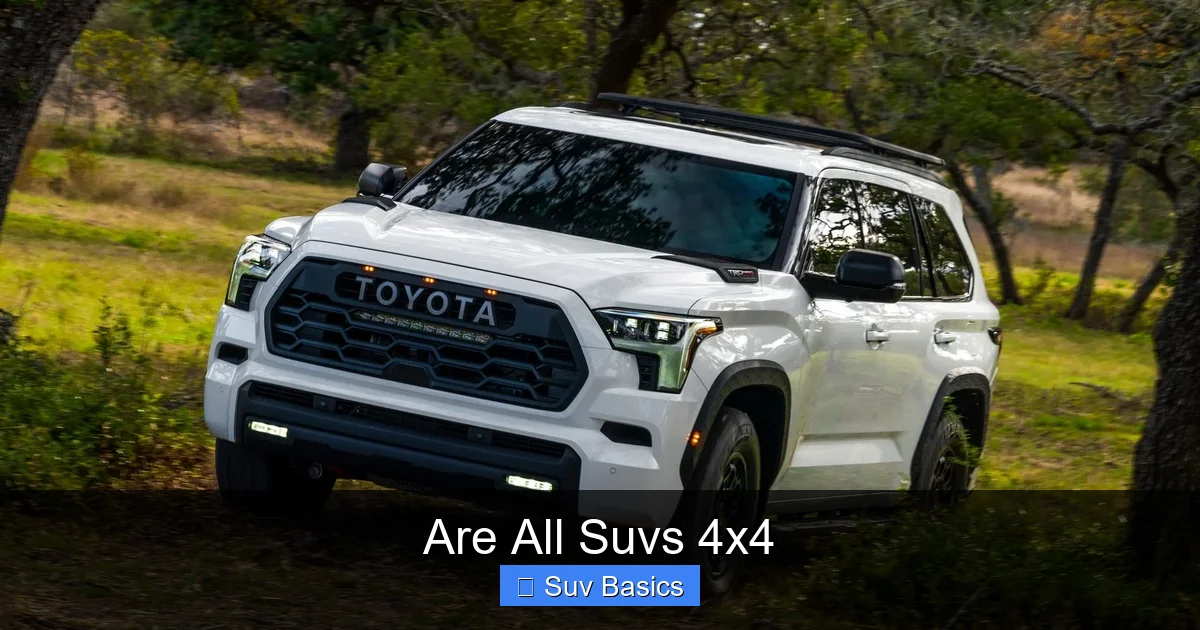
Visual guide about Are All Suvs 4×4
Image source: slashgear.com
Front-Wheel Drive (FWD)
Most compact and midsize SUVs, such as the Hyundai Tucson and Ford Escape, use front-wheel drive as the standard setup. In FWD, the engine sends power to the front wheels only. This design is lighter, more fuel-efficient, and often cheaper to manufacture and maintain.
FWD is great for everyday driving, especially in wet or snowy conditions where front-wheel traction helps with steering and stability. However, it’s not ideal for heavy towing or serious off-roading.
Rear-Wheel Drive (RWD)
Less common in smaller SUVs, rear-wheel drive sends power to the back wheels. You’ll find RWD in larger, truck-based SUVs like the Ford Expedition or Chevrolet Tahoe. RWD offers better weight balance and can improve handling, especially when towing. But like FWD, it doesn’t automatically mean 4×4 capability.
All-Wheel Drive (AWD)
AWD systems automatically send power to all four wheels when needed. Unlike 4WD, AWD is typically always active and works seamlessly in the background. It’s great for improving traction on slippery roads, light snow, or gravel—perfect for suburban drivers who want extra confidence without sacrificing fuel economy.
Many modern SUVs, like the Subaru Forester and Audi Q5, come standard with AWD. But remember: AWD is not the same as 4×4. It’s more about stability than brute strength.
Four-Wheel Drive (4WD or 4×4)
This is the real deal when it comes to off-road capability. 4WD systems can lock the front and rear axles together, sending equal power to all four wheels. This is essential for climbing rocks, plowing through mud, or navigating steep, uneven terrain.
True 4×4 systems are usually found in body-on-frame SUVs like the Jeep Wrangler, Toyota 4Runner, or Land Rover Defender. They often include low-range gearing, skid plates, and high ground clearance—features you won’t find on most car-based SUVs.
Why So Many SUVs Aren’t 4×4
So why don’t all SUVs come with 4×4? The answer lies in cost, fuel efficiency, and intended use.
Adding 4WD increases the vehicle’s weight, complexity, and price. It also reduces fuel economy—sometimes by several miles per gallon. For the average driver who sticks to highways and city streets, that extra capability isn’t necessary. Automakers know this, so they offer FWD or AWD as standard to keep prices competitive and appeal to a broader audience.
For example, the 2024 Toyota RAV4 comes standard with FWD and offers AWD as an option. The 4WD version? Not available. That’s because Toyota designed the RAV4 as a practical, fuel-efficient crossover—not a rock crawler. Meanwhile, the Toyota 4Runner, built on a truck frame, comes standard with 4WD and is built for adventure.
Another factor is market demand. Most SUV buyers prioritize comfort, cargo space, and tech features over off-road performance. As a result, manufacturers focus on delivering those qualities, often at the expense of heavy-duty 4×4 systems.
When Do You Actually Need 4×4?
Before you assume you need a 4×4 SUV, ask yourself: where and how will I drive?
City and Suburban Driving
If you live in a city or suburb and mostly drive on paved roads, a FWD or AWD SUV is likely more than enough. AWD will give you extra grip in rain or light snow, and you’ll save money on fuel and upfront cost. Vehicles like the Mazda CX-5 or Volkswagen Tiguan offer excellent AWD systems for daily use without the bulk of a 4×4.
Snowy or Icy Conditions
For drivers in snowy regions, AWD is often sufficient. Modern AWD systems are smart and responsive, adjusting power to the wheels with the most traction. However, if you face deep snow, steep driveways, or rural roads that aren’t plowed, a 4×4 with high ground clearance—like a Jeep Grand Cherokee with 4WD—might be worth the investment.
Off-Roading and Adventure
If you plan to go off the beaten path—think mountain trails, river crossings, or desert dunes—then 4×4 is a must. Look for SUVs with true 4WD, locking differentials, and off-road modes. The Jeep Wrangler Rubicon, Ford Bronco, and Toyota Land Cruiser are built for this kind of adventure.
Towing and Hauling
Need to tow a boat, camper, or trailer? 4×4 can provide better traction and control, especially on inclines or uneven surfaces. While some AWD SUVs can tow, 4×4 models generally offer higher towing capacities and more robust drivetrains.
How to Tell If an SUV Has 4×4
Don’t rely on looks. Just because an SUV looks rugged doesn’t mean it has 4×4. Here’s how to check:
- Read the specs: Always review the manufacturer’s website or owner’s manual. Look for terms like “4WD,” “4×4,” or “part-time/full-time four-wheel drive.”
- Check the trim level: 4×4 is often only available on higher trims. For example, the base model of a Ford Explorer may be FWD, while the ST or Platinum trim offers 4WD.
- Look for badges: Many 4×4 SUVs have badges like “4×4,” “4WD,” or “Off-Road” on the rear or fenders.
- Test drive: If you’re at a dealership, ask to see the drivetrain controls. True 4×4 systems often have a transfer case with 2H, 4H, and 4L modes.
For example, the 2024 Subaru Outback comes standard with AWD—but not 4WD. It’s great for snow and light trails, but not for serious off-roading. Meanwhile, the 2024 Jeep Grand Cherokee offers both AWD and 4WD options, depending on the trim and package.
The Bottom Line: Choose the Right SUV for Your Needs
So, are all SUVs 4×4? Absolutely not—and that’s okay. The diversity in drivetrains allows buyers to choose a vehicle that matches their lifestyle, budget, and driving conditions.
If you’re commuting daily, running errands, or driving on highways, a FWD or AWD SUV will serve you well. You’ll enjoy better fuel economy, lower maintenance costs, and a smoother ride. But if you live off the grid, love weekend adventures, or face extreme weather, investing in a true 4×4 SUV is worth every penny.
The key is to do your research. Don’t assume capability based on appearance. Read the specs, compare drivetrain options, and test drive different models. Whether you choose a compact crossover or a full-size off-road beast, the right SUV is out there—just make sure it has the right drivetrain for you.
Frequently Asked Questions
Are all SUVs all-wheel drive?
No, not all SUVs are all-wheel drive. Many come standard with front-wheel drive, with AWD available as an optional upgrade. Always check the trim and specifications to confirm.
What’s the difference between AWD and 4×4?
AWD automatically sends power to all four wheels for better traction and is ideal for everyday driving. 4×4 (or 4WD) allows manual engagement of all four wheels and is better for off-roading and tough terrain.
Can a FWD SUV handle snow?
Yes, a FWD SUV can handle light to moderate snow, especially with winter tires. However, AWD or 4×4 provides better traction and control in deeper snow or icy conditions.
Do I need 4×4 if I live in the city?
Probably not. Most city drivers don’t need 4×4. A FWD or AWD SUV offers better fuel economy and is more than capable for urban and suburban roads.
Are 4×4 SUVs more expensive to maintain?
Yes, 4×4 systems are more complex and can cost more to repair. They also tend to reduce fuel efficiency, which increases long-term fuel costs.
Can I upgrade a FWD SUV to 4×4?
Generally, no. Converting a FWD SUV to 4×4 is extremely difficult, expensive, and often not worth it. It’s better to buy a model that comes with 4×4 from the factory.