
No, not all Hyundai Konas are electric. The Hyundai Kona comes in multiple powertrain options, including gasoline, hybrid, plug-in hybrid, and a fully electric version. While the Kona Electric is gaining popularity for its zero-emission driving, most Konas on the road still run on traditional fuel or hybrid systems.
If you’ve been eyeing the Hyundai Kona and heard buzz about it being “electric,” you might be wondering: Are all Hyundai Konas electric? The short answer is no—but the longer, more interesting answer involves understanding the full spectrum of what this compact SUV offers. The Kona has evolved into a versatile lineup, catering to a wide range of drivers with different needs, budgets, and environmental priorities.
Hyundai launched the Kona in 2017 as a stylish, subcompact SUV with bold design and urban-friendly dimensions. Over the years, it’s grown into one of the brand’s most popular models globally. While the Kona Electric has grabbed headlines for its impressive range and eco-friendly appeal, it’s just one piece of the puzzle. Most Konas on the road today still run on gasoline, with hybrid and plug-in hybrid versions offering a middle ground for those wanting better efficiency without going fully electric.
So, why the confusion? Part of it comes from Hyundai’s strong push toward electrification. The company has committed to becoming a leader in sustainable mobility, and the Kona Electric was one of the first affordable long-range EVs on the market. But that doesn’t mean every Kona you see is emission-free. Let’s break down the different versions and help you understand which one might be right for you.
Key Takeaways
- Multiple Powertrain Options: The Hyundai Kona is available as a gasoline-powered SUV, a hybrid, a plug-in hybrid, and a fully electric vehicle (EV).
- Kona Electric is Just One Variant: The all-electric Kona Electric is a distinct model with a dedicated EV platform and larger battery pack.
- Gas Models Are Still Widely Available: Most Kona sales globally are still traditional internal combustion engine (ICE) versions, especially in markets with limited EV infrastructure.
- Hybrid and Plug-in Hybrid Offer Middle Ground: These models combine a gas engine with electric motors for better fuel efficiency without full EV commitment.
- Design and Features Vary by Model: While the exterior looks similar, interior tech, range, and performance differ significantly between electric and non-electric Konas.
- EV Incentives Apply Only to Electric Version: Buyers of the Kona Electric may qualify for tax credits and rebates, which don’t apply to gas or hybrid trims.
- Future May Shift Toward Electrification: Hyundai plans to expand its EV lineup, but gas-powered Konas will likely remain available for years.
📑 Table of Contents
Understanding the Hyundai Kona Lineup
The Hyundai Kona isn’t a single vehicle—it’s a family of models built on the same platform but powered by different technologies. Think of it like a smartphone lineup: the same basic design, but with different processors, cameras, and battery life depending on the model.
At its core, the Kona is a subcompact SUV designed for city driving, weekend adventures, and everything in between. It’s known for its sharp styling, high seating position, and user-friendly tech. But when it comes to what’s under the hood, things get more interesting.
Gasoline-Powered Kona: The Traditional Choice
The standard Kona runs on a conventional internal combustion engine (ICE). In most markets, this is the base model and the most widely available version. It typically comes with a 2.0-liter four-cylinder engine producing around 147 horsepower, paired with a six-speed automatic transmission. There’s also a more powerful 1.6-liter turbocharged option in some regions, delivering up to 195 horsepower with a seven-speed dual-clutch transmission.
This gas-powered Kona is ideal for drivers who:
– Don’t have access to home charging
– Take frequent long road trips
– Prefer lower upfront costs
– Live in areas with limited EV infrastructure
While it doesn’t offer the silent ride or zero emissions of an EV, the gas Kona is reliable, affordable to maintain, and delivers solid fuel economy—around 28–32 mpg combined, depending on the engine and drivetrain.
Hybrid and Plug-in Hybrid Konas: The Best of Both Worlds
For drivers who want better fuel efficiency without fully committing to electric, Hyundai offers hybrid and plug-in hybrid (PHEV) versions of the Kona.
The Kona Hybrid combines a 1.6-liter gasoline engine with an electric motor and a small battery. It automatically switches between gas and electric power, optimizing efficiency without needing to plug in. You’ll get around 40–45 mpg combined, making it a great choice for daily commuters.
The Kona Plug-in Hybrid takes it a step further. It has a larger battery that can be charged via an external power source, offering about 30 miles of all-electric range. Once the battery is depleted, it operates like a regular hybrid. This model is perfect for someone who drives short distances daily but still wants the flexibility of a gas engine for longer trips.
Both hybrid versions retain the Kona’s fun-to-drive character while significantly reducing fuel costs and emissions.
Kona Electric: The Zero-Emission Star
Now, let’s talk about the model that’s causing all the excitement: the Kona Electric. This is the fully electric version of the SUV, and it’s a standout in the affordable EV market.
The Kona Electric comes with a large 64 kWh lithium-ion battery pack (or a smaller 39 kWh option in some regions) and an electric motor that delivers instant torque—up to 201 horsepower and 291 lb-ft of torque. That means quick acceleration and a smooth, quiet ride.
One of its biggest selling points is range. The long-range version can travel up to 258 miles on a single charge (EPA estimate), which is impressive for a compact SUV. It supports fast charging, so you can get from 10% to 80% charge in about 47 minutes at a DC fast charger.
Inside, the Kona Electric features a digital instrument cluster, a 10.25-inch touchscreen, and Hyundai’s latest infotainment system. It also includes advanced driver-assistance features like adaptive cruise control, lane-keeping assist, and automatic emergency braking.
But here’s the key point: the Kona Electric is a separate model, not just a trim level of the gas Kona. It has a different battery layout, modified suspension, and unique interior design elements to accommodate the EV components.
How to Tell the Difference Between Kona Models
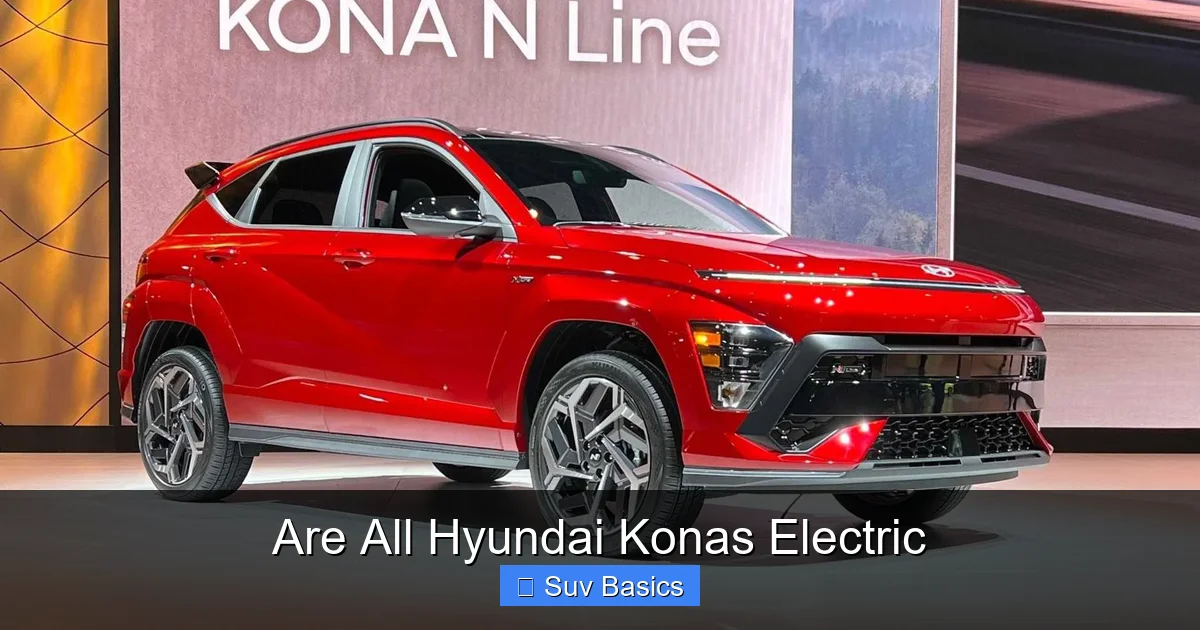
Visual guide about Are All Hyundai Konas Electric
Image source: cdn.motor1.com
At first glance, all Konas look similar—bold front grille, LED headlights, and a sporty stance. But there are subtle (and not-so-subtle) clues that can help you identify which version you’re looking at.
Exterior Design Cues
– Kona Electric: Features a closed front grille (since it doesn’t need airflow for engine cooling), unique 17-inch or 18-inch aerodynamic wheels, and “Electric” badging on the rear and sides.
– Hybrid/PHEV: Has a slightly different front bumper design and may include hybrid-specific badges. The PHEV also has a charging port on the front fender.
– Gas Models: Traditional grille with open slats, standard wheels, and no electric badging.
Interior and Technology Differences
The interior of the Kona Electric often includes a digital gauge cluster, a rotary gear selector (instead of a traditional shifter), and EV-specific menus showing energy flow, charging status, and regenerative braking levels. The hybrid models may also have some of these features, but the gas-only Kona sticks to analog dials and conventional controls.
Another giveaway? The Kona Electric has no exhaust pipe—because it doesn’t need one.
Performance and Driving Experience
Driving a Kona feels different depending on the powertrain. The gas model offers a familiar, responsive ride with decent acceleration. The turbo version adds some fun, especially for highway merging or passing.
The hybrid and PHEV versions feel smoother and quieter at low speeds, thanks to electric motor assistance. They also offer better fuel economy, especially in stop-and-go traffic.
But the Kona Electric truly stands out. With instant torque and near-silent operation, it feels more like a luxury vehicle than a compact SUV. The low center of gravity (thanks to the floor-mounted battery) improves handling, and regenerative braking helps recharge the battery while slowing down.
That said, the electric version is heavier than the gas model, which can affect ride comfort on rough roads. But for city driving and highway cruising, it’s a joy.
Cost, Incentives, and Ownership Considerations
Price is a big factor when choosing between Kona models. The gas-powered Kona starts around $23,000, making it the most budget-friendly option. The hybrid adds a few thousand dollars, while the PHEV and Electric versions can cost $35,000–$40,000 or more, depending on trim and options.
However, the Kona Electric may qualify for federal tax credits (up to $7,500 in the U.S.) and state or local incentives, which can significantly reduce the effective price. Some utilities also offer rebates for home charger installation.
Maintenance costs are generally lower for electric and hybrid models—no oil changes, fewer moving parts, and less wear on brakes due to regenerative braking. But battery replacement (if needed) can be expensive down the line.
Charging the Kona Electric at home with a Level 2 charger takes about 9 hours for a full charge. Public fast chargers can top it up in under an hour, making it practical for road trips with some planning.
The Future of the Hyundai Kona
Hyundai has announced plans to phase out internal combustion engines in favor of electric vehicles, but that transition will take time. The next-generation Kona, set to launch in 2024, will be built on a new platform that supports all powertrains—gas, hybrid, and electric—so all versions will continue to be available for the foreseeable future.
This means you’ll still be able to buy a gas-powered Kona for years to come, even as EV adoption grows. But Hyundai is clearly betting big on electrification, with the Kona Electric leading the charge.
Which Kona Is Right for You?
Choosing the right Kona depends on your lifestyle, budget, and driving habits.
– Choose the gas Kona if you want affordability, simplicity, and don’t mind stopping at gas stations.
– Go hybrid or PHEV if you want better fuel economy and some electric driving without range anxiety.
– Pick the Kona Electric if you have access to charging, drive mostly in the city, and want to reduce your carbon footprint.
No matter which version you choose, the Hyundai Kona offers a stylish, practical, and fun-to-drive package. Just remember: not all Konas are electric—but the option is there if you want it.
Frequently Asked Questions
Are all Hyundai Konas electric?
No, not all Hyundai Konas are electric. The Kona lineup includes gasoline, hybrid, plug-in hybrid, and fully electric models. Only the Kona Electric runs entirely on battery power.
How can I tell if a Kona is electric?
Look for a closed front grille, “Electric” badging, and a charging port. The interior will also have EV-specific displays and a rotary gear selector instead of a traditional shifter.
What is the range of the Hyundai Kona Electric?
The long-range Kona Electric has an EPA-estimated range of up to 258 miles on a full charge. The standard-range version offers around 197 miles.
Can I charge a Kona Electric at home?
Yes, the Kona Electric can be charged at home using a standard 120V outlet (slow) or a 240V Level 2 charger (faster). A Level 2 charger can fully recharge the battery in about 9 hours.
Do hybrid Konas need to be plugged in?
The regular Kona Hybrid does not need to be plugged in—it charges its battery through regenerative braking and the gas engine. The Plug-in Hybrid (PHEV) does require external charging to maximize electric range.
Is the Kona Electric more expensive to maintain?
No, the Kona Electric typically has lower maintenance costs than gas models. It doesn’t require oil changes, and regenerative braking reduces wear on brake pads.