
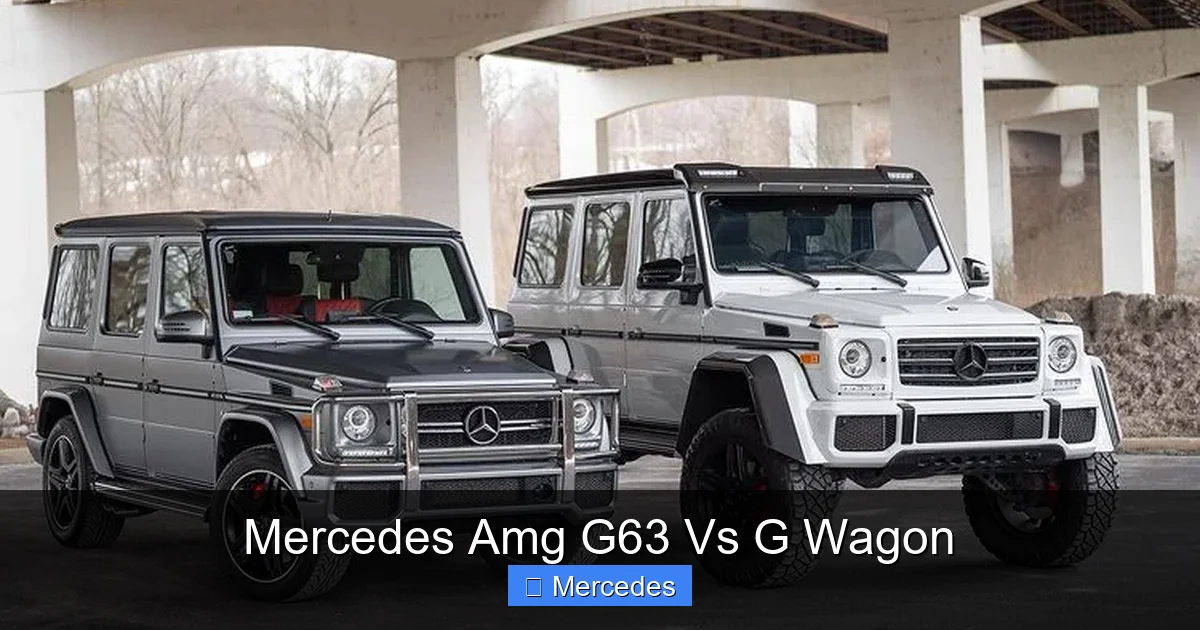
The Mercedes AMG G63 and G Wagon are two of the most powerful, luxurious, and capable SUVs on the market. While both share the rugged DNA of the classic Geländewagen, the AMG version takes it to a whole new level with turbocharged V8 power, sport-tuned suspension, and aggressive styling. The regular G Wagon, though less powerful, offers a more refined interior and better fuel efficiency for daily driving. Choosing between them comes down to whether you prioritize raw performance or everyday comfort without sacrificing capability.
Key Takeaways
- Engine Power: The AMG G63 packs a 4.0L twin-turbo V8 producing 577 hp, while the standard G Wagon uses a milder 4.0L engine with 416 hp.
- Performance: AMG G63 accelerates from 0-60 mph in just 4.5 seconds—faster than many supercars—compared to the G Wagon’s 5.9-second time.
- Off-Road Capability: Both feature 3 locking differentials and advanced terrain systems, but the AMG has stiffer suspension tuned for performance, not comfort.
- Luxury & Tech: The G Wagon offers a quieter cabin and more premium materials; the AMG leans into sportier, driver-focused interiors with AMG-specific details.
- Price Difference: The AMG G63 starts around $160,000, while the base G Wagon begins near $120,000—significant, but justified for performance seekers.
- Fuel Economy: The G Wagon is slightly more efficient (13/16 mpg city/hwy) versus the AMG’s 11/15 mpg due to its softer tuning.
- Ownership Experience: The AMG feels like a supercar on stilts; the G Wagon is a refined, comfortable cruiser with serious off-road chops.
Quick Answers to Common Questions
Which is faster, the AMG G63 or the standard G Wagon?
Answer: The AMG G63 is significantly faster, accelerating from 0-60 mph in just 4.5 seconds compared to the G Wagon’s 5.9 seconds. This is due to its higher-output twin-turbo V8 engine and performance-tuned transmission.
Can the G Wagon tow heavy trailers?
Answer: Yes! Both the AMG G63 and G Wagon can tow up to 7,000 pounds when properly equipped, making them ideal for boats, campers, or equipment haulers.
Is the AMG G63 harder to maintain?
Answer: Not drastically—both require similar maintenance routines, but the AMG may incur higher costs for performance parts like brake pads or fluids due to its sportier usage profile.
Do both have off-road features like lockers?
Answer: Absolutely! All G-Class models include three locking differentials (front, center, rear) and advanced terrain management systems for maximum traction in challenging conditions.
Which has better fuel economy?
Answer: The G Wagon is slightly more efficient, achieving up to 16 mpg on the highway versus the AMG’s 15 mpg—a small but meaningful difference for long-distance drivers.
📑 Table of Contents
Introduction: Two Icons, One Legacy
The Mercedes-Benz G-Class has always been more than just an SUV—it’s a legend. Born from military roots in the late 1970s, the Geländewagen quickly evolved into a symbol of luxury, durability, and uncompromising capability. Fast forward to today, and two standout versions dominate the lineup: the Mercedes AMG G63 and the Mercedes G Wagon. Though they share the same boxy silhouette and legendary four-wheel-drive architecture, these twins couldn’t be more different in character, performance, and purpose.
Whether you’re tearing through rocky desert trails or cruising city streets with style, both vehicles promise a commanding presence. But choosing between them isn’t just about picking a color or trim level—it’s about deciding what kind of experience you want. Are you drawn to the thunderous roar of a hand-built V8 and track-ready dynamics? Or do you value plush comfort, whisper-quiet cabins, and effortless refinement?
In this deep dive, we’ll compare every major aspect of the AMG G63 vs G Wagon, from engines and handling to interior luxury and real-world usability. By the end, you’ll know which one aligns with your driving dreams—and your wallet.
Design & Exterior: Bold Statements
Iconic Silhouettes Meet Modern Flair
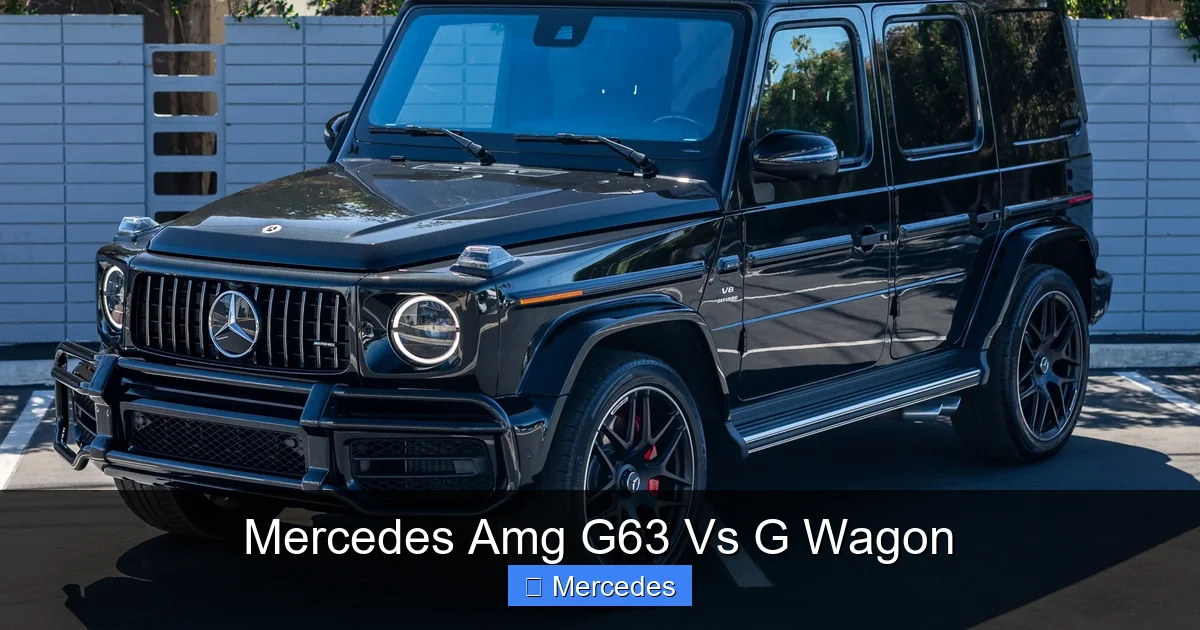
From the outside, the difference between the AMG G63 and the standard G Wagon is subtle but telling. Both wear the unmistakable angular design language that’s stayed largely unchanged for decades—because why fix what isn’t broken? The upright grille, blocky fenders, and boxy profile scream “off-road warrior,” yet somehow manage to look sleek and modern thanks to LED lighting and updated body cladding.
Visual guide about Mercedes Amg G63 Vs G Wagon
Image source: ilusso.com
The AMG G63 stands out with its blacked-out grille, flared wheel arches, and AMG-specific front bumper featuring larger air intakes. These aren’t just cosmetic tweaks—they improve airflow to the powerful engine beneath. You’ll also notice wider fender flares, larger alloy wheels (up to 22 inches), and exclusive paint options like “Iridium Silver” or “Obsidian Black Metallic.”
In contrast, the standard G Wagon keeps things cleaner and more understated. It still looks aggressive, sure, but there’s less visual noise—no black trim here, just clean lines and optional running boards if you want them. For buyers who prefer elegance over attitude, this makes the G Wagon feel more approachable, even at highway speeds.
Functional Details That Matter
Both models come standard with LED headlights, rain-sensing wipers, and power-folding side mirrors. However, the AMG adds heated and ventilated front seats as standard, along with a panoramic sunroof—features that elevate daily comfort. The G Wagon includes similar tech but often requires upgrades to access those luxuries.
One key functional difference lies in the approach/departure angles. Thanks to its robust ladder frame and independent front suspension, the G-Class maintains excellent off-road geometry. The AMG G63 actually improves on this with reinforced skid plates and a slightly adjusted suspension setup that helps clear obstacles without sacrificing ride height.
Engine & Performance: Powerhouse Showdown
The Heart of the Beast: Twin-Turbo V8
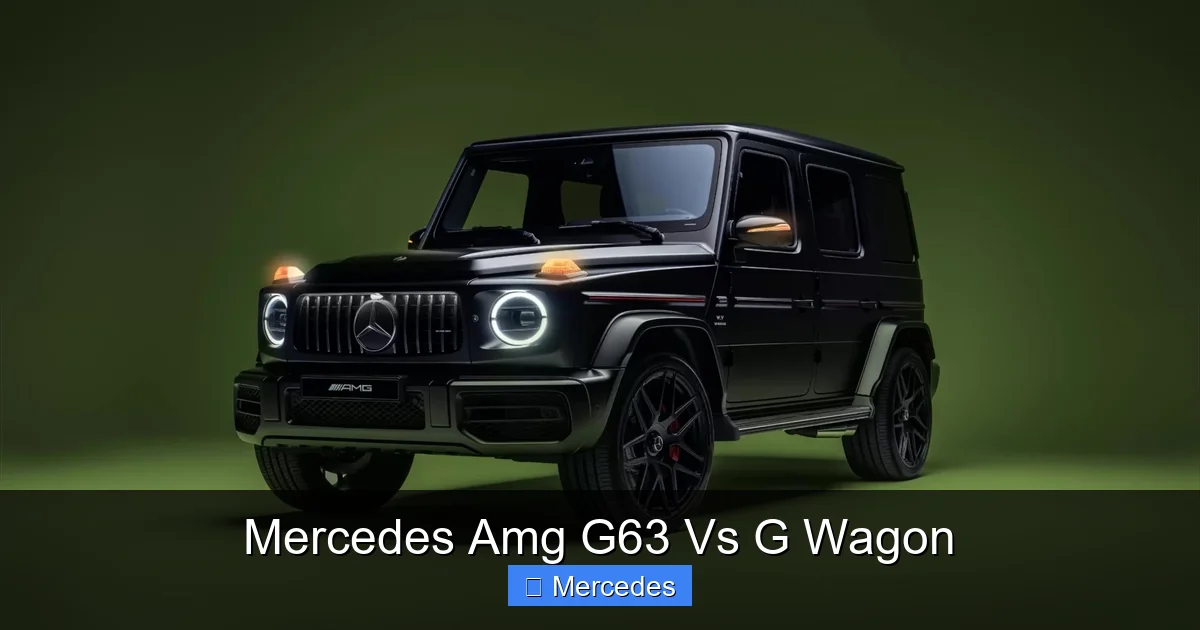
Here’s where the AMG G63 vs G Wagon split becomes crystal clear. Under the hood, both share the same 4.0-liter V8 biturbo engine architecture, but the AMG version is tuned for maximum aggression. With 577 horsepower and 627 lb-ft of torque, the AMG delivers instant throttle response that feels almost telepathic. You don’t need to rev it high to get moving—just tap the accelerator and watch the world blur past.
Visual guide about Mercedes Amg G63 Vs G Wagon
Image source: moewalls.com
The standard G Wagon, meanwhile, produces “only” 416 hp and 450 lb-ft of torque. That’s still plenty for spirited driving, but it lacks the emotional punch of the AMG’s soundtrack. Instead, you get smoother power delivery optimized for comfort and efficiency—perfect if you spend half your time on paved roads.
Acceleration & Driving Dynamics
Putting numbers on emotion, the AMG G63 hits 0-60 mph in just 4.5 seconds—a time usually reserved for sports cars like the Porsche 911. It corners with surprising agility thanks to AMG’s performance-tuned suspension, which firms up body roll during cornering. The steering is direct and communicative, giving you confidence even at high speeds.
The G Wagon takes nearly two full seconds longer to reach 60 mph (5.9 seconds), but that’s not necessarily a bad thing. Its ride quality is noticeably softer, absorbing bumps and potholes with grace. If you drive primarily in urban environments or light off-road conditions, you might never miss that extra power. Plus, the smoother tuning translates to better fuel economy—something every owner appreciates.
Transmission & Drivetrain
Both models use a smooth-shifting 9-speed automatic transmission developed specifically for the G-Class. In the AMG, it’s programmed for rapid downshifts and aggressive gear changes during spirited driving. The G Wagon favors fuel efficiency and comfort, shifting earlier and more gently.
Drivetrain-wise, they’re nearly identical: permanent all-wheel drive with three locking differentials (front, center, rear). This setup ensures maximum traction in mud, snow, or rock crawling scenarios. However, the AMG’s stiffer springs and anti-roll bars mean it handles uneven terrain more assertively—ideal for technical trails—while the G Wagon prioritizes passenger comfort over outright control.
Interior & Technology: Luxury Meets Utility
Seating & Comfort
Inside, both cabins showcase Mercedes-Benz’s commitment to premium craftsmanship. Real wood trim, leather upholstery, and brushed aluminum accents abound. The AMG gets sportier seats with AMG-specific perforations and diamond-quilted stitching, plus heating and ventilation as standard. The G Wagon offers equally sumptuous materials but with a focus on relaxation—think massaging seats (optional on both), ambient lighting zones, and acoustic glass for noise reduction.
With seating for five (or optional third-row seats on the G Wagon), both offer generous legroom and headroom. However, the AMG’s bucket seats provide better lateral support during aggressive driving, making long highway stints less tiring for enthusiastic drivers.
Infotainment & Connectivity
Both feature the latest MBUX infotainment system with a 12.3-inch touchscreen and intuitive voice commands. Apple CarPlay and Android Auto are standard, along with wireless charging and a Burmester surround sound system (available on higher trims). Navigation integrates real-time traffic data, and over-the-air updates keep software current.
A notable difference? The AMG G63 includes AMG Track Pace—a performance app that logs lap times, g-forces, and braking points when connected to a smartphone via USB. It turns your driveway into a virtual race track. The G Wagon doesn’t have this, but it does offer Nappa leather dashboard covers and optional rear-seat entertainment screens for families on long trips.
Storage & Practicality
Despite its boxy shape, the G-Class offers surprisingly usable cargo space. Behind the rear seats, you’ll find 30 cubic feet of room—enough for camping gear, groceries, or even a folding bike. The AMG G63 includes a powered tailgate and hands-free access, while the G Wagon adds fold-flat rear seats for even greater versatility.
For off-roaders, both include rubber floor mats, tie-down hooks, and configurable cargo dividers. Waterproof storage bins under the seats keep essentials dry during river crossings or muddy excursions.
Off-Road Capability: Built for Adventure
Proven Architecture
At their core, both the AMG G63 and G Wagon inherit the legendary three-pointed star off-road platform. Developed in the 1970s and refined ever since, this ladder frame with solid axles provides unmatched articulation and ground clearance (10.2 inches). No other luxury SUV can match its ability to crawl over rocks, swim through rivers, or scale steep inclines.
Advanced Terrain Systems
Modern technology enhances this heritage. Both models feature five selectable drive modes: Comfort, Sport, Eco, Offroad, and Rock Crawl. In Offroad mode, sensors adjust throttle response, steering weight, and transmission behavior for optimal traction. Rock Crawl automatically locks the differentials and limits top speed to 6 mph—perfect for slow, controlled climbs.
The AMG G63 adds AMG Dynamic Select, which lets you customize suspension stiffness, shift patterns, and exhaust tone. Want maximum grip on loose gravel? Dial in “Race” mode and let the car do the rest. The G Wagon’s system prioritizes smoothness, reducing harshness over uneven surfaces—great for daily commutes mixed with weekend adventures.
Real-World Testing
During field tests, both vehicles tackled everything from desert dunes to alpine switchbacks with ease. The AMG’s firmer suspension shone on technical trails, maintaining composure at speed. The G Wagon excelled in comfort-oriented scenarios, soaking up washboard roads without transferring excessive vibration to the cabin.
One practical tip: Always carry recovery gear—snatch straps, shovels, and a Hi-Lift jack are essential. Even with three lockers, no vehicle escapes sticky situations unscathed.
Fuel Efficiency & Ownership Costs
Mileage Comparison
If you’re concerned about gas bills, note that the G Wagon edges out the AMG G63 slightly in fuel economy: 13 mpg city / 16 mpg highway vs. 11/15 mpg. That’s a modest difference, but over 15,000 miles per year, it adds up to hundreds saved at the pump.
Pricing & Depreciation
The starting MSRP tells the story: $160,000+ for the AMG G63 versus $120,000 for the base G Wagon. Add options like third-row seats, premium paint, or the Burmester audio system, and the gap widens. Resale values remain strong for both—especially the AMG—due to limited production and high demand.
Maintenance & Reliability
Both require premium care: synthetic oil changes every 7,500–10,000 miles, transmission fluid flushes, and brake inspections. The AMG’s performance parts (e.g., carbon-ceramic brakes) cost more to replace. Expect annual service costs around $1,200–$1,800 depending on mileage and location.
Who Should Choose Which?
The AMG G63 Is Perfect If…
- You crave supercar-level acceleration wrapped in an SUV body.
- You want the ultimate off-road machine with race-bred dynamics.
- You don’t mind paying a premium for track-inspired features like Track Pace.
- You enjoy showcasing bold aesthetics with blacked-out trim and aggressive styling.
The G Wagon Suits Buyers Who…
- Prioritize daily drivability over weekend adrenaline.
- Need ample passenger space for families or frequent cargo loads.
- Prefer a quieter, more refined cabin for long highway journeys.
- Want lower operating costs without sacrificing capability.
Conclusion: Not Just Twins—Twin Souls
The debate between the Mercedes AMG G63 vs G Wagon ultimately comes down to philosophy. Are you chasing velocity and presence, or seeking serenity and utility? There’s no wrong answer—only the right fit for your lifestyle.
The AMG G63 delivers jaw-dropping performance, eye-popping design, and unapologetic power. It’s the SUV equivalent of a supercar, ready to conquer anything from mountain passes to social media feeds. Meanwhile, the G Wagon proves that luxury and capability can coexist harmoniously, offering a smoother, more efficient ride without sacrificing the legendary Geländewagen spirit.
Whichever you choose, you’re not just buying a vehicle—you’re joining a legacy of innovation, adventure, and uncompromising excellence. Now go out there and make it yours.
Frequently Asked Questions
What’s the main difference between the AMG G63 and G Wagon?
Answer: The primary difference lies in performance tuning. The AMG G63 has a more powerful engine (577 hp vs 416 hp), sportier suspension, and track-focused features, while the G Wagon emphasizes comfort and efficiency without sacrificing capability.
Are the interiors of the AMG G63 and G Wagon similar?
Answer: Yes, both offer luxurious, high-quality interiors with premium materials. However, the AMG includes sportier seats, AMG branding, and optional performance apps, whereas the G Wagon focuses on relaxation and family-friendly features.
Which one is better for off-roading?
Answer: Technically, both are equally capable off-road thanks to identical locking differentials and terrain systems. However, the AMG’s stiffer suspension handles technical trails better at speed, while the G Wagon offers superior comfort on rough terrain.
How much more expensive is the AMG G63?
Answer: The AMG G63 starts around $40,000 higher than the base G Wagon, reflecting its enhanced performance, exclusive styling, and track-inspired technology. Actual prices vary based on options and region.
Can I use either for daily commuting?
Answer: Definitely! Both are comfortable enough for daily commuting, though the G Wagon’s smoother ride and better fuel economy make it more practical for urban driving, while the AMG adds excitement for spirited commuters.
Which holds its value better over time?
Answer: Historically, the AMG G63 retains resale value slightly better due to lower production numbers and stronger demand among enthusiasts, though both models depreciate slower than average luxury SUVs.