
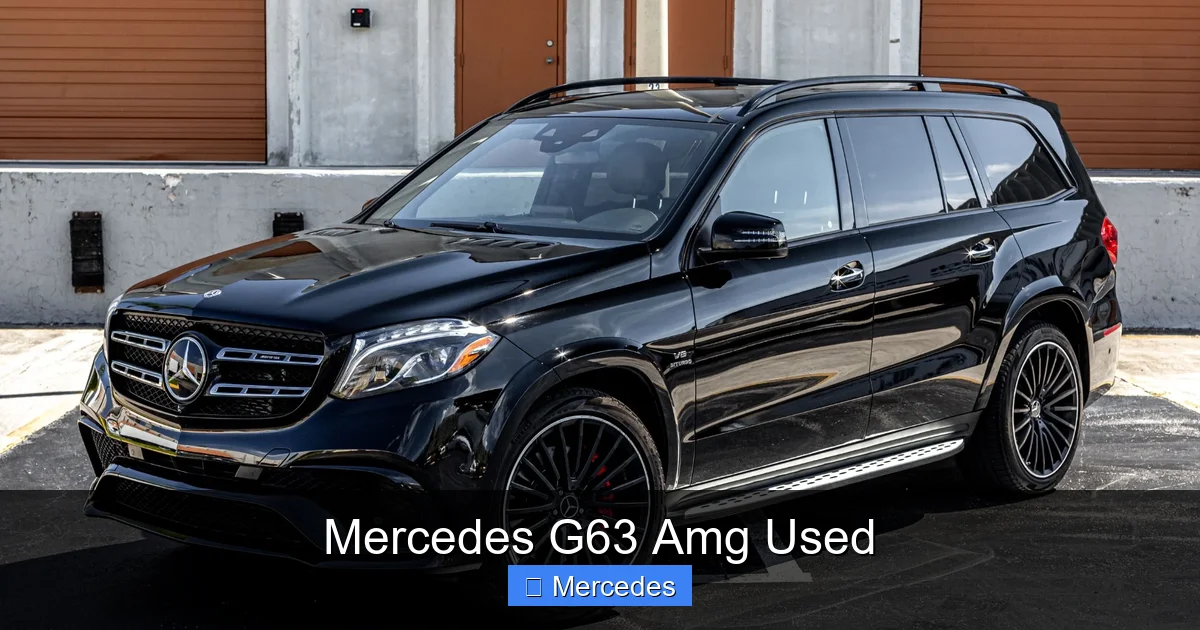
The Mercedes G63 AMG is a luxury SUV that blends brutal off-road capability with high-end refinement, making it a standout in the used luxury vehicle market. While its price tag remains steep even when pre-owned, smart buyers can find excellent value by understanding common issues, model year differences, and maintenance needs.
Key Takeaways
- Powerful Performance: The G63 AMG packs a handcrafted 4.0L twin-turbo V8 engine producing 577 horsepower, delivering thrilling acceleration and towing capacity.
- Iconic Design: With its boxy silhouette, exposed door hinges, and military-inspired roots, the G-Wagon turns heads everywhere—even in used form.
- High Ownership Costs: Expect premium maintenance, expensive parts, and fuel economy around 13–15 mpg combined—budget accordingly.
- Model Year Matters: Post-2018 models feature updated infotainment (MBUX), improved ride quality, and better driver aids than earlier versions.
- Reliability Concerns: Watch for air suspension leaks, turbo issues, and electrical gremlins—always get a pre-purchase inspection.
- Strong Resale Value: The G63 holds its value better than most luxury SUVs, especially well-maintained examples with low mileage.
- Off-Road Ready: Three locking differentials, low-range gearing, and rugged construction make it surprisingly capable off pavement.
[FEATURED_IMAGE_PLACEHER]
Why the Mercedes G63 AMG Used Market Is So Popular
The Mercedes G63 AMG isn’t just a car—it’s a statement. Since its debut in the early 2000s as AMG’s take on the legendary G-Class, this high-performance SUV has become a symbol of luxury, power, and rugged elegance. While new G63s command six-figure prices, the used market offers a more accessible—but still premium—path to ownership. In recent years, demand for used G63 AMGs has surged, driven by celebrities, executives, and enthusiasts who want the iconic G-Wagon experience without paying full retail.
What makes the used G63 so appealing? First, it’s one of the few vehicles that genuinely blends supercar-level performance with go-anywhere capability. Second, its timeless design means even older models don’t look dated. Third, Mercedes’ reputation for engineering excellence gives buyers confidence—provided they do their homework. Whether you’re eyeing a 2016 model with classic analog controls or a 2022 with the latest MBUX infotainment, the used G63 delivers an unmatched blend of prestige and performance.
Performance and Engine Specs: What to Expect
At the heart of every Mercedes G63 AMG is a hand-built 4.0-liter twin-turbocharged V8 engine, assembled by a single technician at AMG’s Affalterbach facility. This powerhouse generates 577 horsepower and 627 lb-ft of torque—enough to rocket the nearly 5,500-pound SUV from 0 to 60 mph in just 4.4 seconds. That’s faster than many sports cars, yet it still offers three locking differentials and a low-range transfer case for serious off-roading.
Transmission and Drivetrain
The G63 uses a 9-speed automatic transmission (9G-Tronic) that’s smooth in daily driving but can be tuned for aggressive shifts in Sport+ mode. All-wheel drive is standard, with a default 40:60 front-to-rear torque split that leans slightly rear-biased for a sportier feel. The system automatically adjusts based on traction needs, but unlike some competitors, it doesn’t offer adaptive torque vectoring—instead relying on mechanical locking differentials for maximum grip.
Real-World Driving Experience
Behind the wheel, the G63 feels surprisingly agile for its size. The steering is heavy but precise, and body roll is well-controlled thanks to adaptive air suspension (standard on all G63s since 2018). However, the ride can be firm—especially on rough roads—because the G-Class prioritizes off-road durability over plush comfort. That said, newer models (2019+) include an optional “Comfort” suspension setting that softens things up considerably.
Fuel economy is predictably poor: expect 13–15 mpg combined, with city driving dipping below 12 mpg if you enjoy the V8’s roar. But for many buyers, that’s part of the charm. After all, you’re not buying a G63 for efficiency—you’re buying it for presence, performance, and the sheer joy of commanding such a bold machine.
Design and Interior: Luxury Meets Ruggedness
The G63’s exterior is instantly recognizable. Its squared-off shape, round headlights, and exposed door hinges haven’t changed much since the 1970s—and that’s intentional. Mercedes knows the G-Class’s appeal lies in its heritage, so even modern iterations retain classic cues while adding contemporary flair like LED lighting, wider fenders, and aggressive AMG-specific bodywork.
Interior Quality and Features
Step inside, and you’re greeted by a cabin that blends old-school robustness with cutting-edge luxury. High-quality materials abound: Nappa leather, real wood or carbon fiber trim, and metal accents. The dashboard layout is functional, with physical buttons for critical functions—a rarity in today’s touchscreen-dominated world.
From 2019 onward, the G63 received a major interior overhaul featuring dual 12.3-inch screens (one for the instrument cluster, one for infotainment), running Mercedes’ MBUX system. This includes voice control (“Hey Mercedes”), Apple CarPlay, Android Auto, and over-the-air updates. Earlier models (pre-2018) use the older COMAND system, which feels dated by comparison but still handles basics well.
Cargo Space and Practicality
Despite its size, the G63 isn’t the most practical SUV. Rear cargo space is modest—about 38 cubic feet with seats up, expanding to 75 with them folded—due to the spare tire mounted on the rear door. Rear legroom is adequate but not generous, and the upright seating position may feel stiff on long trips. Still, for a weekend getaway or urban errands, it’s perfectly capable.
One unique feature: the optional “G manufaktur” program lets buyers customize nearly every detail—from paint color to seat stitching—even on used cars if they were originally ordered that way. This adds to the G63’s exclusivity and resale appeal.
Reliability and Common Issues in Used G63 AMGs
While the G63 is built like a tank, it’s not immune to problems—especially as it ages. Understanding common issues can save you thousands in repair costs and headaches down the road.
Air Suspension Failures
The most frequent complaint among G63 owners is air suspension failure. Components like air struts, compressors, and valves can leak or wear out, causing the vehicle to sag or ride unevenly. Repairs often cost $2,000–$4,000. To check for issues, look for uneven ride height, warning lights on the dash, or a hissing sound when parked.
Turbo and Engine Concerns
The 4.0L V8 is generally reliable, but turbochargers can develop boost leaks or wastegate issues after 60,000–80,000 miles. Listen for unusual whining noises under acceleration or reduced power. Also, ensure the engine has had regular oil changes—AMG recommends synthetic oil every 10,000 miles, but many owners stretch intervals, risking sludge buildup.
Electrical and Infotainment Glitches
Older G63s (pre-2018) are prone to COMAND system freezes, Bluetooth pairing failures, and backup camera lag. Newer MBUX systems are more stable but can still suffer from software bugs. Always test all screens, cameras, and connectivity features during a test drive.
Brake Wear and Cost
With over 570 horsepower and a heavy curb weight, the G63 wears brakes quickly. Expect to replace pads and rotors every 20,000–30,000 miles—and budget $1,500–$2,500 per axle at a Mercedes dealer. Aftermarket options exist but may void warranties or affect performance.
Tips for Avoiding Problems
- Always get a pre-purchase inspection (PPI) from a Mercedes specialist—not a general mechanic.
- Check service records for consistent maintenance, especially oil changes and air suspension servicing.
- Avoid vehicles with accident history or frame damage—the G-Class’s body-on-frame construction makes repairs costly.
- Consider certified pre-owned (CPO) models for extended warranty coverage.
Model Year Comparison: Which Used G63 Should You Buy?
Not all used G63s are created equal. Significant updates occurred in 2018 and 2019, so your choice of model year greatly affects features, reliability, and value.
2016–2017: The Early AMG Era
These were the first G63s with the 4.0L V8 (replacing the older 5.5L). They offer strong performance but lack modern tech. The COMAND infotainment is slow, driver aids are basic (no adaptive cruise or lane keep), and the ride is harsher due to passive dampers. However, they’re often the cheapest entry point—typically $80,000–$100,000 with moderate mileage.
2018–2019: The Transition Year
The 2018 model introduced adaptive air suspension as standard, greatly improving ride comfort. It also added more driver assistance features like blind-spot monitoring and parking sensors. Infotainment remained COMAND, but the hardware was slightly upgraded. Prices range from $100,000–$120,000.
2020–2023: The Modern G63
Starting in 2019 (but more widely available in 2020), the G63 got the full MBUX overhaul, including the widescreen dashboard, augmented reality navigation, and enhanced voice control. These models also feature improved sound insulation, better fuel economy (thanks to mild-hybrid tech in some trims), and more advanced safety systems like active brake assist and evasive steering support. Expect to pay $120,000–$160,000 depending on mileage and options.
Verdict: Best Value Pick
For most buyers, a well-maintained 2019 or 2020 G63 offers the best balance of modern features, reliability, and price. Avoid very low-mileage “garage queens” unless you plan to resell soon—excessive idling can cause carbon buildup in the V8.
Cost of Ownership: Beyond the Purchase Price
Buying a used G63 is just the beginning. Ongoing costs can add up quickly if you’re not prepared.
Insurance and Registration
Insurance premiums are high—expect $3,000–$5,000 annually for full coverage, especially if you’re under 30 or live in an urban area. Registration fees vary by state but can exceed $1,000 in places like California or New York.
Maintenance and Repairs
Routine maintenance at a Mercedes dealer costs significantly more than average. An oil change runs $200–$300, and major services (every 20,000 miles) can hit $1,500+. Independent shops specializing in Mercedes can save 30–40%, but ensure they use OEM or equivalent parts.
Tires and Brakes
The G63 rides on large, high-performance tires (often 20” or 22”), which cost $300–$500 each. Full set replacements run $1,500–$2,500. As mentioned, brakes wear fast—factor in $3,000–$5,000 over 50,000 miles.
Fuel Costs
At $4/gallon and 14 mpg combined, filling the 26.4-gallon tank costs over $100 and lasts ~370 miles. Annual fuel expense could easily exceed $4,000 if you drive 15,000 miles per year.
Depreciation and Resale
The good news? The G63 depreciates slower than rivals like the Range Rover Sport or BMW X5 M. A well-kept example may lose only 10–15% per year after the initial drop. Keep service records, avoid modifications, and store it properly to maximize resale value.
Where to Buy and What to Look For
Finding the right used G63 requires patience and diligence. Here’s where to look and what to prioritize.
Certified Pre-Owned (CPO) vs. Private Sale
Mercedes CPO programs offer peace of mind: 1-year/unlimited-mile warranty (extendable), 24/7 roadside assistance, and rigorous inspections. However, CPO prices are 10–15% higher than private sales. Private sellers may offer better deals but carry more risk—always verify ownership and history.
Online Marketplaces
Check reputable sites like Cars.com, Autotrader, and CarGurus. Filter for “Mercedes-Benz Certified” or “AMG Specialist Inspected.” Avoid Craigslist or Facebook Marketplace unless you’re experienced—scams and salvage titles are common.
Red Flags to Avoid
- No service history or gaps in maintenance
- Rust on frame or undercarriage (rare but serious)
- Mismatched VINs or tampered odometer
- Aftermarket modifications (especially engine tuning)
- Flood damage or salvage title
Test Drive Checklist
During your test drive, pay attention to:
- Smooth gear shifts and no turbo lag
- Even ride height and no suspension noises
- All infotainment functions working
- No warning lights on the dash
- Proper operation of 4WD and low-range modes (if testing off-road)
Final Thoughts: Is a Used G63 AMG Right for You?
The Mercedes G63 AMG used is more than a vehicle—it’s an experience. It delivers jaw-dropping performance, head-turning style, and genuine off-road prowess in a package that feels both timeless and cutting-edge. Yes, it’s expensive to buy and own, and it demands respect when it comes to maintenance. But for those who value character over conformity, the G63 remains one of the most compelling luxury SUVs on the road.
If you’re ready to embrace the compromises—fuel costs, maintenance bills, and occasional quirks—you’ll be rewarded with a driving experience few cars can match. Just remember: do your research, inspect thoroughly, and buy the best-condition example you can afford. With proper care, a used G63 AMG can provide years of thrilling, unforgettable journeys.
FAQs
How much does a used Mercedes G63 AMG cost?
Prices vary widely based on year, mileage, and condition. Expect to pay $80,000–$160,000, with 2016–2017 models on the lower end and 2020–2023 models commanding premium prices.
Is the G63 AMG reliable as a used car?
Generally yes, but it requires diligent maintenance. Common issues include air suspension leaks and turbo problems—always get a pre-purchase inspection.
What’s the fuel economy of a used G63 AMG?
Average combined fuel economy is 13–15 mpg. City driving typically yields 11–13 mpg, while highway cruising may reach 16–18 mpg.
Can a used G63 AMG go off-road?
Absolutely. With three locking differentials, low-range gearing, and a robust body-on-frame design, it’s one of the most capable luxury off-roaders available.
Should I buy a CPO or private-sale G63?
CPO offers warranty protection and peace of mind but costs more. Private sales can offer better value if you’re willing to accept slightly higher risk and do thorough due diligence.
Do used G63s hold their value well?
Yes—the G63 depreciates slower than most luxury SUVs. Well-maintained examples with low mileage often retain 60–70% of their value after 3–4 years.
This is a comprehensive guide about mercedes g63 amg used.
Key Takeaways
- Understanding mercedes g63 amg used: Provides essential knowledge
Frequently Asked Questions
What is mercedes g63 amg used?
mercedes g63 amg used is an important topic with many practical applications.