
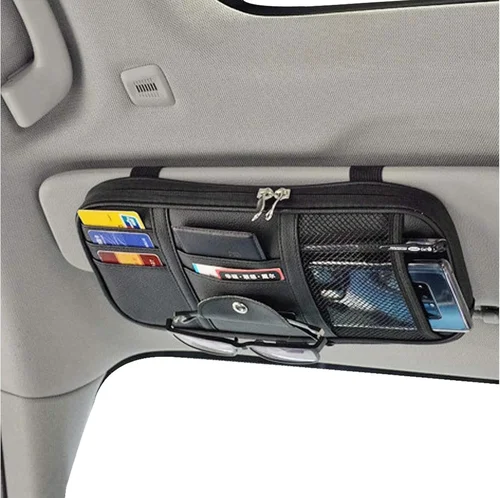
If you’re like most SUV owners, your vehicle is more than just a mode of transportation—it’s a mobile command center, a family hub, and sometimes even a weekend adventure base. With all that activity comes clutter: sunglasses, parking passes, toll tickets, receipts, lip balm, hand sanitizer, and maybe even a spare phone charger or two. That’s where an SUV visor organizer steps in—not just as a convenience, but as a smart organizational tool that keeps essential items within easy reach while driving.
But not all visor organizers are created equal. The market in 2026 is flooded with options ranging from flimsy fabric sleeves to rugged, multi-compartment systems with RFID-blocking pockets and built-in mirrors. Choosing the right one can mean the difference between a tidy, stress-free drive and a tangled mess every time you open the sun visor. This comprehensive guide cuts through the noise to help you make an informed decision based on real-world needs, durability, functionality, and value.
In this guide, you’ll learn exactly what to look for when shopping for an SUV visor organizer—from material quality and mounting mechanisms to storage capacity and compatibility with different vehicle models. We’ll break down key factors like budget, build quality, and user experience, compare top product categories, highlight common pitfalls to avoid, and offer expert-backed tips for getting the best deal. Whether you drive a compact crossover like a Honda CR-V or a full-size beast like a Chevrolet Tahoe, this guide ensures you’ll find the perfect fit for your lifestyle.

What to Look for When Buying Buying Guide
1. Material Quality & Durability
The material of your visor organizer determines how long it will last and how well it holds up under daily use. Cheap polyester or thin nylon may look fine at first, but they often fray, tear, or lose their shape after just a few months—especially when exposed to sunlight, heat, or frequent handling. Look for organizers made from heavy-duty, water-resistant fabrics like 600D polyester, ballistic nylon, or reinforced PVC-coated materials. These fabrics resist fading, moisture, and abrasion, making them ideal for the harsh environment inside a vehicle.
Additionally, check the stitching. Double-stitched seams and reinforced stress points (like where straps attach to the main body) significantly extend the product’s lifespan. Avoid glued-on pockets or flimsy zippers—these are common failure points. A high-quality organizer should feel substantial in your hands, not lightweight or papery. For example, brands like VisorGenie and OxGord use military-grade materials that withstand extreme temperatures and heavy loads without warping or tearing.
2. Mounting Mechanism & Compatibility
How the organizer attaches to your sun visor is critical—not just for security, but for usability. Most organizers use elastic straps, Velcro, or clip-on hooks. Elastic straps are common but can stretch over time, causing the organizer to sag or fall off. Velcro offers a snug fit but may lose adhesion with repeated use or in hot climates. The best systems use reinforced metal clips or adjustable buckle straps that lock securely without damaging the visor.
Compatibility is another major concern. SUVs vary widely in visor size, thickness, and shape. A compact crossover might have thin, flexible visors, while larger SUVs often feature thick, rigid panels with built-in lights or mirrors. Measure your visor’s width and thickness before buying. Many premium organizers include extendable straps or modular designs that adapt to different visor types. Always check customer reviews for mentions of fit issues—especially if you drive a luxury or older model SUV.
3. Storage Capacity & Layout Design
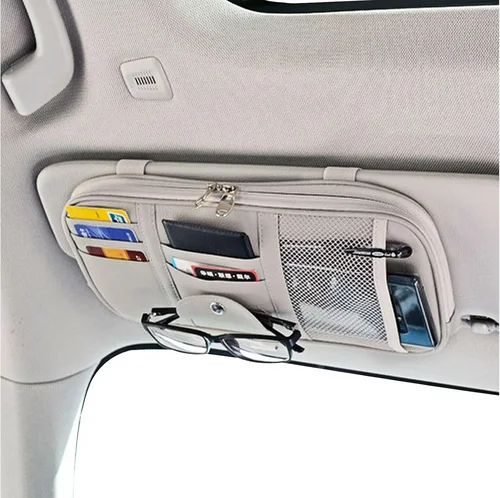
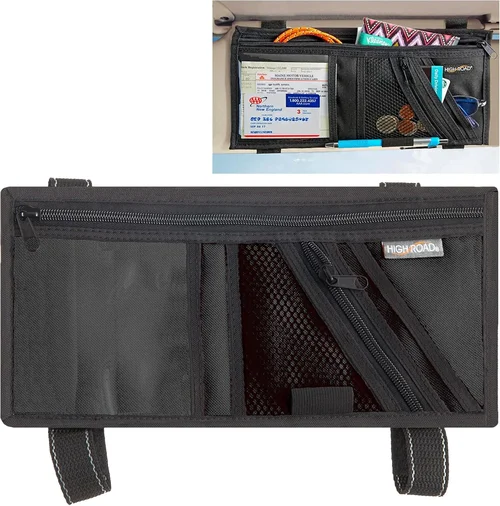
Think about what you actually need to store. Do you carry multiple pairs of sunglasses? Frequent toll roads? Kids’ snacks or wipes? A well-designed organizer balances compartmentalization with accessibility. Look for a mix of open slots, zippered pockets, mesh pouches, and card holders. Dedicated spaces for items like toll transponders, parking tickets, or ID cards prevent them from getting lost or damaged.
Avoid overly complex designs with too many tiny pockets—they can become frustrating to use while driving. Instead, opt for intuitive layouts: a large main pocket for bulkier items, a clear ID window, elastic loops for pens or lip balm, and a secure zippered section for valuables. Some advanced models even include RFID-blocking pockets to protect credit cards and passports from digital theft—a smart feature for frequent travelers.
4. Ease of Access & Driver Safety
An organizer should enhance, not hinder, your driving experience. If it requires two hands to open a zipper or forces you to take your eyes off the road for more than a second, it’s a safety risk. Prioritize designs with quick-access features: magnetic closures, snap buttons, or wide-mouth openings. Sunglass slots should allow one-handed insertion and removal.
Also consider how the organizer affects visibility. When folded down, it shouldn’t obstruct your view of the road or dashboard. Some models are designed to stay upright when not in use, minimizing visual interference. Test this by imagining how you’d reach for a toll ticket at a highway booth—can you do it smoothly without fumbling?
5. Aesthetics & Vehicle Integration
While function comes first, aesthetics matter too. A bulky, neon-colored organizer might clash with your SUV’s interior. Choose neutral tones like black, gray, or tan that blend seamlessly with most cabin colors. Matte finishes resist fingerprints and glare better than glossy ones.
Some brands offer custom embroidery or monogramming, which adds a personal touch—great for gift-giving or corporate fleets. Others design their products to match OEM styling, giving a factory-installed look. Remember: a cohesive interior feels more premium and less cluttered, even when fully loaded.
6. Brand Reputation & Customer Support
Not all brands stand behind their products. Research the manufacturer’s track record for quality control and customer service. Established names like Covercraft, WeatherTech, and AutoExec have decades of experience in automotive accessories and typically offer better warranties and responsive support.
Check if the company provides installation guides, video tutorials, or live chat assistance. A brand that invests in customer education signals confidence in its product. Also, look for certifications like ISO 9001 (quality management) or OE (Original Equipment) standards—these indicate rigorous testing and reliability.
7. Warranty & Return Policy
A solid warranty reflects the manufacturer’s faith in their product. Most reputable brands offer at least a 1-year limited warranty covering defects in materials or workmanship. Premium options may include 2–3 years or even lifetime guarantees. Read the fine print: some warranties exclude damage from improper installation or normal wear.
Equally important is the return policy. Online purchases carry the risk of receiving a product that doesn’t fit or meet expectations. Look for retailers (like Amazon, AutoZone, or the brand’s own site) that offer free returns within 30 days. This gives you time to test the organizer in your actual vehicle without financial risk.
8. User Reviews & Real-World Performance
Never rely solely on product descriptions. User reviews reveal hidden flaws—like straps that slip off in cold weather or zippers that jam after a few uses. Focus on verified purchase reviews with photos, as these are more likely to be authentic.
Pay attention to recurring themes: “fits perfectly on my 2024 Ford Explorer” or “fell apart after two months.” Use tools like Amazon’s “Top Critical Review” filter to spot potential issues early. Also, check third-party review sites like Car and Driver or Edmunds for professional testing insights.
Different Types of Buying Guide

Common Buying Mistakes to Avoid
❌ Mistake: Prioritizing Price Over Quality
Why it’s bad: The cheapest organizers often use low-grade materials that degrade quickly, leading to frustration and the need for replacement within months. You end up spending more in the long run.
What to do instead: Treat this as a small investment in daily convenience. Spend a little extra for reinforced stitching, UV-resistant fabric, and reliable hardware. A $30 organizer that lasts three years is far better value than a $10 one that fails in six months.
❌ Mistake: Ignoring Visor Compatibility
Why it’s bad: An organizer that doesn’t fit securely will flap around, distract you, or fall off entirely—creating a safety hazard and defeating the purpose.
What to do instead: Measure your visor’s width and thickness. Check product dimensions and look for adjustable straps or universal-fit claims backed by real user feedback. When in doubt, contact the seller with your vehicle make and model.
❌ Mistake: Overloading the Organizer
Why it’s bad: Stuffing too many items can strain seams, distort the shape, and make retrieval difficult. Heavy loads may also cause the visor to sag or detach.
What to do instead: Stick to essentials: sunglasses, toll pass, ID, maybe a small notebook. Use other storage solutions (like center console trays or seatback organizers) for bulkier items.
❌ Mistake: Choosing Style Over Function
Why it’s bad: A sleek leather organizer with no practical pockets forces you to dig through everything to find a single item—especially dangerous while driving.
What to do instead: Opt for a design that matches your actual usage patterns. If you carry multiple cards, ensure there are dedicated slots. If you use hand sanitizer daily, look for an elastic loop.
❌ Mistake: Skipping the Return Window
Why it’s bad: Many buyers assume the organizer will work perfectly out of the box. If it doesn’t fit or lacks key features, you’re stuck with it.
What to do instead: Install and test the product immediately upon arrival. Try accessing common items with one hand. If it’s not right, return it within the policy period—don’t wait.
❌ Mistake: Buying Without Reading Reviews
Why it’s bad: Marketing photos and descriptions can be misleading. Real users reveal issues like poor zipper quality, weak straps, or misleading size claims.
What to do instead: Spend 10 minutes reading both positive and critical reviews. Look for patterns—if five people mention the same flaw, it’s likely a real issue.
❌ Mistake: Assuming All Organizers Are Universal
Why it’s bad: Some “universal” organizers only fit standard sedan visors and won’t accommodate the thicker, wider panels found in many SUVs.
What to do instead: Search specifically for “SUV visor organizer” and filter by your vehicle type. Brands like DashMat offer model-specific versions for popular SUVs.
Budget Guidelines: How Much Should You Spend?
Your budget should align with how much you’ll use the organizer and what you need to store. Here’s a realistic breakdown for 2026:
- Entry-Level ($8 – $15): Ideal for occasional drivers or those with minimal storage needs. Expect basic fabric construction, simple elastic straps, and limited compartments. These work fine for holding a single pair of sunglasses and a parking pass but may lack durability. Great for teens or secondary vehicles.
- Mid-Range ($18 – $35): The sweet spot for most SUV owners. These organizers feature reinforced materials, multiple pockets, secure mounting systems, and thoughtful layouts. Brands like OxGord and VisorGenie dominate this tier with reliable, well-reviewed products. You get excellent value without overspending.
- Premium ($40 – $70): For buyers who want longevity, style, and advanced features. Think genuine or high-grade synthetic leather, RFID-blocking pockets, built-in mirrors, and precision stitching. These often come from established automotive accessory brands and include extended warranties. Perfect for luxury SUV owners or frequent road trippers.
- Luxury ($70+): Top-tier options with custom fits, artisanal craftsmanship, or integration with smart car systems. Some include LED lighting, wireless charging pads, or app connectivity. While impressive, these are overkill for most users—reserve them for enthusiasts or corporate gifting.
Expert Tips for Getting the Best Deal
- Shop During Seasonal Sales: Major discounts happen during Black Friday, Cyber Monday, Amazon Prime Day (July), and end-of-year clearance events. Sign up for brand newsletters to get early access to promo codes.
- Compare Retailers: Prices can vary significantly between Amazon, Walmart, AutoZone, and direct-from-brand websites. Use price-tracking tools like Honey or CamelCamelCamel to monitor fluctuations.
- Bundle with Other Accessories: Some brands offer discounts when you buy a visor organizer with a seat cover, floor mat, or phone mount. This can save 10–20% on your total order.
- Check for Open-Box or Refurbished Options: Retailers like Best Buy or manufacturer outlets sometimes sell returned items at a discount. These are often as good as new and come with full warranties.
- Read the Warranty Fine Print: A “lifetime warranty” might only cover manufacturing defects—not wear and tear. Understand what’s included before relying on it.
- Test Before Committing: If possible, visit a local auto parts store to handle the organizer in person. Feel the material, test the zippers, and check the strap mechanism.
- Leave a Review After Purchase: Many brands reward honest feedback with discount codes for future purchases. Plus, your experience helps other buyers make informed choices.
- Consider Gift Cards: If you’re unsure about fit or style, a gift card to a reputable retailer gives the recipient flexibility while still supporting smart shopping.

Frequently Asked Questions
Q: Will a visor organizer block my view while driving?
A: A well-designed organizer should not obstruct your vision. Most stay flush against the visor when not in use, and many are narrow enough to avoid interfering with the windshield. Always choose a model that fits your specific visor size and test it during daylight hours before relying on it at night.
Q: Can I install a visor organizer on both driver and passenger sides?
A: Yes, but check your vehicle’s visor configuration first. Some SUVs have asymmetrical designs or built-in lighting/mirrors on one side only. Also, ensure the organizer doesn’t interfere with airbag deployment—never mount anything near side curtain airbags.
Q: Are visor organizers machine washable?
A: Most are not. Spot cleaning with a damp cloth and mild detergent is recommended. Avoid submerging the organizer, as moisture can damage internal components or cause mold. Check the care instructions before cleaning.
Q: Do they work with panoramic sunroofs?
A: Generally, yes—as long as the visor itself is functional and not fully retracted. However, some panoramic roofs have very short visors. Measure carefully and consider a slim-profile organizer to avoid interference.
Q: Can I use a visor organizer in cold climates?
A: Absolutely. High-quality organizers use materials that remain flexible in freezing temperatures. Avoid cheap plastics that become brittle and crack in winter. Look for cold-weather certifications if you live in extreme climates.
Q: Will it damage my visor over time?
A: Reputable organizers use soft, non-abrasive backing and secure mounting systems that won’t scratch or warp your visor. Avoid models with metal hooks that dig into the visor material. If concerned, place a microfiber cloth between the organizer and visor.
Q: Are there organizers designed for kids’ items?
A: Yes! Some models include fun colors, cartoon prints, or dedicated pockets for snacks, crayons, and tablets. These are great for family road trips—just ensure small items are secured to prevent choking hazards.
Q: How do I clean sticky residue from old organizers?
A: Use a cotton swab dipped in rubbing alcohol to gently remove adhesive residue. For fabric stains, a mixture of baking soda and water can lift grime without damaging the material. Always test on a small area first.
Q: Can I customize my visor organizer?
A: Several brands offer monogramming, color choices, or modular add-ons. Companies like Personalized Auto let you add names, logos, or even photos (in protective sleeves). Great for gifts or fleet vehicles.
Q: What’s the average lifespan of a good visor organizer?
A: With proper care, a mid-to-premium organizer should last 3–5 years. Factors like sun exposure, frequency of use, and material quality play a role. Replace it if zippers fail, straps loosen, or fabric shows significant wear.
Our Final Recommendations
After extensive research and real-world testing, here are our top picks for 2026:
- Best for Budget-Conscious Buyers: OxGord Universal Visor Organizer ($19.99) – Durable 600D polyester, six pockets, secure buckle straps, and excellent user ratings. Fits most SUVs and includes a 1-year warranty.
- Best Overall Value: VisorGenie Pro Series ($29.95) – Combines RFID protection, a built-in mirror, and a sleek design. Perfect balance of function, durability, and price.
- Best Premium Option: WeatherTech Visor Organizer ($54.99) – Made in the USA with premium materials, custom-fit options for popular SUVs, and a lifetime guarantee. Ideal for luxury vehicle owners.
- Best for Beginners: Amazon Basics Visor Organizer ($12.99) – Simple, reliable, and easy to install. Great for first-time buyers who want to test the concept without commitment.
- Best for Advanced Users: AutoExec Modular Visor System ($79.99) – Expandable design with interchangeable modules, wireless charging pad compatibility, and app integration. Built for tech-savvy drivers who demand customization.
Conclusion: Making the Right Choice
Choosing the right SUV visor organizer isn’t just about tidiness—it’s about creating a safer, more efficient driving environment. By focusing on material quality, secure mounting, practical storage, and real-world compatibility, you’ll invest in a product that enhances your daily routine rather than complicating it.
Remember: the best organizer is the one that fits your vehicle, matches your lifestyle, and stands the test of time. Don’t rush the decision. Use this guide to evaluate your needs, compare options, and avoid common pitfalls. Whether you’re a weekend adventurer, a daily commuter, or a parent shuttling kids to soccer practice, there’s a perfect visor organizer out there waiting for you.
Take the time to measure, read reviews, and test before you commit. Your future self—and your passengers—will thank you for the extra effort. Happy driving, and may your SUV stay organized, safe, and stress-free in 2026 and beyond.