
Keeping your SUV clean and organized is more than just a matter of pride—it’s about comfort, safety, and long-term vehicle value. Whether you’re a weekend road-tripper, a parent shuttling kids to soccer practice, or a rideshare driver logging thousands of miles each month, managing trash on the go can quickly become a frustrating chore. Crumpled receipts, empty snack wrappers, coffee cups, and discarded tissues have a way of piling up fast, especially in larger vehicles with multiple passengers. Without a dedicated solution, these small messes can turn your spacious SUV into a cluttered, unhygienic environment that detracts from the driving experience.
That’s where an SUV trash can hanging system comes in. These clever, often overlooked accessories are designed specifically to help drivers and passengers dispose of waste conveniently and hygienically while on the move. Unlike flimsy grocery bags or makeshift containers, purpose-built hanging trash cans are engineered for durability, ease of access, and seamless integration into your vehicle’s interior. They attach securely to headrests, seatbacks, or center consoles, staying out of the way yet always within reach. In this comprehensive guide, we’ll walk you through everything you need to know to choose the best SUV trash can for your lifestyle—covering key features, budget considerations, common pitfalls, expert tips, and top product recommendations.
The market for automotive trash solutions has evolved significantly over the past few years. What once consisted mostly of basic mesh bags has now expanded into a diverse ecosystem of smartly designed, multi-functional organizers. From collapsible silicone bins with odor-locking lids to heavy-duty nylon holders with leak-proof liners, today’s options cater to every need and preference. Some models even double as storage for tissues, wipes, or charging cables. With so many choices available—ranging from under $10 to well over $50—it’s easy to feel overwhelmed. But don’t worry: by the end of this guide, you’ll have a clear understanding of what matters most, how to avoid overpaying for unnecessary features, and which products truly deliver on their promises. Whether you drive a compact crossover like a Honda CR-V or a full-size beast like a Chevrolet Suburban, there’s an ideal hanging trash can out there for you.
What to Look for When Buying Buying Guide
1. Mounting System & Compatibility
The single most important factor in choosing an SUV trash can is how—and where—it mounts inside your vehicle. A poorly mounted bin can slide around, spill contents, or even become a projectile during sudden stops. Look for models that offer versatile attachment options: adjustable straps that loop around headrest posts, hook-and-loop fasteners for seatbacks, or clip systems that secure to air vents or center consoles. The best designs accommodate multiple mounting positions so you can place the bin within easy reach of front or rear passengers without obstructing legroom or visibility. For more background on SUV types and their evolution, see our comprehensive guide on SUV history.
Compatibility matters too. SUVs vary widely in interior layout—some have thick headrests, others have narrow posts; some seats recline far back, others are fixed. Measure your headrest diameter (typically 1.5–2 inches) and check clearance behind your seats before buying. Many top-rated models include extendable straps or modular hooks to fit a range of vehicles. Avoid units that rely solely on suction cups—they often fail on textured surfaces or in extreme temperatures.
2. Capacity & Size
Trash can capacity isn’t just about how much junk it holds—it’s about balancing utility with practicality. Too small, and you’ll be emptying it constantly; too large, and it becomes bulky and intrusive. For most SUVs, a capacity between 0.5 and 1.5 liters strikes the perfect balance. This range handles daily debris from 2–4 passengers without dominating cabin space.
Consider your usage patterns: if you frequently travel with kids who generate snack wrappers and juice boxes, lean toward the higher end. For solo commuters or short trips, a compact 0.3L model may suffice. Also pay attention to the opening diameter—wider mouths (3+ inches) make tossing items easier, especially for younger passengers. Some models feature expandable sides that increase volume when needed but collapse flat when not in use—a smart space-saving trick for weekend warriors.
3. Material & Durability
Your trash can will face spills, crumbs, moisture, and constant handling—so material quality is non-negotiable. Avoid thin, brittle plastics or low-grade polyester that tears easily. Instead, prioritize reinforced nylon, ripstop fabric, or food-grade silicone. These materials resist punctures, odors, and UV degradation from sun exposure through windows.
Silicone models (like those from WeatherTech or DriveBright) are particularly值得推荐 because they’re waterproof, easy to wipe clean, and often dishwasher-safe. Nylon versions with PVC coating offer excellent durability and often include removable liners for quick disposal. Check stitching quality—reinforced seams and double-stitched straps prevent premature failure. If you live in a humid climate or frequently eat messy foods (think greasy fries or ice cream), opt for mold- and mildew-resistant fabrics.
4. Leak & Odor Protection
Nothing ruins a car ride faster than a leaking juice box or lingering fast-food smell. A good SUV trash can must contain both liquid and odor effectively. Look for models with sealed lids—snap-on, zip-top, or drawstring closures work best. Some premium options include activated carbon filters or antimicrobial linings to neutralize odors at the source.
For leak protection, ensure the interior has a waterproof barrier. Removable plastic or silicone liners are ideal—they let you toss the whole liner in the outdoor bin without scrubbing the entire unit. Avoid open-top designs unless you’re only disposing of dry paper. If you regularly carry beverages, choose a can with a spill-resistant lid and reinforced bottom. Bonus points if it includes a dedicated cup holder or coaster pocket to catch drips before they hit the floor.
5. Ease of Cleaning & Maintenance
A trash can that’s hard to clean will quickly become a breeding ground for bacteria and odors. The best models are designed for hassle-free maintenance. Removable, machine-washable liners are a game-changer—simply take out the liner, toss it in the wash, and reinsert. Silicone bodies can often be rinsed under the sink or wiped with disinfectant wipes.
Avoid designs with hard-to-reach corners or complex hinges that trap grime. Smooth interiors and minimal seams make cleaning faster. Some brands include cleaning brushes or offer replacement liners—worth considering if you’re a frequent traveler. Also check whether the exterior attracts dust or pet hair; matte finishes tend to hide debris better than glossy ones.
6. Additional Features & Multi-Functionality
Modern SUV trash cans often double as organizational hubs. Look for extras like built-in tissue dispensers, wet wipe pockets, phone holders, or even USB cable organizers. These add-ons enhance convenience without cluttering your console. For families, a model with a dedicated “kids’ zone” (e.g., a side pocket for crayons or small toys) can keep little hands busy and reduce litter.
Other smart features include reflective strips for nighttime visibility, collapsible designs for storage when not in use, or modular systems that let you attach multiple bins (e.g., one for trash, one for recyclables). While not essential, these extras can justify a slightly higher price if they align with your needs. Just beware of “feature bloat”—some overly complex designs sacrifice core functionality for gimmicks.
7. Brand Reputation & Customer Support
Not all automotive accessories are created equal. Established brands like WeatherTech, DriveBright, and AutoExec have built reputations for rigorous testing and reliable customer service. They often provide detailed fit guides, video installation tutorials, and responsive support teams. Lesser-known brands may offer tempting prices, but inconsistent quality control or poor warranty policies can lead to frustration.
Check if the company offers a satisfaction guarantee or extended warranty—especially important for fabric-based products that may degrade over time. Read verified buyer reviews on platforms like Amazon or AutoZone to spot recurring issues (e.g., straps breaking after a few months). A brand that stands behind its product is more likely to resolve problems quickly if they arise.
8. Price vs. Value Proposition
It’s tempting to grab the cheapest option, but a $7 mesh bag won’t last long under real-world conditions. Conversely, spending $60 on a luxury model may be overkill if you only need basic containment. Focus on value—what you get for your money relative to your usage.
Ask yourself: Does this model solve my specific pain points? Will it last at least 1–2 years with regular use? Are replacement parts (like liners or straps) readily available? A mid-tier product ($15–$25) often delivers the best balance of durability, features, and affordability. Premium models ($30+) make sense for commercial drivers, large families, or those who prioritize aesthetics and advanced odor control.
Different Types of Buying Guide

Common Buying Mistakes to Avoid
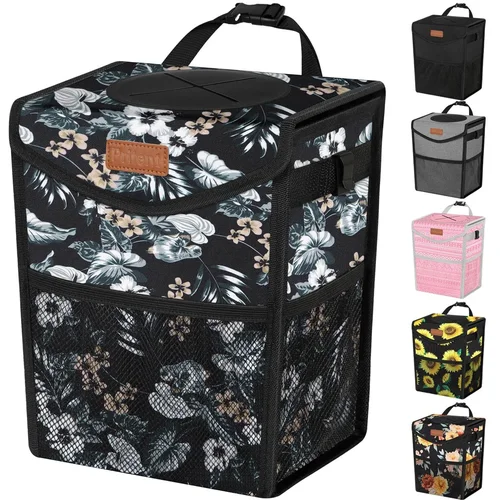
❌ Mistake: Ignoring Mounting Stability
Why it’s bad: A trash can that swings, slips, or detaches while driving is not only annoying—it’s a safety hazard. Loose objects can distract the driver or injure passengers in a collision.
What to do instead: Always test the mounting system in your actual vehicle before committing. Look for models with wide, non-slip straps and secure buckles. If possible, choose a design that anchors to two points (e.g., both headrest posts) for maximum stability.
❌ Mistake: Overlooking Cleaning Requirements
Why it’s bad: A trash can that’s difficult to clean will accumulate bacteria, stains, and odors, turning it into a hygiene liability rather than a convenience.
What to do instead: Prioritize removable liners or fully washable materials. Avoid units with intricate compartments or glued-on components that trap moisture. Read care instructions carefully—some “waterproof” fabrics still require special cleaners.
❌ Mistake: Choosing Based Solely on Price
Why it’s bad: The cheapest option often lacks essential features like leak protection or durable straps, leading to frequent replacements and higher long-term costs.
What to do instead: Calculate cost per use. A $20 bin that lasts two years is a better value than a $8 bag that tears after three months. Invest in quality if you use your SUV daily.
❌ Mistake: Neglecting Passenger Accessibility
Why it’s bad: If rear-seat passengers can’t reach the trash can easily, they’ll resort to tossing wrappers on the floor or seatbacks—defeating the purpose.
What to do instead: Mount the bin within arm’s reach of the most frequent users. Consider a dual-mount system (e.g., one for front, one for back) or a long-strapped model that hangs low enough for kids to access.
❌ Mistake: Assuming All “SUV-Specific” Models Fit Every SUV
Why it’s bad: Vehicle interiors vary wildly—even among SUVs of the same class. A bin that fits a Toyota RAV4 might not work in a Ford Expedition due to seat design or headrest shape.
What to do instead: Check manufacturer fit guides or contact customer service with your vehicle’s make, model, and year. Many brands offer compatibility charts or even free return policies for misfits.
❌ Mistake: Disregarding Odor Control in Warm Climates
Why it’s bad: In hot weather, organic waste decomposes quickly, creating strong smells that permeate your cabin—even with windows down.
What to do instead: Choose models with sealed lids and odor-blocking technology (like activated carbon). Empty the bin daily during summer months, and consider using biodegradable bags with essential oil infusions.
❌ Mistake: Buying Without Reading Real User Reviews
Why it’s bad: Marketing photos and descriptions often exaggerate durability or functionality. Only real-world testing reveals flaws like weak stitching or poor strap adjustability.
What to do instead: Spend 10 minutes reading recent 3- and 4-star reviews—they often highlight subtle issues that 5-star reviews omit. Look for photos uploaded by buyers to verify build quality.
Budget Guidelines: How Much Should You Spend?
– Entry-Level ($5–$12): Ideal for occasional use or as a backup. Expect basic mesh or thin nylon construction with minimal features. These work fine for dry trash like paper or wrappers but lack leak protection and may tear under heavy use. Great for teens learning car responsibility or weekend errand runs.
– Mid-Range ($12–$25): The sweet spot for most SUV owners. These models offer reinforced materials, reliable mounting systems, removable liners, and often include extras like tissue pockets or cup holders. They balance affordability with durability, typically lasting 1–3 years with regular cleaning. Perfect for families, commuters, and road-trippers.
– Premium ($25–$40): Designed for heavy-duty or commercial use. Features include silicone bodies, advanced odor seals, multi-point mounting, and modular designs. Often come with warranties and replacement parts. Ideal for rideshare drivers, large families, or anyone who prioritizes cabin cleanliness and hygiene.
– Luxury ($40+): Top-tier options with smart technology, app integration, or designer aesthetics. Examples include auto-closing lids, built-in air fresheners, or custom-fit designs for specific SUV models. Best suited for luxury vehicle owners who want seamless integration and cutting-edge convenience—though the ROI may be marginal for casual users.
Expert Tips for Getting the Best Deal
– Buy During Off-Seasons: Automotive accessories often go on sale in late winter (February–March) as retailers clear inventory for spring models. Black Friday and Cyber Monday also offer solid discounts—but stock may be limited.
– Check Manufacturer Websites Directly: Brands like WeatherTech frequently run exclusive promotions or bundle deals (e.g., trash can + floor mats) that aren’t available on third-party sites. Signing up for newsletters can unlock early access to sales. For help choosing the right SUV for your needs, consult our Ultimate 2024 Evaluation Guide.
– Compare Return Policies: A generous return window (30+ days) lets you test the product in your actual vehicle risk-free. Avoid sellers with restocking fees or short trial periods.
– Look for Refurbished or Open-Box Deals: Reputable retailers like Amazon Renewed or Best Buy Outlet sell inspected, like-new items at 20–40% off. These are often indistinguishable from new units but come with full warranties.
– Bundle with Other Car Accessories: Many online stores offer discounts when you buy multiple items (e.g., trash can + phone mount + seat covers). This can save you 10–15% overall.
– Test Before Committing Long-Term: If you’re unsure, start with a mid-range model. Once you know your preferred mounting location and usage habits, you can upgrade confidently later.
– Join Owner Forums: Communities like Reddit’s r/SUV or brand-specific Facebook groups often share exclusive coupon codes or alert members to flash sales.
– Consider Local Auto Stores: Sometimes in-store pickup qualifies for additional discounts, and you can inspect the product physically before buying—something impossible with online-only retailers.

Frequently Asked Questions
Q: Can I use a regular trash can in my SUV?
A: Technically yes, but it’s not recommended. Standard bins lack secure mounting, aren’t designed for vehicle vibrations, and can tip over easily. They also take up valuable floor or cargo space. A purpose-built hanging trash can stays contained, accessible, and out of the way.
Q: Will a hanging trash can damage my headrest or seats?
A: High-quality models use soft, padded straps that won’t scratch or deform upholstery. Avoid cheap units with rough nylon webbing or metal hooks that can rub against fabric. If concerned, place a microfiber cloth between the strap and seatback.
Q: How often should I empty the trash can?
A: For dry waste (paper, wrappers), every 2–3 days is sufficient. For food scraps or liquids, empty daily—especially in warm weather. Lingering organic matter breeds bacteria and attracts pests.
Q: Are these trash cans safe for kids to use?
A: Most are child-friendly, but supervise young children to prevent choking hazards (small parts) or spills. Choose models with simple, one-handed operation and avoid those with small detachable components.
Q: Can I put hot items in the trash can?
A: No. Hot coffee cups, fries, or other heated items can warp plastic liners or melt silicone. Allow items to cool slightly before disposal. Some premium models include heat-resistant pockets—check specifications.
Q: Do they work in winter conditions?
A: Yes, but extreme cold can make silicone brittle and nylon stiff. Store the bin indoors when not in use if temperatures drop below 20°F (-7°C). Avoid freezing liquids inside, as expansion may crack containers.
Q: Can I recycle through the trash can?
A: Absolutely! Some models include separate compartments for recyclables (plastic bottles, cans). Just ensure you empty them into your home recycling bin regularly to avoid contamination.
Q: What if my SUV has captain’s chairs or no headrests?
A: Look for vent-mounted, console-clip, or seatback-hook designs. Many brands offer alternative mounting kits—contact customer service for recommendations based on your seating configuration.
Q: Are there eco-friendly options?
A: Yes! Silicone and recycled nylon models are reusable and reduce single-use plastic waste. Some companies also use biodegradable liners or plant-based materials. Check certifications like OEKO-TEX or BPA-free labels.
Q: How do I clean a silicone trash can?
A: Most are dishwasher-safe (top rack) or can be hand-washed with mild soap and warm water. For stubborn odors, soak in a vinegar-water solution (1:1 ratio) for 30 minutes, then rinse thoroughly.
Our Final Recommendations
– Best for Budget-Conscious Buyers: DriveBright Hanging Car Trash Can ($14) – Durable nylon, leak-proof liner, and universal headrest mounting. Simple, effective, and backed by a 1-year warranty.
– Best Overall Value: WeatherTech CargoLiner Trash Can ($22) – Premium build quality, odor-resistant design, and excellent customer support. Fits most SUVs and includes a removable plastic liner.
– Best Premium Option: AutoExec SmartBin Pro ($38) – Features a self-sealing lid, carbon filter, and dual mounting system. Ideal for long-haul drivers or luxury SUV owners who demand perfection.
– Best for Beginners: OxGord Collapsible Car Trash Bag ($11) – Easy to install, lightweight, and perfect for first-time users. Great for testing if a hanging trash can fits your lifestyle.
– Best for Advanced Users: Garmin DriveLuxe 70 Trash & Organizer System ($45) – Integrates with Garmin navigation apps to remind you to empty the bin and includes a built-in phone charger. A tech-forward solution for connected drivers.
Conclusion: Making the Right Choice
Choosing the right SUV trash can hanging system isn’t just about tidiness—it’s about creating a safer, more pleasant, and more efficient driving environment. By focusing on mounting stability, material quality, ease of cleaning, and real-world usability, you can transform a minor annoyance into a seamless part of your daily routine. Remember, the best product isn’t necessarily the most expensive or feature-packed; it’s the one that aligns perfectly with your vehicle, your habits, and your priorities.
Take the time to assess your needs: How many passengers do you typically carry? Do you eat on the go? Is odor control a major concern? Once you’ve answered these questions, use the guidelines in this guide to narrow your options and avoid common pitfalls. And don’t hesitate to invest a little extra for durability—after all, a reliable trash can pays for itself in saved time, reduced stress, and preserved resale value of your SUV.
Ultimately, a small accessory like a hanging trash can might seem trivial, but its impact on your overall driving experience is anything but. So go ahead—make the smart choice today, and enjoy a cleaner, fresher, and more organized ride tomorrow. Your passengers (and your future self) will thank you.