
Whether you’re planning a cross-country road trip, hauling camping gear for a weekend adventure, or simply need extra storage space for your growing family, an SUV cargo carrier hitch can be a game-changer. These versatile accessories mount directly to your vehicle’s trailer hitch receiver, transforming your SUV into a mobile storage powerhouse without sacrificing interior comfort or passenger space. In recent years, the market for hitch-mounted cargo carriers has exploded—offering everything from basic steel trays to high-tech, lockable, weatherproof systems with integrated lighting and anti-sway features.
But with so many options available, choosing the right one can feel overwhelming. That’s where this comprehensive guide comes in. We’ve tested, researched, and analyzed dozens of models to bring you everything you need to make an informed decision in 2026. You’ll learn how to evaluate key factors like weight capacity, build quality, security features, and compatibility—plus avoid common pitfalls that lead to buyer’s remorse. Whether you drive a compact crossover like a Honda CR-V or a full-size beast like a Chevrolet Tahoe, this guide will help you find the perfect cargo solution tailored to your needs, budget, and lifestyle.

What to Look for When Buying a SUV Cargo Carrier Hitch
1. Weight Capacity & Load Rating
The single most critical specification when selecting a hitch cargo carrier is its weight capacity. This number tells you the maximum amount of gear—including the weight of the carrier itself—that it can safely support. Most standard carriers range from 300 to 750 pounds, but always check both the carrier’s rated capacity and your vehicle’s hitch receiver class (Class I, II, III, or IV). For example, a Class III hitch typically supports up to 6,000 lbs towing and 600 lbs tongue weight, so don’t exceed that limit even if the carrier claims higher capacity.
Overloading not only risks damaging your hitch or vehicle frame but can also cause dangerous swaying, reduced braking performance, and loss of control. Always distribute weight evenly across the platform and secure loads tightly. If you plan to carry heavy items like coolers, generators, or multiple bicycles, opt for a carrier rated at least 20% above your expected load to account for dynamic forces during driving.
2. Hitch Receiver Compatibility
Not all cargo carriers fit all hitches. Before buying, confirm your SUV has a receiver-style hitch (not just a tow ball) and identify its class and opening size. Most carriers are designed for 1.25-inch or 2-inch receivers, with adapters available for cross-compatibility. However, using an adapter reduces effective capacity by about 30%, so it’s better to match sizes directly.
Also consider whether your hitch is fixed or removable. Some carriers require the hitch pin to be accessible from the side, while others need vertical clearance behind the bumper. Measure the distance from your hitch receiver to the rear bumper—especially on SUVs with spare tires or exhaust cutouts—to ensure the carrier won’t scrape or interfere with ground clearance.
3. Build Quality & Durability
A cargo carrier is an investment that should last years, not seasons. Look for frames made from high-strength steel (preferably powder-coated or galvanized to resist rust) and platforms constructed from durable materials like expanded metal mesh, aluminum slats, or reinforced plastic. Avoid flimsy welds, thin gauge steel, or plastic components that crack under stress.
Pay attention to corrosion resistance—especially if you live in snowy climates where road salt is used. Galvanized steel offers superior protection over standard paint finishes. Also check hinge and latch mechanisms: they should operate smoothly and withstand repeated use without loosening or breaking. Brands like Thule, Yakima, and Curt are known for rigorous testing standards, but even budget models can offer solid construction if inspected carefully.
4. Security Features
Your cargo is only as safe as your carrier’s locking system. At minimum, look for a carrier with integrated lock points for cable or chain locks. Better yet, choose models with built-in keyed locks that secure the carrier to the hitch and/or the cargo to the platform. Some premium carriers include anti-theft hitch pins and tamper-resistant hardware.
Consider visibility too: reflective strips or LED taillights (on larger models) improve safety at night and may be required by law in certain states if your load extends beyond the vehicle’s rear. If you frequently park in high-theft areas or leave gear unattended, invest in a carrier with robust security—because replacing stolen camping equipment costs far more than upgrading your lock system upfront.
5. Foldability & Storage Convenience
One major advantage of hitch-mounted carriers is their ability to fold up when not in use—saving space and improving aerodynamics. Look for models with upright folding capabilities that tuck vertically against your bumper or even fold flat for compact storage in your garage.
Some carriers also feature tilting or swinging mechanisms that allow access to your SUV’s rear hatch without removing the entire unit. This is especially useful for SUVs with side-opening tailgates. However, note that swing-away designs often cost more and may reduce weight capacity due to added leverage forces. Test the folding mechanism before purchase: it should be smooth, sturdy, and easy to operate with one hand.
6. Aerodynamics & Fuel Efficiency Impact
Adding a cargo carrier increases drag, which can reduce fuel economy by 5–15%, depending on size, shape, and driving speed. While you can’t eliminate this effect entirely, choosing a streamlined design helps. Look for carriers with tapered fronts, enclosed sides, or aerodynamic fairings that deflect airflow.
Also consider removable side rails or collapsible designs that let you reduce profile when carrying smaller loads. If you frequently drive on highways, prioritize low-profile models over boxy enclosures. And remember: even an empty carrier creates drag—so remove it when not needed to maximize MPG.
7. Ease of Installation & Removal
Nobody wants to wrestle with a 50-pound carrier every time they need to load gear. The best models feature quick-release mechanisms, tool-free installation, and ergonomic handles. Many use a simple hitch pin and clip system, while others incorporate cam-lock levers or torque-limiting knobs that prevent over-tightening.
Test how easily the carrier attaches and detaches—ideally in under two minutes. If you’re shopping online, watch installation videos to see real-world handling. Also check if the carrier comes with a hitch lock or requires a separate purchase. A secure, hassle-free setup encourages regular use and reduces the temptation to leave the carrier mounted permanently (which invites theft and wear).
8. Warranty & Customer Support
A strong warranty signals manufacturer confidence in their product. Most reputable brands offer 1–3 years of coverage against defects, with some premium lines extending to 5 years or lifetime warranties. Read the fine print: many exclude damage from overloading, improper installation, or environmental factors like salt corrosion.
Equally important is customer support. Can you easily reach a human for troubleshooting? Are replacement parts (like pins, straps, or locks) readily available? Brands with dedicated service centers or responsive online chat tend to provide better long-term value. Avoid no-name sellers on marketplaces who vanish after the sale—your carrier might be cheap today but costly tomorrow if it fails prematurely.
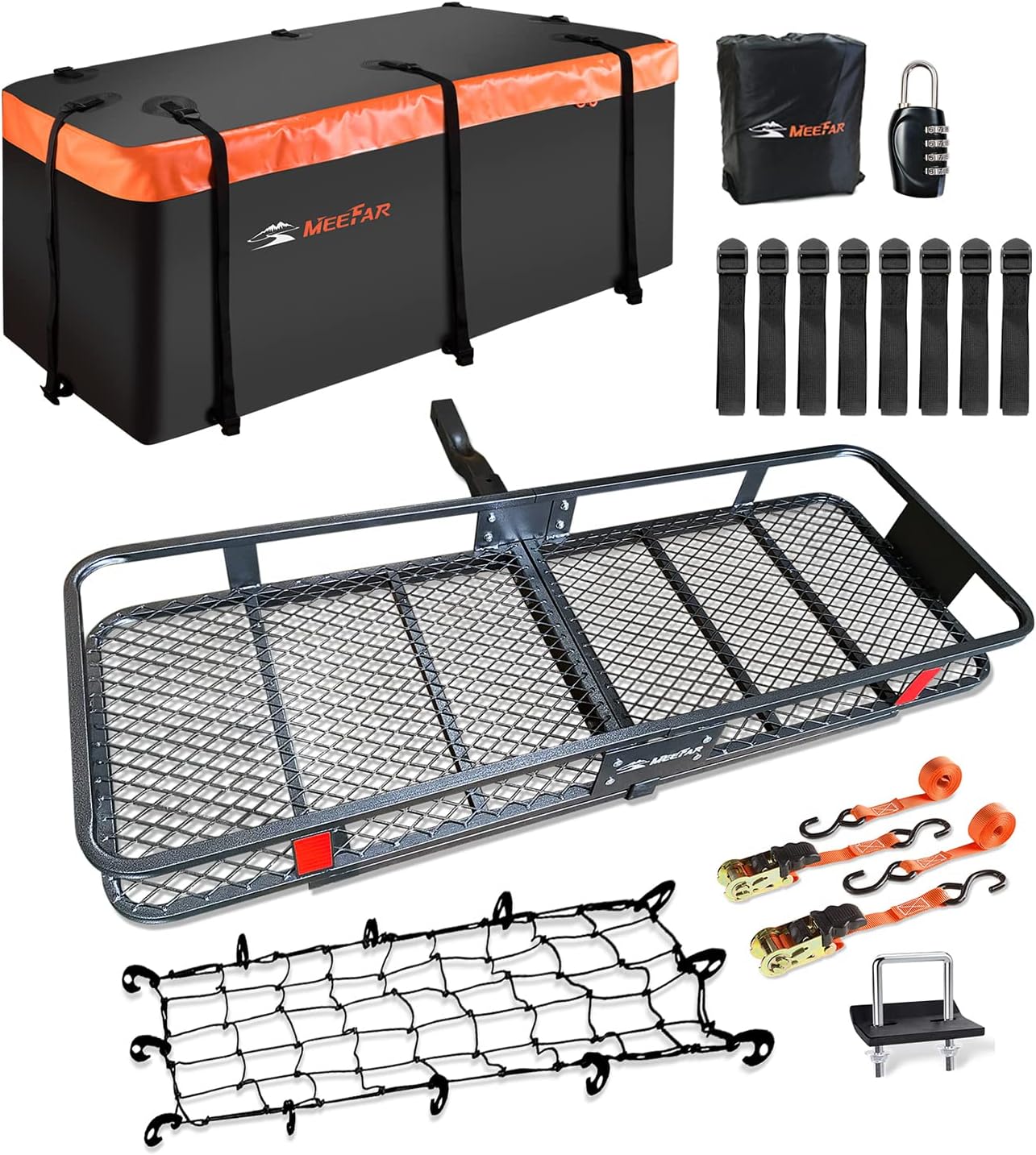
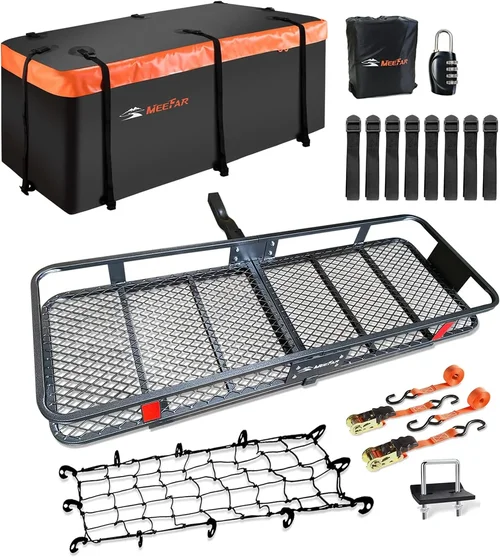
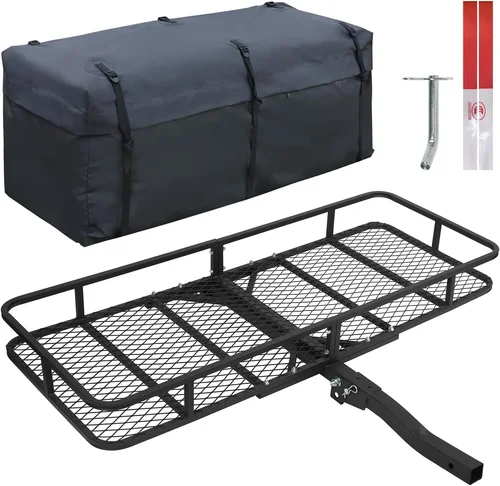
Different Types of SUV Cargo Carrier Hitches
Common Buying Mistakes to Avoid
❌ Mistake: Ignoring Your Vehicle’s Tongue Weight Limit
Why it’s bad: Exceeding your SUV’s tongue weight rating can cause rear suspension sag, poor steering response, and even structural damage to the hitch or frame. It also voids insurance claims in accidents.
What to do instead: Consult your owner’s manual for the exact tongue weight limit (usually 10–15% of towing capacity). Choose a carrier whose total loaded weight—including the carrier itself—stays well below this threshold.
❌ Mistake: Buying Based Solely on Price
Why it’s bad: Ultra-cheap carriers often use thin steel, weak welds, and minimal corrosion protection. They may fail under moderate loads or rust out within a year, costing more in replacements than a mid-tier model would have.
What to do instead: Treat the carrier as a long-term investment. Spend slightly more for galvanized steel, reinforced corners, and reputable branding. The extra $50–$100 pays off in safety and longevity.
❌ Mistake: Overlooking Security Until It’s Too Late
Why it’s bad: Unlocked carriers are prime targets for theft—especially in campgrounds, rest stops, or urban parking lots. Replacing stolen gear (coolers, tents, electronics) quickly erases any upfront savings.
What to do instead: Prioritize models with integrated locks or compatible lock points. Use heavy-duty cables for added protection, and never leave valuables unattended—even for “just a minute.”
❌ Mistake: Assuming All 2-Inch Carriers Fit All 2-Inch Hitches
Why it’s bad: Tolerances vary between manufacturers. A carrier that’s too tight won’t insert; one that’s too loose rattles and wears out the hitch pin hole.
What to do instead: Look for carriers with adjustable shims or anti-rattle devices. Some brands include rubber inserts or torque-limiting knobs to ensure a snug, vibration-free fit.
❌ Mistake: Neglecting Aerodynamics on Highway Drives
Why it’s bad: A boxy carrier can reduce fuel economy by 10+ mpg on long trips, adding hundreds in gas costs annually—and creating noisy wind buffeting.
What to do instead: Choose streamlined designs or removable fairings. Remove the carrier when not in use, and avoid mounting it during daily commutes if you only need it for weekend trips.
❌ Mistake: Forgetting About Ground Clearance
Why it’s bad: Low-slung carriers can scrape on driveways, speed bumps, or uneven terrain—damaging the unit and potentially causing loss of control.
What to do instead: Measure the distance from your hitch to the ground when loaded. Opt for taller platforms or carriers with angled bases if you drive a lifted SUV or frequently navigate rough roads.
❌ Mistake: Not Testing Fold/Swing Mechanisms Before Buying
Why it’s bad: A stiff or misaligned hinge can make folding difficult—or worse, cause the carrier to collapse unexpectedly while driving.
What to do instead: If buying in-store, operate the mechanism yourself. Online? Watch demo videos and read reviews mentioning ease of use. Choose models with dual-pin locks or spring-assisted hinges for reliability.
Budget Guidelines: How Much Should You Spend?
SUV cargo carriers span a wide price spectrum, but your budget should align with usage frequency, load demands, and desired features. Here’s a realistic breakdown for 2026:
Entry-Level ($100–$200): Ideal for occasional users with light loads (e.g., beach bags, small coolers). Expect basic steel construction, minimal corrosion resistance, and no advanced features like locks or foldability. Brands like Allen Sports or Rola offer decent value here—but inspect welds carefully and avoid overloading.
Mid-Range ($200–$450): The sweet spot for most families and weekend adventurers. These carriers typically feature powder-coated steel, integrated lock points, upright folding, and 500+ lb capacities. Models from Curt, Reese, and MaxxHaul excel in this tier, balancing durability, functionality, and affordability.
Premium ($450–$800): Designed for frequent travelers, outdoor enthusiasts, and those carrying expensive gear. Expect galvanized or aluminum frames, weatherproof enclosures, anti-sway technology, LED lighting, and tool-free installation. Thule, Yakima, and RockyMounts dominate here with innovative designs and exceptional build quality.
Luxury ($800+): Reserved for professionals, overlanders, or collectors who demand the absolute best. These include motorized swing systems, carbon fiber components, custom-fit enclosures, and smart features like load sensors or app integration. While overkill for most, they offer unparalleled convenience and peace of mind for high-stakes trips.
Expert Tips for Getting the Best Deal
Smart shopping goes beyond comparing prices—it’s about timing, sourcing, and strategy. Here’s how to maximize value in 2026:
- Shop post-summer (September–November): Retailers clear out seasonal inventory after Labor Day. You’ll find discounts of 20–40% on last year’s models as new 2027 designs arrive.
- Check manufacturer rebates: Brands like Thule and Yakima often run mail-in rebates ($25–$100) during spring and fall. Sign up for newsletters to get early alerts.
- Buy online, install locally: Online retailers (Amazon, REI, etrailer) offer wider selection and lower prices, but many local auto shops provide free installation with purchase—saving you time and hassle.
- Consider certified refurbished: Reputable sellers like REI Co-op Outlet or Backcountry sell returned or demo units at 30–50% off, often with full warranties.
- Read return policies carefully: Some carriers can’t be returned once installed due to hygiene or safety rules. Ensure you can test fitment before finalizing.
- Bundle with other gear: Purchase a carrier with straps, locks, or a hitch extender in one order—many retailers offer package discounts.
- Watch for Black Friday/Cyber Monday: While selection may be limited, deep discounts on premium brands are common. Set price alerts in advance.
- Join owner forums: Communities like Reddit’s r/SUV or Ford Truck Enthusiats often share exclusive promo codes or flash sales from niche brands.

Frequently Asked Questions
Q: Can I use a cargo carrier without a hitch?
A: No—hitch-mounted carriers require a receiver-style trailer hitch. If your SUV only has a tow ball, you’ll need to install a proper hitch first (cost: $150–$400 parts + labor). Roof racks are an alternative but reduce fuel economy more and limit garage access.
Q: Will a cargo carrier affect my SUV’s warranty?
A: Generally no, as long as it’s installed correctly and doesn’t exceed your vehicle’s tongue weight limit. However, modifications that cause damage (e.g., overloading) may void specific coverage. Always keep installation receipts.
Q: How do I secure loose items on the carrier?
A: Use high-quality ratchet straps with S-hooks or cam buckles. Cross-strap heavy items and tie down corners to prevent shifting. For small loose items, add a cargo net or bungee system. Never rely solely on the side rails.
Q: Can I drive with an empty cargo carrier?
A: Yes, but it’s not recommended. An empty carrier still creates drag, noise, and theft risk. Most models fold upright or can be removed in under 5 minutes—so take it off when not needed.
Q: Are cargo carriers legal in all states?
A: Almost all states allow them, but regulations vary. Some require lights if the load extends beyond 4 feet past the bumper, or reflectors if over 6 inches wide. Check your state DMV website for specifics.
Q: What’s the difference between a cargo carrier and a bike rack?
A: Bike racks are specialized for bicycles (with wheel trays or frame clamps), while cargo carriers are flat platforms for general gear. Some carriers accept bike attachments, but dedicated racks offer better stability and protection for bikes.
Q: How often should I inspect my cargo carrier?
A: Before every trip, check for loose bolts, rust, cracks, or worn straps. After winter, clean off salt residue and lubricate hinges. Annual deep inspections are wise for frequent users.
Q: Can I paint or modify my cargo carrier?
A: Painting is fine (use rust-inhibiting primer), but never drill holes or weld reinforcements unless specified by the manufacturer—it can compromise structural integrity and void warranties.
Q: Do I need a brake controller for a cargo carrier?
A: No. Brake controllers are only required for trailers with electric brakes. Cargo carriers don’t have brakes and rely on your SUV’s braking system—just ensure your load doesn’t exceed safe limits.
Q: What’s the best way to clean my cargo carrier?
A: Rinse with mild soap and water. Avoid pressure washers near seals or welds. For rust spots, sand lightly and apply touch-up paint. Store indoors or cover when not in use to prolong life.
Our Final Recommendations
Best for Budget-Conscious Buyers: Curt Folding Cargo Carrier (18 cu ft) – At under $200, it offers surprising durability, 500-lb capacity, and easy folding. Perfect for occasional campers who need reliability without breaking the bank.
Best Overall Value: Reese Explore 64401 Folding Cargo Carrier – Priced around $280, this galvanized steel model includes anti-rattle technology, integrated lock points, and a 600-lb rating. It’s the Goldilocks option: not too cheap, not too expensive, just right.
Best Premium Option: Thule Force XT Cargo Box (XXL) – For those who prioritize security and weather protection, this $900+ enclosure features dual-side opening, LED taillights, and a sleek aerodynamic design. Ideal for long road trips with valuables.
Best for Beginners: Allen Sports Deluxe Folding Carrier – Simple, lightweight, and intuitive to use. Great for first-time buyers who want a no-fuss solution for weekend getaways.
Best for Advanced Users: Yakima EXO Cargo System – Modular, expandable, and compatible with bike, ski, and cargo modules. The $1,200+ system is overkill for casual users but unmatched for overlanders and gearheads.
Conclusion: Making the Right Choice
Choosing the right SUV cargo carrier hitch isn’t just about adding storage—it’s about enhancing your adventures safely, efficiently, and sustainably. By focusing on weight capacity, compatibility, build quality, and real-world usability, you’ll avoid costly mistakes and find a solution that grows with your needs. Remember: the cheapest option isn’t always the best value, and the most expensive isn’t always necessary. Prioritize your specific use case—whether it’s family road trips, solo camping, or contractor hauling—and let that guide your decision.
Take the time to measure your hitch, read verified reviews, and test mechanisms when possible. And don’t forget the small details: a good lock, proper straps, and regular maintenance can turn a simple carrier into a trusted travel companion for years to come. With the insights from this guide, you’re now equipped to navigate the 2026 market with confidence. So pack your gear, hit the open road, and make every mile count—your SUV is ready for whatever lies ahead.