
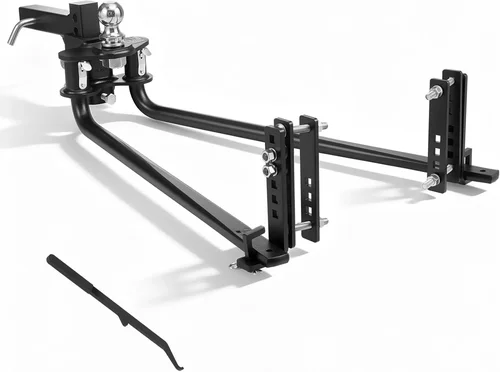
When it comes to towing with your SUV, safety, stability, and control aren’t just nice-to-haves—they’re essential. Whether you’re hauling a travel trailer for a weekend getaway, pulling a boat to the lake, or transporting a utility trailer loaded with gear, how your SUV handles that extra weight can make or break your driving experience. This is where a weight distribution hitch (WDH) becomes one of the most critical upgrades you can make. Without it, your SUV may sag in the rear, lose steering responsiveness, experience excessive sway, or even compromise braking performance—especially under heavy loads.
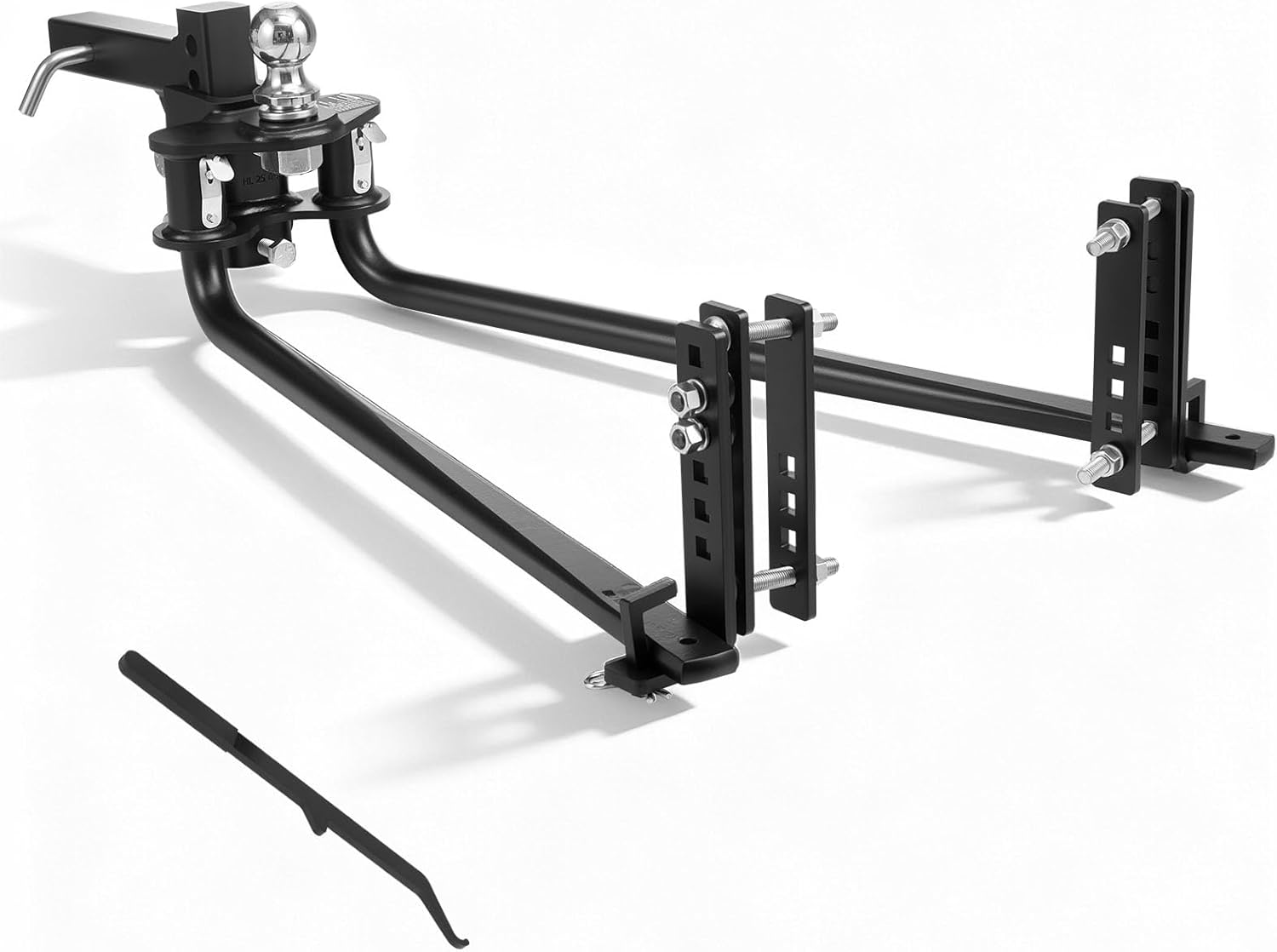
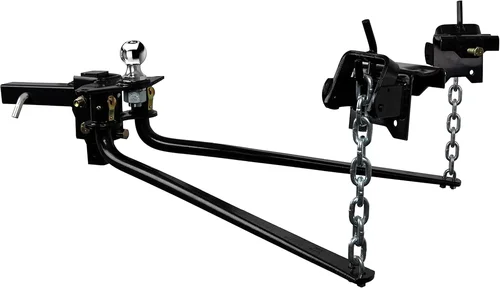
A weight distribution hitch redistributes the tongue weight of your trailer more evenly across all axles of your vehicle and trailer, restoring proper ride height and improving overall handling. But not all WDHs are created equal. The market is flooded with options ranging from basic setups under $200 to high-end systems exceeding $1,000, each designed for different towing needs, vehicle types, and user skill levels. Choosing the right one requires understanding not just your SUV’s towing capacity, but also the dynamics of load distribution, hitch class compatibility, and real-world performance under stress. That’s exactly why this guide exists: to cut through the confusion and help you make a confident, informed decision.
In this comprehensive buying guide, you’ll learn everything you need to know about selecting the best weight distribution hitch for your SUV in 2026. We’ll walk you through the key factors to evaluate—from price and build quality to features and brand reputation—and compare the main types of WDH systems available today. You’ll discover common mistakes that even experienced towers make, get realistic budget guidelines, and receive expert tips to help you secure the best deal. Whether you’re a first-time buyer or upgrading from an older model, this guide will equip you with the knowledge to choose a hitch that enhances safety, improves ride quality, and lasts for years of reliable service.
What to Look for When Buying a Weight Distribution Hitch
1. Towing Capacity & Tongue Weight Rating
The single most important specification when choosing a weight distribution hitch is its towing capacity and maximum tongue weight rating. These numbers must align with both your SUV’s capabilities and the trailer you plan to tow. Exceeding either limit can lead to catastrophic failure—think broken hitch bars, bent receiver tubes, or even trailer detachment.
Most modern SUVs have a towing capacity between 3,500 and 8,000 pounds, though some full-size models like the Ford Expedition or Chevrolet Tahoe can handle up to 9,000+ pounds. Your trailer’s tongue weight typically ranges from 10% to 15% of its total loaded weight. For example, a 6,000-pound travel trailer will exert 600–900 pounds of downward force on your hitch. Your WDH must be rated to handle at least that amount—and preferably with a safety margin.
Always check your SUV’s owner’s manual for its maximum towing and tongue weight limits. Then, match those figures to a hitch system that meets or exceeds them. Many manufacturers offer multiple hitch classes (Class III, IV, V), so ensure compatibility. A Class IV hitch (up to 10,000 lbs GTW, 1,000 lbs TW) is common for midsize SUVs, while larger rigs may require Class V (up to 17,000 lbs GTW).
2. Hitch Class & Receiver Compatibility
Weight distribution hitches are designed to work with specific hitch receiver classes, which define the size and strength of the square tube mounted to your SUV’s frame. The most common classes for SUVs are:
– Class III: 2-inch receiver, up to 6,000 lbs GTW
– Class IV: 2-inch receiver, up to 10,000 lbs GTW
– Class V: 2.5-inch receiver, up to 17,000 lbs GTW
Most SUVs come equipped with a 2-inch receiver (Class III or IV), but always verify yours before purchasing. Using a WDH with an incompatible receiver—or forcing a 2.5-inch shank into a 2-inch receiver with an adapter—can compromise structural integrity and void warranties.
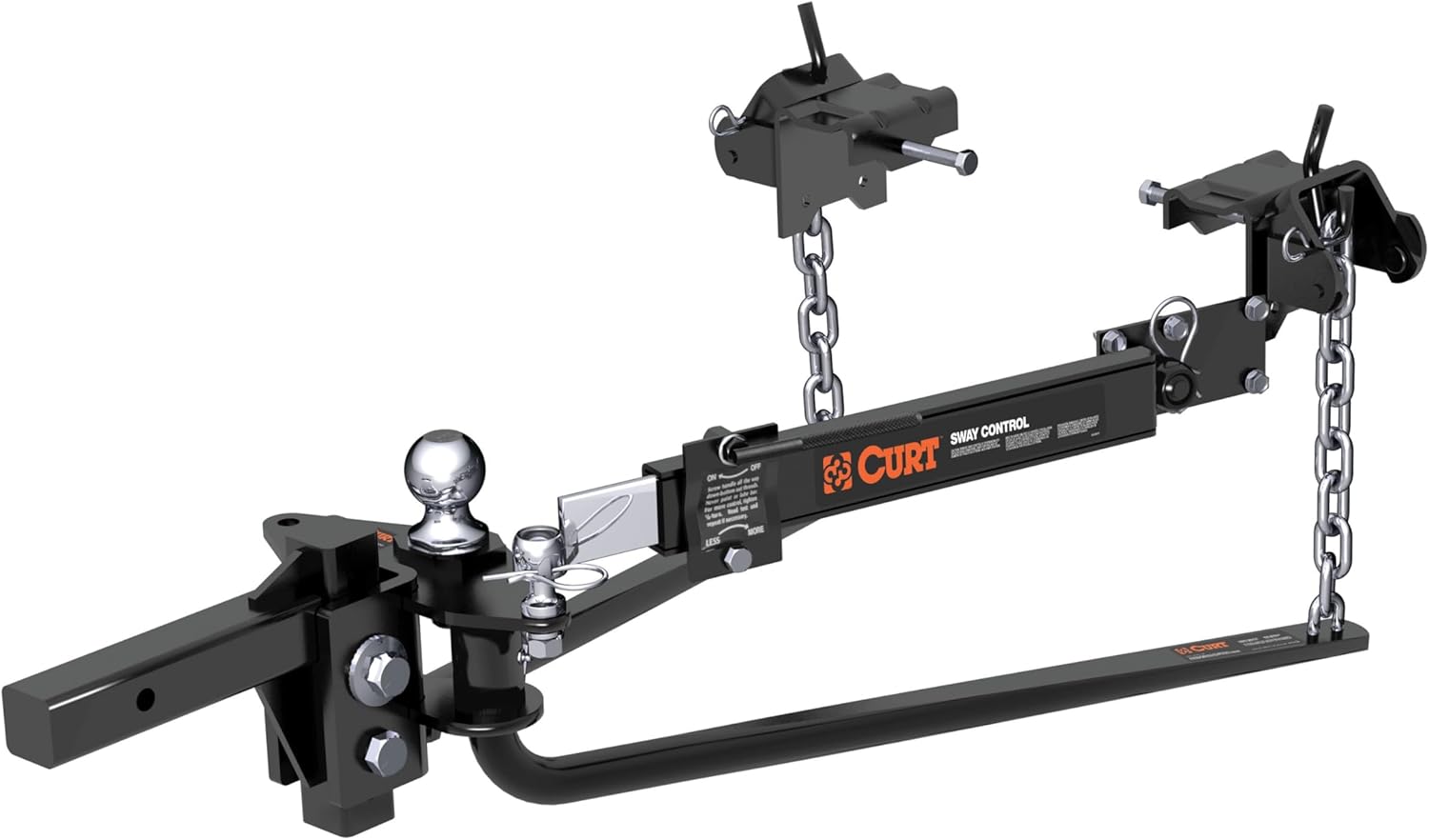
Additionally, some high-end WDH systems include built-in sway control, which may require specific receiver types or additional mounting hardware. Always confirm that your SUV’s hitch receiver is rated for weight distribution use—some OEM receivers are only designed for dead-weight towing (like bike racks) and cannot handle the dynamic forces of a WDH.
3. Sway Control Integration
Trailer sway—the dangerous side-to-side oscillation that can escalate into a jackknife—is one of the leading causes of towing accidents. A quality weight distribution hitch should include effective sway control to mitigate this risk.
There are two primary types of sway control:
– Friction-style: Uses a friction bar pressed against the trailer’s A-frame to dampen movement. Affordable and effective for moderate sway, but requires manual adjustment and periodic maintenance.
– Cam-style (or dual-cam): Employs pivoting cams that engage automatically when sway begins, providing proactive resistance. More expensive but offers smoother, more consistent performance, especially in crosswinds or when passed by large trucks.
Some premium systems combine both methods or integrate electronic sway control (like the Curt Spectrum or Blue Ox SwayPro). If you’re towing a long or lightweight trailer (e.g., teardrop campers or fiberglass boats), sway control isn’t optional—it’s essential.
4. Adjustability & Ease of Installation
Not all SUVs sit at the same height, and trailers vary in coupler height. A good WDH should offer vertical adjustability—typically via multiple hole positions on the shank or adjustable spring bars—to ensure the trailer rides level when connected.
Look for systems that allow quick height changes without tools. Some models feature a “drop/rise” shank that can be flipped to raise or lower the ball mount by 2–6 inches. Others include telescoping or sliding components for fine-tuning.
Installation should also be straightforward. While all WDHs require some setup (attaching spring bars, tightening chains, adjusting torque), top-tier models simplify the process with color-coded components, pre-assembled parts, or integrated leveling indicators. Avoid overly complex systems if you’re not mechanically inclined—or budget for professional installation.
5. Build Quality & Materials
A weight distribution hitch endures immense stress: twisting forces, road vibrations, weather exposure, and repeated loading cycles. Cheaply made hitches with thin steel, poor welds, or flimsy hardware can fail prematurely—or worse, during travel.
Prioritize hitches constructed from high-strength steel (often powder-coated for corrosion resistance) with robust spring bars (usually 1/2-inch or thicker). Check for reinforced welds at stress points and corrosion-resistant fasteners (stainless steel or zinc-plated). Avoid painted finishes that chip easily; powder coating offers superior durability.
Also consider the design of the spring bars. Round bar systems (like those from Equal-i-zer or Andersen) tend to offer smoother articulation and better sway control than traditional square bars. However, they may require more precise setup.
6. Brand Reputation & Customer Support
Not all hitch manufacturers are equal. Established brands like Curt, Reese (now part of Horizon Global), Blue Ox, Equal-i-zer, and Andersen have decades of engineering experience and rigorous testing protocols. They often provide detailed installation guides, video tutorials, and responsive customer service.
Cheaper off-brand or Amazon-only sellers may save you money upfront but could leave you stranded with no support if something goes wrong. Look for companies that stand behind their products with strong warranties (see below) and offer replacement parts readily.
Read verified buyer reviews—not just star ratings—to spot recurring issues like rust, difficulty adjusting, or poor instructions. A brand with a solid track record in the RV and towing community is usually a safer bet.
7. Warranty & Return Policy
A weight distribution hitch is a long-term investment. Reputable manufacturers typically offer limited lifetime warranties covering defects in materials and workmanship. Some even include accidental damage coverage or free replacement parts.
Before buying, check:
– Warranty duration and what it covers
– Whether registration is required
– If modifications void the warranty
– Return window (ideally 30–90 days)
Avoid products with “as-is” sales or no stated warranty. If a company doesn’t trust its product enough to back it, why should you?
8. User Reviews & Real-World Performance
Spec sheets tell part of the story—but real users tell the rest. Look for reviews from people with similar SUVs and trailers. Pay attention to comments about:
– Ease of setup and adjustment
– Effectiveness in reducing sway
– Durability after months or years of use
– Compatibility with specific vehicle models
Be wary of overly glowing reviews that sound scripted or lack detail. Genuine feedback often includes minor criticisms (“took two tries to get the chains right”) alongside praise—that’s a good sign.
Forums like RV.net, Trailers of America, or Ford Truck Enthusiasts are goldmines for unbiased insights. Search for your SUV model + “weight distribution hitch review” to find targeted discussions.
Different Types of Weight Distribution Hitches
Common Buying Mistakes to Avoid
❌ Mistake: Buying Based Solely on Price
Why it’s bad: The cheapest WDH may save you $100 now but cost you thousands in repairs—or worse, cause an accident—if it fails under load. Low-cost models often use thinner steel, weaker springs, and minimal corrosion protection.
What to do instead: Treat your WDH as a safety-critical component. Allocate at least 10–15% of your trailer’s value to the hitch system. A $500 hitch for a $5,000 trailer is a smart investment.
❌ Mistake: Ignoring Tongue Weight Calculations
Why it’s bad: Overloading your hitch or underestimating tongue weight leads to rear-end sag, poor steering, and increased risk of trailer sway. Many buyers assume “if it fits, it’s fine”—but physics doesn’t work that way.
What to do instead: Use a tongue weight scale or bathroom scale method to measure actual tongue weight before purchasing. Add 10–15% for safety margin when selecting your WDH rating.
❌ Mistake: Skipping Sway Control Entirely
Why it’s bad: Even with perfect weight distribution, crosswinds, passing trucks, or uneven roads can induce dangerous sway. Without active sway control, you’re relying solely on driver reaction—which isn’t enough in emergencies.
What to do instead: Choose a WDH with integrated sway control, especially if your trailer is longer than 20 feet or has a high profile (like a travel trailer with slide-outs).
❌ Mistake: Assuming All Hitches Fit All SUVs
Why it’s bad: Ground clearance, bumper design, and receiver placement vary widely between SUV models. A hitch that works on a Toyota Highlander might not clear the rear bumper on a Jeep Grand Cherokee.
What to do instead: Check fitment guides from manufacturers or consult forums specific to your SUV model. Measure available space behind the receiver before buying.
❌ Mistake: Neglecting Regular Maintenance
Why it’s bad: Rust, loose bolts, and worn friction pads reduce effectiveness over time. A neglected WDH can give a false sense of security while performing below capacity.
What to do instead: Inspect your hitch before every trip: check for cracks, tighten all bolts, lubricate moving parts, and replace worn components per the manual.
❌ Mistake: Buying Without Testing Compatibility
Why it’s bad: Some WDHs require specific ball sizes, shank lengths, or chain configurations that may not match your existing setup. Returning a heavy, bulky hitch is expensive and inconvenient.
What to do instead: Confirm ball size (usually 2″ or 2-5/16″), shank diameter, and chain link count before ordering. Keep receipts and packaging until you’ve tested the full setup.
Budget Guidelines: How Much Should You Spend?
– Entry-Level ($200–$350): Basic square bar systems with minimal sway control. Suitable for light-duty towing (under 5,000 lbs) with small trailers. Expect simpler construction and fewer adjustment options. Best for occasional users who prioritize affordability.
– Mid-Range ($350–$600): The sweet spot for most SUV owners. Includes round bar designs with reliable friction or cam-style sway control, better materials, and easier adjustability. Ideal for travel trailers, medium boats, and frequent towing. Brands like Curt and Reese dominate this segment.
– Premium ($600–$900): High-performance systems with dual-cam sway control, tool-free adjustments, and corrosion-resistant finishes. Models like the Equal-i-zer 4-point sway control or Andersen Ultimate offer superior ride quality and durability. Recommended for long trips, heavy loads, or adverse weather conditions.
– Luxury ($900+): Top-tier integrated systems with electronic monitoring, automatic leveling, or smart brake coordination. These are overkill for most SUVs but may appeal to full-time RVers or those towing near their vehicle’s max capacity. Often include lifetime warranties and premium support.
Expert Tips for Getting the Best Deal
– Buy in the Off-Season: Retailers often discount towing gear in late fall and winter when demand drops. Look for Black Friday, Cyber Monday, or post-holiday sales at Camping World,etrailer, or Amazon.
– Shop Specialty Retailers: Online stores like etrailer.com offer expert advice, detailed fitment tools, and bundle deals (hitch + brake controller + wiring). They often price-match and provide free shipping on large orders.
– Consider Refurbished or Open-Box: Reputable sellers sometimes offer certified refurbished WDHs at 20–30% off. Ensure they come with full warranties and haven’t been used under heavy load.
– Check Manufacturer Rebates: Brands like Curt and Blue Ox occasionally run rebate programs—especially during peak RV season (spring). Sign up for newsletters to get alerts.
– Read the Fine Print on Returns: Some retailers charge restocking fees for heavy items. Confirm return policies before ordering, especially for custom-fit systems.
– Test Before Committing: If possible, borrow a friend’s WDH or rent one from a local RV shop to test compatibility and ease of use before buying.
– Bundle with Other Upgrades: Purchasing a WDH alongside a brake controller, wiring harness, or trailer coupler can unlock package discounts.
– Register Your Product: Many warranties require registration within 30 days. Do it immediately to avoid gaps in coverage.

Frequently Asked Questions
Q: Do I really need a weight distribution hitch if my SUV handles the trailer fine?
A: Even if your SUV seems to handle the load, a WDH improves safety by leveling the ride, restoring steering control, and reducing brake strain. It’s not just about capability—it’s about optimal performance and accident prevention.
Q: Can I use a weight distribution hitch with any trailer?
A: Only if the trailer has a compatible A-frame and coupler. Most travel trailers, boat trailers, and utility trailers work, but some lightweight or specialty trailers (like pop-ups) may not require or support WDHs.
Q: How often should I adjust my WDH?
A: Re-adjust whenever you change trailers, load significantly different weights, or notice changes in ride height or handling. Always re-torque bolts after the first 50 miles of use.
Q: Will a WDH void my SUV’s warranty?
A: No—using a properly rated WDH is considered normal towing practice and won’t affect your vehicle warranty. However, improper installation or overloading could.
Q: Can I install a WDH myself?
A: Yes, most systems are designed for DIY installation. Follow the manual carefully, use a torque wrench, and double-check all connections. If unsure, hire a professional—safety isn’t worth skimping on.
Q: What’s the difference between weight distribution and load-leveling suspension?
A: Load-leveling shocks or airbags help your SUV handle extra weight but don’t redistribute tongue weight to the front axle. A WDH does both—use them together for maximum stability.
Q: How do I know if my WDH is working correctly?
A: Your SUV should sit level (or slightly nose-down), steering should feel responsive, and trailer sway should be minimal. If the rear sags or the trailer wags, re-adjust the spring bar tension.
Q: Are aluminum WDHs safe?
A: Generally no. Aluminum lacks the strength and fatigue resistance of steel for high-stress towing applications. Stick with high-grade steel constructions.
Q: Can I use a WDH with a fifth-wheel or gooseneck trailer?
A: No. Weight distribution hitches are for bumper-pull trailers only. Fifth-wheel and gooseneck setups use different mounting systems integrated into the truck bed.
Q: What happens if I exceed my WDH’s rating?
A: The hitch may bend, break, or fail to control sway, leading to loss of control. Always stay within the manufacturer’s specified limits—even if your SUV can technically tow more.
Our Final Recommendations
– Best for Budget-Conscious Buyers: Curt TruTrack 10K – Reliable round-bar system with integrated sway control, solid steel construction, and easy setup under $500.
– Best Overall Value: Reese Strait-Line RP66083 – Dual-cam sway control, heavy-duty build, and excellent reviews for midsize SUVs towing 6,000–8,000 lbs.
– Best Premium Option: Equal-i-zer 4-Point Sway Control – Industry-leading sway suppression, durable components, and smooth articulation—worth the investment for frequent travelers.
– Best for Beginners: Andersen Ultimate Hitch – Tool-free height adjustment, lightweight design, and intuitive setup make it ideal for first-time towers.
– Best for Advanced Users: Blue Ox SwayPro BXW1000 – High-capacity, dual-cam system with precision engineering for those pushing their SUV’s towing limits.
Conclusion: Making the Right Choice
Choosing the right weight distribution hitch for your SUV isn’t just about checking a box on your towing checklist—it’s about ensuring every mile you travel with a trailer is as safe, stable, and stress-free as possible. From understanding your vehicle’s limits to evaluating build quality, sway control, and real-world performance, the decisions you make today will impact your confidence and safety on the road for years to come.
Remember: the best hitch is the one that matches your specific needs—not the most expensive or the cheapest. Prioritize compatibility, safety features, and long-term reliability over flashy extras or rock-bottom prices. Take the time to measure, calculate, and research. Read reviews from people who drive SUVs like yours. And when in doubt, consult a professional installer or towing specialist.
Investing in a quality weight distribution hitch is one of the smartest moves you can make as an SUV owner who tows. It transforms a potentially unstable load into a smooth, controlled experience—giving you peace of mind whether you’re heading to the mountains, the coast, or just the local hardware store. So gear up wisely, tow confidently, and enjoy the journey ahead.