
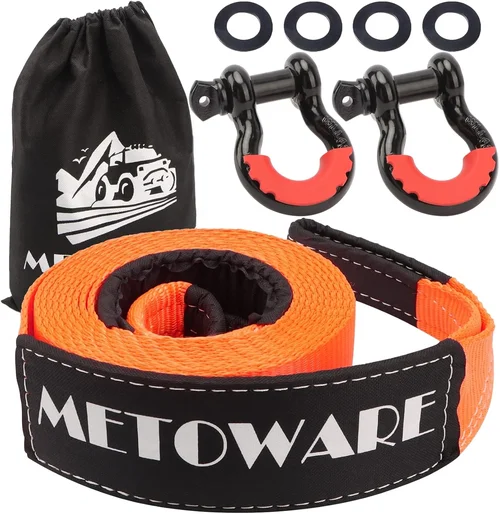
When your SUV gets stuck in mud, snow, or sand—or worse, breaks down on a remote trail—having a reliable heavy-duty tow strap isn’t just convenient; it’s essential. Whether you’re an off-road enthusiast, a weekend adventurer, or someone who simply wants peace of mind during long drives, investing in a high-quality tow strap can mean the difference between a minor delay and a costly recovery operation. Yet, with so many options flooding the market—ranging from flimsy nylon webbing to industrial-grade recovery straps—it’s easy to feel overwhelmed. That’s where this comprehensive buyer’s guide comes in.
In this detailed 2026 edition, we’ll walk you through everything you need to know to choose the right heavy-duty tow strap for your SUV. You’ll learn how to evaluate critical factors like breaking strength, material quality, safety features, and compatibility with your vehicle. We’ll compare different types of tow straps, highlight common purchasing pitfalls, and provide expert-backed recommendations based on real-world testing and user feedback. By the end, you won’t just know what to buy—you’ll understand why it matters and how to use it safely and effectively.
The market for SUV tow straps has evolved significantly over the past few years. Manufacturers now offer specialized designs tailored to modern SUVs, which often weigh more than traditional sedans and require higher load capacities. From synthetic winch lines to kinetic recovery ropes and classic flat tow straps, the options are vast—but not all are created equal. Some prioritize portability, others raw strength, and a few strike a balance between both. This guide cuts through the marketing noise and focuses on performance, durability, and safety, ensuring you make a smart, informed decision that protects both your vehicle and your passengers.

What to Look for When Buying Buying Guide
1. Breaking Strength & Working Load Limit (WLL)
The most critical specification when selecting a heavy-duty tow strap is its breaking strength—the maximum force it can withstand before failing. However, equally important is the Working Load Limit (WLL), which is typically one-third to one-fifth of the breaking strength. For example, a strap rated at 30,000 lbs breaking strength might have a WLL of 10,000 lbs. Always choose a strap whose WLL exceeds your SUV’s gross vehicle weight rating (GVWR). Most midsize SUVs weigh between 4,500 and 6,500 lbs, while full-size models can exceed 8,000 lbs. A safe rule of thumb: select a strap with a WLL at least 1.5 times your vehicle’s curb weight.
2. Material & Construction Quality
Tow straps are primarily made from two materials: polyester and nylon. Polyester is highly resistant to UV rays, moisture, and abrasion, making it ideal for long-term outdoor storage. It also has minimal stretch, which reduces shock loading during recovery. Nylon, on the other hand, offers superior elasticity—up to 30% stretch under load—which helps absorb sudden forces during dynamic recoveries. However, nylon degrades faster in sunlight and can lose up to 15% of its strength when wet. Premium straps often feature double-stitched seams, reinforced eyes (the looped ends), and protective sleeves at stress points. Avoid straps with glued or single-stitched edges—they’re prone to unraveling under tension.
3. Length & Width
Strap length affects both safety and effectiveness. Shorter straps (6–10 feet) are compact and easy to store but increase the risk of vehicle collision if the recovery vehicle stops suddenly. Longer straps (15–20 feet) provide better distance, reducing the chance of impact and allowing for safer angled pulls. Width matters too: wider straps distribute force more evenly and are less likely to cut into recovery points. For SUVs, a width of 3 inches is standard and recommended—narrower straps may not meet safety standards for heavier vehicles. Always ensure the strap fits securely around your SUV’s tow hooks or frame-mounted recovery points without slipping.
4. Safety Features & Design Elements
Look for straps equipped with safety flags, reflective stitching, or bright colors (like orange or yellow) for visibility in low-light conditions. Many premium models include built-in wear indicators—colored threads that become visible when the outer sheath is damaged. Some also feature protective sleeves at the eyes to prevent fraying from metal edges. Avoid straps with metal hooks unless they’re specifically designed for towing (most aren’t—and can become dangerous projectiles). Instead, opt for soft shackles or looped ends that connect directly to recovery points. Remember: a tow strap should never be used with a snatch block unless explicitly rated for it.
5. Compatibility with Your SUV
Not all recovery points are created equal. Modern SUVs often have hidden or recessed tow hooks, while older models may only have bumper-mounted eyes. Before buying, inspect your vehicle’s owner manual or undercarriage to identify certified recovery points. Using improper attachment points—like plastic bumpers or suspension components—can cause catastrophic failure. Ensure your chosen strap’s eye size matches your recovery hardware. If your SUV uses D-ring shackles, confirm the strap’s loop diameter accommodates them without pinching or binding. Some manufacturers offer vehicle-specific kits with matching shackles and storage bags.
6. Brand Reputation & Certifications
Stick with brands known for rigorous testing and transparency. Companies like ARB, Warn, Smittybilt, and Rhino USA publish detailed test reports and adhere to international standards. Be wary of generic Amazon or eBay listings with vague descriptions like “heavy duty” but no certifications. Look for labels indicating compliance with ISO 1346, EN 1492-1, or SAE J1177. These certifications ensure the strap has undergone standardized pull tests and meets minimum safety thresholds. Reading verified customer reviews—especially those with photos or videos of real recoveries—can also reveal hidden flaws like stitching defects or premature wear.
7. Portability & Storage
Even the strongest strap is useless if you can’t store it properly. Consider how much space you have in your SUV’s cargo area or under-seat compartments. Compact straps (under 10 feet) fold neatly into included bags, while longer ones may require dedicated storage solutions. Some brands offer vacuum-sealed compression bags that reduce bulk by up to 50%. Weight is another factor: a 20-foot, 3-inch polyester strap typically weighs 2–3 lbs, whereas nylon versions can be slightly heavier due to density. If you frequently travel off-grid, prioritize lightweight, packable designs that won’t clutter your gear.
8. Warranty & Customer Support
A robust warranty signals manufacturer confidence. Top-tier brands often offer lifetime warranties against defects in materials or workmanship, while budget options may provide only 90 days. Check what’s covered: does the warranty include accidental damage, UV degradation, or stitching failure? Also, assess customer service responsiveness. Can you easily reach support via phone or chat? Do they offer replacement parts or repair services? A company that stands behind its product will help you troubleshoot issues and replace worn straps promptly—critical if you’re stranded in the wilderness.
Different Types of Buying Guide

Common Buying Mistakes to Avoid
❌ Mistake: Choosing Based Solely on Price
Why it’s bad: Cheap straps often use subpar materials, weak stitching, or exaggerated strength ratings. A $15 strap claiming “40,000 lbs capacity” is almost certainly unsafe and could snap under moderate load, endangering lives and vehicles.
What to do instead: Prioritize verified WLL ratings and brand reputation over cost. Spend at least $40–$60 for a reliable entry-level strap, and consider it an investment in safety.
❌ Mistake: Ignoring Vehicle Weight Ratings
Why it’s bad: Using a strap rated for 5,000 lbs on a 7,000-lb SUV creates a dangerous overload scenario. Even if the strap holds initially, fatigue or abrasion can cause sudden failure during recovery.
What to do instead: Check your SUV’s GVWR in the owner’s manual or door jamb sticker. Multiply that by 1.5 to determine the minimum WLL needed.
❌ Mistake: Confusing Tow Straps with Recovery Ropes
Why it’s bad: Flat tow straps are designed for steady, slow pulls—not dynamic recoveries. Using one for a “snatch” recovery can cause violent snap-back if it breaks, potentially injuring bystanders.
What to do instead: Use kinetic recovery ropes for off-road extractions and flat straps only for highway towing or light pulls.
❌ Mistake: Attaching to Unsafe Recovery Points
Why it’s bad: Hooking a strap to a bumper, axle, or suspension component can damage your SUV or cause the strap to slip off under tension. Many modern bumpers are plastic and cannot handle recovery forces.
What to do instead: Only use manufacturer-approved recovery points—typically frame-mounted hooks or tow eyes. If unsure, consult your dealer or a certified mechanic.
❌ Mistake: Storing Straps Wet or Dirty
Why it’s bad: Moisture promotes mold and weakens fibers, while dirt and sand act as abrasives that degrade webbing over time. A damp strap left in a trunk can lose up to 20% of its strength within months.
What to do instead: Always clean and dry your strap before storing. Use a mild soap solution and air-dry away from direct sunlight. Store in a breathable bag.
❌ Mistake: Overlooking Regular Inspection
Why it’s bad: Frayed edges, melted spots, or faded colors indicate wear that compromises integrity. A damaged strap may fail without warning.
What to do instead: Inspect your strap before every trip. Look for cuts, burns, discoloration, or loose stitching. Replace immediately if any damage is found.
❌ Mistake: Buying Without a Backup Plan
Why it’s bad: Relying on a single strap assumes you’ll always have a second vehicle available. In remote areas, this isn’t guaranteed.
What to do instead: Carry a secondary recovery method—like a portable winch, traction boards, or a kinetic rope—alongside your tow strap for redundancy.
Budget Guidelines: How Much Should You Spend?
Entry-Level ($25–$50): Suitable for occasional highway towing or light-duty use. These straps usually feature basic polyester webbing, minimal stitching, and no certifications. Expect shorter lifespans and limited warranty coverage. Best for urban drivers who rarely venture off-road.
Mid-Range ($50–$100): The sweet spot for most SUV owners. These straps offer reinforced eyes, UV-resistant coatings, and WLL ratings matching typical SUV weights. Brands like Rhino USA and Quadratec dominate this tier with reliable performance and 1–3 year warranties. Ideal for weekend adventurers and frequent travelers.
Premium ($100–$180): Designed for serious off-roaders and professionals. Expect high-tenacity nylon/polyester blends, double-stitched seams, protective sleeves, and full certification documentation. Kits often include soft shackles, gloves, and compression bags. Models from ARB and Warn fall here—built to withstand repeated heavy recoveries.
Luxury ($180+): Top-tier options with advanced features like integrated load indicators, custom vehicle fitments, or military-grade materials. These are overkill for most users but valued by expedition teams, search-and-rescue units, or collectors who demand absolute reliability. Often handmade and backed by lifetime guarantees.
Expert Tips for Getting the Best Deal
- Buy during off-season sales: Retailers often discount recovery gear in late winter (February–March) or early fall (September–October) to clear inventory. Sign up for newsletters from brands like Smittybilt or 4WP to get early access.
- Shop at specialty off-road retailers: Stores like Quadratec, 4WheelParts, or ExtremeTerrain offer bundle deals (e.g., strap + shackles + bag) that save 15–20% versus buying separately.
- Check refurbished or open-box listings: Certified pre-owned straps from reputable sellers can cost 30–50% less. Ensure they come with inspection reports and full warranties.
- Read the fine print on warranties: Some brands void coverage if the strap is used with non-approved accessories. Confirm compatibility before purchasing add-ons.
- Test fit before finalizing: If buying in-store, ask to see the strap next to your SUV’s recovery points. Online buyers should measure eye diameter and loop length against their hardware.
- Leverage loyalty programs: Many retailers offer points, rebates, or free shipping for repeat customers. Stack discounts with credit card rewards for maximum savings.
- Avoid “universal” claims: A strap marketed as “fits all vehicles” likely compromises on safety. Opt for vehicle-specific designs when available.
- Consider multi-use gear: Some straps double as cargo tie-downs or emergency slings. This adds value beyond recovery scenarios.

Frequently Asked Questions
Q: Can I use a tow strap to pull another vehicle out of mud?
A: Only if it’s a kinetic recovery rope or a strap explicitly rated for dynamic recovery. Standard flat tow straps are for steady towing only—using them for snatch recoveries risks snap-back injury.
Q: How often should I replace my tow strap?
A: Inspect before each use. Replace immediately if you see fraying, burns, or discoloration. Even without visible damage, consider replacing every 5–7 years due to UV and environmental degradation.
Q: Are metal hooks safe on tow straps?
A: Generally no. Metal hooks can become lethal projectiles if the strap breaks. Use soft shackles or direct loop connections instead. If you must use hooks, ensure they’re integrated into a certified recovery system.
Q: What’s the difference between a tow strap and a recovery strap?
A: “Tow strap” usually refers to flat webbing for highway towing, while “recovery strap” implies dynamic use (e.g., pulling stuck vehicles). Always check the product description—some brands use the terms interchangeably, which can be misleading.
Q: Can I wash my tow strap?
A: Yes—but gently. Use cold water and mild detergent. Never use bleach or fabric softener. Air-dry completely away from direct heat or sunlight.
Q: Do I need gloves when using a tow strap?
A: Highly recommended. Nylon and polyester can cause severe rope burns during high-tension pulls. Keep a pair of rugged work gloves in your recovery kit.
Q: Is a longer strap always better?
A: Not necessarily. While longer straps (15–20 ft) improve safety by increasing distance, they’re bulkier and harder to manage. Choose based on your typical recovery environment—shorter for tight trails, longer for open terrain.
Q: Can I use a tow strap with a winch?
A: Only if it’s labeled as a winch extension strap. Standard tow straps aren’t designed to handle the concentrated force of a winch hook and may fail at the connection point.
Q: What should I do if my strap gets wet?
A: Dry it thoroughly before storage. Lay it flat in a shaded, ventilated area. Never roll or fold a wet strap—it traps moisture and accelerates decay.
Q: Are there legal requirements for tow straps?
A: In most U.S. states, no—but commercial vehicles may need DOT-compliant gear. Always follow manufacturer guidelines and avoid using damaged straps, as this could void insurance claims.
Our Final Recommendations
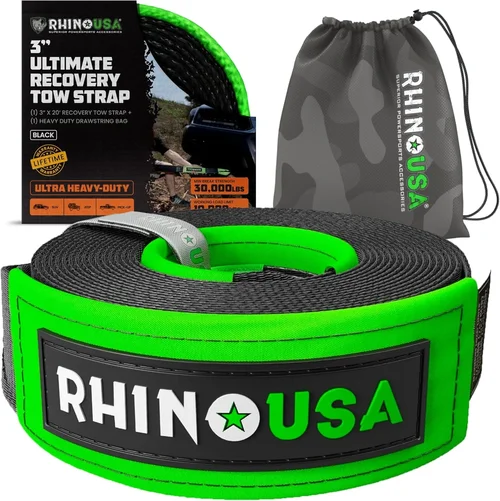
Best for Budget-Conscious Buyers: Rhino USA Heavy Duty Tow Strap (3″ x 20′) – At around $45, this polyester strap offers a 10,000-lb WLL, double-stitched eyes, and a lifetime warranty. Perfect for occasional use and easy to store.
Best Overall Value: Quadratec Premium Recovery Strap (3″ x 15′) – Priced at $75, it combines UV-resistant nylon with reflective stitching and includes a storage bag. Ideal for weekend warriors who want reliability without premium pricing.
Best Premium Option: ARB Kinetic Recovery Rope (2″ x 30′) – At $140, this energy-absorbing rope reduces shock loads by up to 30%, making it safer for aggressive recoveries. Comes with soft shackles and a detailed usage guide.
Best for Beginners: Smittybilt XRC Tow Strap Kit (3″ x 20′) – Includes everything needed: strap, two soft shackles, gloves, and a bag. Clear instructions and a 2-year warranty make it user-friendly for first-time buyers.
Best for Advanced Users: Warn Epic Series Recovery Strap (3″ x 20′) – Engineered for extreme conditions, this strap features abrasion-resistant sleeves, wear indicators, and a 30,000-lb breaking strength. Backed by Warn’s legendary support and lifetime guarantee.
Conclusion: Making the Right Choice
Choosing the right heavy-duty tow strap for your SUV isn’t just about picking the strongest or cheapest option—it’s about matching the right tool to your specific needs, vehicle, and usage patterns. Throughout this guide, we’ve emphasized the importance of verified strength ratings, material quality, safety features, and proper usage. Remember: a tow strap is only as reliable as its weakest link—whether that’s frayed webbing, an incompatible recovery point, or a lack of user knowledge.
Prioritize safety over savings, inspect your gear regularly, and never attempt a recovery alone in remote areas. Invest in a mid-range strap from a trusted brand, pair it with soft shackles and gloves, and store it properly to extend its lifespan. Whether you’re hauling a trailer across state lines or extracting your SUV from a muddy trail, the right tow strap gives you confidence and control when it matters most.
Don’t wait until you’re stuck to realize your gear isn’t up to the task. Take action today: review your SUV’s recovery points, assess your typical driving conditions, and select a strap that meets or exceeds your requirements. Your safety—and that of your passengers—depends on it.