
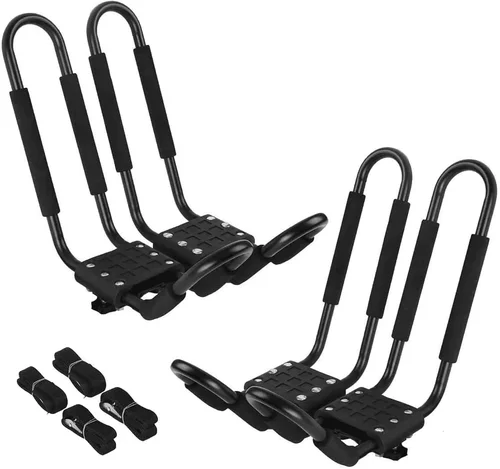
Whether you’re a weekend warrior heading to the lake or an avid kayaker planning a multi-day river expedition, transporting your kayak safely and securely is one of the most critical—and often overlooked—aspects of the adventure. A reliable SUV kayak rack isn’t just a convenience; it’s a necessity that protects your investment, ensures road safety, and enhances your overall paddling experience. With countless options flooding the market in 2026—from budget-friendly foam blocks to high-tech J-style carriers—it’s easy to feel overwhelmed. That’s where this comprehensive guide comes in.
In this expert-level buying guide, we’ll walk you through everything you need to know to choose the perfect kayak rack for your SUV. You’ll learn how to evaluate key factors like compatibility, load capacity, ease of installation, and durability. We’ll break down the different types of racks available, compare their pros and cons, and help you avoid common pitfalls that could lead to damage, theft, or even accidents. Whether you’re hauling a single recreational kayak or multiple touring models, our goal is to equip you with the knowledge to make a confident, informed decision.
The SUV kayak rack market has evolved significantly over the past few years. Advances in materials, design, and mounting technology have made modern racks safer, lighter, and more user-friendly than ever before. However, not all racks are created equal. Some prioritize affordability over longevity, while others offer premium features that may be overkill for casual users. By understanding your specific needs—vehicle type, kayak size, frequency of use, and budget—you can cut through the noise and find a solution that truly fits your lifestyle. Let’s dive in.

What to Look for When Buying Buying Guide
1. Vehicle Compatibility & Mounting System
Before you even consider the type of kayak rack, you must ensure it’s compatible with your SUV. Not all racks fit all vehicles, and mismatched systems can lead to instability, damage to your roof or kayak, or worse—catastrophic failure on the highway. Start by identifying your SUV’s roof type: does it have factory-installed roof rails, raised side rails, flush-mounted rails, or a bare roof with no rails at all? Most modern SUVs come equipped with some form of roof rails, but their design varies widely between manufacturers like Toyota, Subaru, Ford, and Jeep.
The mounting system is equally important. Racks typically attach via clamps that grip existing rails, crossbars that span the width of the roof, or direct-to-roof hardware for vehicles without rails. Universal-fit racks claim broad compatibility, but always verify fitment using the manufacturer’s fit guide or vehicle selector tool. For example, a rack designed for flush rails may not securely clamp onto raised rails without additional adapters. Some brands, like Thule and Yakima, offer vehicle-specific kits that guarantee a perfect fit—often worth the extra cost for peace of mind.
Don’t forget to check your SUV’s dynamic (driving) and static (parked) load limits, usually listed in the owner’s manual or on a sticker inside the driver’s door jamb. Exceeding these limits can compromise structural integrity and void warranties. A typical mid-size SUV might support 165–220 lbs dynamically, but this includes the weight of the rack, kayak, and any additional gear. Always leave a safety margin—never max out your vehicle’s capacity.
2. Kayak Size, Weight & Quantity
Not all kayaks are built the same, and your rack must accommodate your specific model(s). Recreational kayaks typically range from 9 to 12 feet and weigh 40–60 lbs, while touring and sea kayaks can stretch up to 16 feet and exceed 70 lbs. Tandem kayaks double those numbers. Your rack’s load capacity must comfortably handle the total weight—including the kayak, paddles, dry bags, and any accessories strapped on top.
Consider how many kayaks you plan to transport regularly. A solo paddler might only need a single-kayak carrier, but families or groups often require dual or even quad setups. J-style racks are compact and ideal for one or two kayaks, while saddle-style or stacker systems can handle more. However, stacking multiple kayaks increases wind resistance, fuel consumption, and the risk of damage during loading/unloading. Some racks include anti-sway features or padded cradles to prevent hull scratching when transporting multiple vessels.
Also factor in kayak shape and material. Inflatable or foldable kayaks are lighter and more flexible, making them easier to secure with foam blocks or soft racks. Hard-shell kayaks—especially those with rounded hulls—require cradles or J-hooks that conform to their contours. If you own a sit-on-top kayak with scupper holes, ensure the rack doesn’t block drainage or trap water, which adds unnecessary weight and promotes mold.
3. Ease of Installation & Removal
How often you use your kayak directly impacts how much you’ll value quick setup and takedown. If you’re a frequent paddler who loads up every weekend, a rack that takes 20 minutes to install each time will quickly become a frustration. Look for systems with tool-free installation, quick-release levers, or pre-assembled components that snap into place.
Hard-shell roof racks (like those from Thule or Yakima) often require minimal tools and can be installed in under 10 minutes once you’re familiar with the process. Soft racks or temporary foam block systems are even faster—ideal for spontaneous trips—but may lack the stability of permanent mounts. Some premium models feature one-handed operation or integrated torque limiters that prevent over-tightening, reducing the risk of damaging your roof or the rack itself.
Consider storage when the rack isn’t in use. Do you have garage space to store a bulky J-rack, or do you need something that folds flat or disassembles easily? Many users leave their crossbars on year-round for versatility (e.g., carrying bikes or cargo boxes), but removable kayak-specific attachments save space and reduce drag when not needed.
4. Security Features
Your kayak is a significant investment—often costing $500 to $3,000 or more—and leaving it exposed on your roof makes it a prime target for theft. A good kayak rack should include robust locking mechanisms to deter opportunistic criminals. Most reputable brands integrate lock cylinders into the rack’s attachment points, allowing you to secure both the rack to the vehicle and the kayak to the rack.
Look for racks with included lock cores or compatibility with universal lock systems (like Yakima’s Same Key System or Thule’s One-Key). These allow you to use the same key across multiple accessories—bikes, cargo boxes, etc.—simplifying your setup. Some high-end models even offer GPS tracking compatibility or tamper alerts via smartphone apps, though these are still niche features in 2026.
Beware of “security through obscurity”—cheap racks with flimsy padlocks or no locking option at all. A determined thief can cut through basic straps or pry off unsecured clamps in under a minute. Invest in a rack with hardened steel locks and anti-theft bolts. Additionally, always use cam straps or ratchet straps with integrated locks for extra peace of mind, especially when parked in urban areas or overnight at campgrounds.
5. Build Quality & Durability
A kayak rack is exposed to harsh elements: UV rays, rain, snow, road salt, and extreme temperatures. Over time, poor materials degrade, leading to rust, cracking, or failure. Prioritize racks made from corrosion-resistant aluminum or powder-coated steel. Avoid plastic components in high-stress areas—they may crack under load or become brittle in cold weather.
Check for reinforced welds, thick padding (at least ½ inch), and weatherproof seals around moving parts. Premium brands often use marine-grade materials and undergo rigorous testing for salt spray, vibration, and load fatigue. Read user reviews for long-term feedback—some racks look great out of the box but develop squeaks, loosen over time, or fail after a few seasons.
Warranty length is a strong indicator of build quality. Most mid-to-high-end racks come with 3–5 year warranties, while budget options may offer only 1 year or none at all. A lifetime warranty (offered by some boutique brands) signals confidence in durability—but read the fine print to ensure it covers wear and tear, not just defects.
6. Aerodynamics & Fuel Efficiency
Adding a kayak rack—and especially a loaded kayak—increases wind resistance, which directly impacts fuel economy. On long highway drives, this can mean burning an extra gallon or two per trip. Modern racks are designed with aerodynamics in mind: streamlined profiles, tapered edges, and low-profile mounts reduce drag compared to older boxy designs.
J-style racks, while space-efficient, create more wind noise and drag than saddle-style or stacker systems because the kayak sits vertically. However, some newer J-racks feature aerodynamic fairings or adjustable angles to minimize turbulence. If fuel efficiency is a priority, consider a rear-mounted hitch rack instead—though these require a trailer hitch and reduce rear visibility.
Even when unloaded, crossbars and mounts create drag. Some SUV owners remove crossbars when not in use, but this isn’t practical for frequent users. Look for racks with removable or foldable components, or invest in aerodynamic crossbars (like Thule’s WingBar Edge) that slice through air more efficiently than traditional square or round bars.
7. Ease of Loading & Unloading
Getting a 60-lb kayak onto a 7-foot-high SUV roof isn’t easy—especially if you’re alone. Poorly designed racks can turn loading into a back-straining ordeal. Look for features that simplify the process: extended load assists, roller systems, or tilt mechanisms that lower the rack toward the ground.
Some premium racks include built-in rollers at the rear edge of the crossbar, allowing you to slide the kayak up with minimal lifting. Others use gas struts or spring-assisted arms to hold the kayak at waist height while you secure it. For solo paddlers, these features are game-changers—they reduce strain and prevent accidental drops that can damage both kayak and vehicle.
If you’re under 5’6″ or have limited upper-body strength, consider a hitch-mounted rack instead. These position the kayak closer to the ground, making loading significantly easier. Alternatively, use a kayak loader—a portable ramp that bridges the gap between your vehicle and the roof.
8. Brand Reputation & Customer Support
Not all rack manufacturers are equal. Established brands like Thule, Yakima, Malone, and Sea to Summit have decades of experience, rigorous testing protocols, and strong customer support networks. They invest in R&D, offer detailed installation videos, and provide responsive service if something goes wrong.
Budget brands may save you money upfront but often cut corners on materials, instructions, or售后 support. If you buy a no-name rack from an online marketplace and it fails after six months, you may be stuck with no recourse. Stick with reputable retailers (REI, Backcountry, Amazon verified sellers) and read verified purchase reviews to gauge real-world performance.
Check if the brand offers replacement parts—straps, locks, padding—years down the line. A rack is only as good as its serviceability. Also, consider ecosystem compatibility: if you already own Thule bike racks or cargo boxes, sticking with the same brand simplifies locking systems and crossbar compatibility.
Different Types of Buying Guide

Common Buying Mistakes to Avoid
❌ Mistake: Ignoring Vehicle Load Limits
Why it’s bad: Overloading your SUV’s roof can cause structural damage, increase braking distance, and even lead to roof collapse in extreme cases. Many buyers focus only on the kayak’s weight and forget the rack and accessories add 15–30 lbs more.
What to do instead: Always check your owner’s manual for dynamic and static load ratings. Subtract the rack weight from your vehicle’s limit before adding the kayak. When in doubt, err on the side of caution—or consider a hitch-mounted alternative.
❌ Mistake: Choosing Based Solely on Price
Why it’s bad: The cheapest rack may save you $50 now but cost you $500 in a damaged kayak or vehicle repair later. Budget racks often use thin metal, weak straps, and minimal padding.
What to do instead: View the rack as a long-term investment. Spend a little more for quality materials, better padding, and reliable locks. Mid-range racks ($200–$350) typically offer the best balance of cost and performance.
❌ Mistake: Assuming “Universal Fit” Means Perfect Fit
Why it’s bad: Universal claims are marketing fluff. A rack that “fits most SUVs” may wobble, scratch your paint, or fail to clamp securely on your specific model.
What to do instead: Use the manufacturer’s vehicle selector tool. Provide your SUV’s year, make, and model. If they don’t have a fit guide, don’t buy it.
❌ Mistake: Skipping the Test Drive
Why it’s bad: Even a properly installed rack can vibrate, whistle, or shift at highway speeds. Without a test drive, you won’t notice issues until it’s too late.
What to do instead: After installation, drive slowly around the block. Listen for noises, check for movement, and re-tighten straps. Do a longer test at 50+ mph before hitting the open road.
❌ Mistake: Using Old or Worn Straps
Why it’s bad: UV exposure and weather degrade nylon straps over time. A frayed or stretched strap can snap under tension, sending your kayak flying.
What to do instead: Inspect straps before every trip. Replace them every 2–3 years or immediately if you see cracks, fading, or loose stitching. Invest in high-quality cam straps with rubber-coated hooks.
❌ Mistake: Not Securing the Bow and Stern
Why it’s bad: Roof racks secure the middle of the kayak, but wind can lift the front and back like wings. Unsecured ends can flap violently, damaging the kayak or causing loss of control.
What to do instead: Always use bow-and-stern lines—additional straps anchored to your SUV’s front bumper and rear hitch or tow hook. This creates a triangulated hold that prevents lifting.
❌ Mistake: Overlooking Local Laws and Regulations
Why it’s bad: Some states require flags or lights on loads extending beyond certain lengths. Others restrict rear-mounted racks that block license plates or taillights.
What to do instead: Check your state’s Department of Motor Vehicles website for load regulations. Use a red flag on long kayaks and ensure your license plate and lights remain visible.
Budget Guidelines: How Much Should You Spend?
Entry-Level ($30–$120): This tier includes foam block systems and basic soft racks. Ideal for occasional users with lightweight kayaks (under 50 lbs) and short trips. Expect minimal padding, no locks, and limited durability. Great for beginners testing the waters—but upgrade within a year if you paddle regularly.
Mid-Range ($120–$350): The sweet spot for most SUV owners. These racks offer solid construction, good padding, reliable straps, and often include locks. Brands like Malone, Rhino-Rack, and SportRack dominate this space. You’ll get compatibility with most SUVs, easy installation, and decent aerodynamics. Perfect for weekly paddlers with one or two kayaks.
Premium ($350–$600): For enthusiasts and frequent travelers. Expect marine-grade aluminum, advanced locking systems, load-assist features, and superior aerodynamics. Thule, Yakima, and Sea to Summit shine here. These racks are built to last decades, support heavy or multiple kayaks, and often integrate with other outdoor gear systems.
Luxury ($600+): Top-tier options with cutting-edge tech: motorized loading, GPS tracking, app connectivity, and custom-fit designs. Mostly aimed at professional outfitters or ultra-committed paddlers. While overkill for most, they offer unmatched convenience and security for those who prioritize ease and innovation.
Expert Tips for Getting the Best Deal
- Shop during off-season: Prices drop significantly in late fall and winter (October–February) when demand is low. Retailers clear inventory for new models.
- Bundle with crossbars: Many brands offer discounts when you buy a kayak rack plus compatible crossbars. This saves money and ensures perfect fitment.
- Check REI and Backcountry sales: These outdoor retailers frequently run member-exclusive deals, especially around holidays like Memorial Day and Black Friday.
- Consider certified refurbished: Thule and Yakima sell factory-refurbished racks at 20–30% off with full warranties. Identical to new but cheaper.
- Read return policies carefully: Some retailers charge restocking fees or won’t accept returns on installed racks. Buy from stores with generous return windows (30+ days).
- Join brand loyalty programs: Sign up for emails from Thule, Yakima, etc. They often send early access to sales and exclusive promo codes.
- Test before committing: If possible, visit a local outdoor store to see the rack in person. Feel the weight, test the locks, and ask staff for demos.
- Don’t forget tax and shipping: Some online retailers offer free shipping, while others add hidden fees. Calculate total cost before clicking “buy.”
Frequently Asked Questions
Q: Can I use a kayak rack on a bare roof SUV with no rails?
A: Yes, but you’ll need a rack system that includes foot pads and crossbars designed for flush or bare roofs. Brands like Thule and Yakima offer complete kits with rubberized feet that clamp directly to the door frames without drilling. Always follow the manual precisely to avoid paint damage.
Q: How do I prevent my kayak from scratching during transport?
A: Use racks with thick, UV-resistant padding (at least ½ inch). Avoid metal-on-kayak contact. Add extra foam blocks or pool noodles at pressure points if needed. Never overtighten straps—snug is enough.
Q: Will a kayak rack affect my SUV’s fuel economy?
A: Yes, especially at highway speeds. Expect a 5–15% drop in MPG depending on rack type and kayak size. J-racks create more drag than saddle styles. Removing the rack when not in use helps, but frequent users should factor this into long-term costs.
Q: Can I leave my kayak rack on all year?
A: You can, but it’s not recommended. Prolonged exposure to sun, snow, and road salt degrades components faster. Remove it during winter if you don’t paddle, or at minimum, cover it with a tarp when parked.
Q: What’s the difference between dynamic and static load capacity?
A: Dynamic capacity is the weight your roof can handle while driving (includes wind, bumps, and acceleration). Static capacity is the weight it can hold when parked. Always use dynamic limits for transport—they’re typically 25–50% lower than static.
Q: Do I need a roof rack if I have a trailer hitch?
A: Not necessarily. Hitch-mounted kayak racks are excellent alternatives—they’re easier to load, don’t affect roof clearance, and often hold more weight. But they require a 2-inch receiver hitch and reduce rear visibility.
Q: How tight should kayak straps be?
A: Tight enough that the kayak doesn’t shift when you push it side-to-side, but not so tight that you dent the hull. Over-tightening can crack plastic kayaks or warp fiberglass. Use cam straps—not ratchet straps—which can apply excessive force.
Q: Can I transport an inflatable kayak on a roof rack?
A: Yes, but use extra caution. Inflatable kayaks are lighter and more flexible, so they’re prone to wind flapping. Use a soft rack or foam blocks with wide straps, and always secure bow and stern lines.
Q: What if my kayak is longer than my SUV?
A: It’s common and legal in most states, but you must use a red flag on the overhanging end and ensure it doesn’t obstruct your view. Check local laws for maximum allowable overhang (usually 3–4 feet).
Q: Are used kayak racks safe to buy?
A: Only if they’re from a trusted source and show no signs of damage, rust, or wear. Avoid used racks with missing parts or faded straps. When in doubt, buy new—your safety isn’t worth the risk.
Our Final Recommendations
Best for Budget-Conscious Buyers: Malone Foam Block Kayak Carrier – At under $60, this soft rack is perfect for occasional use. Easy to store, no installation required, and gentle on kayaks. Just remember to add bow-and-stern lines.
Best Overall Value: Thule Hull-a-Port Pro – A sleek J-style rack that balances price ($280), durability, and ease of use. Includes locks, fits most SUVs, and folds flat when not in use. Ideal for weekend warriors.
Best Premium Option: Yakima JayLow – With its dual-position design (J-style or saddle), heavy-duty construction, and integrated locks, this $420 rack handles everything from solo trips to family adventures. The load-assist feature makes solo loading a breeze.
Best for Beginners: SportRack Kayak Carrier – Affordable ($150), simple saddle design, and clear instructions. Great for first-time buyers who want reliability without complexity.
Best for Advanced Users: Sea to Summit Telescopic Kayak Rack – Innovative telescoping arms adjust to fit any kayak width. Lightweight, aerodynamic, and built for long-distance travelers. Priced at $550, it’s for those who demand precision and performance.
Conclusion: Making the Right Choice
Choosing the right SUV kayak rack isn’t just about finding the cheapest or most popular option—it’s about matching a solution to your unique needs, vehicle, and paddling habits. From understanding your SUV’s roof configuration to evaluating load capacity, security, and ease of use, every factor plays a role in ensuring safe, stress-free transport. Avoid common pitfalls like ignoring weight limits or skipping bow-and-stern lines, and always prioritize quality over price.
Remember, your kayak is more than gear—it’s your gateway to adventure. Protect it with a rack that’s built to last, designed for your vehicle, and trusted by experts. Whether you’re chasing whitewater rapids or serene lake sunrises, the right rack lets you focus on the journey, not the journey home.
Take the time to assess your priorities, compare options using our guidelines, and invest wisely. Your future self—and your kayak—will thank you. Now go get out there and paddle with confidence.