
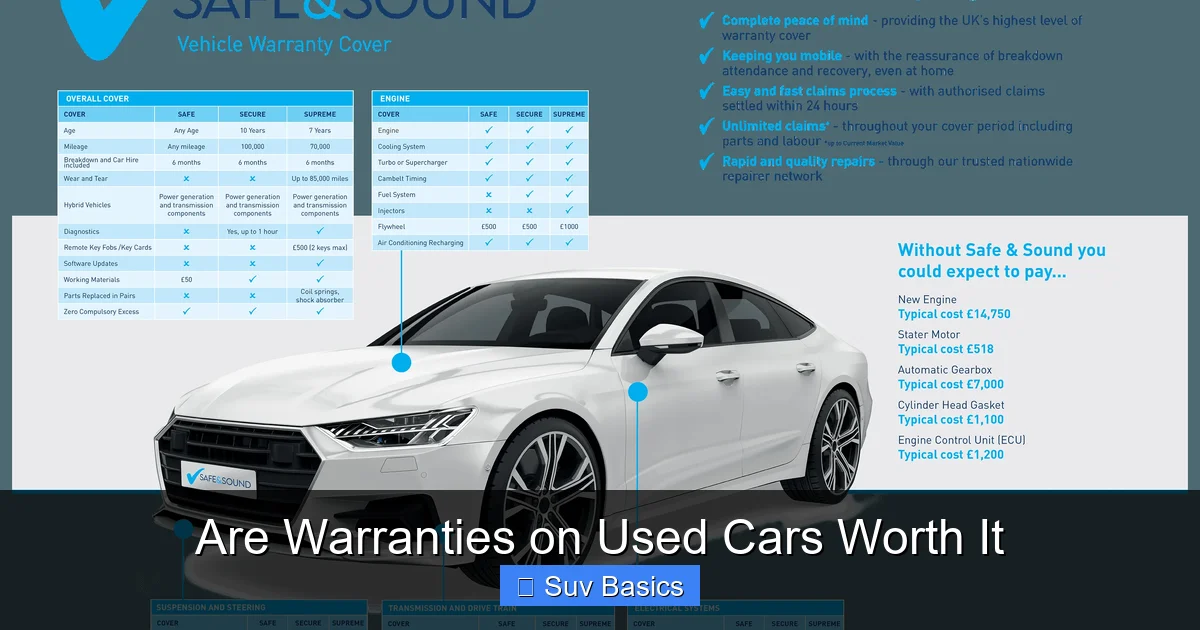
Deciding whether a warranty on a used car is worth it depends on the vehicle’s age, mileage, and your budget. While extended warranties can offer peace of mind and financial protection, they aren’t always cost-effective—especially for reliable models or low-mileage SUVs.
Buying a used SUV can be a smart financial move—you avoid the steep depreciation of a new car and still get a reliable vehicle for daily commutes, family trips, or weekend adventures. But as you shop around, you’ll likely come across offers for extended warranties, also known as vehicle service contracts. These plans promise to cover repair costs after the manufacturer’s warranty expires, giving you peace of mind. But the big question remains: are warranties on used cars worth it?
The answer isn’t a simple yes or no. It depends on several factors, including the SUV’s condition, how much you drive, and your risk tolerance. For some buyers, a warranty feels like a safety net—especially if they’re not mechanically inclined or live in an area with harsh weather that can stress a vehicle. For others, the cost of the warranty outweighs the potential benefits, especially if they choose a dependable model with a strong track record.
In this guide, we’ll break down everything you need to know about used car warranties, so you can make an informed decision that fits your needs and budget.
Key Takeaways
- Warranties can reduce repair costs: If your used SUV breaks down, a warranty may cover expensive repairs like transmission or engine issues.
- Not all warranties are equal: Coverage varies widely—some plans only cover basic components, while others include roadside assistance and rental car reimbursement.
- Check the vehicle’s reliability first: Research the make and model’s common problems before buying a warranty—some SUVs rarely need major repairs.
- Consider the car’s age and mileage: High-mileage or older SUVs are more likely to need repairs, making a warranty more valuable.
- Compare third-party vs. dealer warranties: Third-party providers may offer better prices and more flexibility than dealership plans.
- Read the fine print carefully: Exclusions, deductibles, and claim limits can affect whether a warranty is truly beneficial.
- Weigh cost vs. potential savings: If the warranty costs nearly as much as a major repair, it might not be worth it unless you drive frequently or plan to keep the SUV long-term.
📑 Table of Contents
- What Is a Used Car Warranty?
- Types of Used Car Warranties
- When Is a Warranty on a Used Car Worth It?
- When Might a Warranty Not Be Worth It?
- How to Evaluate a Used Car Warranty
- Real-World Example: SUV Warranty in Action
- Final Thoughts: Making the Right Choice
What Is a Used Car Warranty?
A used car warranty is a contract that covers the cost of certain repairs for a set period of time or mileage. Unlike a manufacturer’s warranty—which typically comes with a new vehicle—an extended warranty is purchased separately, either from the dealership or a third-party provider.
These warranties come in different levels of coverage. A basic plan might only cover major components like the engine and transmission, while a comprehensive (or “bumper-to-bumper”) plan can include electronics, air conditioning, and even suspension parts. Some plans also offer perks like 24/7 roadside assistance, towing, and rental car reimbursement.
It’s important to note that these are not the same as a certified pre-owned (CPO) warranty, which is backed by the manufacturer and usually comes with a thorough inspection. CPO warranties are generally more reliable and offer better coverage, but they’re only available on vehicles that meet strict criteria.
Types of Used Car Warranties
Visual guide about Are Warranties on Used Cars Worth It
Image source: driveuae.ae
Not all warranties are created equal. Understanding the different types can help you choose the right one—or decide if you even need one at all.
Manufacturer-Backed Extended Warranties
Some automakers offer extended warranty plans that can be purchased even after the original warranty expires. These are often available for certified pre-owned vehicles and may be transferable if you sell the SUV. Because they’re backed by the manufacturer, they tend to be more trustworthy and may include nationwide service at authorized dealerships.
Dealership Extended Warranties
Many used car dealers offer their own warranty plans. While convenient, these can be more expensive and may come with stricter terms. Always ask for a copy of the contract and read it carefully. Some dealer warranties are actually administered by third-party companies, so you’re not necessarily dealing directly with the dealership.
Third-Party Warranties
Independent companies like Endurance, CarShield, or Protect My Car offer extended warranties for used vehicles. These plans can be more affordable and flexible, with options to customize coverage. However, not all third-party providers are reputable—some have been criticized for denying claims or making it difficult to get repairs approved.
Before buying, check reviews, look up the company’s rating with the Better Business Bureau, and verify that they’re licensed in your state.
When Is a Warranty on a Used Car Worth It?
A warranty can be a smart investment in certain situations. Here are a few scenarios where it makes the most sense.
High Mileage or Older SUVs
If you’re buying a used SUV with over 80,000 miles or one that’s more than 8 years old, the risk of mechanical failure increases. In these cases, a warranty can protect you from unexpected repair bills. For example, replacing a transmission can cost $3,000 or more—far more than the average warranty cost.
Expensive or Complex Vehicles
Luxury SUVs or models with advanced technology (like hybrid systems or all-wheel drive) often come with higher repair costs. A warranty can help offset these expenses. For instance, a faulty infotainment system in a high-end SUV could cost $1,500 to fix—something a warranty might cover.
Frequent or Long-Distance Driving
If you drive more than 15,000 miles a year or frequently take road trips, your SUV is under more stress. Wear and tear accumulate faster, increasing the chance of breakdowns. A warranty can provide peace of mind, especially if you rely on your vehicle for work or family needs.
Limited Savings for Repairs
If you don’t have an emergency fund to cover unexpected car repairs, a warranty can act as a financial safety net. Paying $1,500–$2,500 upfront for a warranty might be cheaper than a single major repair down the road.
When Might a Warranty Not Be Worth It?
On the flip side, there are times when skipping the warranty makes more sense.
Reliable, Low-Mileage SUVs
If you’re buying a well-maintained, low-mileage SUV from a reputable brand—like a Toyota RAV4 or Honda CR-V—the likelihood of major repairs is low. These models are known for longevity, and many owners drive them well past 200,000 miles without serious issues. In this case, the cost of a warranty may not be justified.
Short-Term Ownership
If you plan to sell or trade in the SUV within a few years, a warranty may not pay off. Most extended warranties don’t start covering repairs until after a waiting period, and you might not use it enough to justify the cost.
High Deductibles or Limited Coverage
Some warranties come with high deductibles—say, $100 per repair—or exclude common issues like brakes, tires, or electrical problems. If the coverage is too narrow or the out-of-pocket costs are high, the warranty may not offer real value.
How to Evaluate a Used Car Warranty
If you’re considering a warranty, don’t just take the dealer’s word for it. Do your homework.
Read the Contract Thoroughly
Ask for a copy of the warranty agreement and read every section. Pay attention to:
– What’s covered and what’s excluded
– The length of coverage (time and mileage)
– Deductibles and claim limits
– Whether the warranty is transferable
– The process for filing a claim
Compare Costs and Coverage
Get quotes from multiple providers—dealerships, manufacturers, and third-party companies—and compare them side by side. A cheaper plan isn’t always better if it offers less coverage.
Check the Provider’s Reputation
Look up customer reviews and ratings. Avoid companies with a history of denying claims or poor customer service. A good warranty is only valuable if it actually pays when you need it.
Consider Alternatives
Instead of buying a warranty, you could set aside the same amount of money in a dedicated car repair fund. Over time, this “self-insurance” approach might save you money—especially if your SUV doesn’t need major repairs.
Real-World Example: SUV Warranty in Action
Let’s say you buy a 2018 Ford Explorer with 70,000 miles. The dealer offers a 3-year/36,000-mile extended warranty for $2,200. You drive about 12,000 miles a year and plan to keep the SUV for five years.
Two years later, the transmission fails. Without a warranty, the repair would cost $3,500. With the warranty, you pay a $100 deductible and the rest is covered. In this case, the warranty saved you $3,400—making it a worthwhile investment.
But if you had bought a 2020 Toyota Highlander with 30,000 miles and no major issues after three years, that same $2,200 warranty would have been money down the drain.
Final Thoughts: Making the Right Choice
So, are warranties on used cars worth it? The answer depends on your specific situation. For high-mileage, older, or complex SUVs—especially if you drive a lot or lack savings for repairs—a warranty can be a smart, cost-effective choice. But for reliable, low-mileage models, you might be better off skipping the extra cost and building your own repair fund.
The key is to evaluate the SUV’s condition, research the warranty terms, and weigh the potential risks against the cost. And remember: a warranty is not a substitute for regular maintenance. Keeping up with oil changes, tire rotations, and inspections will go a long way in preventing costly breakdowns—with or without a warranty.
Ultimately, the goal is to drive with confidence, knowing you’re prepared for whatever the road throws your way.
Frequently Asked Questions
Do all used cars come with a warranty?
No, not all used cars come with a warranty. Only certified pre-owned (CPO) vehicles typically include a manufacturer-backed warranty. Most “as-is” used cars are sold without any coverage, so you’d need to purchase an extended warranty separately.
Can I buy a warranty after purchasing a used car?
Yes, you can often buy an extended warranty after buying a used car, as long as the vehicle meets the provider’s eligibility requirements (such as age and mileage limits). However, prices may be higher, and coverage options could be more limited.
Are third-party warranties reliable?
Some third-party warranties are reliable, but others have poor reputations. Always research the company, read customer reviews, and verify their licensing before purchasing. Look for providers with strong BBB ratings and transparent claim processes.
What’s the difference between a warranty and a service contract?
The terms are often used interchangeably, but technically, a warranty is a promise from the manufacturer, while a service contract is sold by a third party. Both cover repairs, but service contracts may have more restrictions and exclusions.
Can I cancel a used car warranty?
Many extended warranties allow cancellation within a certain period (usually 30–60 days) for a full or partial refund. Check your contract for cancellation terms, as some plans are non-refundable after the initial period.
Do warranties cover routine maintenance?
No, most extended warranties do not cover routine maintenance like oil changes, tire rotations, or brake pads. They’re designed for unexpected mechanical failures, not regular upkeep. Some premium plans may include maintenance packages, but these are rare.