
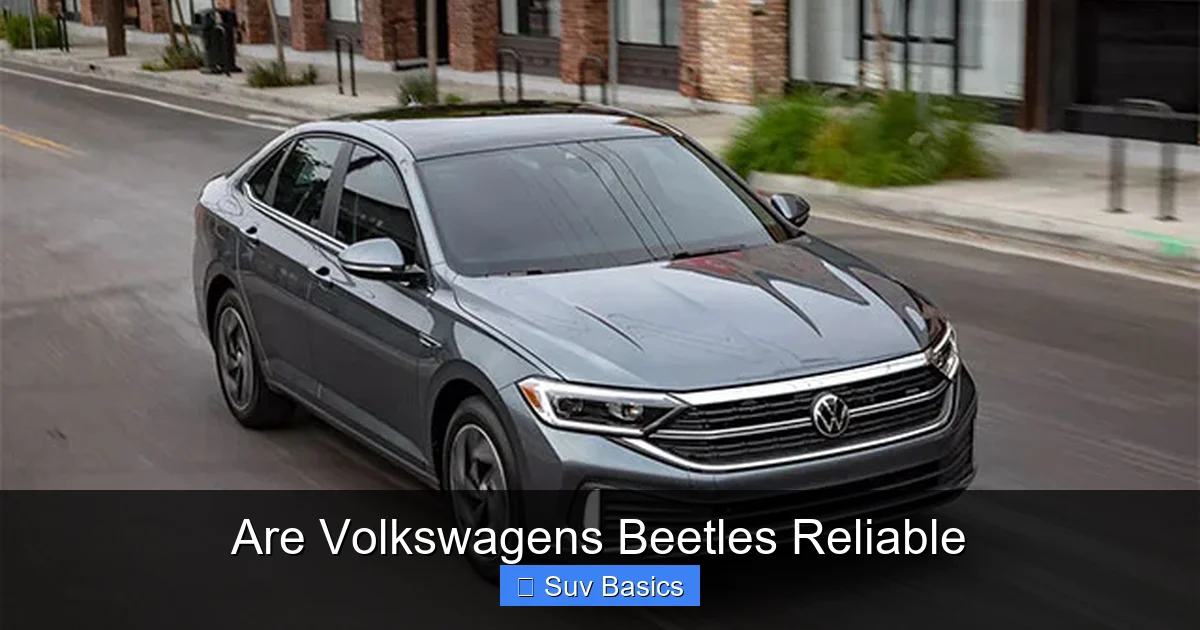
The Volkswagen Beetle has a mixed reputation for reliability, depending heavily on the model year and maintenance history. While early 2000s models faced mechanical challenges, later versions (2012–2019) improved significantly with better build quality and modern engineering.
Key Takeaways
- Reliability varies by generation: Early 2000s Beetles had more reported issues, while newer models (2012–2019) are generally more dependable.
- Regular maintenance is crucial: Following the manufacturer’s service schedule greatly improves longevity and performance.
- Common issues include electrical faults and oil leaks: These are often fixable with timely repairs and shouldn’t deter ownership if addressed early.
- Fuel efficiency is a strong point: Most Beetles offer good gas mileage, especially the 2.0L and 1.8L turbo engines.
- Safety ratings are solid: Newer Beetles earned strong scores from the IIHS and NHTSA, making them safe daily drivers.
- Resale value is moderate: While not the highest, well-maintained Beetles hold value better than many compact cars.
- Fun to drive and stylish: Beyond reliability, the Beetle offers a unique driving experience and iconic design.
📑 Table of Contents
- Are Volkswagen Beetles Reliable? A Complete Breakdown
- Understanding Beetle Generations and Their Reliability
- Common Reliability Issues in Volkswagen Beetles
- Maintenance Tips to Maximize Beetle Reliability
- Safety and Ownership Experience
- Resale Value and Long-Term Ownership
- Final Verdict: Should You Buy a Volkswagen Beetle?
Are Volkswagen Beetles Reliable? A Complete Breakdown
If you’re thinking about buying a Volkswagen Beetle, one of the first questions on your mind is probably: *Are Volkswagen Beetles reliable?* It’s a fair concern—after all, no one wants to invest in a car that’s constantly in the shop. The Beetle, with its retro charm and unmistakable silhouette, has captured hearts for decades. But does it deliver when it comes to dependability?
The short answer? It depends. Reliability in Volkswagen Beetles isn’t a one-size-fits-all story. Much like any vehicle, the Beetle’s track record varies significantly across different model years and generations. Early 2000s models, for example, had their share of mechanical hiccups, while the later redesigns—especially from 2012 onward—showed marked improvement in build quality and engineering. So, while the Beetle may not top every reliability ranking, it’s far from being a lemon, especially if you know what to look for.
In this guide, we’ll dive deep into the reliability of Volkswagen Beetles, covering everything from common problems to maintenance tips, safety ratings, and real-world ownership experiences. Whether you’re eyeing a classic New Beetle from the early 2000s or a more recent Final Edition model, this article will help you make an informed decision.
If you’re also curious about other vehicle types, check out our SUV guide for more insights.
Understanding Beetle Generations and Their Reliability
Visual guide about Are Volkswagens Beetles Reliable
Image source: carsthrust.com
To truly answer whether Volkswagen Beetles are reliable, it helps to understand the different generations and how they stack up. For those interested in how vehicle categories evolve, see the history of SUVs.
The New Beetle (1998–2010)
The original New Beetle, introduced in 1998, was a nostalgic revival of the classic 1960s design. While it was a style icon, early models (1998–2005) had several reliability concerns. Owners frequently reported issues with the cooling system, electrical components, and premature wear on suspension parts. The 2.0L inline-4 engine, while simple, was known for oil consumption and occasional head gasket failures.
That said, many of these problems were addressed in later model years. By 2006–2010, Volkswagen had refined the platform, improving engine performance and electrical systems. Still, these older Beetles require extra attention—especially if they’ve racked up high mileage.
The Beetle (2012–2019)
In 2012, Volkswagen launched a completely redesigned Beetle, ditching the rounded roofline of the New Beetle for a more aggressive, coupe-like profile. This generation marked a major step forward in reliability. Built on the same platform as the Jetta and Golf, the new Beetle benefited from shared engineering and improved manufacturing processes.
The 2012–2019 models featured more robust engines, including the 2.0L turbo and the efficient 1.8L turbocharged four-cylinder. These engines were better sealed, more fuel-efficient, and less prone to oil leaks. Additionally, the electrical systems were modernized, reducing the frequency of dashboard warning lights and sensor failures.
Consumer Reports and J.D. Power gave these later models higher reliability scores, especially when compared to their predecessors. If you’re shopping for a used Beetle, aiming for a 2013 or newer model is a smart move.
Common Reliability Issues in Volkswagen Beetles
No car is perfect, and the Beetle is no exception. While newer models are more dependable, there are still some recurring issues to watch out for.
Electrical Problems
One of the most frequently reported issues across Beetle generations is electrical gremlins. These can range from faulty window switches and malfunctioning dashboard lights to more serious problems like faulty body control modules (BCMs). In some cases, water intrusion due to poor sealing around the sunroof or windshield can lead to short circuits.
Tip: Before buying a used Beetle, have a trusted mechanic inspect the electrical system, especially if the car has been parked outside in rainy climates.
Oil Leaks and Engine Seals
Oil leaks are another common concern, particularly in older Beetles with the 2.0L engine. The valve cover gasket and camshaft seal are frequent culprits. While not catastrophic, these leaks can lead to low oil levels and engine damage if ignored.
The good news? These are relatively inexpensive fixes—usually under $300—if caught early. Regular oil changes and inspections can help prevent bigger problems down the road.
Transmission Troubles
Some Beetle owners have reported issues with the automatic transmission, especially in models equipped with the 6-speed DSG (direct-shift gearbox). Symptoms include rough shifting, hesitation, and warning lights. While not universal, these problems tend to appear after 80,000–100,000 miles.
If you’re considering a DSG-equipped Beetle, check the service history for transmission fluid changes. Volkswagen recommends servicing the DSG every 40,000 miles—skipping this can lead to premature wear.
Maintenance Tips to Maximize Beetle Reliability
The best way to ensure your Volkswagen Beetle stays reliable is through consistent, proactive maintenance. While maintaining your Beetle, you might also enjoy reading about luxury SUVs for comparison. Here’s how to keep your Beetle running smoothly for years.
Follow the Factory Maintenance Schedule
Volkswagen provides a detailed maintenance schedule in the owner’s manual. Stick to it. This includes regular oil changes (every 5,000–7,500 miles), brake inspections, coolant flushes, and timing belt replacements (if applicable). Neglecting routine service is the fastest way to shorten your Beetle’s lifespan.
Use Quality Fluids and Parts
Volkswagen engines are precision-tuned, and using the wrong oil or low-quality filters can cause problems. Always use VW-approved synthetic oil (5W-40 or 5W-30) and genuine or OEM-equivalent parts when possible. This is especially important for the turbocharged engines in newer models.
Address Small Issues Immediately
A small oil leak or a flickering dashboard light might seem minor, but they can escalate quickly. Catching problems early saves money and prevents breakdowns. Keep an ear out for unusual noises and monitor your dashboard for warning lights.
Protect the Exterior and Interior
The Beetle’s unique design means some parts can be harder to find or more expensive to replace. Regular washing, waxing, and interior cleaning help preserve the car’s value and prevent rust or upholstery damage.
Safety and Ownership Experience
Beyond reliability, safety and driving enjoyment are key factors in any car purchase.
Safety Ratings
The 2012–2019 Beetle earned strong safety ratings. The Insurance Institute for Highway Safety (IIHS) gave it a “Good” rating in most categories, including frontal crash, side impact, and roof strength. The National Highway Traffic Safety Administration (NHTSA) awarded it an overall 5-star safety rating.
Standard safety features on newer models include electronic stability control, anti-lock brakes, and multiple airbags. Higher trims offer advanced options like blind-spot monitoring and rear cross-traffic alert.
Driving Dynamics
The Beetle isn’t a sports car, but it’s more fun to drive than many competitors. The turbocharged engines provide peppy acceleration, and the suspension offers a balanced mix of comfort and handling. The compact size makes it easy to park and maneuver in city traffic.
Owners often praise the Beetle for its smooth ride and quiet cabin—especially in the Final Edition models with upgraded insulation.
Resale Value and Long-Term Ownership
So, how well does a Beetle hold its value?
Depreciation Trends
Like most non-luxury compact cars, the Beetle depreciates steadily in the first few years. However, well-maintained models—especially the Final Edition (2019)—tend to hold value better due to their limited production and nostalgic appeal.
According to Kelley Blue Book, a 2017 Beetle with average mileage retains about 45–50% of its original value after five years. That’s on par with similar vehicles like the Mazda MX-5 Miata and Mini Cooper.
Cost of Ownership
Overall, the Beetle is moderately priced to own. Insurance rates are average, and fuel economy is solid—expect 25–30 mpg combined, depending on the engine. Repair costs are slightly higher than non-European brands, but not excessively so if you stick to regular maintenance.
Final Verdict: Should You Buy a Volkswagen Beetle?
So, are Volkswagen Beetles reliable? The answer is: *Yes, with caveats.*
If you’re looking at a 2012 or newer model with a clean maintenance history, the Beetle can be a reliable, stylish, and enjoyable daily driver. It’s not the most bulletproof car on the road, but with proper care, it can serve you well for 150,000 miles or more.
On the other hand, early 2000s models require more diligence. They’re still charming and affordable, but be prepared for potential repairs and a closer eye on maintenance.
Ultimately, the Beetle’s reliability comes down to how well it’s been cared for. A well-maintained 2005 Beetle might outlast a neglected 2015 model. Do your homework, get a pre-purchase inspection, and consider a certified pre-owned (CPO) option if available.
And remember—reliability isn’t the only thing that matters. The Beetle offers something few cars can: personality. It turns heads, sparks conversations, and delivers a driving experience that’s as fun as it is functional.
If you’re willing to put in a little extra care, the Volkswagen Beetle can be a rewarding and reliable companion on the road.
Frequently Asked Questions
Are Volkswagen Beetles expensive to maintain?
Maintenance costs for Beetles are moderate. While parts and labor can be slightly pricier than non-European brands, regular upkeep keeps expenses manageable. Following the service schedule is key.
Which Beetle model year is the most reliable?
The 2013–2019 models are generally the most reliable, thanks to improved engineering, better engines, and modern electrical systems. Avoid high-mileage early 2000s models unless thoroughly inspected.
Do Beetles have good fuel economy?
Yes. Most Beetles get 25–30 mpg combined, especially the 1.8L and 2.0L turbo engines. This makes them efficient for city and highway driving.
Are Beetles safe in accidents?
Newer Beetles (2012–2019) earned top safety ratings from the IIHS and NHTSA. They come with standard safety features like stability control and multiple airbags.
Can a Beetle last 200,000 miles?
Yes, with proper maintenance. Many owners report reaching 150,000–200,000 miles, especially with the later-generation models and turbocharged engines.
Is the Beetle a good first car?
It can be, especially newer models with good safety ratings and fuel efficiency. However, ensure it has a solid maintenance history and consider insurance costs for younger drivers.