
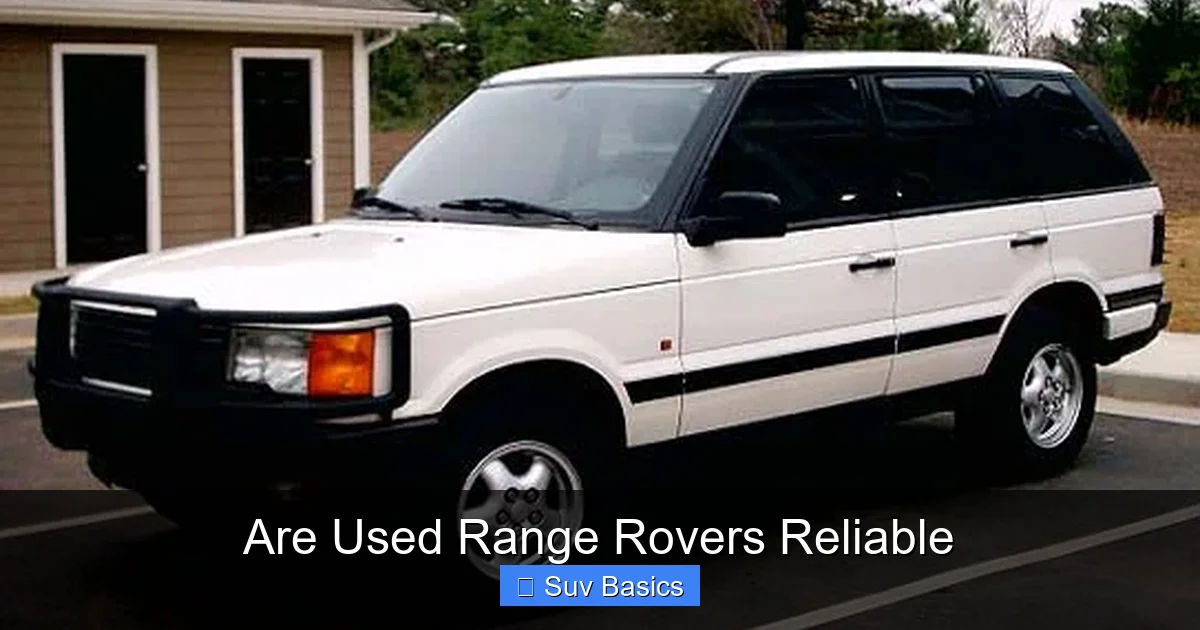
Used Range Rovers offer luxury and off-road capability, but reliability varies by model year and maintenance history. While newer models have improved, older ones may face costly repairs—making thorough inspections and service records essential before buying.
If you’re dreaming of driving a used Range Rover—complete with leather seats, a commanding view of the road, and that unmistakable British elegance—you’re not alone. These luxury SUVs turn heads and deliver a smooth, powerful ride whether you’re navigating city streets or tackling muddy trails. But behind the prestige and plush interiors lies a big question: Are used Range Rovers reliable?
The short answer? It depends. Range Rovers are built for performance and comfort, but their reliability has been a mixed bag over the years. Some owners enjoy years of trouble-free driving, while others face frequent trips to the repair shop. The truth is, like any high-end vehicle, a used Range Rover’s dependability hinges on several factors: the model year, how well it was maintained, and where you buy it. In this guide, we’ll break down what you need to know before handing over your hard-earned cash for a pre-owned Range Rover.
Understanding Range Rover Reliability Over Time
Range Rover has been a symbol of luxury SUVs since the 1970s, but its reputation for reliability has evolved significantly. Early models, especially those from the 1990s and early 2000s, were often plagued by mechanical and electrical issues. However, Land Rover has made notable improvements in recent years, particularly after the brand was acquired by Tata Motors in 2008.
Early Models (Pre-2010): Proceed with Caution
If you’re eyeing a used Range Rover from before 2010, be prepared for potential headaches. Models like the 2003–2009 Range Rover (L322) are known for problems with the air suspension system, which can fail and cost over $2,000 to replace. Electrical gremlins—such as faulty instrument clusters, window regulators, and infotainment screens—are also common. These issues often stem from aging wiring and subpar sealing, which can lead to moisture damage.
Mid-2010s: A Turning Point
The introduction of the fourth-generation Range Rover in 2013 marked a major shift. Built on a lighter aluminum platform, these models offered better fuel efficiency and improved build quality. The 2013–2017 Range Rover and Range Rover Sport saw fewer mechanical failures, though some owners still reported issues with the Terrain Response system and occasional transmission hiccups. Overall, these years are considered a sweet spot for used buyers seeking a balance of luxury and reliability.
For more insight into luxury SUV trends, see our guide on the top luxury SUVs of 2024.
Recent Models (2018–Present): Better, But Not Perfect
Newer used Range Rovers, especially those from 2018 onward, benefit from advanced engineering and better quality control. The 2020 Range Rover Evoque, for example, earned praise for its refined interior and improved reliability scores. However, even recent models aren’t immune to problems. Some 2019–2021 models have experienced software glitches in the Pivi Pro infotainment system, requiring dealership updates. Still, these issues are generally less severe than the mechanical failures of older models.
Common Problems in Used Range Rovers

Visual guide about Are Used Range Rovers Reliable
Image source: sax4x4.s3-eu-west-1.amazonaws.com
While no car is perfect, used Range Rovers have a few recurring issues that buyers should watch for. Knowing these can save you from expensive surprises down the road.
Air Suspension Failures
One of the most notorious issues with older Range Rovers is the air suspension system. Designed to provide a smooth, adjustable ride, it’s also prone to leaks, compressor failures, and sensor malfunctions. When it fails, the vehicle may sag on one side or refuse to rise to the correct height. Replacing the entire system can cost between $1,500 and $3,000, depending on the model and labor rates.
Electrical and Infotainment Glitches
Range Rovers are packed with technology, from adaptive cruise control to 360-degree cameras. But with complexity comes vulnerability. Many owners report issues with the touchscreen freezing, Bluetooth disconnecting, or warning lights flashing for no reason. These problems are often software-related and can sometimes be fixed with updates, but they’re frustrating nonetheless.
Engine and Transmission Concerns
Most used Range Rovers come with either a V6 or V8 engine, and while these powerplants are generally robust, they’re not invincible. The 3.0L V6 diesel engine (used in some European models) has had reports of turbocharger and emissions system failures. Meanwhile, the 8-speed automatic transmission, introduced in 2013, is reliable but can develop rough shifting if not serviced regularly.
Interior Wear and Tear
Even with proper maintenance, the luxurious interiors of Range Rovers can show their age. Leather seats may crack or fade, wood trim can peel, and ambient lighting may fail. While these aren’t mechanical issues, they affect the overall value and driving experience.
Maintenance and Ownership Costs
Owning a used Range Rover isn’t just about the purchase price—it’s about what comes after. These vehicles are expensive to maintain, even when they’re running well.
Service Intervals and Costs
Land Rover recommends servicing every 10,000 to 15,000 miles, depending on driving conditions. A standard service—oil change, filter replacement, brake inspection—can cost $200–$400 at a dealership. Major services, including fluid flushes and brake work, can run $800 or more. Independent shops may offer lower rates, but they must have experience with Land Rover systems to avoid mistakes.
Parts and Labor Expenses
Because Range Rovers use specialized components, parts are pricier than those for mainstream SUVs. A new air suspension compressor can cost over $1,000, and labor rates at dealerships often exceed $150 per hour. Even routine items like brake pads and rotors are more expensive due to the vehicle’s weight and performance demands.
Fuel Economy Considerations
Don’t forget about fuel costs. Most Range Rovers get between 18–22 mpg combined, which is decent for a full-size luxury SUV but still higher than smaller alternatives. If you drive frequently, fuel expenses can add up quickly.
Tips for Buying a Reliable Used Range Rover
Despite the challenges, you can find a dependable used Range Rover—if you know what to look for.
Choose the Right Model and Year
Stick with models from 2013 or later, especially the Range Rover Sport or Evoque. These have better reliability records and more modern features. Avoid high-mileage examples (over 80,000 miles) unless they have a flawless service history.
Get a Pre-Purchase Inspection (PPI)
Never skip a PPI. Have a qualified mechanic—preferably one familiar with Land Rovers—inspect the vehicle thoroughly. They’ll check the suspension, engine, transmission, electronics, and undercarriage for hidden damage.
Review the Service History
Ask for maintenance records. A well-documented history of regular oil changes, brake services, and software updates is a strong indicator of a cared-for vehicle. Gaps in service or repeated repairs for the same issue are red flags.
Check for Recalls and Technical Service Bulletins (TSBs)
Visit the National Highway Traffic Safety Administration (NHTSA) website and enter the VIN to see if the vehicle has any open recalls. Also, ask the dealer or seller about any known TSBs—these are manufacturer-issued fixes for common problems.
Consider a Certified Pre-Owned (CPO) Vehicle
Land Rover’s CPO program includes a 12-month/unlimited-mile warranty, a 165-point inspection, and roadside assistance. While CPO vehicles cost more, the added protection can be worth it for peace of mind.
Real Owner Experiences
To get a sense of real-world reliability, we looked at owner reviews and forums. Many 2015–2017 Range Rover Sport owners report smooth sailing with minimal issues, especially when serviced regularly. One owner in Colorado drove her 2016 model over 90,000 miles with only routine maintenance and a single air suspension repair.
On the flip side, some 2008–2010 models have been called “money pits” due to repeated electrical and suspension failures. One forum user spent over $5,000 in repairs during the first two years of ownership.
These stories highlight a key truth: maintenance matters. A neglected Range Rover will likely fail, while a well-cared-for one can deliver years of luxury driving.
Conclusion: Are Used Range Rovers Worth It?
So, are used Range Rovers reliable? The answer isn’t black and white. They can be reliable—especially newer models with good maintenance—but they’re not the most dependable SUVs on the market. If you’re willing to invest in regular upkeep and possibly an extended warranty, a used Range Rover can be a rewarding choice. But if you’re looking for a low-maintenance, budget-friendly SUV, you might want to consider alternatives like the Lexus GX or Acura MDX.
Ultimately, buying a used Range Rover is about balancing luxury with practicality. Do your homework, inspect thoroughly, and go in with your eyes open. With the right approach, you can enjoy the prestige and performance of a Range Rover without constant worry.
Frequently Asked Questions
Are used Range Rovers expensive to maintain?
Yes, used Range Rovers typically cost more to maintain than average SUVs due to premium parts, specialized labor, and complex systems like air suspension. Budget for higher service and repair costs.
Which used Range Rover model is the most reliable?
The 2013–2017 Range Rover Sport and 2019–2021 Range Rover Evoque are among the most reliable used models, with fewer reported issues and better build quality. For a broader perspective on choosing an SUV, check our evaluation guide.
How long do used Range Rovers last?
With proper maintenance, a used Range Rover can last 150,000–200,000 miles or more. However, major components like the air suspension may need replacement before then.
Should I buy a used Range Rover with high mileage?
It’s risky unless the vehicle has a complete service history and recent major repairs. High-mileage models (over 100,000 miles) are more likely to need expensive fixes.
Do used Range Rovers have good resale value?
Range Rovers depreciate quickly in the first few years, but well-maintained models can hold value better than expected, especially in the luxury SUV market.
Is it better to buy a CPO or private-sale used Range Rover?
A certified pre-owned (CPO) vehicle offers warranties and inspections, making it safer. Private sales may be cheaper but come with more risk—always get a pre-purchase inspection.