
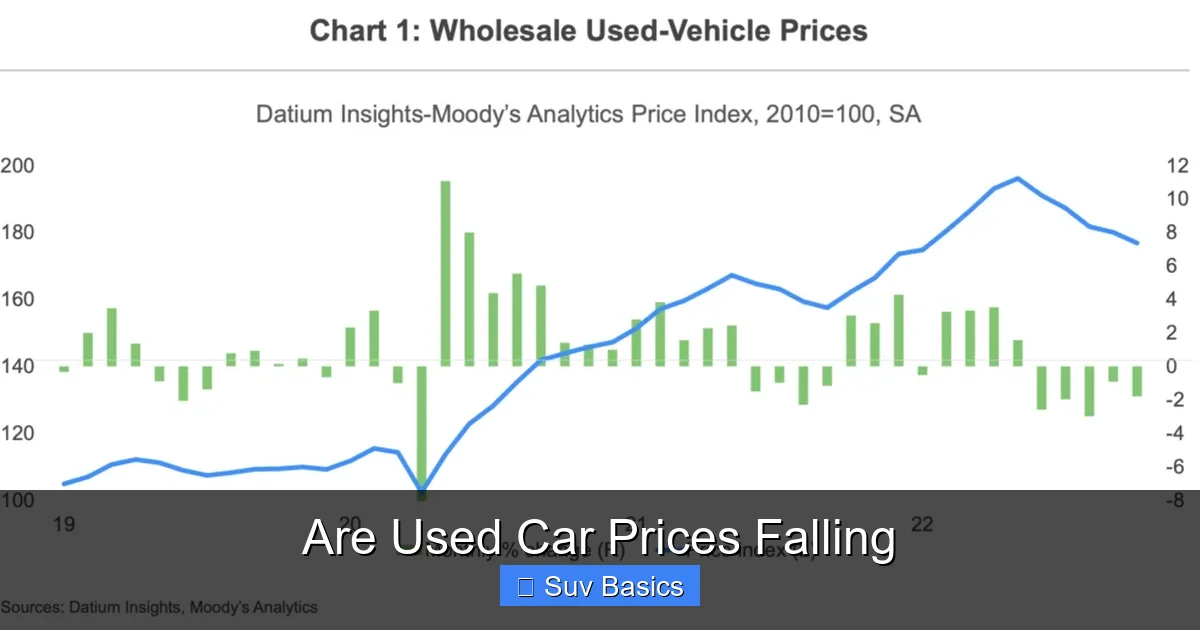
Used car prices are indeed falling after years of record highs, driven by increased inventory and slowing demand. This shift offers relief for SUV shoppers, especially those eyeing popular models like the Honda CR-V or Toyota RAV4.
If you’ve been thinking about buying a used SUV lately, you might have noticed something surprising: prices are actually going down. After years of skyrocketing costs during the pandemic, the used car market is finally cooling off. This shift is great news for anyone looking to upgrade to a reliable, spacious SUV without breaking the bank. Whether you’re a family needing extra room or an outdoor enthusiast seeking all-wheel drive, now could be the perfect time to shop.
The used car market went through a wild ride over the past few years. In 2021 and 2022, prices hit all-time highs due to supply chain disruptions, chip shortages, and high demand. People couldn’t buy new cars, so they turned to used ones—driving prices up across the board. But now, things are changing. Automakers have caught up on production, more used cars are hitting the market, and consumer demand is leveling off. As a result, prices are falling, especially for popular SUVs.
Key Takeaways
- Used car prices are declining: After peaking in 2022, prices have dropped steadily due to improved supply chains and higher interest rates.
- SUVs are seeing the biggest price drops: High-demand SUVs like the Ford Explorer and Subaru Outback are now more affordable than in recent years.
- Increased inventory means more choices: Dealerships are stocking more used vehicles, giving buyers better selection and negotiating power.
- Interest rates still impact affordability: While prices are down, financing costs remain high, so monthly payments may not drop as much as expected.
- Certified pre-owned (CPO) programs offer value: Buyers can get reliable SUVs with warranties at lower prices than new models.
- Timing matters: Prices tend to dip at the end of the year, making late fall and winter ideal for shopping.
- Research is key: Use tools like Kelley Blue Book and Edmunds to compare prices and spot the best deals.
📑 Table of Contents
- Why Are Used Car Prices Falling?
- SUVs Are Leading the Price Decline
- What This Means for Buyers
- Best Times to Buy a Used SUV
- How to Find the Best Deals
- Should You Buy Now or Wait?
- Final Thoughts
Why Are Used Car Prices Falling?
Several key factors are behind the drop in used car prices. Understanding these can help you make smarter buying decisions and time your purchase perfectly.
Improved Supply Chains
One of the biggest reasons prices are falling is that supply chains have stabilized. During the pandemic, automakers struggled to get parts like semiconductors, which slowed down new car production. With fewer new cars being made, people held onto their old vehicles longer, reducing the number of used cars available. Now, production is back on track, and more new cars mean more trade-ins—boosting the used car supply.
Higher Interest Rates
Another major factor is rising interest rates. When borrowing costs go up, fewer people can afford to finance large purchases like cars. This reduces demand, especially for higher-priced used SUVs. As a result, dealerships are lowering prices to attract buyers. While this helps with the sticker price, keep in mind that your monthly payment might still be high due to interest.
Consumer Demand Is Slowing
After years of pent-up demand, many people have already made their car purchases. With inflation affecting household budgets, fewer buyers are rushing to buy used cars. This shift in demand gives shoppers more leverage. Dealerships are more willing to negotiate, and private sellers may drop their asking prices to make a quick sale.
SUVs Are Leading the Price Decline
Among all vehicle types, SUVs are experiencing some of the steepest price drops. This is especially true for mid-size and compact models that were in high demand during the pandemic.
Popular Models Are More Affordable
SUVs like the Honda CR-V, Toyota RAV4, and Ford Escape were once selling for well above their original MSRP. Now, you can find these models at or below market value. For example, a 2020 Honda CR-V that sold for $32,000 last year might now go for $28,000—a significant savings. Even luxury SUVs like the Lexus RX and Acura MDX are seeing price reductions.
For help choosing the right SUV, check out our SUV evaluation guide.
Visual guide about Are Used Car Prices Falling
Image source: fleetautonews.com.au
Why SUVs Are Dropping Faster
SUVs were hit hardest during the price surge because they’re so versatile and family-friendly. When demand spiked, their values soared. Now that the market is correcting, they’re leading the decline. Additionally, many buyers who wanted SUVs during the shortage have already made their purchases, so demand is tapering off.
What This Means for Buyers
If you’ve been waiting to buy a used SUV, now is a great time to act—but it’s not without considerations.
More Negotiating Power
With more inventory and lower demand, buyers have more room to negotiate. Dealerships are eager to move inventory, especially as the year ends. Don’t be afraid to walk away if the price isn’t right. You might be surprised how quickly a seller lowers their offer when they know you’re serious.
Watch Out for High Financing Costs
Even though prices are down, interest rates are up. A $25,000 SUV with a 7% interest rate over 60 months will cost you about $495 per month. That’s still a big chunk of change. If possible, consider making a larger down payment or shopping for a shorter loan term to reduce interest.
Consider Certified Pre-Owned (CPO) Options
Certified pre-owned SUVs offer the best of both worlds: lower prices than new models and added peace of mind. CPO vehicles come with extended warranties, thorough inspections, and often roadside assistance. Brands like Toyota, Honda, and Subaru have strong CPO programs that make buying used feel almost like buying new.
Best Times to Buy a Used SUV
Timing your purchase can save you hundreds—or even thousands—of dollars.
End-of-Year Sales
Dealerships often clear out inventory at the end of the year to meet sales goals and make room for new models. December is typically one of the best months to buy a used SUV. You’ll find more incentives, lower prices, and salespeople who are motivated to close deals.
Model Year Changeovers
When new model years arrive (usually in late summer or early fall), dealerships discount older models. If you’re okay with a previous-year SUV, you can score a great deal. For example, a 2023 RAV4 might drop in price when the 2024 version hits the lot.
Avoid Peak Buying Seasons
Spring and early summer are busy times for car shopping, especially for families. Prices tend to be higher during these months. If you can wait, shopping in late fall or winter will likely yield better deals.
How to Find the Best Deals
Knowing where and how to shop can make a big difference in what you pay.
Use Online Tools
Websites like Kelley Blue Book (KBB), Edmunds, and Cars.com let you compare prices across dealerships and private sellers. These tools show you the fair market value for specific SUV models, so you know if you’re getting a good deal. You can also set up price alerts to notify you when a vehicle you want drops in price.
Check Multiple Sources
Don’t limit yourself to one dealership or website. Compare listings from local dealers, national chains, and private sellers. Sometimes, a private seller will offer a lower price, but you’ll miss out on financing options and warranties. Weigh the pros and cons before deciding.
Get a Pre-Purchase Inspection
Even if a used SUV looks great, it’s smart to have a trusted mechanic inspect it before you buy. This can uncover hidden issues like transmission problems or frame damage. A $100 inspection could save you thousands in repairs down the road.
Should You Buy Now or Wait?
With prices falling, many buyers wonder if they should jump in now or hold out for even lower prices.
The Case for Buying Now
If you need a vehicle soon, there’s no reason to wait. Prices have already dropped significantly, and further declines may be modest. Plus, waiting too long could mean missing out on the best inventory. Popular SUVs in good condition tend to sell quickly, even at lower prices.
The Case for Waiting
If you can delay your purchase, you might benefit from continued price drops—especially if interest rates eventually fall. However, there’s no guarantee prices will keep falling. Market conditions can change quickly, and waiting too long could backfire if demand picks up again.
A Balanced Approach
The smartest move is to start shopping now but stay flexible. Set a budget, research your top SUV choices, and monitor prices. When you find a great deal on a well-maintained vehicle, don’t hesitate to act. The goal isn’t to get the absolute lowest price, but to get the best value for your money.
Final Thoughts
The used car market is finally turning in favor of buyers, and SUV shoppers are reaping the benefits. With prices falling, inventory rising, and more negotiating power, now is a great time to find a reliable, affordable SUV. Whether you’re looking for a fuel-efficient compact like the Mazda CX-5 or a rugged three-row like the Chevrolet Traverse, there are deals to be found.
Just remember to do your homework, compare options, and consider the total cost of ownership—not just the sticker price. Factor in insurance, fuel economy, and potential repairs. And if you’re financing, shop around for the best loan rates.
The bottom line? Yes, used car prices are falling—and that’s excellent news for anyone in the market for an SUV. With a little patience and research, you can drive away in a great vehicle without overpaying.
Frequently Asked Questions
Are used car prices really going down?
Yes, used car prices have been declining since 2022 due to increased supply, higher interest rates, and slowing demand. This trend is especially noticeable for SUVs and popular models.
Which SUVs are seeing the biggest price drops?
Mid-size and compact SUVs like the Honda CR-V, Toyota RAV4, Ford Escape, and Subaru Outback are among the models with the most significant price reductions.
Is now a good time to buy a used SUV?
Yes, now is a great time to buy a used SUV. Prices are down, inventory is up, and buyers have more negotiating power—especially at the end of the year.
Will used car prices keep falling?
Prices may continue to drop slightly, but the steep declines of the past year are likely over. Waiting too long could mean missing out on good deals and available inventory.
Should I buy a certified pre-owned SUV?
Certified pre-owned SUVs are a smart choice because they come with warranties, inspections, and peace of mind—often at a lower price than new models.
How can I get the best deal on a used SUV?
Use online pricing tools, compare multiple listings, negotiate with dealers, and consider buying at the end of the year when inventory is high and prices are lower.