
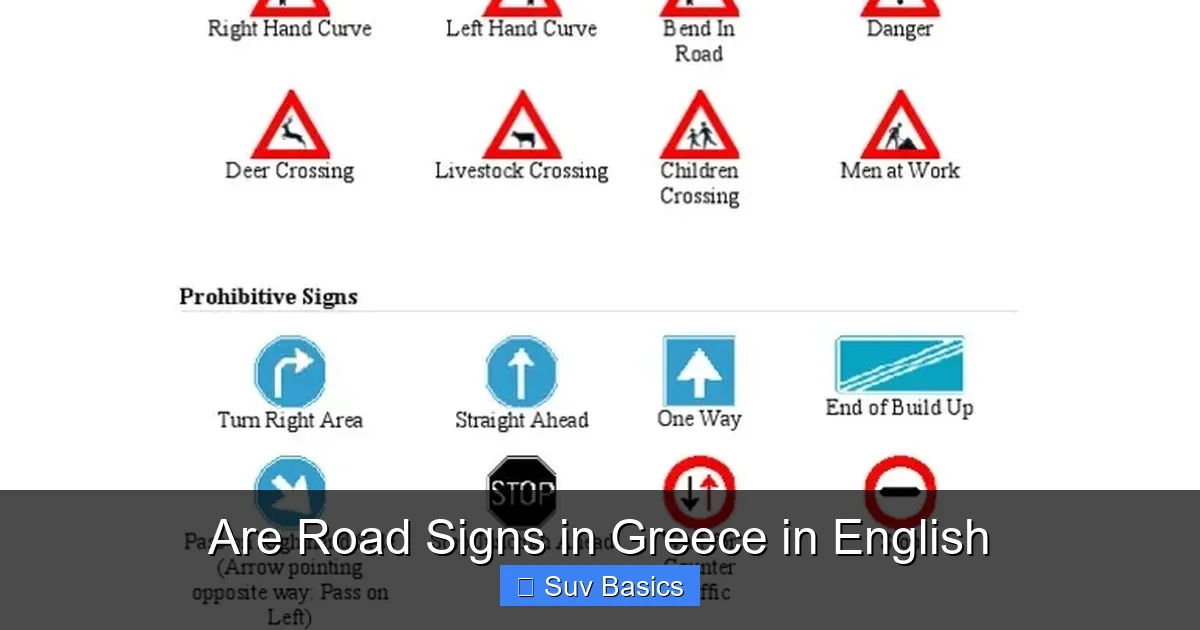
Most road signs in Greece are in Greek, but many—especially near tourist areas and highways—also include English translations or universal symbols. While major routes are generally easy to navigate, rural areas may lack English signage, so preparation is key for a smooth driving experience.
Driving in a foreign country can be both exciting and intimidating—especially when you’re not sure what the road signs mean. If you’re planning a road trip through Greece, one of your first questions might be: *Are road signs in Greece in English?* The short answer is: sometimes. While Greece primarily uses Greek-language signage, English translations and universal symbols are common in areas frequented by tourists. However, if you venture off the beaten path, you’ll quickly notice that English isn’t always available. Understanding how Greek road signs work—and how to navigate them—can make your journey safer and more enjoyable.
Greece is a popular destination for travelers who love scenic drives along coastal roads, mountain passes, and historic routes. Whether you’re cruising around the Peloponnese, exploring the islands via ferry and rental car, or driving from Athens to Delphi, knowing what to expect from road signage is crucial. The good news? Greece follows European Union traffic sign standards, which means many signs use clear, intuitive symbols. The challenge? The Greek alphabet can be confusing at first glance. But with a little preparation and awareness, even first-time visitors can drive confidently.
Key Takeaways
- Primary language is Greek: Official road signs use the Greek alphabet, so familiarity with basic Greek letters or transliterations helps.
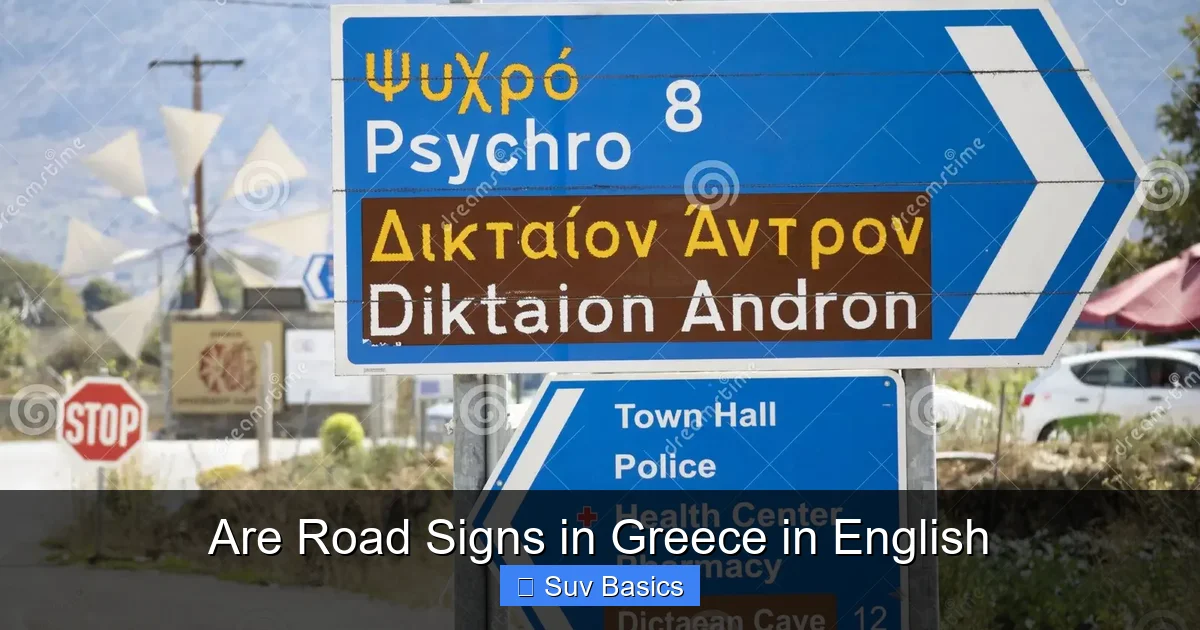
- English appears in tourist zones: Major highways, airports, and popular destinations like Santorini, Mykonos, and Athens often feature bilingual signs.
- Universal symbols reduce confusion: Many signs use internationally recognized icons (e.g., arrows, stop signs, pedestrian crossings), making them understandable even without text.
- Rural areas may lack English: Remote villages and lesser-traveled roads often have signs only in Greek, so GPS or offline maps are essential.
- Speed limits and rules differ: Greece follows European standards, with speed limits in km/h and right-of-way rules that may differ from North America or Asia.
- Rentals and GPS help: Most rental cars come with GPS systems that offer English voice guidance, and apps like Google Maps work well offline.
- Learning a few Greek words helps: Knowing terms like “Είσοδος” (entrance) or “Έξοδος” (exit) can make navigation easier in non-touristy areas.
📑 Table of Contents
- Understanding the Basics of Greek Road Signs
- Where You’ll Find English on Greek Road Signs
- Challenges in Rural and Remote Areas
- Tips for Driving in Greece as an English Speaker
- Speed Limits and Traffic Rules in Greece
- Conclusion
Understanding the Basics of Greek Road Signs
Greek road signs are designed to comply with international traffic conventions, particularly those set by the Vienna Convention on Road Signs and Signals. This means that while the text is in Greek, the shapes, colors, and symbols are largely consistent with what you’d see in other European countries. For example, a red octagon will always mean “Stop,” and a blue circle with a white arrow indicates a mandatory direction.
Most signs fall into standard categories: regulatory (like speed limits and no entry), warning (such as sharp curves or pedestrian crossings), and informational (including directions to towns or attractions). The key difference for English speakers is the language. Instead of reading “STOP” in Latin letters, you’ll see “ΣΤΑΜΑΤΗΣΤΕ” (stamatisté) in Greek. Similarly, “SPEED LIMIT” becomes “ΟΡΙΟ ΤΑΧΥΤΗΤΑΣ” (orio tachytitas).
Common Greek Road Sign Translations
Here are a few essential signs you’re likely to encounter:
– **ΣΤΑΜΑΤΗΣΤΕ (Stamatisté):** Stop
– **ΠΡΟΣΤΑΓΜΑ (Prostagma):** Give Way
– **ΑΠΑΓΟΡΕΥΕΤΑΙ Η ΕΙΣΟΔΟΣ (Apagorevetai i eisodos):** No Entry
– **ΟΡΙΟ ΤΑΧΥΤΗΤΑΣ (Orio tachytitas):** Speed Limit
– **ΕΙΣΟΔΟΣ (Eisodos):** Entrance
– **ΈΞΟΔΟΣ (Exodos):** Exit
– **ΠΕΡΙΟΡΙΣΜΕΝΗ ΤΑΧΥΤΗΤΑ (Periorismeni tachytita):** Reduced Speed Ahead
While these translations help, it’s worth noting that many signs—especially warning signs—rely more on symbols than text. A deer silhouette means wildlife crossing, and a winding arrow indicates a sharp turn. These visual cues transcend language barriers and are designed to be understood at a glance.
Where You’ll Find English on Greek Road Signs
Visual guide about Are Road Signs in Greece in English
Image source: thumbs.dreamstime.com
English is not the official language of Greece, so don’t expect every sign to be bilingual. However, in areas with high tourist traffic, English is often included—either as a secondary line of text or through universally understood symbols.
Highways and Major Routes
On the national highway system, particularly the A1 (Athens-Thessaloniki) and A8 (Athens-Patras), you’ll frequently see signs with both Greek and English. For example, exit signs for cities like Lamia or Corinth may display both “ΛΑΜΙΑ” and “LAMIA” in Latin letters. This dual labeling helps international drivers navigate major arteries without confusion.
Tourist Hotspots and Islands
If you’re driving in popular destinations like Santorini, Mykonos, Crete, or Rhodes, English is much more common. Signs directing you to beaches, archaeological sites, or ferry ports often include English translations. For instance, a sign pointing to “ΑΚΡΟΠΟΛΗ” (Acropolis) will usually also say “ACROPOLIS” below it. Similarly, parking signs in Oia or Fira often have English equivalents.
Airports and Rental Car Areas
When picking up a rental car at Athens International Airport (Eleftherios Venizelos) or other major airports, you’ll find clear English signage guiding you to rental counters, parking zones, and highway entrances. These areas are designed with international travelers in mind, so navigation is straightforward.
Challenges in Rural and Remote Areas
While urban and tourist zones are relatively easy to navigate, rural Greece presents more challenges. In small villages, mountain passes, or agricultural regions, road signs may be written entirely in Greek with no English translation. This is especially true on secondary roads or local routes that don’t see much foreign traffic.
Limited Signage on Backroads
In places like the Mani Peninsula, the Zagori region, or the hills of Epirus, signs may be sparse and written only in Greek. A sign that says “ΠΟΛΗ” (city) or “ΧΩΡΙΟ” (village) won’t help much if you can’t read the name of the destination. This is where GPS and offline maps become invaluable.
Transliteration Isn’t Always Consistent
Even when Greek words are written in Latin letters (a process called transliteration), the spelling can vary. For example, the city of Thessaloniki might appear as “Thessaloniki,” “Saloniki,” or “Selanik” depending on the sign. This inconsistency can be confusing, especially when relying on memory or older maps.
Tips for Driving in Greece as an English Speaker
Navigating Greek roads doesn’t have to be stressful. With a few smart strategies, you can drive confidently—even if you don’t speak Greek.
Use a GPS with Offline Maps
Download offline maps before your trip using apps like Google Maps, Maps.me, or Waze. These apps allow you to navigate without a constant internet connection, which is helpful in remote areas. Most rental car companies also offer GPS units with English voice guidance, which can be a lifesaver.
Learn Basic Greek Letters
You don’t need to become fluent, but learning the Greek alphabet can help you recognize common words. For example, knowing that “Α” is “A,” “Β” is “V,” and “Σ” is “S” allows you to sound out place names. This skill is especially useful when your GPS fails or when reading street signs in small towns.
Carry a Phrasebook or Translation App
While road signs are one thing, communicating with locals or reading parking instructions may require more than symbols. A simple translation app like Google Translate (with camera function) can help you decode signs in real time. Just point your phone at a sign, and it will translate it instantly.
Stick to Main Roads When Possible
If you’re not confident in your navigation skills, stick to major highways and well-marked routes. These are more likely to have English signage and clear directions. Save the backroads for when you’re more comfortable or traveling with a local guide.
Understand Greek Driving Culture
Greek drivers can be assertive, and traffic rules aren’t always followed to the letter. Be prepared for sudden lane changes, minimal use of turn signals, and pedestrians crossing unexpectedly. Always stay alert, especially in cities like Athens or Thessaloniki.
Speed Limits and Traffic Rules in Greece
Greece follows standard European traffic laws, but there are a few key points every driver should know.
– **Urban areas:** 50 km/h (31 mph)
– **Rural roads:** 80–90 km/h (50–56 mph)
– **Highways:** 120–130 km/h (75–81 mph)
Speed limit signs are usually posted in Greek, but the numbers are universal. Look for a white circle with a red border and a black number—this indicates the maximum speed. Be aware that speed cameras are common on highways, and fines can be steep. If you’re looking for a comfortable ride, consider checking out the Top 5 Luxury SUVs of 2024.
Right-of-way rules can also differ from what you’re used to. In Greece, vehicles entering a roundabout must yield to those already in the circle. At intersections without signs, the general rule is that the vehicle on the right has priority—unless otherwise marked.
Conclusion
So, are road signs in Greece in English? The answer is: partially. While you’ll find English translations in tourist areas, major highways, and airports, many signs—especially in rural regions—are only in Greek. However, thanks to universal symbols, GPS technology, and a little preparation, driving in Greece is entirely manageable for English-speaking visitors.
The key is to plan ahead. Download offline maps, learn a few Greek letters, and choose routes that match your comfort level. When you choose the right vehicle, such as a reliable SUV, you’ll feel much more secure on these winding roads. With the right mindset and tools, you can enjoy Greece’s stunning landscapes, charming villages, and historic sites—all from the driver’s seat of your rental SUV. Whether you’re exploring the winding coastal roads of the Peloponnese or navigating the narrow streets of a Cycladic village, understanding road signs is just one part of the adventure. Embrace the journey, stay alert, and you’ll find that driving in Greece is as rewarding as it is scenic.
Frequently Asked Questions
Are all road signs in Greece written in English?
No, most road signs in Greece are in Greek using the Greek alphabet. However, English translations or Latin-letter equivalents are common in tourist areas, major highways, and airports.
Can I drive in Greece if I only speak English?
Yes, many international tourists drive in Greece successfully. Use GPS with offline maps, learn basic Greek letters, and stick to well-marked routes to make navigation easier.
Do Greek road signs use symbols like other European countries?
Yes, Greek road signs follow EU standards and use universal symbols for warnings, regulations, and directions, making them easier to understand regardless of language.
What should I do if I can’t read a road sign in Greece?
Use a translation app with a camera feature, rely on your GPS, or look for visual cues like arrows, colors, and shapes that convey meaning without text.
Are speed limit signs in Greece in English?
Speed limit signs show numbers in black on a white circle with a red border. While the word “speed limit” is in Greek, the numeric value is universal and easy to understand.
Is it safe to drive in rural Greece without knowing Greek?
It can be challenging due to limited English signage. It’s safer to use offline GPS, travel during daylight, and avoid remote roads unless you’re confident in your navigation skills.