
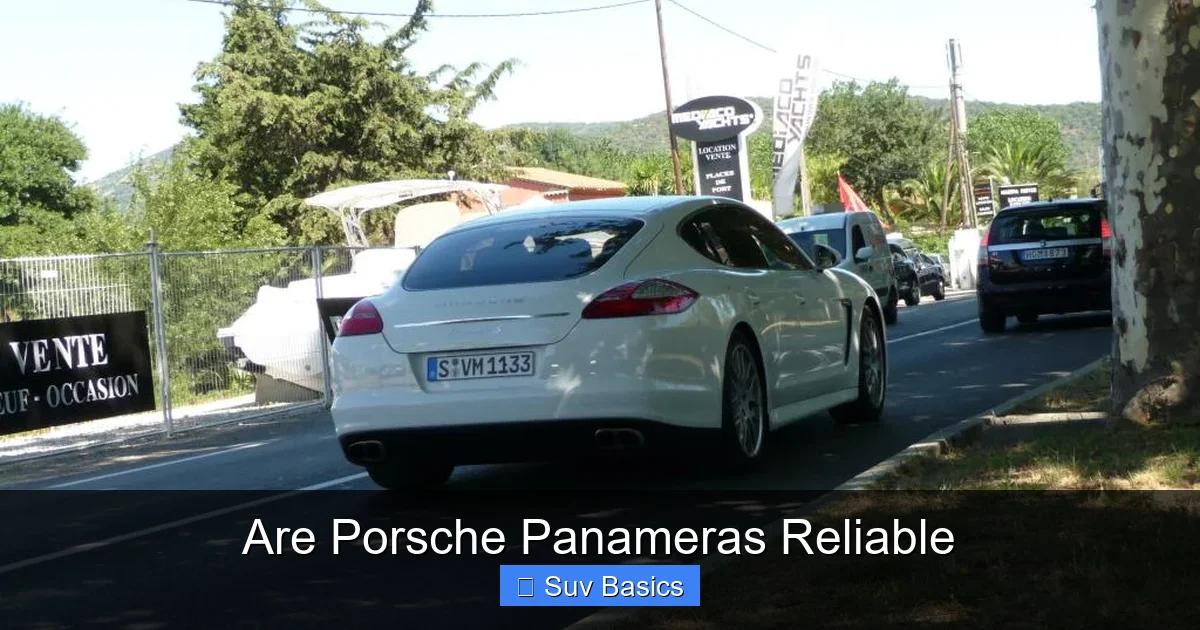
The Porsche Panamera is a luxury performance sedan that blends sports car DNA with everyday usability. While it offers thrilling driving dynamics and premium build quality, its reliability depends heavily on maintenance habits and model year.
If you’re also exploring family-friendly luxury options, check out our guide to the top luxury SUVs for 2024.
Key Takeaways
- Reliability varies by model year: Early Panamera models (2010–2013) had more reported issues, while newer generations (2017+) show improved dependability.
- Regular maintenance is critical: Skipping scheduled service can lead to expensive repairs, especially with complex systems like the PDK transmission and air suspension.
- Electrical and infotainment glitches are common: Owners often report software bugs, screen freezes, and connectivity issues in older models.
- Engine and transmission are generally robust: The V6 and V8 engines, along with the dual-clutch PDK gearbox, are well-engineered but require timely oil and fluid changes.
- Air suspension problems can be costly: Many Panameras use adaptive air suspension, which may fail over time and cost thousands to repair or replace.
- High ownership costs: Parts and labor at Porsche dealerships are expensive, so budgeting for maintenance is essential.
- Long-term owners report satisfaction: Despite some hiccups, many Panamera drivers praise the car’s comfort, performance, and daily drivability.
📑 Table of Contents
- Are Porsche Panameras Reliable? A Deep Dive into Long-Term Ownership
- Understanding the Panamera’s Engineering and Design
- Reliability by Model Year: What Owners Are Saying
- Common Reliability Issues and How to Avoid Them
- Maintenance Costs and Ownership Experience
- Real Owner Experiences: The Good, the Bad, and the Ugly
- Conclusion: Is the Porsche Panamera Right for You?
Are Porsche Panameras Reliable? A Deep Dive into Long-Term Ownership
When you think of Porsche, images of roaring engines, sleek designs, and track-ready performance likely come to mind. But what happens when that performance machine is also a four-door luxury sedan designed for daily commutes, school runs, and weekend getaways? That’s where the Porsche Panamera steps in—a bold blend of sports car soul and executive comfort. But with such complexity comes a big question: Are Porsche Panameras reliable?
The short answer? It depends. The Panamera isn’t a Toyota Camry when it comes to bulletproof reliability, but it’s far from a lemon. Like many high-performance luxury vehicles, its dependability hinges on how well it’s maintained, which model year you choose, and your expectations for long-term ownership. In this guide, we’ll break down everything you need to know about Panamera reliability, from common issues to real owner experiences, so you can decide if this luxury liftback is the right fit for your lifestyle.
Understanding the Panamera’s Engineering and Design
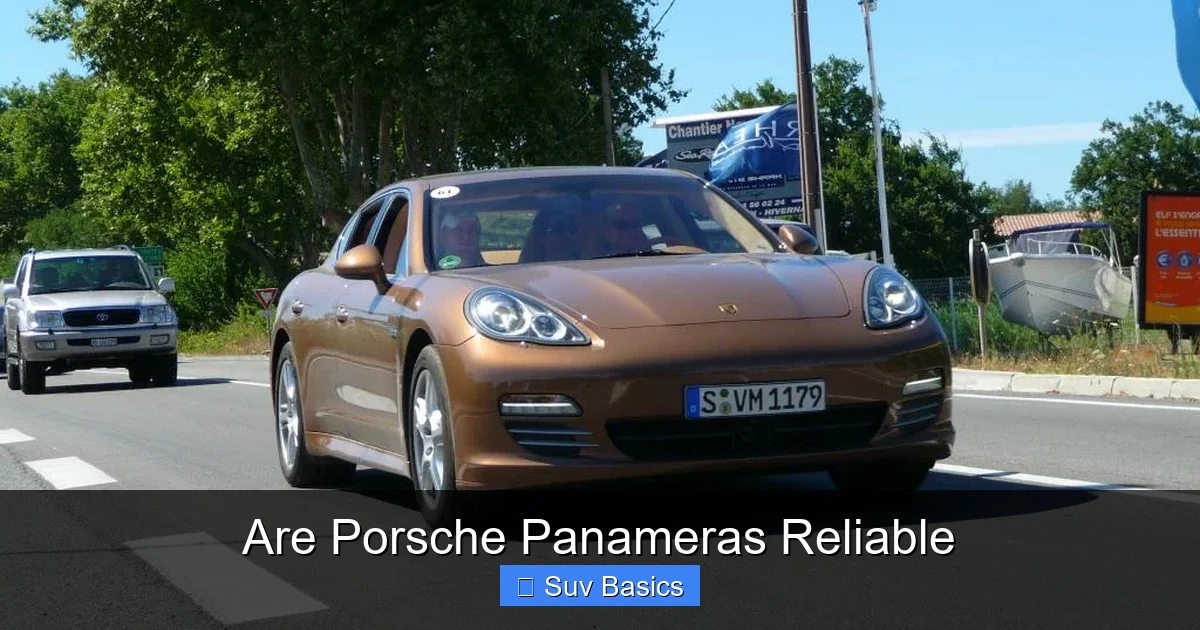
Visual guide about Are Porsche Panameras Reliable
Image source: static.autojunk.nl
The Porsche Panamera first hit the market in 2009 as the brand’s first four-door sedan since the 1990s. It was a bold move—Porsche was known for two-door sports cars, not family haulers. But the Panamera wasn’t just a stretched 911. It was designed from the ground up to offer sports car handling with sedan practicality.
Under the hood, you’ll find a range of engines, from a 3.0-liter V6 to a twin-turbo 4.0-liter V8 in the Turbo models. Most Panameras come with Porsche’s PDK dual-clutch automatic transmission, which is praised for its lightning-fast shifts and smooth operation. The chassis often features adaptive air suspension, all-wheel drive, and advanced driver aids—features that enhance comfort and performance but also add complexity.
This engineering brilliance is part of what makes the Panamera so appealing. But it’s also why reliability can be a mixed bag. More systems mean more potential failure points. For example, the air suspension that gives the Panamera its smooth ride can develop leaks or sensor issues over time. Similarly, the PDK transmission, while durable, requires precise maintenance to avoid costly repairs.
Those interested in how SUVs evolved from utility to luxury might enjoy reading about the history of SUVs.
Reliability by Model Year: What Owners Are Saying
One of the most important factors in determining Panamera reliability is the model year. Early models, particularly those from 2010 to 2013, have a reputation for more frequent issues. These first-generation Panameras were groundbreaking but came with some growing pains.
First Generation (2010–2016): A Mixed Bag
Owners of early Panameras often report problems with the electrical system, including faulty sensors, malfunctioning infotainment screens, and glitchy climate controls. The PCM (Porsche Communication Management) system, while advanced for its time, was prone to freezing or crashing—especially after software updates.
Mechanical issues weren’t uncommon either. Some owners experienced premature wear on the PDK transmission clutch packs, particularly in models with high mileage or aggressive driving. The air suspension also drew complaints, with air springs and compressors failing after 60,000 to 80,000 miles. Repair costs for these components can easily exceed $2,000.
That said, many first-gen Panameras have proven durable with proper care. Owners who followed the maintenance schedule and addressed issues early often report trouble-free driving beyond 100,000 miles.
Second Generation (2017–Present): Improved but Not Perfect
Porsche addressed many of the early flaws in the second-generation Panamera, launched in 2017. The new model featured a redesigned interior, updated infotainment (now with Apple CarPlay and Android Auto), and improved build quality.
Reliability scores from sources like J.D. Power and Consumer Reports have been more favorable for these newer models. Electrical issues are less frequent, and the updated PCM system is more stable. The engines and transmissions remain strong, with fewer reports of major failures.
However, no car is immune to problems. Some 2017–2020 Panameras have had issues with the adaptive cruise control radar sensors, which can fail and trigger warning lights. Additionally, the hybrid variants (Panamera 4 E-Hybrid) have had occasional battery management glitches, though these are relatively rare.
Common Reliability Issues and How to Avoid Them
Even the best-engineered cars have weak spots. The Panamera is no exception. Here are some of the most common reliability concerns—and how to minimize your risk.
Electrical and Infotainment Glitches
The Panamera’s advanced tech is both a blessing and a curse. While features like navigation, voice control, and smartphone integration are impressive, they can be buggy. Owners often report:
– Touchscreen freezes or slow response
– Bluetooth pairing failures
– Climate control system errors
Tip: Keep your PCM software updated. Porsche releases updates periodically, and many glitches can be resolved with a simple reset or dealer update. Avoid third-party modifications, which can interfere with system stability.
Air Suspension Failures
Adaptive air suspension is a hallmark of the Panamera’s comfort, but it’s also one of its most expensive components to repair. Common signs of failure include:
– One corner of the car sitting lower than the others
– A loud compressor noise from the trunk
– Warning lights on the dashboard
Tip: If you notice any suspension issues, don’t ignore them. Continuing to drive on a failing air suspension can damage other components. Consider upgrading to coilovers if you plan to keep the car long-term and want to avoid future air suspension costs.
PDK Transmission Concerns
The PDK transmission is one of Porsche’s engineering triumphs, but it’s not maintenance-free. Over time, the clutch packs can wear, especially in high-performance models or those driven aggressively.
Tip: Follow the recommended service intervals—typically every 40,000 miles for a PDK fluid change. Avoid “launch control” abuse, and let the transmission warm up in cold weather before pushing it hard.
Engine Oil Consumption
Some Panamera owners, particularly those with V8 engines, report higher-than-expected oil consumption. While not a defect, it’s something to monitor.
Tip: Check your oil level every few thousand miles. If you’re burning more than a quart every 1,000 miles, have it inspected. Regular oil changes with high-quality synthetic oil can help reduce consumption.
Maintenance Costs and Ownership Experience
Let’s be honest—owning a Porsche isn’t cheap. The Panamera is no exception. While it’s not as expensive to maintain as a Lamborghini or Ferrari, it’s still a premium vehicle with premium upkeep.
Routine Maintenance
Basic services like oil changes, brake pads, and tire rotations are necessary but can cost more than average. An oil change at a Porsche dealership might run $200–$300, compared to $50–$80 at a local shop. However, using independent Porsche specialists can save you money without sacrificing quality.
Major Repairs
When things go wrong, they can go wrong in a big way. Replacing an air suspension compressor can cost $1,500–$3,000. A PDK transmission rebuild? Easily $5,000 or more. Even something as simple as a faulty door handle sensor can set you back $500.
Extended Warranties and Pre-Purchase Inspections
Given the potential for high repair costs, many Panamera owners opt for extended warranties or certified pre-owned (CPO) programs. These can provide peace of mind, especially for older models.
Pro Tip: Always get a pre-purchase inspection (PPI) before buying a used Panamera. A qualified mechanic can spot hidden issues like water damage, frame problems, or worn suspension components.
Real Owner Experiences: The Good, the Bad, and the Ugly
To get a true sense of Panamera reliability, it helps to hear from those who live with the car every day.
One owner, Sarah from California, drives a 2018 Panamera 4S. “I’ve put 70,000 miles on it, and it’s been fantastic,” she says. “I’ve only had minor electrical glitches—once the screen froze, but a reboot fixed it. The ride is smooth, and it handles like a dream.”
On the other hand, Mike from Texas owns a 2012 Panamera Turbo. “I love the car, but it’s been expensive,” he admits. “I’ve replaced the air suspension twice and had the PDK serviced early. But when it’s running right, there’s nothing like it.”
These stories highlight a common theme: the Panamera can be incredibly rewarding to own, but it demands attention and investment.
Conclusion: Is the Porsche Panamera Right for You?
So, are Porsche Panameras reliable? The answer isn’t black and white. They’re not the most reliable cars on the road, but they’re far from unreliable. With proper maintenance, a good model year, and realistic expectations, the Panamera can be a dependable and thrilling daily driver.
If you’re considering a Panamera, focus on newer models (2017 and later), stick to the maintenance schedule, and budget for unexpected repairs. And if you’re buying used, a thorough inspection is non-negotiable.
At the end of the day, the Panamera isn’t just a car—it’s an experience. It’s the thrill of a sports car with the space of a sedan. For many owners, that blend of performance and practicality makes the occasional hiccup worth it.
If you’re weighing a luxury sedan against a sport utility vehicle, our comparison guide can help you decide.
Frequently Asked Questions
Are Porsche Panameras expensive to maintain?
Yes, maintenance costs are higher than average due to premium parts and labor. Routine services can cost 30–50% more than non-luxury brands, and major repairs (like air suspension or PDK work) can be very expensive.
Which Panamera model year is the most reliable?
The second-generation models (2017 and newer) are generally more reliable than the first generation. They feature updated electronics, better build quality, and fewer reported issues.
Do Panameras have transmission problems?
The PDK transmission is generally reliable but can develop clutch wear over time, especially in high-mileage or aggressively driven vehicles. Regular fluid changes help prevent issues.
How long do Porsche Panameras last?
With proper maintenance, a Panamera can easily last 150,000 to 200,000 miles. Some well-cared-for examples have surpassed 250,000 miles without major engine or transmission failure.
Are Panamera hybrids reliable?
The Panamera E-Hybrid models are generally reliable, but some owners report occasional battery or charging system glitches. Overall, they’re a solid choice for eco-conscious luxury buyers.
Should I buy a used Porsche Panamera?
Yes, but only after a thorough pre-purchase inspection. Focus on well-maintained examples with service records, and consider a CPO warranty for added protection.