
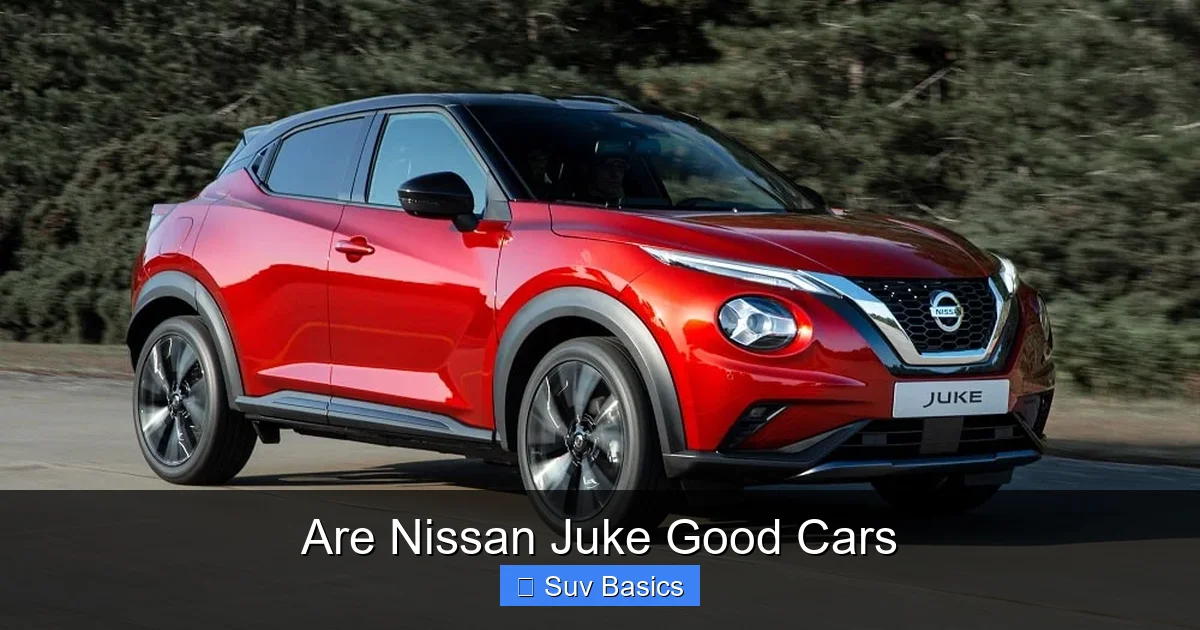
The Nissan Juke is a stylish, fun-to-drive compact SUV that stands out with bold design and agile handling. While it offers good fuel economy and a unique personality, some buyers may find the ride firm and rear visibility limited.
Key Takeaways
- Bold and Unique Styling: The Nissan Juke’s eye-catching design turns heads with its coupe-like roofline, aggressive front grille, and muscular fenders—perfect for drivers who want something different.
- Fun Driving Dynamics: With responsive steering and a peppy turbocharged engine, the Juke delivers an engaging driving experience uncommon in small SUVs.
- Good Fuel Efficiency: Most Juke models achieve 28–32 mpg on the highway, making it a cost-effective choice for daily commuting and weekend trips.
- Compact Interior with Trade-Offs: The cabin is well-designed but tight in the back seat and cargo area—ideal for singles or couples, less so for families.
- Reliability Varies by Year: Earlier models (2011–2015) had some transmission and engine concerns, but later years (2016–2019) improved significantly in dependability.
- Strong Safety Ratings: The Juke earned high marks from the IIHS and NHTSA, especially in later model years with added safety tech like blind-spot monitoring.
- Affordable Used Market: Thanks to depreciation, used Jukes offer great value for budget-conscious buyers seeking style and performance.
📑 Table of Contents
- Are Nissan Juke Good Cars? A Honest Look at the Compact Crossover
- Design and Styling: Bold, Polarizing, and Unforgettable
- Performance and Driving Experience
- Fuel Economy: Efficient for Its Class
- Reliability and Common Issues
- Safety Features and Ratings
- Ownership Costs and Value
- Who Should Buy a Nissan Juke?
- Final Verdict: Are Nissan Juke Good Cars?
Are Nissan Juke Good Cars? A Honest Look at the Compact Crossover
If you’re shopping for a small SUV that breaks the mold, the Nissan Juke might just be the quirky cousin at the family reunion—unlike anything else on the block. Launched in 2010, the Juke was Nissan’s answer to drivers who wanted the practicality of an SUV but refused to sacrifice style or driving excitement. With its frog-eyed headlights, floating roof design, and sporty stance, the Juke stands out in a sea of bland compact crossovers.
But looks aren’t everything. So, are Nissan Juke good cars when it comes to real-world performance, reliability, and value? That’s the million-dollar question. Over its production run from 2011 to 2019 (in the U.S.), the Juke carved out a niche among urban drivers, young professionals, and anyone who enjoys a car that feels more like a hot hatch than a boxy utility vehicle. It’s not perfect—no car is—but for the right buyer, the Juke can be a surprisingly rewarding choice.
Design and Styling: Bold, Polarizing, and Unforgettable
Visual guide about Are Nissan Juke Good Cars
Image source: momentcar.com
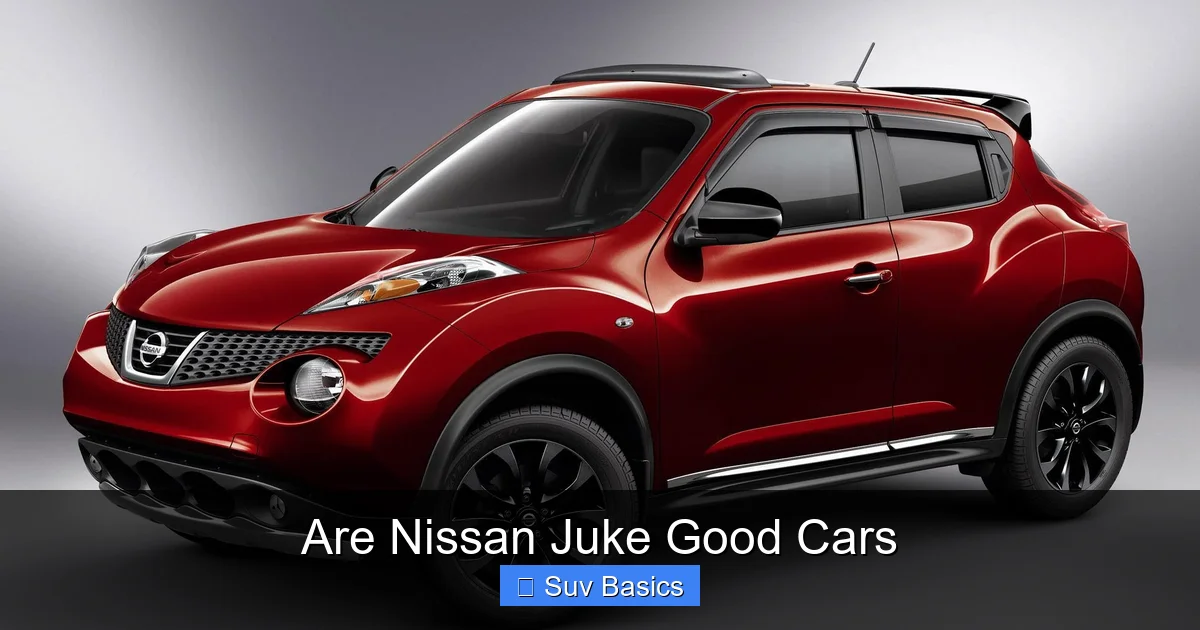
Let’s be honest: the Nissan Juke isn’t for everyone. Its design is bold, almost futuristic, with a high beltline, narrow rear window, and aggressive front fascia that gives it a predatory look. Some call it ugly. Others call it iconic. Either way, you won’t mistake it for a Honda HR-V or Toyota C-HR. To learn more about the evolution of SUVs, see the history of SUVs.
Exterior Highlights
The Juke’s most distinctive feature is its split-headlight design—the main lights are tucked high up near the hood, while the daytime running lights sit lower like angry eyebrows. The roof appears to “float” thanks to blacked-out A-pillars, and the rear spoiler adds a sporty flair. Available in vibrant colors like Electric Blue, Red Alert, and Solar Yellow, the Juke screams individuality.
Interior Comfort and Layout
Inside, the Juke feels more like a sports car than an SUV. The driver-centric cockpit wraps around you, with supportive front seats and intuitive controls. Higher trims like the NISMO RS offer bolstered sport seats and red stitching, enhancing the performance vibe. However, rear-seat space is tight—legroom is limited, and the sloping roofline cuts into headroom for taller passengers. Cargo space is also modest at 10.6 cubic feet behind the rear seats (expandable to 35.9 with seats folded), which is below average for the class.
Performance and Driving Experience
One of the Juke’s strongest selling points is how it drives. Unlike many small SUVs that feel sluggish and uninspired, the Juke delivers a surprisingly lively ride.
Engine and Powertrain Options
From 2011 to 2019, the Juke came with a 1.6-liter turbocharged four-cylinder engine producing 188 horsepower and 177 lb-ft of torque. That’s impressive for a vehicle weighing around 3,000 pounds. The engine pairs with either a 6-speed manual or a continuously variable transmission (CVT). While the manual is more engaging, the CVT—though smoother—can feel sluggish under hard acceleration, especially in earlier models.
Front-wheel drive is standard, but all-wheel drive (AWD) is available on select trims. The AWD system uses a torque-vectoring setup that sends power to individual rear wheels during cornering, improving grip and handling. This makes the Juke surprisingly capable on twisty roads or wet pavement.
Handling and Ride Quality
The Juke’s suspension is tuned for sportiness, which means it handles corners with confidence and minimal body roll. Steering is direct and communicative, giving drivers a sense of connection to the road. However, the trade-off is a firmer ride—potholes and bumps are felt more sharply than in softer-riding competitors like the Mazda CX-3 or Subaru Crosstrek. If you prioritize comfort over agility, this might be a drawback.
Fuel Economy: Efficient for Its Class
For a turbocharged SUV, the Juke delivers respectable fuel efficiency. According to EPA estimates:
– Front-wheel drive models with the CVT achieve 28 mpg city / 32 mpg highway / 30 mpg combined.
– AWD versions are slightly less efficient at 26 mpg city / 30 mpg highway / 28 mpg combined.
– Manual transmission models are rare but offer similar numbers.
In real-world driving, many owners report averaging around 29–31 mpg on mixed driving, which is excellent for a vehicle with this level of performance. Compared to rivals like the Ford EcoSport (23 mpg combined) or the Jeep Renegade (24 mpg), the Juke holds its own.
Reliability and Common Issues
This is where the Juke’s reputation gets mixed. Early models (2011–2015) had some notable reliability concerns, particularly with the CVT and turbocharged engine. For a broader perspective on SUV reliability, consult our evaluation of SUVs guide.
Known Problems
– **CVT Issues:** Some owners reported shuddering, hesitation, or complete failure of the continuously variable transmission. Nissan issued technical service bulletins and extended warranties on certain components, but problems still occurred.
– **Turbocharger Concerns:** A small number of 1.6L engines experienced turbo failures, often linked to oil starvation or carbon buildup. Regular oil changes and using high-quality synthetic oil can help prevent this.
– **Electrical Glitches:** Infotainment systems, sensors, and dashboard warnings occasionally malfunctioned, though these were usually software-related and fixable with updates.
Later Models Improve
From 2016 onward, Nissan made several updates to improve reliability. The CVT was refined, and engine management software was improved. As a result, 2016–2019 Jukes are generally more dependable. According to J.D. Power and Consumer Reports, later models score above average in reliability for the compact SUV segment.
Safety Features and Ratings
Safety is a key consideration for any family vehicle, and the Juke holds up well—especially in later years.
Crash Test Performance
The National Highway Traffic Safety Administration (NHTSA) gave the 2017–2019 Juke an overall 4-star safety rating (out of 5). The Insurance Institute for Highway Safety (IIHS) rated it “Good” in most categories, including moderate overlap front, side, and roof strength. However, it received an “Acceptable” rating for headlights, which is common in older models.
Available Safety Tech
Higher trims (like the SL and NISMO RS) offer advanced features such as:
– Blind-spot monitoring
– Rear cross-traffic alert
– Forward collision warning
– Automatic emergency braking (on select 2018–2019 models)
These features weren’t standard on base models, so it’s worth checking the trim level when buying used.
Ownership Costs and Value
One of the Juke’s biggest advantages is its affordability on the used market. Since it’s no longer in production (Nissan discontinued it in the U.S. after 2019), prices have dropped significantly.
Used Pricing
As of 2024, you can find:
– 2011–2015 models: $8,000–$12,000
– 2016–2019 models: $12,000–$18,000
Higher trims with AWD and NISMO packages command a slight premium. Compared to similar-aged Honda HR-Vs or Mazda CX-3s, the Juke often costs less, making it a budget-friendly option.
Maintenance and Insurance
Maintenance costs are average for the segment. The turbocharged engine requires premium fuel (recommended, not required), which adds to fuel costs. However, routine services like oil changes, brakes, and tires are reasonably priced. Insurance tends to be slightly higher than average due to the Juke’s sporty image, but not dramatically so.
Who Should Buy a Nissan Juke?
The Juke isn’t for everyone—but it’s perfect for the right person.
– **Urban Commuters:** Its compact size makes it easy to park and maneuver in tight city streets.
– **Young Drivers or Couples:** The sporty feel and stylish design appeal to those who want a car that reflects their personality.
– **Budget-Conscious Buyers:** Used Jukes offer great value for the money, especially if you avoid early model years.
– **Weekend Enthusiasts:** If you enjoy driving for the sake of driving, the Juke’s handling and turbo punch make it a fun weekend cruiser.
However, if you need maximum cargo space, rear-seat room, or ultra-smooth ride quality, consider alternatives like the Subaru Crosstrek or Hyundai Kona.
Final Verdict: Are Nissan Juke Good Cars?
So, are Nissan Juke good cars? The answer is: yes—for the right buyer.
The Juke shines with its bold design, engaging driving dynamics, and solid fuel economy. It’s a compact SUV that doesn’t take itself too seriously, offering a refreshing alternative to the cookie-cutter crossovers dominating the market. While early models had some reliability hiccups, later years are much more dependable and packed with useful features.
If you’re looking for a used SUV that’s stylish, fun to drive, and easy on the wallet, the Nissan Juke deserves a serious look. Just be sure to test drive one, check the vehicle history, and consider a pre-purchase inspection—especially if you’re eyeing a 2011–2015 model.
In the end, the Juke isn’t just a car—it’s a statement. And for those who value individuality and driving joy, that’s a statement worth making.
Frequently Asked Questions
Is the Nissan Juke reliable?
Reliability varies by model year. Early Jukes (2011–2015) had some issues with the CVT and turbocharger, but later models (2016–2019) are significantly more dependable. Regular maintenance and choosing a well-cared-for used example can improve longevity.
How much does a used Nissan Juke cost?
Used Nissan Jukes typically range from $8,000 for older base models to $18,000 for newer, higher-trim versions with AWD and low mileage. Prices depend on condition, location, and trim level.
Does the Nissan Juke have all-wheel drive?
Yes, all-wheel drive is available on select trims, particularly the SV and SL models from 2015 onward. AWD improves traction in rain or light snow and enhances cornering stability.
What kind of gas does the Nissan Juke take?
The Juke’s 1.6L turbocharged engine recommends premium gasoline (91 octane or higher) for optimal performance and fuel economy, though it can run on regular in a pinch.
Is the Nissan Juke good for long trips?
The Juke is comfortable for short to medium trips, but rear-seat space and cargo room are limited. For long road trips with passengers or lots of luggage, a larger SUV may be more practical.
Why was the Nissan Juke discontinued?
Nissan discontinued the Juke in the U.S. after 2019 due to declining sales and a shift in focus toward larger SUVs like the Rogue and Kicks. It remains popular in Europe and other markets under updated designs.