
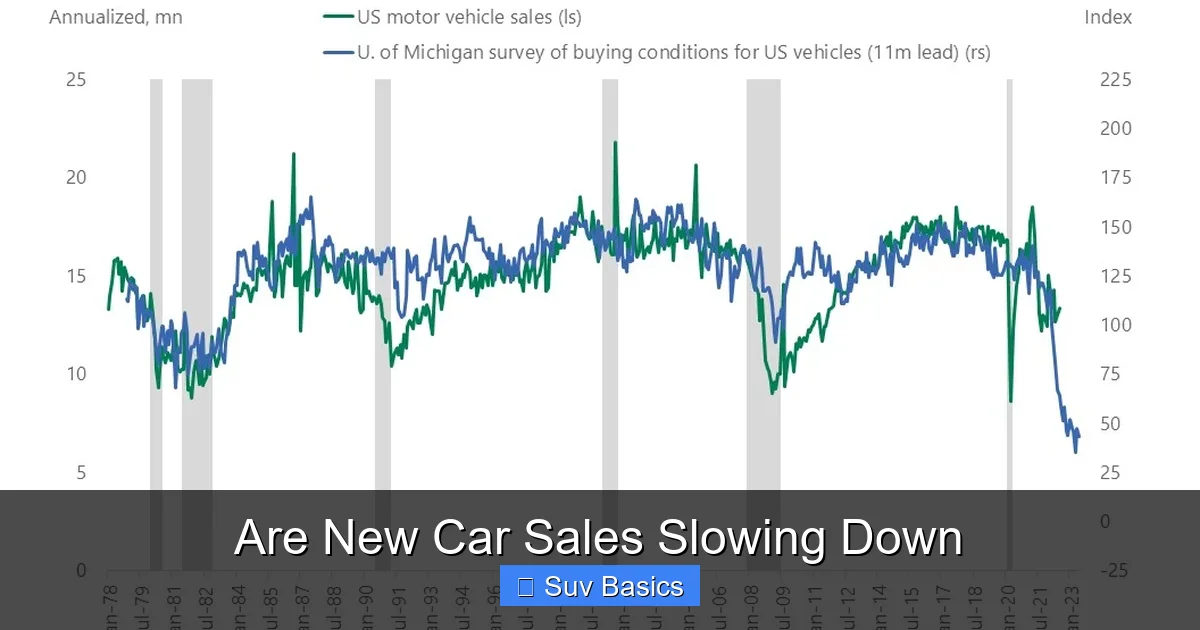
New car sales are indeed showing signs of slowing down in 2024, driven by high interest rates, inflation, and shifting consumer behavior. While demand remains strong for SUVs and electric vehicles, overall sales growth has cooled compared to the post-pandemic surge.
Key Takeaways
- Sales Growth Has Cooled: After a strong rebound in 2021–2023, new car sales are growing at a slower pace in 2024 due to economic headwinds.
- High Interest Rates Are a Major Factor: Rising auto loan rates are making monthly payments less affordable, pushing buyers toward used cars or delaying purchases.
- SUVs Remain Popular: Despite the slowdown, SUVs continue to dominate new car sales, especially compact and hybrid models.
- Electric Vehicle (EV) Sales Are Mixed: While EV adoption is growing, high prices and charging concerns are slowing mass-market uptake.
- Inventory Is Improving: Dealerships now have more vehicles in stock, reducing wait times but increasing pressure to sell.
- Consumers Are More Cautious: Buyers are taking longer to decide, comparing more options, and prioritizing value and fuel efficiency.
- Dealerships Are Adapting: Many are offering more incentives, trade-in deals, and online buying tools to attract hesitant shoppers.
📑 Table of Contents
- Are New Car Sales Slowing Down?
- What’s Behind the Slowdown?
- Are SUVs Still Selling Well?
- What About Electric Vehicles?
- How Are Dealerships Responding?
- What Should Buyers Do?
- Conclusion
Are New Car Sales Slowing Down?
If you’ve been thinking about buying a new car lately, you might have noticed something different at the dealership. Fewer crowds, more inventory on the lot, and salespeople who seem a little more eager to close a deal. That’s not your imagination—new car sales are indeed slowing down in 2024.
After a few years of record-breaking demand and tight supply, the auto market is hitting a soft patch. While people still need vehicles, economic pressures are making them think twice before signing on the dotted line. From rising interest rates to lingering inflation, several factors are cooling the once-red-hot new car market.
But it’s not all bad news. For smart shoppers, this slowdown could mean better deals, more choices, and less pressure to buy quickly. Whether you’re eyeing a rugged SUV, a fuel-efficient hybrid, or a brand-new electric vehicle, understanding what’s driving this shift can help you make a smarter decision.
What’s Behind the Slowdown?
Visual guide about Are New Car Sales Slowing Down
Image source: assets-global.website-files.com
Several key factors are contributing to the cooling of new car sales. Let’s break them down.
High Interest Rates Are Squeezing Buyers
One of the biggest reasons new car sales are slowing is the sharp rise in auto loan interest rates. In 2022 and 2023, the Federal Reserve raised rates aggressively to combat inflation. As a result, the average interest rate on a new car loan climbed from around 4% in early 2022 to over 7% by mid-2024.
For example, on a $40,000 SUV with a 60-month loan, a 4% rate means monthly payments of about $736. At 7%, that jumps to $792—over $50 more per month. Over the life of the loan, that’s nearly $3,200 in extra interest.
This added cost is making many buyers pause. Some are opting for used cars, which often come with lower price tags and shorter loan terms. Others are delaying purchases altogether, choosing to keep their current vehicles longer.
Inflation and Cost of Living Pressures
Even as inflation has eased from its 2022 peak, everyday expenses—like grocers, rent, and utilities—remain high. This leaves less room in household budgets for big-ticket items like new cars.
A recent survey by Cox Automotive found that nearly 60% of consumers say inflation has impacted their decision to buy a new vehicle. Many are prioritizing essential spending and cutting back on discretionary purchases.
This financial caution is especially evident among middle-income buyers, who are the backbone of the SUV and crossover market. With less disposable income, they’re more likely to shop around, wait for sales, or consider certified pre-owned options.
Improved Inventory Means Less Urgency
During the pandemic, semiconductor shortages caused massive production delays. Dealerships had empty lots, and buyers faced waitlists of six months or more. That scarcity created a sense of urgency—people bought quickly, often paying above sticker price, just to secure a vehicle.
Now, that’s changed. Automakers have ramped up production, and inventory levels are back to pre-pandemic norms. According to J.D. Power, the average days’ supply of new vehicles reached 68 days in June 2024—up from just 20 days in early 2022.
With more cars available, buyers no longer feel the need to rush. They can take their time, compare models, negotiate prices, and wait for the right deal. This shift in power from sellers to buyers is a major reason sales are slowing.
Are SUVs Still Selling Well?
Despite the overall slowdown, one segment remains strong: SUVs.
SUVs Dominate the Market
SUVs continue to be the most popular vehicle type in the U.S., accounting for over 50% of all new car sales. Compact and midsize SUVs—like the Toyota RAV4, Honda CR-V, and Hyundai Tucson—are especially in demand.
Why? They offer a blend of space, fuel efficiency, and versatility that appeals to a wide range of buyers. Families love the extra room for kids and gear. Commuters appreciate the higher driving position and all-wheel-drive options. And with hybrid versions now widely available, many SUVs are more fuel-efficient than ever.
For example, the 2024 Toyota RAV4 Hybrid gets an EPA-estimated 40 miles per gallon combined—better than many sedans. That kind of efficiency is a big selling point in today’s economy.
Buyers Are Choosing Value and Efficiency
Even within the SUV category, buyers are being more selective. They’re looking for models that offer the best combination of price, features, and fuel economy.
Trim levels matter more than ever. Many shoppers are skipping the top-tier luxury versions and opting for mid-range trims that include key features like Apple CarPlay, advanced safety systems, and all-wheel drive—without the $10,000 price jump.
Hybrids are also gaining ground. The Ford Escape Hybrid, Subaru Crosstrek Hybrid, and Kia Sportage Hybrid are all seeing increased interest as buyers seek to reduce fuel costs without going fully electric.
What About Electric Vehicles?
Electric vehicle (EV) sales are growing, but not as fast as some predicted.
EV Adoption Is Slowing
After years of rapid growth, EV sales growth has slowed in 2024. According to Kelley Blue Book, EV sales increased by just 9% in the first half of 2024, compared to 49% growth in the same period in 2023.
Why the slowdown? High prices are a big factor. The average transaction price for a new EV is still over $55,000—well above the overall market average of around $48,000. Even with federal tax credits, many buyers find EVs out of reach.
Charging infrastructure remains a concern, especially in rural areas. Range anxiety—the fear of running out of battery—still deters some buyers, even as EV ranges improve.
Hybrids Are the Sweet Spot
For many consumers, hybrids offer the best of both worlds: better fuel economy than gas-only vehicles, without the range or charging limitations of EVs.
Plug-in hybrids (PHEVs) are also gaining popularity. Models like the Toyota RAV4 Prime and Ford Escape PHEV can travel 30–40 miles on electric power alone, making them ideal for daily commutes, while still having a gas engine for longer trips.
As a result, automakers are expanding their hybrid lineups. Honda, Hyundai, and Kia have all announced plans to offer hybrid versions of nearly all their SUVs by 2025.
How Are Dealerships Responding?
With sales slowing, dealerships are adapting their strategies to attract buyers.
More Incentives and Discounts
To move inventory, many dealers are offering deeper discounts, cash rebates, and low-interest financing. Manufacturer incentives—like $2,000 off a new SUV or 0.9% APR financing—are becoming more common.
Some brands are even offering “loyalty bonuses” for returning customers or “conquest cash” to lure buyers from competitors.
Enhanced Online Shopping Tools
Dealerships are investing in digital tools to make the buying process easier. Many now offer virtual tours, online financing applications, and home delivery options.
You can configure your ideal SUV, get a trade-in estimate, and even complete the purchase—all from your couch. This convenience is especially appealing to younger buyers who prefer digital experiences.
Focus on Trade-Ins and Certified Pre-Owned
With new car demand softening, dealers are pushing trade-ins and certified pre-owned (CPO) vehicles. CPO programs offer used cars with extended warranties, roadside assistance, and rigorous inspections—giving buyers peace of mind.
For dealers, this helps maintain profit margins while still moving metal. For buyers, it’s a way to get a nearly new SUV at a lower price.
What Should Buyers Do?
If you’re in the market for a new SUV or car, here are some smart strategies:
Shop Around and Compare
Don’t settle for the first offer. Get quotes from multiple dealerships—both local and online. Use tools like Edmunds, Kelley Blue Book, and TrueCar to see what others are paying for the same model.
Consider Timing
End-of-month, end-of-quarter, and end-of-year sales events often bring the best deals. Dealers are more motivated to meet quotas during these periods.
Negotiate the Out-the-Door Price
Focus on the total price, not just the monthly payment. Dealers can manipulate loan terms to make payments look lower, but you’ll pay more in interest over time.
Explore Hybrid and CPO Options
If a new SUV is too expensive, consider a hybrid or a certified pre-owned model. You’ll save money and still get a reliable, feature-rich vehicle.
Conclusion
Yes, new car sales are slowing down—but that doesn’t mean the market is collapsing. It’s evolving. Economic pressures are making buyers more cautious, but they’re also creating opportunities for savvy shoppers.
SUVs remain the top choice, especially fuel-efficient and hybrid models. EVs are growing, but hybrids are filling the gap for many consumers. And with more inventory and better deals available, now could be a great time to buy—if you do your homework.
The key is to stay informed, shop smart, and take advantage of the shifting market dynamics. Whether you’re after a rugged off-roader or a family-friendly crossover, there’s never been a better time to find the right SUV at the right price.
Frequently Asked Questions
Are new car sales actually slowing down?
Yes, new car sales growth has slowed in 2024 compared to the rapid rebound seen in 2021–2023. High interest rates, inflation, and improved inventory are contributing to more cautious consumer behavior.
Why are people buying fewer new cars?
Rising auto loan rates, high vehicle prices, and broader economic uncertainty are making buyers more hesitant. Many are choosing used cars, keeping their current vehicles longer, or delaying purchases.
Are SUVs still selling well despite the slowdown?
Yes, SUVs continue to dominate the market, especially compact and hybrid models. Buyers value their space, versatility, and improving fuel efficiency.
Should I wait to buy a new car?
It depends on your needs. If you need a vehicle now, current inventory and incentives may offer good deals. If you can wait, end-of-year sales could bring even better discounts.
Are electric vehicles selling slower now?
EV sales growth has slowed in 2024 due to high prices, charging concerns, and consumer hesitation. However, hybrids and plug-in hybrids are gaining popularity as a middle ground.
How can I get the best deal on a new SUV?
Shop around, compare prices online, negotiate the total out-the-door price, and consider timing your purchase around sales events. Also explore hybrid and certified pre-owned options for better value.