
Yes, most cars today are front-wheel drive (FWD), especially compact sedans, hatchbacks, and many SUVs. This layout offers better fuel efficiency, lower costs, and improved interior space, making it ideal for everyday driving in most conditions.
If you’ve ever shopped for a car, you’ve probably noticed that most of the vehicles on the lot—especially compact cars, sedans, and even many SUVs—are front-wheel drive (FWD). But why is that? Are most cars FWD simply because it’s cheaper to build, or are there real performance and practical benefits? The answer lies in a mix of engineering efficiency, consumer demand, and evolving automotive design.
Front-wheel drive has become the dominant layout in the automotive world over the past few decades. While rear-wheel drive (RWD) and all-wheel drive (AWD) still have their place—especially in performance cars, trucks, and luxury vehicles—FWD rules the mainstream market. From the Honda Civic to the Toyota RAV4, FWD is the go-to choice for automakers aiming to deliver reliable, fuel-efficient, and affordable transportation. But what makes FWD so popular, and is it the right choice for you?
In this guide, we’ll break down why most cars are FWD, how it works, its advantages and limitations, and how it compares to other drivetrain options. Whether you’re buying your first car or just curious about automotive design, understanding FWD will help you make a smarter decision.
Key Takeaways
- FWD is the most common drivetrain: Over 60% of new passenger vehicles sold globally use front-wheel drive due to cost, efficiency, and packaging advantages.
- Better fuel economy: FWD vehicles typically weigh less and have fewer mechanical parts, leading to improved gas mileage.
- Enhanced interior space: With the engine and transmission mounted transversely, FWD allows for more cabin and trunk room.
- Improved traction in snow and rain: The weight of the engine over the driven wheels helps with grip in slippery conditions.
- Less ideal for high-performance driving: FWD can suffer from torque steer and understeer, making it less suitable for aggressive cornering or towing.
- Most SUVs now use FWD or AWD: While traditional SUVs were rear-wheel drive, modern crossovers often start with FWD and offer AWD as an upgrade.
- Maintenance is simpler and cheaper: Fewer drivetrain components mean lower repair costs and easier servicing.
📑 Table of Contents
- What Is Front-Wheel Drive (FWD)?
- Why Are Most Cars FWD?
- Advantages of Front-Wheel Drive
- Limitations of Front-Wheel Drive
- FWD vs. RWD vs. AWD: Which Is Right for You?
- The Future of FWD in SUVs and EVs
- Conclusion
What Is Front-Wheel Drive (FWD)?
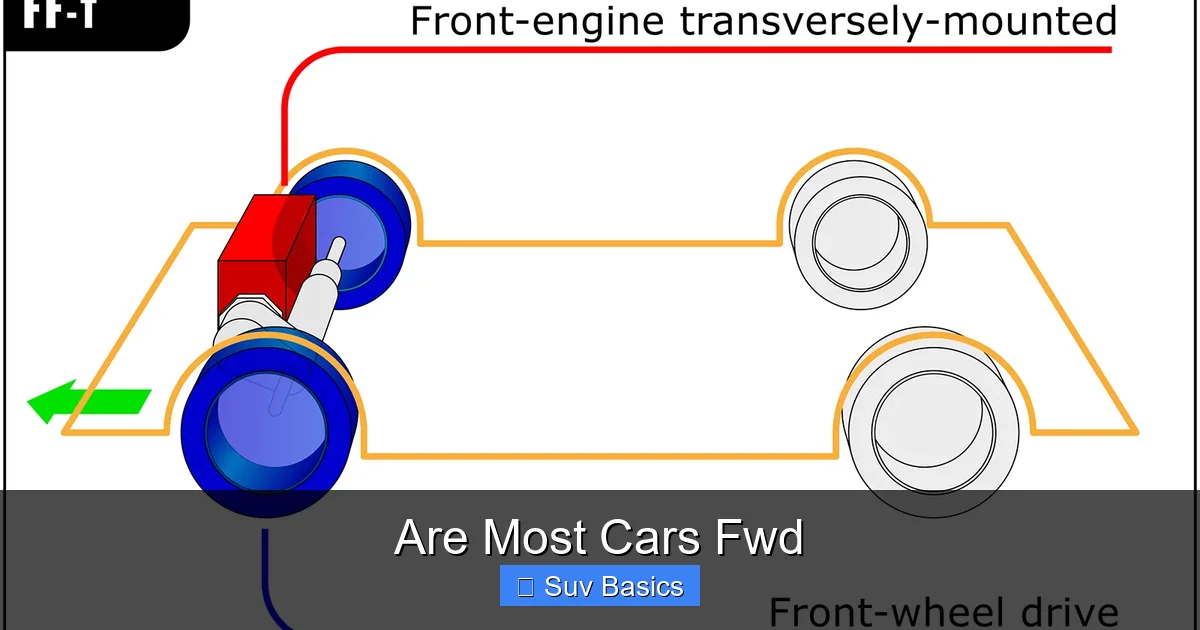
Front-wheel drive means that the engine sends power to the front wheels only. Unlike rear-wheel drive, where the engine typically sits in the front but powers the rear wheels via a driveshaft, FWD combines the engine, transmission, and differential into a single compact unit mounted transversely (sideways) in the engine bay.
How FWD Works
In a typical FWD setup, the engine is positioned sideways, and the transmission is bolted directly to it. Power flows from the engine through the transmission and into the differential, which then sends torque to the front wheels via half-shafts (also called axle shafts). Because all the major drivetrain components are up front, there’s no need for a long driveshaft running under the car to the rear wheels.
This compact design not only saves space but also reduces weight and mechanical complexity. It’s one of the main reasons why FWD vehicles tend to be lighter and more fuel-efficient than their RWD or AWD counterparts.
Common FWD Vehicles
You’ll find FWD in a wide range of vehicles, including:
- Compact and midsize sedans (e.g., Toyota Camry, Honda Accord)
- Hatchbacks (e.g., Volkswagen Golf, Hyundai Elantra GT)
- Subcompact cars (e.g., Nissan Versa, Kia Rio)
- Many crossovers and SUVs (e.g., Honda CR-V, Ford Escape, Toyota RAV4)
Even some minivans and electric vehicles use FWD or a front-motor setup for similar reasons.
Why Are Most Cars FWD?
The dominance of front-wheel drive isn’t accidental—it’s the result of decades of engineering refinement and market demand. Several key factors explain why automakers favor FWD for the majority of their vehicles.
Cost and Manufacturing Efficiency
FWD vehicles are cheaper to produce. With fewer parts—no rear differential, no driveshaft, no rear axle—manufacturers save on materials and assembly time. These savings are passed on to consumers in the form of lower prices and better value.
Visual guide about Are Most Cars Fwd
Image source: digitaltrends.com
For example, a FWD compact car might cost $1,000–$2,000 less to build than a comparable RWD model. That difference adds up quickly when automakers produce hundreds of thousands of units annually.
Better Fuel Economy
Because FWD vehicles are lighter and have less mechanical resistance, they typically achieve better gas mileage. The absence of a driveshaft and rear differential reduces rotational mass, meaning the engine doesn’t have to work as hard to move the car.
This is especially important in today’s market, where fuel efficiency and emissions standards are stricter than ever. Automakers are under pressure to deliver vehicles that meet Corporate Average Fuel Economy (CAFE) standards, and FWD helps them do that.
Improved Interior and Cargo Space
The transverse engine layout in FWD cars frees up space in the cabin and trunk. Without a bulky driveshaft tunnel running through the center of the car, automakers can design flatter floors, more legroom, and larger storage areas.
For families and commuters, this means more comfort and practicality. A FWD SUV like the Subaru Forester or Mazda CX-5 can offer nearly as much interior space as a larger vehicle, thanks to efficient packaging.
Advantages of Front-Wheel Drive
FWD isn’t just popular—it’s practical. Here are the main benefits that make it the preferred choice for everyday drivers.
Better Traction in Wet and Snowy Conditions
Because the engine sits directly over the front wheels, there’s more weight on the driven wheels. This extra weight helps improve traction, especially in rain, snow, or icy conditions. For drivers in colder climates, this can mean better control and safer handling.
While AWD offers even better traction, FWD is often sufficient for light snow and everyday winter driving—especially when paired with winter tires.
Smoother Ride and Handling
FWD vehicles tend to have a more balanced weight distribution front-to-rear compared to RWD cars, which often have a heavier rear end. This can result in more predictable handling and less oversteer during cornering.
Additionally, because the front wheels handle both steering and power delivery, the car tends to “pull” itself forward rather than “push” from the rear, which many drivers find more intuitive.
Lower Maintenance and Repair Costs
With fewer moving parts, FWD systems are generally easier and cheaper to maintain. There’s no rear differential to service, no driveshaft to balance, and no rear axle to worry about. Brake and tire wear is also more even, since the front wheels aren’t solely responsible for both steering and acceleration.
Common FWD maintenance includes regular oil changes, brake inspections, and tire rotations—standard stuff that most mechanics can handle quickly and affordably.
Limitations of Front-Wheel Drive
While FWD has many strengths, it’s not perfect. There are some drawbacks to consider, especially if you’re looking for high performance or heavy-duty capability.
Torque Steer
One of the most common complaints about FWD is torque steer—a phenomenon where the car pulls to one side during hard acceleration. This happens because the two front half-shafts are often unequal in length, causing uneven power delivery.
Modern engineering has reduced this issue significantly, but it can still be noticeable in high-powered FWD cars like the Honda Civic Si or Ford Focus ST.
Understeer in Cornering
FWD vehicles tend to understeer—meaning the front wheels lose grip before the rear wheels during sharp turns. Instead of rotating around the corner, the car “pushes” straight ahead.
This isn’t necessarily dangerous, but it can feel less responsive for drivers who enjoy spirited driving. Enthusiasts often prefer RWD or AWD for better balance and control.
Limited Towing and Payload Capacity
Because the front wheels handle both steering and power, FWD vehicles aren’t ideal for towing heavy loads. The added weight on the front axle can strain the suspension and reduce handling stability.
If you plan to tow a trailer or carry heavy cargo regularly, a RWD or AWD vehicle with a stronger drivetrain may be a better choice.
FWD vs. RWD vs. AWD: Which Is Right for You?
FWD: Best for Everyday Driving
If you’re commuting, running errands, or driving in mild to moderate weather, FWD is an excellent choice. It’s efficient, affordable, and reliable—perfect for the majority of drivers.
RWD: Ideal for Performance and Towing
Rear-wheel drive offers better weight balance and handling dynamics, making it popular in sports cars (like the Ford Mustang) and trucks. It’s also better for towing, as the rear wheels can push the load more effectively.
AWD: Great for All-Weather Confidence
All-wheel drive sends power to all four wheels, providing superior traction in snow, rain, or off-road conditions. Many modern SUVs and crossovers offer AWD as an option, often starting with a FWD base model.
For example, the Toyota RAV4 comes standard with FWD, but you can upgrade to AWD for better performance in winter weather.
The Future of FWD in SUVs and EVs
FWD in Modern SUVs
While traditional body-on-frame SUVs were often RWD, today’s unibody crossovers are predominantly FWD-based. Models like the Nissan Rogue, Chevrolet Equinox, and Hyundai Tucson all use FWD platforms for better efficiency and interior space.
AWD is typically available as an option, using a rear motor or clutch system to send power to the back wheels when needed.
Electric Vehicles and FWD
Many electric vehicles (EVs) use a front-mounted motor, effectively making them FWD. The Tesla Model 3 Standard Range, for example, is FWD, while dual-motor versions offer AWD.
EVs benefit from FWD’s simplicity and packaging efficiency, allowing for larger battery packs and more cabin space.
Conclusion
So, are most cars FWD? Absolutely. Front-wheel drive dominates the automotive market for good reason—it’s cost-effective, fuel-efficient, space-saving, and well-suited for everyday driving. Whether you’re behind the wheel of a compact sedan or a family SUV, chances are you’re driving a FWD vehicle.
While it may not offer the thrilling dynamics of RWD or the all-weather grip of AWD, FWD strikes the perfect balance for the average driver. It’s reliable, practical, and increasingly refined. As automakers continue to prioritize efficiency and affordability, FWD will likely remain the go-to choice for years to come.
If you’re shopping for a new car, don’t overlook the benefits of front-wheel drive. It might just be the smartest choice for your lifestyle.
Frequently Asked Questions
Are most cars FWD?
Yes, the majority of new passenger vehicles sold today are front-wheel drive. This includes most sedans, hatchbacks, and many SUVs, especially in the compact and midsize categories.
Is FWD better than RWD?
It depends on your needs. FWD is better for fuel economy, interior space, and everyday driving, while RWD offers superior handling and performance, especially in sports cars.
Can FWD cars handle snow?
Yes, FWD cars generally perform well in snow and rain because the engine’s weight improves front-wheel traction. However, winter tires are still recommended for optimal safety.
Do FWD cars have less trunk space?
No, FWD cars often have more trunk space because there’s no driveshaft tunnel or rear differential taking up room under the vehicle.
Are FWD cars cheaper to maintain?
Generally, yes. FWD systems have fewer components, which means lower repair costs and simpler maintenance compared to RWD or AWD vehicles.
Can you upgrade a FWD car to AWD?
Not typically. AWD requires additional hardware like a rear differential and driveshaft, which aren’t present in most FWD platforms. It’s usually only available as a factory option.