
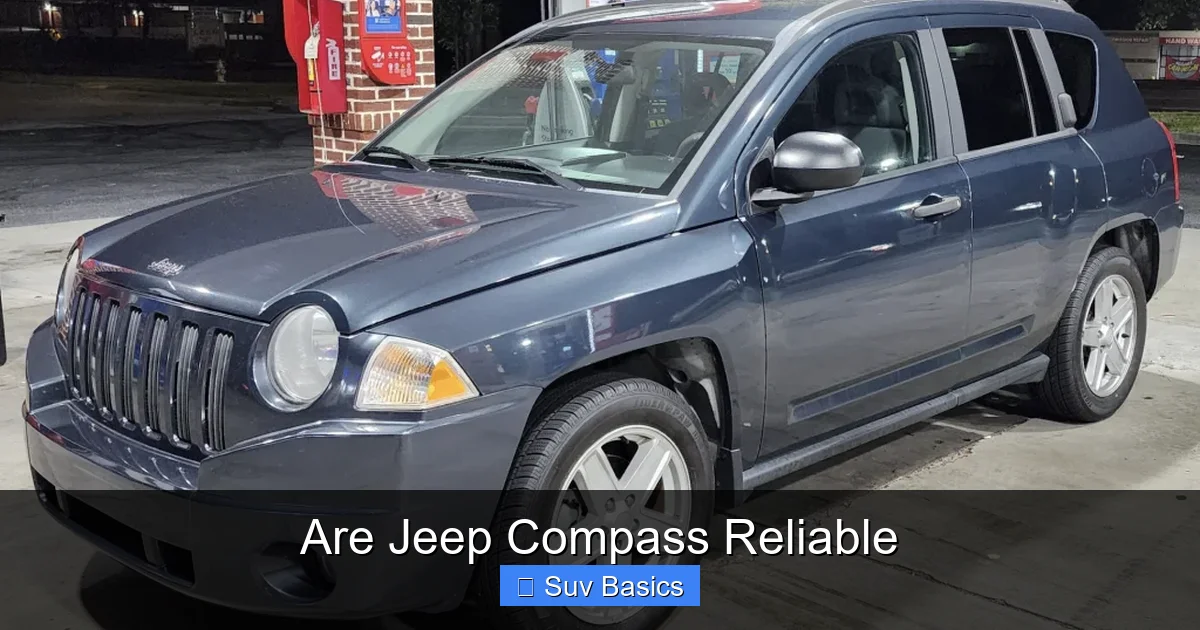
The Jeep Compass offers a blend of off-road capability and daily drivability, but its reliability has been a mixed bag over the years. While recent models show improvement, potential buyers should weigh common issues against strong safety scores and rugged styling.
When you think of Jeep, images of rugged trails, open-air freedom, and iconic seven-slot grilles probably come to mind. The Jeep Compass aims to bring that adventurous spirit into the modern compact SUV market—offering a blend of style, capability, and everyday practicality. But amid the marketing buzz and rugged aesthetics, a critical question remains: Are Jeep Compass reliable?
Reliability is one of the most important factors when buying any vehicle, especially in the competitive compact SUV segment. With so many options—from the Toyota RAV4 to the Mazda CX-5—you want to know your investment will last without constant trips to the repair shop. The Jeep Compass has had its share of ups and downs over the years, but recent improvements suggest Jeep is listening to customer feedback and making meaningful changes. In this guide, we’ll dive deep into the Compass’s reliability record, explore common issues, and help you decide if it’s the right SUV for your lifestyle.
Key Takeaways
- Improved Reliability in Recent Years: Newer Jeep Compass models (2020 and later) have shown better dependability thanks to updated engines and transmissions.
- Common Mechanical Issues: Early models faced problems with the nine-speed automatic transmission, electrical glitches, and premature brake wear.
- Strong Safety Ratings: The Compass earns high marks from the IIHS and NHTSA, especially in crash protection and available driver-assist features.
- Off-Road Capability: With available 4×4 systems and Jeep’s Selec-Terrain traction control, it’s one of the more capable compact SUVs for light off-roading.
- Fuel Efficiency Trade-Offs: While efficient for an SUV, fuel economy lags behind rivals like the Honda CR-V or Toyota RAV4.
- Interior Quality Varies: Higher trims offer premium materials, but base models feel budget-oriented with hard plastics and outdated tech.
- Warranty and Maintenance Costs: Standard 3-year/36,000-mile warranty is average; long-term maintenance can be pricier than competitors due to specialized parts.
📑 Table of Contents
- Jeep Compass Reliability Over the Years
- Common Jeep Compass Reliability Issues
- Safety and Owner Satisfaction
- Off-Road Capability vs. Daily Drivability
- Maintenance, Warranty, and Long-Term Costs
- Should You Buy a Jeep Compass?
Jeep Compass Reliability Over the Years
The Jeep Compass first hit the market in 2007 as a more car-like alternative to the boxier Jeep Patriot. Over the past decade and a half, it’s undergone several redesigns, with the most significant refresh arriving in 2017 and another major update in 2022. These changes have directly impacted its reliability trajectory.
Early Models (2007–2016): A Rocky Start
The first-generation Compass struggled with reliability from the outset. Owners frequently reported issues with the continuously variable transmission (CVT), which was prone to overheating and failure. Electrical problems—such as malfunctioning dashboards, faulty window switches, and erratic infotainment behavior—were also common. According to Consumer Reports and J.D. Power, these early models consistently ranked below average in dependability.
Second Generation (2017–2019): Mixed Progress
The 2017 redesign brought a more modern platform, better interior materials, and a new nine-speed automatic transmission. While this was a step forward, the new transmission introduced its own set of problems. Many owners reported harsh shifting, delayed engagement, and even complete failures—especially in colder climates. Additionally, the 2.4L Tigershark engine, while more powerful, showed signs of premature wear in some cases.
Recent Models (2020–Present): Turning the Corner
Jeep addressed many of these concerns starting in 2020. The nine-speed transmission received software updates and hardware tweaks to improve smoothness and durability. The 2022 refresh introduced a more refined interior, updated Uconnect infotainment system, and enhanced driver-assistance features. Reliability scores have steadily climbed, with the 2021 and 2022 models earning “Average” to “Above Average” ratings from J.D. Power and RepairPal.
Common Jeep Compass Reliability Issues
No vehicle is perfect, and the Compass is no exception. While newer models are more dependable, certain issues still pop up. Knowing what to watch for can save you time, money, and frustration down the road.
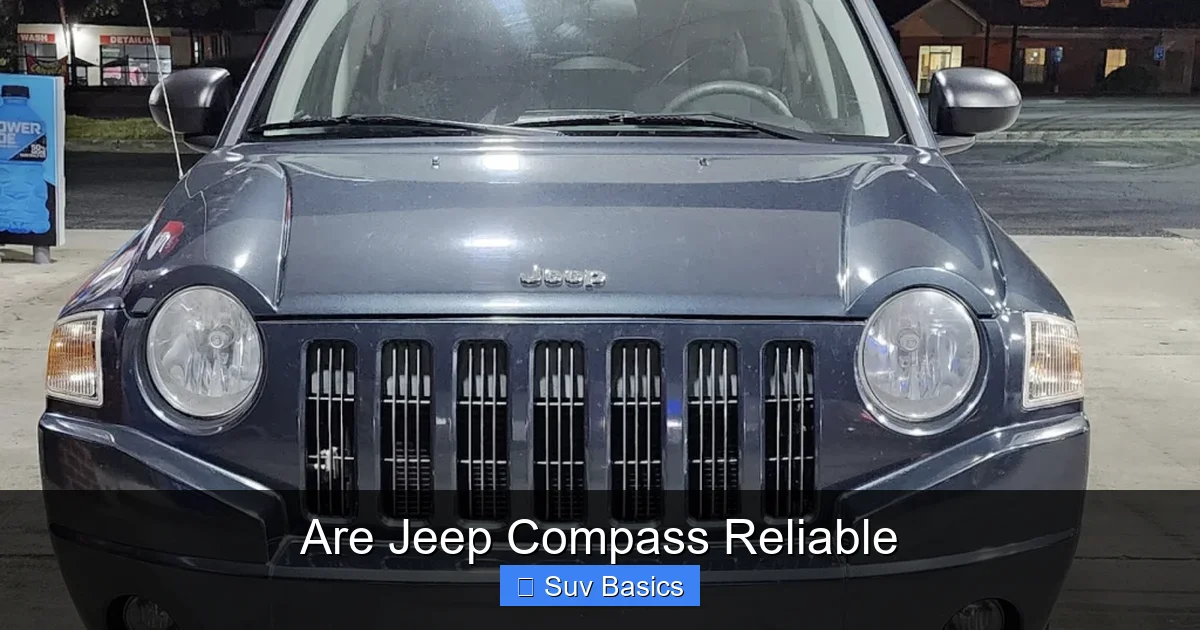
Visual guide about Are Jeep Compass Reliable
Image source: reliableridesga.com
Transmission Troubles
The nine-speed automatic transmission remains the most frequently cited concern. Symptoms include jerky shifts, hesitation when accelerating, and warning lights on the dashboard. In some cases, the transmission control module (TCM) needs replacement. Jeep has issued technical service bulletins (TSBs) for these issues, and many are covered under warranty—but out-of-warranty repairs can cost $2,000 or more.
Electrical and Infotainment Glitches
The Uconnect system, while improved, can still be finicky. Owners report freezing screens, Bluetooth connectivity drops, and unresponsive touch controls. These issues are often resolved with software updates, but they can be annoying, especially on long trips. Additionally, some models have experienced problems with power windows, door locks, and instrument cluster displays.
Brake and Suspension Wear
Premature brake pad and rotor wear have been reported, particularly in models with the 4×4 system. This may be due to the added weight and torque distribution. Front suspension components, including struts and control arms, can also wear out faster than expected, leading to a rougher ride and increased maintenance costs.
Engine Performance Concerns
The 2.4L four-cylinder engine is generally reliable, but some owners have noted oil consumption issues and timing chain noise. The turbocharged 1.3L engine introduced in 2022 is newer and less proven, so long-term reliability data is still limited. Regular oil changes and using high-quality fuel can help mitigate these risks.
Safety and Owner Satisfaction
Despite its mechanical quirks, the Jeep Compass scores well in safety—a major factor in overall reliability perception.
Crash Test Ratings
The Insurance Institute for Highway Safety (IIHS) awarded the 2022 Compass a “Top Safety Pick” rating when equipped with specific headlights and front crash prevention. It earned “Good” ratings in all crash categories and “Superior” ratings for front crash prevention. The National Highway Traffic Safety Administration (NHTSA) also gives it a 5-star overall safety rating.
Driver-Assist Features
Available features like adaptive cruise control, blind-spot monitoring, lane departure warning, and automatic emergency braking add peace of mind. These systems work reliably in most conditions, though some owners note occasional false alerts in heavy rain or snow.
Owner Reviews and Satisfaction
On sites like Edmunds and Kelley Blue Book, Compass owners praise its comfortable ride, stylish design, and off-road ability. However, many mention frustration with dealership service and unexpected repair costs. Long-term owners (5+ years) report that once past the initial issues, the vehicle becomes more dependable—especially with consistent maintenance.
Off-Road Capability vs. Daily Drivability
One of the Compass’s biggest selling points is its Jeep heritage. But how does that translate to real-world reliability?
Trail Rated® Performance
The available Trail Rated® 4×4 system includes Jeep’s Active Drive and Selec-Terrain traction control, allowing drivers to tackle snow, mud, sand, and rock with confidence. Unlike many compact SUVs that are purely front-wheel drive, the Compass offers genuine off-road capability—making it a solid choice for weekend adventurers.
Daily Commuting Experience
On paved roads, the Compass delivers a smooth, quiet ride with good handling for its class. The suspension absorbs bumps well, and steering is responsive. However, fuel economy is modest: around 22–25 mpg city and 30–32 mpg highway, depending on drivetrain. This is decent but not class-leading.
Trade-Offs to Consider
The rugged underpinnings that enable off-road performance can contribute to higher wear and tear over time. Components like the transfer case, differentials, and suspension work harder, potentially shortening their lifespan compared to softer-road-focused SUVs. That said, if you stick to light off-roading and maintain the vehicle properly, these systems are built to last.
Maintenance, Warranty, and Long-Term Costs
Understanding the cost of ownership is key to evaluating reliability.
Standard Warranty Coverage
Jeep offers a basic 3-year/36,000-mile bumper-to-bumper warranty and a 5-year/60,000-mile powertrain warranty. This is standard for the segment but falls short of brands like Hyundai or Kia, which offer 5-year/60,000-mile comprehensive coverage.
Scheduled Maintenance
The Compass requires regular oil changes every 6,000–7,500 miles, tire rotations, and brake inspections. Transmission fluid should be changed every 60,000 miles—critical for avoiding costly repairs. Jeep’s maintenance schedule is straightforward, but labor costs at dealerships can be higher than independent shops.
Long-Term Reliability Outlook
Based on aggregated data from RepairPal, the Compass has an average annual repair cost of $526, which is slightly higher than the compact SUV average of $500. The likelihood of major repairs (like engine or transmission failure) increases after 100,000 miles, but many owners report driving their Compass well beyond that mark with proper care.
Should You Buy a Jeep Compass?
So, are Jeep Compass reliable? The answer isn’t black and white—it depends on which model year you choose and how you plan to use it.
If you’re considering a used Compass, avoid pre-2017 models and be cautious with 2017–2019 trims unless you can verify transmission service history. For new buyers, the 2022 and 2023 models represent the best balance of modern features, improved reliability, and Jeep’s signature capability.
Ultimately, the Compass shines for buyers who value style, light off-road ability, and brand identity over absolute mechanical perfection. It’s not the most reliable SUV in its class, but it’s no longer the unreliable outlier it once was. With diligent maintenance and realistic expectations, it can be a dependable companion for years to come.
Frequently Asked Questions
Is the Jeep Compass reliable after 100,000 miles?
Many Jeep Compass owners report driving their vehicles beyond 100,000 miles with few major issues, especially if they follow the maintenance schedule. However, transmission and suspension components may require attention at this mileage.
What year Jeep Compass is most reliable?
The 2022 and 2023 models are considered the most reliable due to updated transmissions, improved interiors, and better software. Avoid early 2010s models if possible.
Do Jeep Compass have transmission problems?
Yes, particularly in 2017–2019 models with the nine-speed automatic. Issues include harsh shifting and delayed engagement, though many have been resolved with software updates.
Is the Jeep Compass good for daily driving?
Yes, the Compass offers a comfortable ride, good visibility, and user-friendly tech, making it suitable for daily commutes and family errands.
How does the Jeep Compass compare to the Honda CR-V in reliability?
The Honda CR-V generally ranks higher in reliability surveys and has fewer reported mechanical issues. The Compass offers better off-road capability but lags in long-term dependability.
Can the Jeep Compass handle off-road trails?
Yes, especially with the available 4×4 system and Selec-Terrain. It’s capable of handling moderate off-road conditions like dirt trails, snow, and gravel roads.