
Hydrogen cars are engineered with rigorous safety standards and advanced technology to protect drivers and passengers. From high-strength fuel tanks to automatic leak detection systems, these vehicles undergo extensive testing to ensure reliability and peace of mind on the road.
Key Takeaways
- Hydrogen fuel tanks are built to withstand extreme conditions: Made from carbon fiber composites, they resist punctures, fires, and high-pressure impacts far better than traditional fuel tanks.
- Multiple safety systems prevent leaks and fires: Sensors detect hydrogen leaks instantly and automatically shut off fuel flow while venting gas safely away from the vehicle.
- Hydrogen is lighter than air and disperses quickly: Unlike gasoline fumes that pool near the ground, hydrogen rises and dissipates rapidly, reducing explosion risk.
- Crash tests show hydrogen cars perform as well as EVs and gas vehicles: Models like the Toyota Mirai and Hyundai NEXO meet or exceed global safety ratings.
- Refueling is as safe as pumping gasoline: Stations use automated, sealed systems with emergency shut-offs and strict protocols to minimize risk.
- Regulatory standards are strict and continuously updated: Governments and automakers follow international guidelines to ensure hydrogen vehicle safety from design to disposal.
- Hydrogen cars are ideal for SUV buyers seeking innovation and safety: With spacious designs and zero emissions, they offer a secure, eco-friendly alternative without sacrificing performance.
📑 Table of Contents
- Are Hydrogen Cars Safe? A Deep Dive into Safety, Technology, and Real-World Performance
- How Hydrogen Fuel Tanks Are Built for Maximum Safety
- Leak Detection and Automatic Shutdown Systems
- Hydrogen’s Physical Properties Make It Safer Than You Think
- Crash Test Performance and Real-World Safety Records
- Safe Refueling: How Hydrogen Stations Work
- Regulatory Standards and Ongoing Improvements
- Conclusion: Hydrogen Cars Are a Safe, Smart Choice for SUV Buyers
Are Hydrogen Cars Safe? A Deep Dive into Safety, Technology, and Real-World Performance
If you’re considering a hydrogen-powered SUV, you’re likely excited about the clean energy benefits and futuristic appeal. But like any new technology, it’s natural to wonder: are hydrogen cars safe? After all, we’re talking about storing highly flammable gas under high pressure—how can that possibly be safe for everyday driving?
The good news? Hydrogen cars are not only safe—they’re designed with safety as a top priority. Automakers have spent decades refining hydrogen fuel cell technology, and today’s hydrogen SUVs come equipped with layers of protection that go far beyond what you’d find in a traditional gasoline vehicle. From the way hydrogen is stored to how it’s used and monitored, every aspect is engineered to minimize risk and maximize reliability.
In this article, we’ll break down the science, the engineering, and the real-world data to answer the question: are hydrogen cars safe? Whether you’re eyeing a Toyota Mirai, Hyundai NEXO, or another hydrogen SUV, you’ll walk away with a clear understanding of how these vehicles keep you protected on the road.
How Hydrogen Fuel Tanks Are Built for Maximum Safety
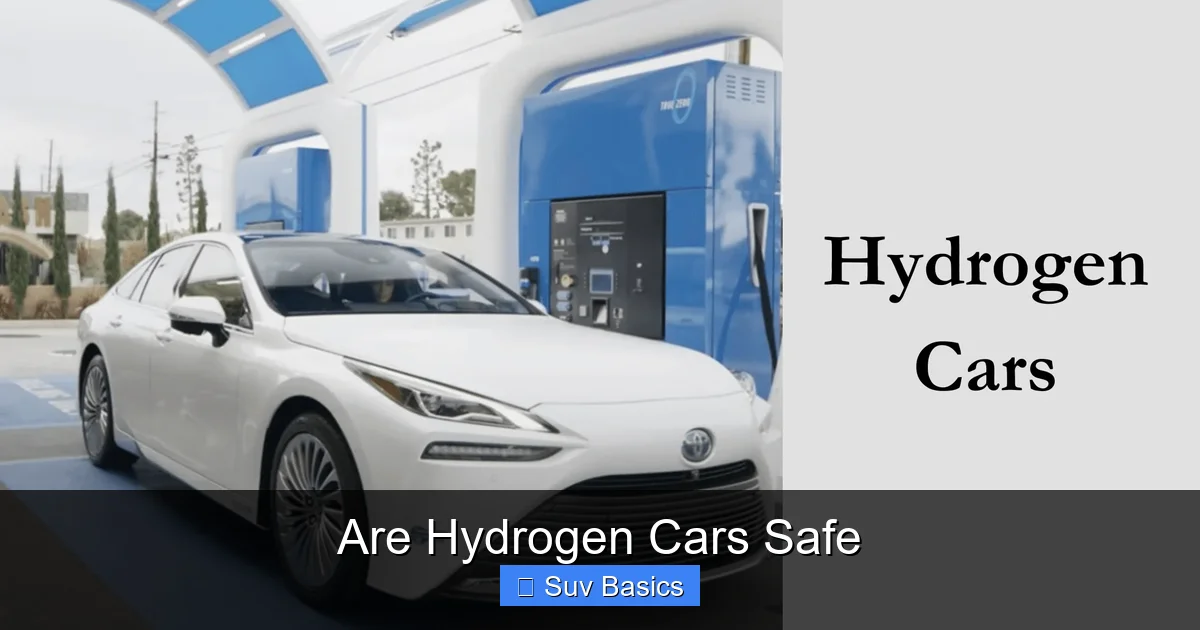
Visual guide about Are Hydrogen Cars Safe
Image source: webstoriesshares.com
One of the biggest concerns people have about hydrogen cars is the fuel tank. After all, hydrogen is a flammable gas stored at high pressures—up to 10,000 psi in some models. That sounds intense, but modern hydrogen tanks are incredibly robust.
Advanced Materials and Design
Hydrogen fuel tanks are typically made from multiple layers of carbon fiber composites wrapped around a durable inner liner. This design makes them much stronger than steel tanks used in older gas vehicles. In fact, these tanks are tested to withstand bullets, extreme heat, and massive impacts—all without rupturing.
For example, during safety testing, hydrogen tanks are subjected to gunfire simulations, where they’re shot with high-caliber bullets. Instead of exploding, the tanks typically just leak slowly, allowing the gas to escape safely. This is a huge advantage over gasoline tanks, which can rupture and ignite under similar conditions.
Pressure Relief Devices (PRDs)
Every hydrogen tank includes a Pressure Relief Device, or PRD. This is a safety valve that automatically releases hydrogen if the tank gets too hot—like in a fire. The PRD opens at a specific temperature, venting the gas upward and away from the vehicle. Because hydrogen is lighter than air, it rises and disperses quickly, reducing the chance of ignition.
This system is similar to the safety valves on natural gas pipelines and has been used safely in industrial applications for decades.
Leak Detection and Automatic Shutdown Systems
Even the strongest tanks can develop tiny leaks over time. That’s why hydrogen cars are equipped with sophisticated monitoring systems that detect even the smallest leaks—long before they become a problem.
Hydrogen Sensors Throughout the Vehicle
Hydrogen-powered SUVs have multiple sensors placed in key areas, including the fuel tank compartment, fuel lines, and around the fuel cell stack. These sensors constantly monitor for the presence of hydrogen gas. If a leak is detected, the system triggers an immediate response.
Automatic Fuel Shutoff and Venting
When a leak is detected, the vehicle’s control system automatically shuts off the flow of hydrogen from the tank. At the same time, it activates ventilation fans to safely disperse any accumulated gas. The driver is alerted via dashboard warnings, and in some cases, the vehicle may limit power or prompt a service visit.
This multi-layered approach ensures that even in the rare event of a leak, the risk of fire or explosion is minimized. It’s a proactive safety net that operates silently in the background—just like the airbags or ABS in your current car.
Hydrogen’s Physical Properties Make It Safer Than You Think
A lot of fear around hydrogen comes from outdated assumptions. But when you look at the science, hydrogen has some natural advantages over gasoline and even batteries.
Hydrogen Rises and Disperses Quickly
Unlike gasoline fumes, which are heavier than air and can pool near the ground—creating a fire hazard—hydrogen is the lightest element. If it leaks, it rises rapidly and disperses into the atmosphere. This means there’s less chance of it accumulating in enclosed spaces like garages or tunnels.
In fact, studies have shown that in the event of a leak, hydrogen disperses up to 10 times faster than gasoline vapors. This rapid dispersion significantly reduces the risk of ignition.
Lower Energy Density in Accidental Releases
While hydrogen is highly flammable, it has a lower energy density by volume compared to gasoline. This means that even if hydrogen ignites, the flame tends to burn upward and quickly, rather than spreading horizontally like a gasoline fire. The flame is also less sooty and produces fewer toxic byproducts.
In crash tests, hydrogen fires have been shown to burn out in seconds, often before they can cause significant damage to the vehicle or harm occupants.
Crash Test Performance and Real-World Safety Records
Safety isn’t just about the fuel—it’s about how the entire vehicle performs in real-world conditions. So how do hydrogen SUVs stack up in crash tests?
Top Ratings from Safety Organizations
Hydrogen-powered SUVs like the Hyundai NEXO and Toyota Mirai have earned top safety ratings from organizations like the National Highway Traffic Safety Administration (NHTSA) and the European New Car Assessment Programme (Euro NCAP). These ratings are based on rigorous crash tests, including front, side, and rollover impacts.
In these tests, hydrogen vehicles perform just as well—if not better—than their gasoline and electric counterparts. The fuel tanks remain intact, and the safety systems function as designed.
Real-World Incident Data
Since hydrogen cars have been on the road for over a decade, we now have real-world data to analyze. According to the U.S. Department of Energy and industry reports, there have been no recorded fatalities due to hydrogen leaks or explosions in passenger vehicles.
Even in high-profile accidents—like the 2019 crash of a Toyota Mirai in Norway—the hydrogen system performed safely. The tank remained intact, and no fire occurred. Emergency responders were able to handle the situation using standard procedures.
Safe Refueling: How Hydrogen Stations Work
Refueling a hydrogen car might seem intimidating, but the process is designed to be as safe—and simple—as pumping gas.
Automated, Sealed Systems
Hydrogen refueling stations use fully automated, sealed dispensers. The nozzle connects securely to the vehicle’s fuel port, and the system checks for leaks before any hydrogen is transferred. If a problem is detected, the process stops immediately.
The entire refueling process takes about 3 to 5 minutes—similar to gasoline—and requires no special training for the driver.
Emergency Protocols and Safety Zones
Hydrogen stations are built with multiple safety features, including fire suppression systems, emergency shut-off buttons, and wide safety zones. Operators are trained to respond to any incident, and regular inspections ensure equipment is in top condition.
In the rare event of a leak during refueling, the system automatically stops the flow and vents the gas safely upward. Again, because hydrogen rises, the risk to people and property is minimal.
Regulatory Standards and Ongoing Improvements
Hydrogen vehicle safety isn’t left to chance. It’s governed by strict international standards that are regularly updated as technology evolves.
Global Safety Guidelines
Organizations like the International Organization for Standardization (ISO), the Society of Automotive Engineers (SAE), and the United Nations have developed comprehensive safety standards for hydrogen vehicles. These cover everything from tank design and crash performance to refueling protocols and maintenance.
Automakers must meet or exceed these standards to sell hydrogen cars in markets like the U.S., Europe, and Japan.
Continuous Innovation
As hydrogen technology advances, so do safety features. Newer models include improved tank materials, better sensor networks, and even AI-driven diagnostics that predict potential issues before they occur.
For SUV buyers, this means you’re getting a vehicle that’s not only safe today—but built to be even safer in the future.
Conclusion: Hydrogen Cars Are a Safe, Smart Choice for SUV Buyers
So, are hydrogen cars safe? The answer is a resounding yes. With advanced fuel tanks, multiple leak detection systems, and inherent physical advantages, hydrogen-powered SUVs are among the safest vehicles on the road.
They offer the spaciousness, performance, and versatility that SUV drivers love—without the emissions or range anxiety of traditional engines. And with ongoing improvements in technology and infrastructure, hydrogen cars are becoming more practical and accessible every year.
If you’re looking for a clean, innovative, and secure vehicle for your next adventure, a hydrogen SUV might just be the perfect fit. Safety isn’t an afterthought—it’s built into every detail.
Frequently Asked Questions
Can a hydrogen car explode in a crash?
Hydrogen cars are designed to prevent explosions. In crashes, the fuel tanks are highly resistant to rupture, and safety systems automatically shut off fuel flow and vent gas safely. Real-world data shows no recorded explosions in passenger hydrogen vehicles.
Is it safe to park a hydrogen car in a garage?
Yes, it’s safe. Hydrogen rises and disperses quickly, so even if a small leak occurs, the gas won’t accumulate. Modern hydrogen cars also have sensors that detect leaks and trigger ventilation systems to keep the area safe.
How do hydrogen cars compare to electric vehicles in safety?
Both hydrogen and electric vehicles are very safe, but they have different risks. EVs face battery fire concerns, while hydrogen cars deal with gas storage. However, hydrogen’s rapid dispersion and robust tank design make it a low-risk option when properly maintained.
What happens if a hydrogen tank gets damaged?
Hydrogen tanks are built to withstand severe damage. Even in extreme cases, they’re more likely to leak slowly than explode. Safety systems will detect the issue, shut off fuel flow, and alert the driver to seek service.
Are hydrogen refueling stations safe?
Yes. Refueling stations use automated, sealed systems with emergency shut-offs and fire suppression. Operators are trained to handle any situation, and the process is designed to be as safe as pumping gasoline.
Do hydrogen cars require special maintenance for safety?
Routine maintenance is similar to other vehicles, but hydrogen-specific components like tanks and sensors are checked during service. Following the manufacturer’s maintenance schedule ensures all safety systems function properly.